As Housing Crisis Deepens, 3 Maine Cities Offer Cash for Backyard Homes
If you own a home in Maine, this is one of those moments where policy actually shows up at your front door with real money attached.
Three cities—Rockland, Bath, and Brunswick—are now offering homeowners up to $10,000 to build an accessory dwelling unit, or ADU. Not as a tax credit you might use someday. Not as a vague promise. This is a direct grant tied to a clear goal: create more places for people to live in a state that’s running out of housing.
I’ve been following housing policy for years, and here’s why this matters. Maine isn’t short on demand. It’s short on supply. Home prices crossed $440,000 while median household income is barely above $71,000. Inventory never fully recovered after the pandemic, and young workers, renters, and even longtime residents are getting squeezed out.
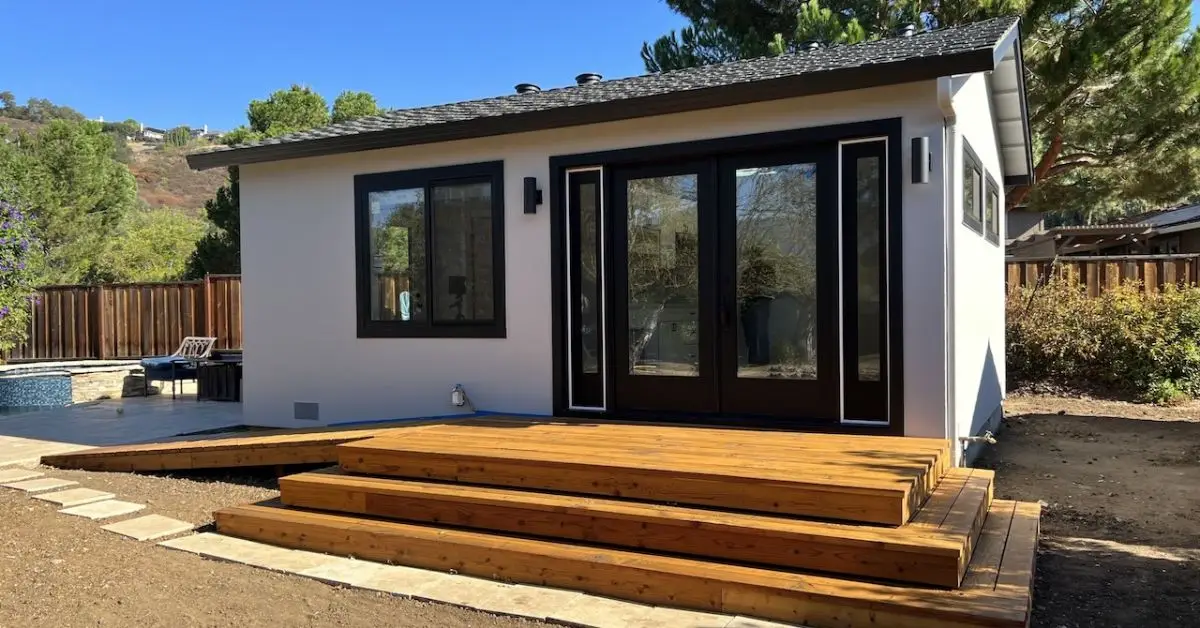
Instead of waiting years for large developments, Maine is trying something more practical: helping existing homeowners add one small unit at a time. A backyard cottage. A converted garage. A basement apartment done right. Multiply that across neighborhoods, and you start changing the math.
What makes this different from past programs is the intent. This isn’t just about adding units. It’s about helping people age in place, earn rental income, and make their homes work harder without selling them. It’s also about giving employers a fighting chance to keep workers who can’t find housing nearby.
And this is just a pilot. If it works here, it could quietly reshape how housing gets added across the state.
If you live in Maine—or care about where housing policy is headed—ask yourself this: if you had the space, would building an ADU make sense for you or someone you know?
What Is the ADU Boost Pilot Program?
ADU Boost Pilot Program, Explained in Simple Terms
If you’re hearing about the ADU Boost Pilot Program for the first time, let me break it down like I’d explain it to a homeowner friend.
This isn’t a broad housing slogan or a vague government promise. It’s a specific initiative that offers real money to help homeowners add accessory dwelling units and expand long-term rental housing in Maine’s midcoast region.
Here’s what it means for you:
- You can receive up to $10,000 toward building an ADU
- That grant covers about 10% of eligible construction costs
- The goal is to increase long-term rental housing, not short-term vacation units
- It’s structured to help you move from “thinking about it” to actually building
What makes this program different is that it tries to help with the real sticking points people face — planning, financing, and construction — instead of just talking about affordable housing in the abstract. You can read the full reporting on the pilot at Realtor.com, which gives credible context and direct quotes from policymakers and housing experts.
Why Rockland, Bath, and Brunswick Were Chosen

You’ll notice this pilot isn’t statewide yet — and that’s by design.
As Alexis Mann, senior policy strategist of the Midcoast Council of Governments, points out, the program is focused on Rockland, Bath, and Brunswick because they are the region’s most urban and densely populated communities. That isn’t an accident — it’s where the housing crunch is most acute and where small gains in housing stock can make a visible difference.
Here’s why this matters:
- These cities have housing stock with space suitable for ADUs
- Demand for long-term rentals is strong, especially among workers and downsizing residents
- Adding even a handful of units in these areas can ease pressure on the local market
So if you live in one of these towns or are considering investing there, this pilot isn’t just theory — it’s a real test case with implications for how Maine may tackle housing shortages going forward.
How the Program Actually Works for Homeowners
From Idea to Construction — The ADU Support Pipeline
This is the part most homeowners actually care about. Not the headline. Not the politics. The “how.”
What I like about the ADU Boost Pilot Program is that it doesn’t assume you already know what you’re doing. It’s built around a simple idea: most people don’t get stuck because they don’t want an ADU — they get stuck because the process feels overwhelming.
So the program is designed as a step-by-step pipeline, not just a check at the end.
Here’s how it flows in real life:
- You start with the idea stage — exploring whether an ADU even makes sense for your property
- Then comes financing guidance, which is where many projects usually die
- Only after that do you move into design, permits, and construction
Alexis Mann from the Midcoast Council of Governments describes this as creating a “continuum of support,” and that framing matters. The goal isn’t just to hand you money and walk away. It’s to reduce friction at every stage so a good idea actually turns into a finished unit.
If you’ve ever looked into building anything and backed off because it felt like too much, this structure is meant to keep that from happening.
Grant Structure and Eligibility Basics
Let’s set expectations clearly, because clarity keeps people from clicking away halfway through.
Here’s what the grant does — and doesn’t — cover:
- The grant is capped at $10,000
- It covers up to 10% of eligible construction costs
- It’s meant for long-term rental housing, not short-term or vacation use
This isn’t free money to remodel for personal use. The intent is very specific: add housing that stays in the community. If that aligns with what you want — rental income, flexibility, or future living options — then the structure actually works in your favor.
Why ADUs Make Sense for Maine Homeowners
Aging in Place + Extra Income = Financial Stability
This is where the program stops being abstract and starts feeling personal.
For many Maine homeowners, especially older ones, the biggest question isn’t growth or profit. It’s stability. How do you stay in the home you love without stretching your budget every month?
An ADU can help answer that:
- It creates rental income that can offset a mortgage, utilities, or rising taxes
- It allows you to age in place while staying financially secure
- It gives flexibility — a tenant today, a family member tomorrow
Alexis Mann has been clear about this point: the program is meant to improve economic security, not push people out of their homes. That’s a different mindset than most housing policies, and it’s one reason this pilot has gotten attention.
Property Value Upside of a Well-Designed ADU
If you’re more numbers-driven, there’s another angle you shouldn’t ignore: value.
A well-planned ADU isn’t just a rental unit. It’s an asset. Just as a well-designed ADU can significantly boost property value, small updates inside your home, like transforming outdated features into modern masterpieces, can make your space feel fresh and increase appeal (8 easy ways to transform outdated wood cabinets into modern masterpieces). According to Whitney Hill, co-founder and CEO of SnapADU, “a well-designed ADU can increase a property’s value significantly.” That’s not speculation — it’s based on years of building and selling homes with ADUs across different markets.
You can explore how ADU design and build quality affect long-term value through companies like SnapADU, which specialize in this exact type of project.
So when you step back and look at the full picture — income, flexibility, and resale value — the question shifts from “Why would I do this?” to “Why wouldn’t I at least run the numbers?”
If this program were available where you live, would you see an ADU as extra work — or as a safety net you wish you’d built sooner?
Local Real Estate Perspective — Why This Matters on the Ground

This is where the policy starts to feel real, not theoretical.
If you walk through Bath, you’ll notice something many newer cities don’t have anymore: large, older homes with space. That’s exactly why local real estate professionals see ADUs as a natural fit here, not a forced solution.
Nancy Carleton, a Bath-based agent with Vitalius Real Estate, puts it plainly. Bath is an old shipbuilding city with beautiful, big houses—homes that were built for families, not minimal square footage. Adding an ADU allows residents to stay in those homes as they age, without feeling financially trapped.
From a ground-level perspective, this matters because ADUs aren’t changing the character of neighborhoods. They’re letting people stay put. For older homeowners, that can mean affording a mortgage, utilities, or taxes without downsizing or leaving the community they’ve lived in for decades.
If you already own a home like this, you’re not starting from scratch. You’re adapting what’s already there.
Workforce Housing and Economic Impact
Housing shortages don’t just hit renters. They hit businesses too.
When workers can’t find a place to live near their jobs, employers lose people. That’s one of the quieter reasons this program exists. According to Alexis Mann, the creation of more long-term rental units makes it easier for young workers to secure housing and stay in the region.
From my point of view, this is a key piece many articles skip. ADUs don’t just help homeowners earn income. They help towns function. Stable housing means a stable workforce, whether that’s healthcare workers, tradespeople, teachers, or service staff.
If you’ve ever heard a local business say they “can’t find workers,” there’s a good chance housing is part of that story.
Could This Program Expand Across Maine?
This pilot isn’t meant to stay small forever.
The entire point of starting in Rockland, Bath, and Brunswick is to see what actually works. If homeowners build, units get rented, and communities feel the impact, this becomes a template—not a one-off.
Based on what’s learned here, the program could expand to other Maine cities and, eventually, scale statewide. That would signal a shift in how Maine approaches housing: fewer massive developments, more incremental growth using existing homes.
If you’re watching this from outside the pilot cities, this matters. Today it’s them. Tomorrow, it could be your town.
How Maine Compares to Other States Using ADUs
Other States Betting on ADUs to Fix Housing Shortages
Maine isn’t experimenting in isolation. It’s following a path other states have already started walking.
Across the country, ADUs are being treated less like exceptions and more like essential housing tools. That trend gives this pilot more weight—it’s aligned with where housing policy is already moving.
New York City — “City of Yes” Housing Reform
New York City recently legalized ADUs in certain neighborhoods as part of its “City of Yes” housing reforms. The expectation is that this could lead to roughly 20,000 ADUs over the next 15 years, added through backyards, basements, garages, and attics.
That scale shows what’s possible when zoning and incentives line up.
California’s ADU Push and Condo-Style Units
California has gone even further. In San Francisco, homeowners can now sell backyard in-law units as separately owned condos. Programs like the ADU Boost Pilot are designed to reduce risk and provide support through each step—unlike some markets, like California, where homeowners must navigate complex regulations and potential pitfalls (California real estate fraud). Real estate agent Ying He describes many of these owners as “house rich but cash poor”—people who bought years ago, have equity, but limited income.
ADUs give them a way to unlock value without selling their main home. That same logic applies in Maine, just at a smaller scale.
ADUs Are Going Mainstream — Even New Builders Are Adopting Them
One of the clearest signs this isn’t a niche idea anymore? Large builders are building for it.
Lennar now offers “Next Gen” homes—townhomes starting around $417,990 that include an attached, ADU-style private suite with its own entrance, living space, kitchen, bedroom, and bathroom. You can see how these layouts work directly on Lennar’s site.
When national builders design homes this way, it signals demand, not theory. ADUs are no longer a workaround. They’re becoming a standard option.
So when you look at Maine’s pilot in that context, it’s not radical. It’s overdue.
If ADUs are already reshaping housing in places like New York and California, do you think Maine is early to this—or finally catching up?
What This Means for Homeowners Considering an ADU Today
This is the point where the headlines stop mattering and your personal situation takes over.
If you live in Maine and you’ve ever thought about adding an ADU, the math looks very different today than it did even a few years ago. Not because building got cheaper—it didn’t—but because the conditions around demand, policy, and support finally line up.
Here’s how I’d think about it if I were in your place.
Financial upside: An ADU isn’t just an expense anymore. Between rental income and potential property value gains, it can act as a financial buffer. Between rental income and potential property value gains, it can act as a financial buffer, especially if you’re navigating affordability challenges—much like strategies I cover in how to buy a house with low income. For many homeowners, that income helps cover a mortgage, utilities, or rising property taxes without selling the home.
Long-term rental demand: Maine doesn’t have a short-term housing problem. It has a long-term one. Workers, downsizing residents, and newcomers all need places to live year-round. That demand isn’t going away, which makes long-term rentals more stable than people assume.
Policy momentum: This part matters more than most people realize. When states and cities actively support ADUs—instead of blocking them—it reduces future risk. Permitting becomes clearer. Zoning gets friendlier. Programs like this pilot signal that ADUs are no longer fringe projects. They’re part of the plan.
If you already have the space, the real question isn’t whether ADUs are “worth it” in general. It’s whether doing nothing is the safer choice anymore.
Final Thoughts — And a Question for You
Maine’s ADU Boost Pilot Program isn’t a silver bullet. It won’t fix the housing crisis overnight. But it does something rare in housing policy: it gives homeowners a practical role in the solution.
Small units. Real people. Real neighborhoods.
If you’re a homeowner, this could be a chance to create income, flexibility, and long-term security. If you’re watching from the sidelines, it’s a glimpse of how housing might get built in the future—one backyard at a time.
I’m curious to hear from you: Would you consider building an ADU if a program like this were available in your city? What would stop you—or push you to move forward?
Drop your thoughts in the comments. And if you want grounded, no-nonsense guidance on building smarter and upgrading your home the right way, explore more resources at Build Like New.
Disclaimer: This article is for informational purposes only and is not legal, financial, or construction advice. Program details, eligibility, and incentives may change over time. Homeowners should consult local authorities, lenders, and qualified professionals before making decisions related to ADU construction.