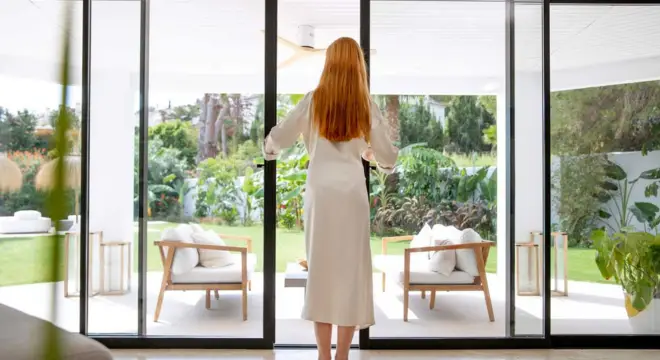
4 Home Decor Mistakes That Create Unwanted Visual Clutter
You can wipe every surface, vacuum the floors, and still step into a room that feels oddly messy.
I’ve noticed this in so many homes—including ones that are clearly clean. Nothing is lying around. Nothing is “out of place.” Yet the space feels busy, restless, and a little stressful.
The issue usually isn’t dirt or poor organization. It’s visual clutter. Certain decor items add visual clutter even when they’re styled neatly and kept spotless. Your eyes don’t get a break, so your brain reads the space as chaotic.
Instead of overwhelming you with dozens of rules, I’ll walk you through four common decor items that quietly make homes look messy—even when they’re clean. Once you understand the logic behind visual clutter, you’ll start noticing these patterns instantly in your own space.
Let me ask you something before we go on: when you walk into your living room, does your eye settle easily—or does it keep jumping from one thing to another?
What Makes Decor Visually Cluttered?
Whenever I walk into a room that feels “too much,” I ask myself one simple question: Where does my eye rest? If the answer is nowhere, that’s visual clutter at work.
Your eyes don’t scan a space randomly. They look for patterns, balance, and breathing room. When every surface has something on it—or when objects compete for attention—your brain has to work harder. That extra effort is what makes a room feel messy, even when it’s perfectly clean.
Here’s what’s really happening behind the scenes:
- Your brain prefers simple groupings over scattered objects
- Too many details create visual overload
- Negative space gives your eyes a pause point
- When everything tries to stand out, nothing actually does
This is why visual clutter feels stressful. It’s not about dirt or poor habits—it’s about how the brain processes what it sees. Once you understand that, decorating starts to feel more intentional instead of overwhelming.
Item #1 — Excess Small Decor Pieces
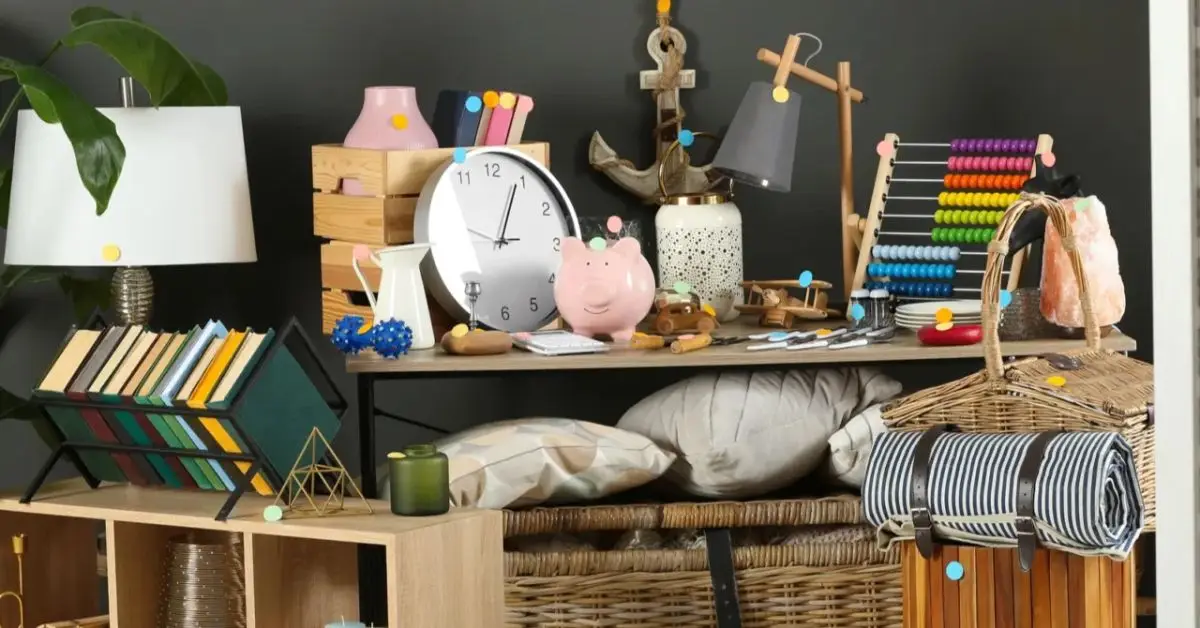
This is one of the most common mistakes I see, and it usually comes from good intentions.
Small figurines, tiny vases, souvenirs, mini candles—they all look harmless on their own. But when they’re spread across shelves and tables, they quietly make your home look crowded. As pointed out by Home Decor Bliss too many small decor items create visual clutter because the eye has no single place to land.
Why this happens:
- Your eyes keep jumping from object to object
- No clear focal point is established
- Flat surfaces lose their clean visual lines
- Even neat spaces start to feel chaotic
What works better instead:
- Group similar items together so they read as one visual element
- Rotate decor instead of displaying everything at once
- Use fewer, larger statement pieces to anchor the space
- Leave some surfaces empty on purpose—it’s visual breathing room, not wasted space
Here’s a simple test: if removing just a few small items instantly makes the area feel calmer, you’ve found the problem. If you’re wondering where this kind of visual clutter builds up fastest, I’ve broken down the six biggest clutter hot spots in most homes that quietly undo all your cleaning efforts—even when everything looks “put away.” It was never about mess—it was about how much your eyes had to process.
Take a look around right now. Which surface feels the busiest, and what’s the smallest thing on it that you could remove first?
Item #2 — Candle Collections & Candle Clutter
Candles feel harmless. I get it—I love them too. They promise warmth, calm, and a “cozy” vibe. The problem starts when one candle turns into five… then eight… then a full lineup across every surface.
Candles tend to pile up fast. Different sizes, colors, labels, half-burned jars. Even when they’re clean, they rarely look unified. Dust shows easily, and without a clear focal point, they turn into visual static.
Design-wise, here’s why candle clutter happens:
- Multiple candles compete instead of working together
- Similar-sized jars create visual noise, not balance
- Scattered placement breaks the flow of a surface
- The eye keeps stopping and restarting
According to Real Simple, excess candles are one of the most common decor items that add visual clutter because they lack visual weight unless they’re styled intentionally.
What actually works better:
- Limit candles to one or two per space
- Use a tray or decorative holder so they read as one unit
- Stick to a single color or material for a cleaner look
- Store the rest and rotate them instead of displaying all at once
If your candles feel like “background noise” instead of a focal point, that’s your cue. If time is the reason you keep letting candle clutter slide, start small—there are 10 spots in your home you can declutter in just 10 minutes that instantly make a space feel calmer. Cozy should feel calm, not crowded.
Item #3 — Pillow Overload & Soft Furnishing Clutter
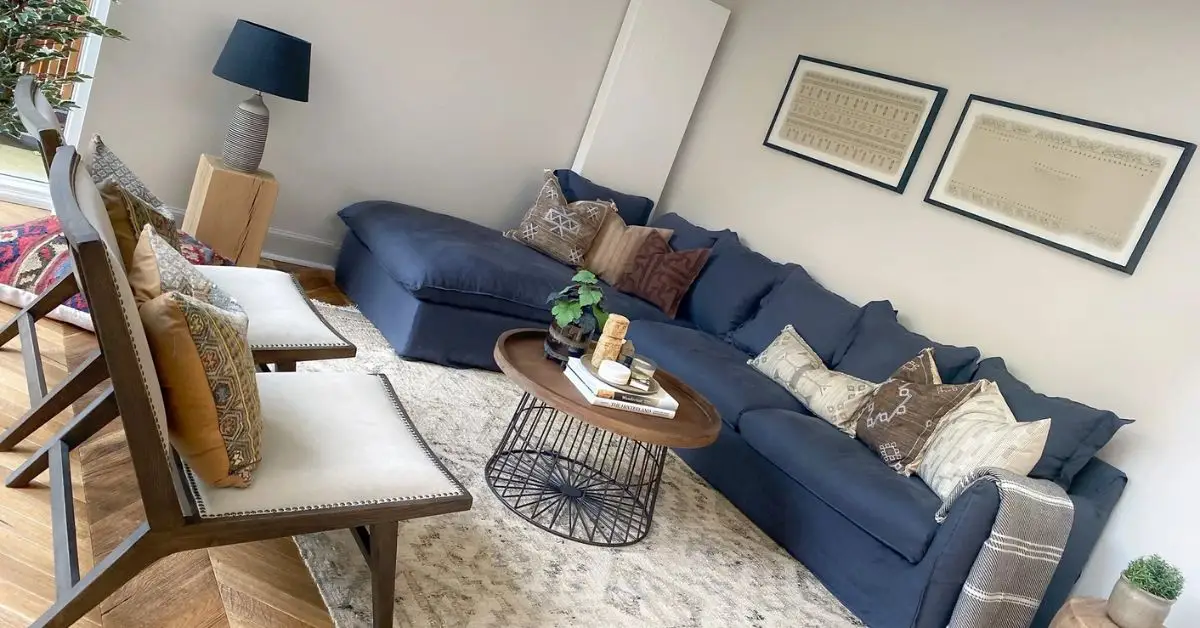
Throw pillows are another decor trap I see all the time—especially on sofas and beds.
Individually, pillows add comfort and texture. Together, when there are too many, they start hiding the furniture itself. The shape of the sofa disappears, and the room feels messier before anyone even sits down.
Here’s why pillow overload makes spaces feel chaotic:
- Furniture lines get buried
- Too many colors and patterns compete
- Pillows spill onto the floor when not in use
- The setup feels staged, not lived-in
As Decor Hint points out, excessive pillows can make even large rooms feel crowded because the eye loses a clear structure to follow.
A simple visual checklist I use:
- 2–4 pillows per sofa is usually enough
- Mix one solid, one subtle pattern, one texture
- Vary sizes, but keep a consistent color story
- If you have to move pillows every time you sit, you have too many
Ask yourself this: do your pillows support the furniture—or are they competing with it? Once the furniture can breathe again, the whole room feels lighter.
Item #4 — Mismatched Frames & Overstuffed Shelves
This one looks “decorated” at first glance, but it quietly stresses the eye.
I see this a lot: different frame sizes, colors, finishes, mixed with books, objects, and keepsakes all fighting for attention on the same shelf or wall. Nothing is technically wrong—yet the space feels unsettled.
Here’s why mismatched frames and packed shelves create visual tension:
- Your eye can’t find a clear order or hierarchy
- Competing frame styles break visual flow
- Shelves lose structure when everything is on display
- The brain keeps scanning instead of settling
What most people miss is how the mismatch affects perception. Cluttered shelves and inconsistent frames overwhelm the viewer because there’s no dominant visual anchor to guide the eye.
What works better:
- Choose one dominant piece (large frame or art) and build around it
- Stick to a limited frame palette (same color or material)
- Leave intentional gaps on shelves—empty space is part of the design
- For shelves, edit ruthlessly: fewer items, varied heights, clear spacing
If your shelves feel “busy” even after organizing, the issue isn’t neatness—it’s too many equal-weight visuals competing at once. Overstuffed shelves and crowded walls are also one of the most common clutter traps people overlook until guests are coming, which is why clearing these five problem areas first makes such a visible difference.
Bonus Decor Culprits Most People Don’t Expect
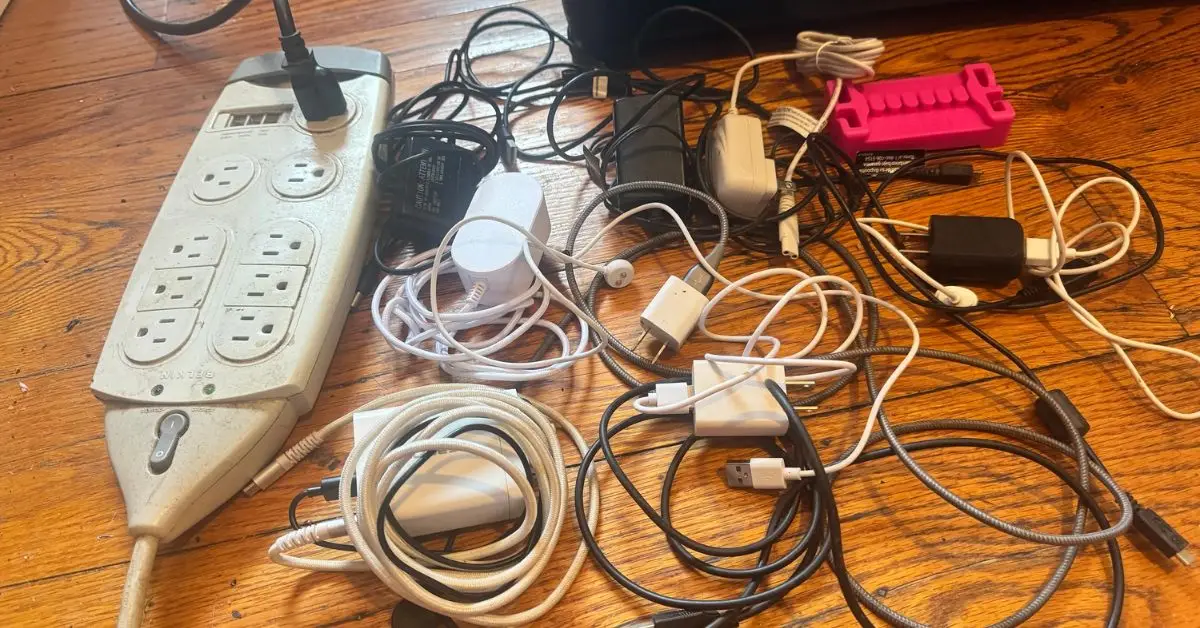
Some items don’t scream clutter—but they quietly sabotage clean spaces.
A few that come up often:
- Exposed cords and tech clutter: Chargers, routers, visible wires instantly break the calm of a room and make even modern spaces feel messy.
- Too many tabletop plants: Plants are beautiful, but when every surface has one, the eye loses focus. Overcrowding plants creates visual noise instead of calm.
Quick fixes:
- Hide cords with cable covers or baskets
- Group plants instead of spreading them everywhere
- Let at least one surface stay plant-free
Sometimes removing just one of these changes the entire feel of a room.
How to Curate Decor Without Losing Personality
I never tell people to strip their homes of personality. The goal isn’t “empty”—it’s intentional.
Here’s the approach that actually works:
- Choose one focal point first: A large artwork, statement mirror, or bold furniture piece should lead the space.
- Use the “one anchor + two accents” rule: One main piece, supported by one or two smaller accents—no more.
- Rotate decor seasonally: Display fewer items at a time. Store the rest and swap them out later.
- Let meaning guide placement: If something matters to you, give it space to stand out instead of burying it among clutter.
When decor has room to breathe, your personality shows more—not less.
Quick Reset Checklist
Use this anytime a space feels “off”:
- Are surfaces intentionally styled or just filled?
- Do frames have consistent spacing and alignment?
- Is there a clear focal point, or does everything compete?
- Are decor heights varied, or all the same level?
- Does your eye know where to rest?
If you answer “no” to more than one, that’s where to start editing.
Final Styling Principles That Make Clean Look Intentional
Clean doesn’t automatically mean calm. Calm comes from clarity.
When you remove visual clutter, you don’t just change how your home looks—you change how it feels. Spaces become easier to live in, easier to clean, and easier on your mind.
I’d love to hear from you: Which decor item surprised you the most—and what are you planning to remove or rethink first? Drop it in the comments.
And if you want more practical, no-fluff guidance on making spaces feel fresh and intentional, explore more ideas at Build Like New.
Disclaimer: This article is for general home styling and informational purposes only. Decor preferences and results may vary based on space, lighting, and personal taste. Always adapt suggestions to what feels right for your home and lifestyle.