Avoid These 5 Cleaning Products to Protect Your Wooden Cutting Board
I ruined a favorite walnut cutting board once by doing what felt like the “right” thing — a heavy bleach soak after a raw-meat mishap. It warped, darkened, and never felt the same. If you’ve ever stood over the sink wondering whether that spray, scrub, or “natural” trick is safe, you’re not alone.
In this piece I’ll show you five common cleaning products and practices that quietly destroy wooden cutting boards — and exactly why they do it. I’ll also give you simple, tested alternatives, maintenance steps to extend a board’s life, and clear signs that it’s time to replace it.
I’ve gone beyond lists: I dug into expert guidance, user threads, and practical testing notes so you’ll get an honest, no-nonsense plan you can use tonight. Read on and I’ll help you save your board — and stop throwing money away on replacements.
Why Wooden Cutting Boards Require Special Care
If you’ve ever wondered why a wooden board reacts so differently from a plastic one, here’s the simple truth: wood is alive in a way plastic isn’t. Even after it’s been shaped and sanded, it still behaves like a natural material.
Wood absorbs moisture. It swells when it gets wet and shrinks as it dries. It pulls in oils, odors, and cleaners more easily than you think. And because it’s porous, anything that sits on the surface can seep deeper into the grain.
When you understand this, the rest suddenly makes sense. A cleaner that works fine on a plastic board can ruin a wooden one within weeks. That’s why I always tell people to treat their wood boards like you would a good cast-iron pan — with attention, not shortcuts.
A helpful reminder from the University of Maine Cooperative Extension: wood boards are sensitive to moisture and should be dried right away after washing. That small step alone prevents half the damage I see people accidentally cause.
To make smart choices later in the article, you need this foundation. Once you see how reactive wood is, the “why” behind each harmful cleaner becomes obvious.
The 5 Cleaning Products (or Practices) That Can Ruin Your Wooden Cutting Board
Below are the five habits I see destroying wooden boards the most. I’ll break down what goes wrong and how the damage shows up so you can fix the issue before it becomes permanent.
1. Bleach and Strong Chemical Disinfectants
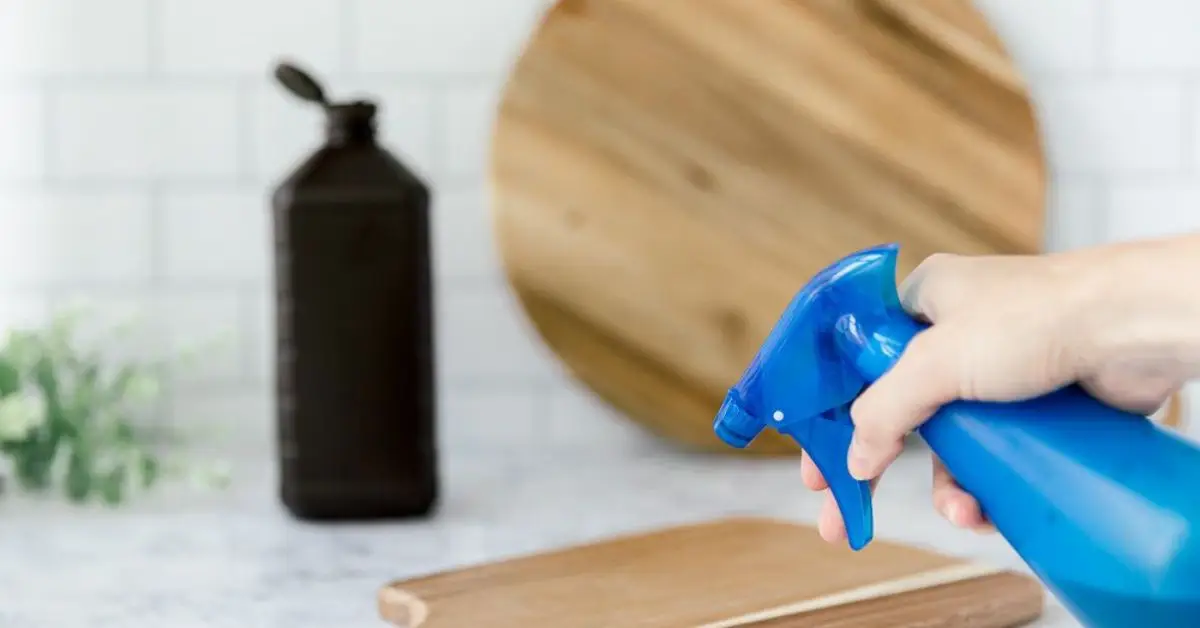
Bleach feels like the safest bet when you want to sanitize something, but wood doesn’t handle it well at all. It sinks into the grain, strips away the natural oils, and leaves behind harsh residue you can’t fully rinse out.
You’ll usually notice:
- The board drying out faster
- A brittle feeling when you run your hand over it
- Light cracks forming near the edges
- A faint chemical smell that won’t go away
You and I both want a clean board, but there’s a big difference between “clean” and “chemically scorched.” Bleach belongs on nonporous surfaces — not wood.
2. Dishwasher Use
I understand the temptation. You’re tired, the sink is full, and the dishwasher button is right there. But wooden boards and dishwashers are a terrible match.
Inside a dishwasher, your board is hit with:
- High heat
- Intense steam
- Long water exposure
- Strong detergent
That combination forces the wood to expand and contract rapidly, which is why so many boards come out warped or cracked. Once that happens, there’s no repair that truly restores it.
If you want your board to last years instead of months, keep it far away from any dishwasher cycle.
3. Pure Citrus Juices (Lemon / Lime) on Their Own
I’ve used lemon for cleaning plenty of things, so I get why people assume it’s gentle. But pure lemon or lime juice is highly acidic. When rubbed directly onto a wooden board, it strips the oils that keep the wood conditioned and flexible.
Signs you’ll see over time:
- The board feeling dry or rough
- Small surface splits
- Warping when exposed to moisture
You can still use half a lemon with coarse salt occasionally for deodorizing, but think of it as a quick scrub, not an everyday cleaner. And definitely don’t let the juice sit on the surface.
4. Prolonged Soaking in Water or Submersion
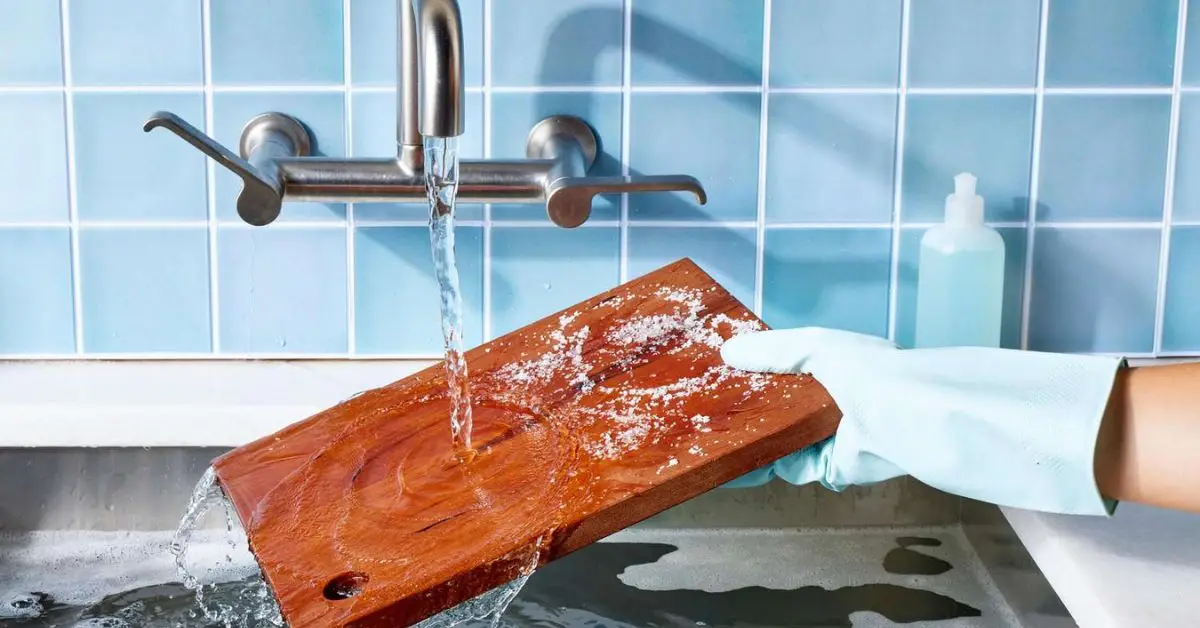
This is one of the most innocent mistakes. You’re multitasking, the board is dirty, and you drop it into the sink “just for a minute.” The problem is that wood absorbs water like a sponge.
What happens next:
- The fibers swell
- The board becomes uneven
- Glued joints weaken
- Cracks form as it dries too quickly
A quick wash is fine. But soaking? That’s the fastest way to turn a flat board into a wobbly one.
5. Abrasive Cleaning Tools (Steel Wool, Harsh Scouring Pads)
When you’re trying to scrub away a stain or dried-on food, steel wool feels like the easy solution. But abrasive tools chew up the surface of a wooden board.
Here’s what they leave behind:
- Deep scratches that trap bacteria
- A stripped, unprotected surface
- A board that absorbs moisture even faster
If you’ve ever seen a wooden board that looks fuzzy, dull, or uneven, this is usually why. A simple scraper or a gentle scrubber does the job without destroying the surface.
Bonus: Other Less Obvious Culprits (or Misunderstood Cleaners)
There are a few things that look harmless but can quietly wear down your board over time. These don’t cause instant damage, which is why most people never notice what’s happening until the board starts feeling rough, dry, or uneven.
Mild Dish Soap (When Overused)
I use dish soap on my own boards, and you probably do too. It’s safe — but only in the right amount. When you use too much, or you switch to a strong, degreasing formula, the soap starts pulling oils out of the wood. If you don’t rinse it thoroughly, the residue dries on the surface and slowly dehydrates the fibers.
You’ll spot the damage when:
- The board feels chalky after washing
- The grain looks lighter or patchy
- Water starts absorbing faster than before
The fix is simple: use enough soap to clean the board, rinse it well, and dry it right away.
Undiluted Vinegar or Acidic Sprays
Vinegar is one of those “safe natural cleaners” that everyone recommends, and in the right dilution, I also use it. But when it’s undiluted, or when someone sprays a strong acidic mix on the board daily, it slowly eats into the finish.
A good reminder from Wholesale Cutting Boards: strong acidic or alkaline cleaners wear down natural wood finishes over time.
If you like using vinegar, use it diluted — never straight.
Highly Alkaline Cleaners
Strong degreasers, heavy-duty sprays, and industrial kitchen cleaners fall into this category. They often have high pH formulas that strip oils and weaken finishes fast. Wooden boards simply aren’t built for that level of chemical strength.
These “borderline” cleaners matter because they’re the ones people use without thinking. They don’t look dangerous, so they slip under the radar — even though they cause slow, long-term wear that’s just as destructive as the big five. If you’re already rethinking some of the everyday kitchen habits that might be wearing things down, you might also like exploring how to keep your kitchen smelling fresh all day without using fancy products.
Safe Alternatives and Best Practices for Cleaning Wooden Cutting Boards
Now that you know what to avoid, here’s what actually works. These are the same methods I use on my own boards and recommend to anyone who wants their board to last more than a few years.
What You Can Use Instead
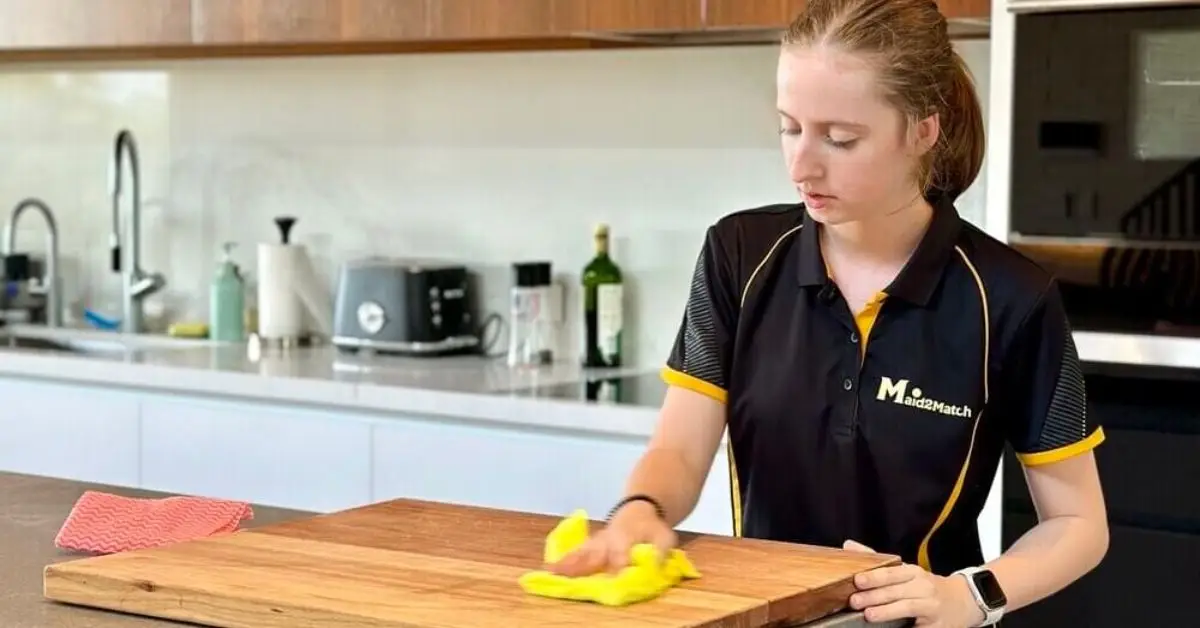
- Mild dish soap + warm water: This is your everyday cleaning routine. A quick wash, a good rinse, and immediate drying is all a wooden board needs after normal use.
- 3% hydrogen peroxide: If you need to sanitize after raw meat or fish, this is a safe option. It kills bacteria without attacking the wood fibers the way bleach does.
- Diluted vinegar solution: White or apple cider vinegar works well when mixed with water. It’s great for odor control and for regular maintenance when you don’t need harsh sanitizing.
Natural Deodorizing and Stain Removal
- Coarse salt + half a lemon: I use this sparingly. The salt scrubs; the lemon freshens. As long as you don’t let the lemon juice sit, it’s a solid occasional refresh.
- Baking soda paste: For stubborn smells or stains, baking soda works better than people expect. Mix it with a little water, scrub gently, rinse, and dry.
Maintenance That Extends the Life of Your Board
- Regular oiling: A food-grade mineral oil, a beeswax blend, or a non-toxic wood conditioner keeps the surface sealed and prevents cracking. If your board feels dry or looks dull, oil it — simple as that.
- Drying and Storage: Always dry the board right after washing, and store it standing upright so air can move around it. That airflow prevents moisture from sinking into the wood and causing warping. If you’re trying to create a consistent cleaning routine for all your wooden surfaces, you may find these pro tips for cleaning wooden kitchen cabinets helpful too.
These small habits make a massive difference. You don’t need fancy products or complicated routines — just consistency and the right approach.
Why People Still Use Harmful Products (Psychology + Misbeliefs)
If you’ve ever grabbed a strong cleaner without thinking twice, you’re not doing anything unusual. Most people don’t damage their cutting boards on purpose — they’re acting on instincts that feel right but don’t line up with how wood behaves.
“Stronger = Cleaner”
A lot of us grew up believing that the stronger the chemical, the safer the kitchen. So when you’re handling raw meat or dealing with a stubborn smell, reaching for bleach or a heavy-duty spray feels logical. The problem is that wood doesn’t react like a countertop. Those chemicals don’t stay on the surface — they get pulled right into the grain.
“Natural = Safe”
Lemon, vinegar, and other natural cleaners seem harmless because they’re not synthetic. But natural acidity is still acidity. If you pour straight lemon juice on wood every day, it’ll dry out the fibers just as reliably as a chemical degreaser.
“More Deep Cleaning = Better Care”
Some people over-clean because they want to take “extra good care” of their board. Ironically, this constant scrubbing, soaking, or sanitizing is what breaks the wood down fastest. Wood needs balance — clean enough to be safe, gentle enough to stay healthy.
Understanding these misbeliefs helps you shift from a fear-based cleaning style to a smarter, more sustainable one. Once you see why these habits form, it’s easier to change them.
When to Replace Your Wooden Cutting Board
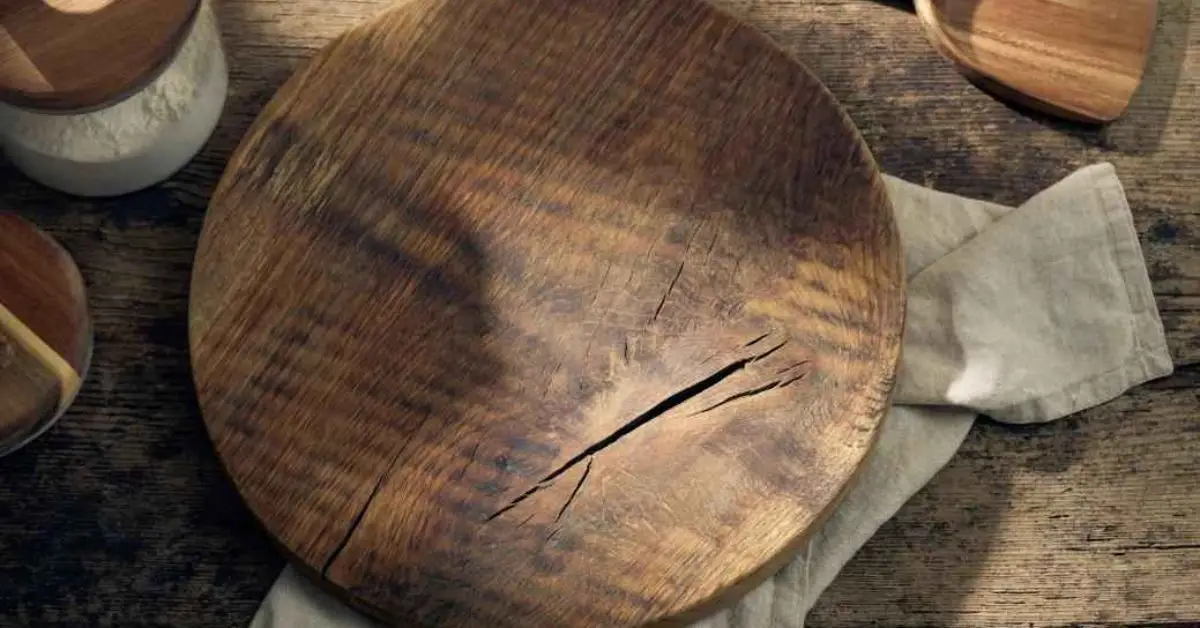
Even with great care, wooden boards don’t last forever. They’re natural materials, and natural materials wear down based on how often you use and wash them. The trick is knowing when you’re maintaining a board — and when you’re just keeping something that’s no longer safe.
Signs of Irreparable Damage
If you start noticing any of these, the board is on its way out:
- Deep cracks that keep widening
- Warping that makes the board rock on the counter
- Glued joints separating on laminated or butcher-block boards
- Permanent stains or grooves you can’t clean out
These aren’t cosmetic problems. They’re structural issues that change how the board handles moisture and bacteria.
The Food Safety Factor
Old boards with deep cuts can trap moisture and bacteria in places you can’t reach. At that point, no amount of cleaning will get the surface truly safe. This is especially important if you use the board for poultry, meat, or fish.
House Digest notes that wooden boards become harder to sanitize once deep grooves form because bacteria settle below the surface where cleaners can’t reach them. It’s one of the clearest signs that retirement time is near.
Check Your Manufacturer’s Notes
Not all boards are built the same way. Some glued or decorative boards have shorter lifespans or specific care warnings. If yours came with instructions, give them a quick read — they often tell you which issues are normal and which aren’t.
Knowing when to replace your board is just as important as knowing how to care for it. A well-loved board can last years, but letting a severely damaged one linger can cause more problems than it’s worth. And if you’re refreshing your kitchen setup while replacing old tools, you might enjoy browsing some smart spice-storage ideas that instantly clear counter clutter.
Summary
Before you head back to your kitchen, here’s a quick, practical recap you can lean on:
- Avoid the five habits that quietly damage wood: bleach, dishwashers, pure citrus, soaking, and abrasive scrubbing.
- Stick to gentle, food-safe cleaners that actually support the wood instead of fighting it.
- Keep the board healthy with regular oiling and quick drying after each wash.
- And when the cracks get deep or the surface won’t clean up anymore, it’s time to retire it for your own safety.
If you’ve used any of these harmful methods before, don’t worry — most people have. What matters is what you do next. I’d love to know: which of these mistakes surprised you the most? Tell me in the comments so we can talk through it together.
And if you want more straight, practical guides for keeping your home tools in great shape, you can explore more resources on Build Like New.
Disclaimer: This guide is for general informational purposes only and isn’t a substitute for professional advice. Always follow your cutting board manufacturer’s care instructions and use your best judgment when cleaning or maintaining kitchen tools.