5 Reasons Your Shelves Look Cluttered (And How to Fix Them)
I see this problem all the time—and honestly, I’ve made it myself.
You look at your shelves and nothing is technically wrong. There’s no trash, no chaos. Everything has a place. And yet, the space feels messy, heavy, and a little stressful to look at. You might even wonder if you just have “bad taste.”
You don’t.
After going through dozens of shelf-styling articles, designer opinions, and real homeowner discussions, one thing is clear: most shelves don’t look messy because of what you put on them—but because of a few quiet mistakes almost everyone makes without realizing it.
Pinterest and Instagram don’t help either. They show perfect shelves in perfect homes, shot with perfect lighting, and make you think you’re doing something wrong when your real-life space doesn’t match up.
In this guide, I’m not going to tell you to buy new decor or copy another styled photo. Instead, I’ll walk you through five very specific shelf styling mistakes that instantly make a space look messy—and more importantly, how to recognize which one you might be making.
As you read, I want you to picture your own shelves, not an online image.
So let me ask you this before we start: When you look at your shelves right now, do they feel intentional—or do they feel like they slowly turned into a dumping zone over time?
Mistake #1: Using Shelves as Storage Instead of a Display
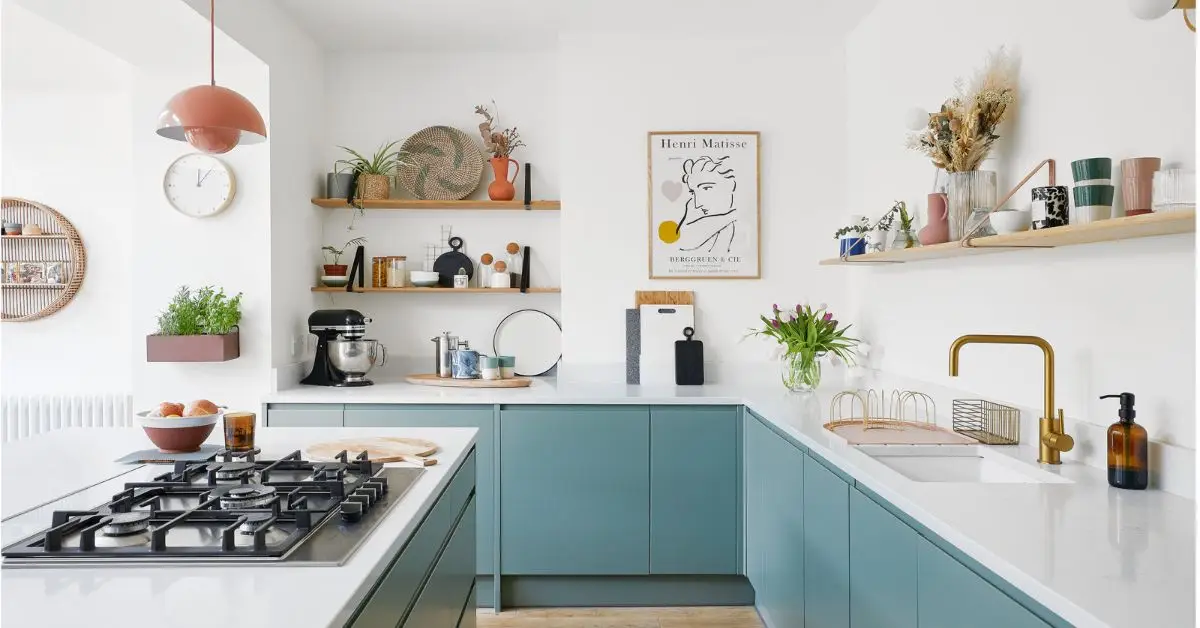
When everything ends up on the shelf by default
I want you to look at your shelves honestly for a second.
If I walk into most homes, the problem isn’t bad decor. It’s that shelves slowly turn into the default drop zone. Books you haven’t read yet. Random frames. Candles you never light. Things that don’t fit anywhere else.
That’s the first mistake.
Shelves are visual space, not backup storage. The moment they start doing the job of cabinets or drawers, they lose clarity—and your room starts feeling messy, even if it’s technically organized. This same mindset shows up elsewhere in the home too—when functional items take over visible areas, like trying to solve practical problems without thinking about design, which I break down in this guide on smart ways to hide mouse traps without ruining your home’s look.
The difference between functional storage and visual styling
Here’s how I explain it to clients:
- Storage is about convenience
- Styling is about intention
When you style a shelf, every item earns its place because it adds something visually—shape, height, texture, or meaning.
When you store on a shelf, items are there simply because they can be there.
That difference matters more than people realize.
Items that instantly make shelves feel cluttered
If too many of these show up together, shelves start to look heavy:
- Loose paperwork or mail
- Stacks of unread books with no visual break
- Small, unrelated decor pieces grouped randomly
- Everyday-use items with no visual consistency
Mistake #2: Filling Every Inch and Ignoring Negative Space
The fear of leaving shelves partially empty
This one is almost emotional.
I see it all the time—people feel like an empty spot means the shelf is “unfinished” or “wasted.” So they keep adding one more item… and then one more.
That’s when the mess creeps in.
Empty space isn’t a mistake. It’s what allows your shelf to breathe.
How the brain reads visual clutter
Your brain scans shelves in seconds. When there’s no pause—no empty area to rest on—it reads the entire surface as noise. Even beautiful objects lose their impact when they’re packed too tightly.
That’s why shelves can feel stressful without you knowing why. I’ve noticed the same pattern with cleaning and upkeep too—doing more doesn’t always mean better results, which is why simple habits, like the ones I shared in these old-school home cleaning hacks you forgot you still needed, often make a space feel calmer overall.
Interior designers often talk about this balance, and Homes & Gardens explains how negative space helps the eye separate objects and makes shelves feel calm and intentional rather than chaotic.
Why designers intentionally leave breathing room
When I style shelves, I always leave space on purpose. Not because I ran out of decor—but because:
- Empty space highlights your best pieces
- It makes shelves feel lighter and more expensive
- It prevents visual fatigue over time
A simple rule I use:
- If everything is touching, the shelf looks crowded
- If a few areas are clear, the shelf looks styled
Before you add anything new, try this instead: Remove one item from each shelf and step back. You’ll be surprised how much cleaner the whole space feels.
Let me ask you something before we move on: If you removed just two items from your shelves today, would the space feel calmer—or would you feel uncomfortable leaving that space empty?
Mistake #3: Repeating the Same Size and Type of Decor
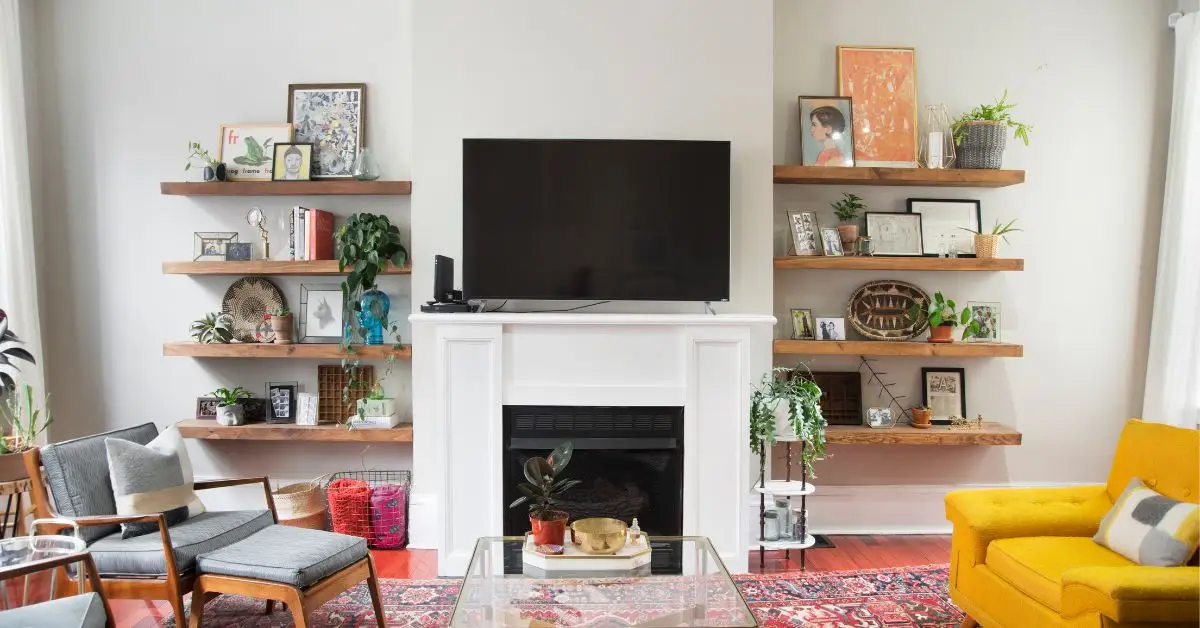
When everything blends into one flat line
This mistake usually comes from good intentions.
You buy decor that “goes together.” Same finish. Same height. Same type. It feels safe—and neat. But once everything lands on the shelf, it looks oddly busy and boring at the same time.
That’s because your eye can’t tell what’s important.
Why shelves need height, depth, and texture contrast
Your brain looks for contrast to create order. When it doesn’t find any, it keeps scanning.
Strong shelves almost always mix:
- Tall items with short ones
- Flat pieces (books, frames) with sculptural objects
- Smooth surfaces with rough or organic textures
If everything is the same height or visual weight, the shelf turns into one long, flat line. Nothing stands out, so everything competes.
How repetition makes shelves look busy, not cohesive
Here’s an easy way to spot this mistake on your own shelf:
- Do most items sit at the same height?
- Are there multiple small objects clustered together?
- Does everything feel like it’s asking for attention at once?
If yes, the shelf isn’t cohesive—it’s crowded visually, even if it’s tidy.
You don’t need to replace decor. You just need variation, so each piece plays a different role.
Mistake #4: Styling Without a Color Plan
When shelves feel visually scattered
This is where many people get stuck.
They declutter. They space things out. They even fix proportions. But the shelf still feels messy—and they can’t explain why.
Most of the time, the issue is color.
How accidental “rainbow shelves” happen
This isn’t something people plan. It happens slowly:
- A bold book spine you love
- A souvenir from a trip
- A gift in a color you wouldn’t normally choose
- A frame or vase that felt right in the store
Individually, these items are fine. Together, they pull the eye in too many directions.
When colors don’t relate to each other, your shelf loses calm. Your brain keeps jumping from one object to the next, trying to organize what it’s seeing—and that mental effort reads as mess.
According to The Spruce’s breakdown of common shelf styling mistakes, lack of color cohesion is one of the biggest reasons shelves feel chaotic, even when they aren’t overcrowded.
The 2–3 color anchor rule for clean-looking shelves
One simple fix I always recommend is limiting your shelf to 2–3 main colors.
That usually looks like:
- One neutral base (white, wood, black, beige)
- One main accent color
- One softer supporting tone (optional)
Once colors repeat intentionally, the shelf starts to feel like a whole—not a collection of random objects.
You don’t need everything to match. You just need everything to belong.
Before we move on, pause and ask yourself: If someone glanced at your shelves for three seconds, would they notice a clear color story—or just a mix of unrelated pieces?
Mistake #5: Copying Pinterest Looks Without Considering Your Space
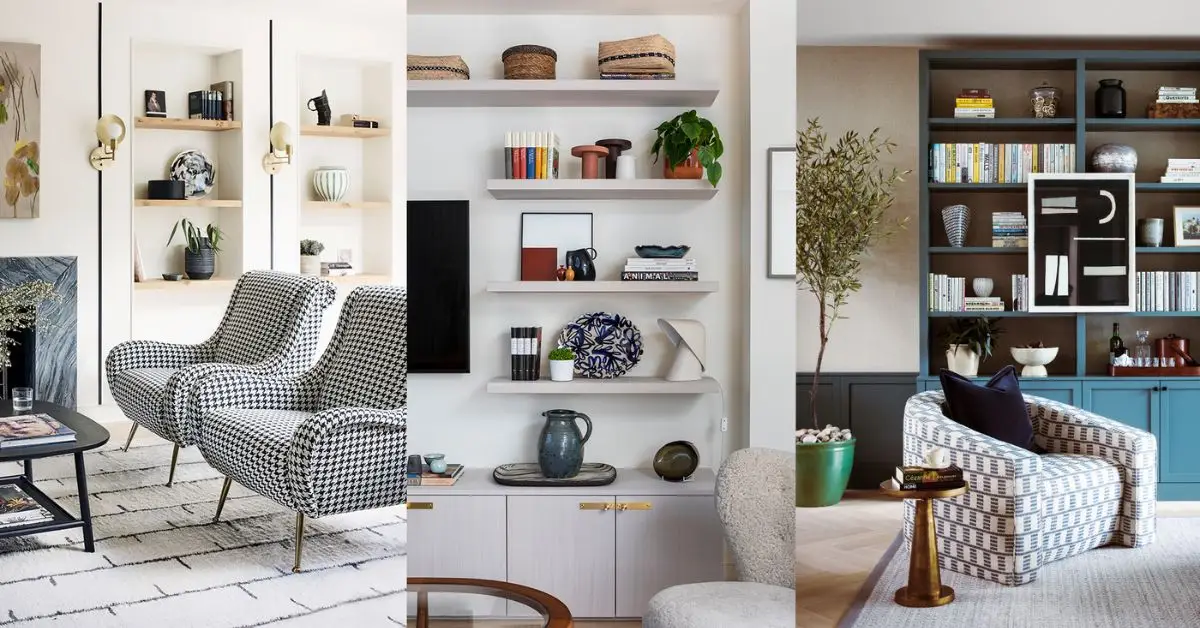
Why picture-perfect shelves fail in real homes
I want to say this clearly, because a lot of people need to hear it:
If your shelves don’t look like Pinterest, it’s not because you have bad taste.
It’s because Pinterest shelves aren’t real homes.
Most people blame themselves here. They think they picked the wrong decor or didn’t “style it right.” In reality, they’re comparing their everyday space to something that was never meant to be lived in.
Styled photos vs real-life homes (lighting, depth, usage)
Most Pinterest shelf photos are:
- Shot with professional lighting
- Styled once, never touched again
- Set on deeper, custom-built shelves
- Completely free of daily-life items
Your shelves, on the other hand:
- Get used every day
- Hold things you actually need
- Sit in rooms with normal lighting
- Change over time
When you copy a photo without adjusting for these differences, the shelf almost always feels cluttered or “off” in real life.
That doesn’t mean the idea was bad. It means the context was ignored.
Small apartments, rentals, and everyday reality
This gap shows up even more in real homes.
If you live in:
- A small apartment
- A rental with shallow shelves
- A shared space
- A home with kids or pets
Then Pinterest-style minimal shelves aren’t just unrealistic—they’re unsustainable.
You’re not failing at styling. You’re just trying to force a showroom look into a lived-in space.
You can see this frustration clearly in real user discussions, where people share how copying online shelf photos didn’t work once real-life constraints came into play.
That’s the key shift most articles miss.
Good shelf styling isn’t about copying an image. It’s about adapting ideas to your space, your storage needs, and your daily habits.
Before we wrap this up, ask yourself one honest question: Are you styling your shelves for a photo—or for the way you actually live?
A 10-Minute Shelf Reality Check
How to quickly identify which mistake you’re making
Before you buy anything new or start rearranging again, pause.
I want you to stand in front of your shelves and do one simple thing—stop styling and start observing. This isn’t about design rules or perfection. It’s about clarity.
Most people don’t need more decor. They need to see which mistake is actually causing the mess. I had the same realization when I started letting go of things that were quietly adding to the clutter, which I wrote about in these things I’m finally letting go of to make room at home—because clarity usually comes from removing, not adding.
Take ten quiet minutes and answer these questions honestly. A simple yes or no is enough.
Ask yourself these five questions:
- Is this shelf acting as storage? If you’re placing items here mainly because they don’t have another home, you’ve found the first problem.
- Is there visible empty space? If every inch is filled, the shelf has no breathing room—and your eye feels it.
- Are decor items repeating in size or shape? If everything sits at the same height or feels visually similar, the shelf will look flat and busy.
- Do the colors feel intentional? If you can’t describe the shelf’s color palette in one sentence, it’s probably scattered.
- Does this shelf fit my real life, not an online photo? If the setup only works when untouched, it’s not designed for how you actually live.
You don’t need to “fix” everything at once. Even spotting one yes is progress. That’s the mistake to work on first.
If this checklist helped you see your shelves differently, I’d love to hear from you. Which question hit the hardest? Drop your answer in the comments.
And if you want more practical, no-nonsense home guidance that works in real spaces—not just picture-perfect ones—you’ll find it on Build Like New. That’s where I share ideas built for everyday homes, not showrooms.
Disclaimer: Every home is different. Shelf styling looks different in small spaces, rentals, or homes with kids and pets. Use these tips as guidance, not rules, and adapt them to what works for your lifestyle.