5 Conflict-Free Ways to Address Difficult Neighbors and Stay in Control
I’ve lived through neighbor headaches—late-night parties, cars parked where they shouldn’t be, lawn disputes that spiral into weeks of passive-aggressive notes—and I know how small, daily annoyances can eat at your calm. In this piece I’ll give you five practical, no-nonsense ways to handle difficult neighbors so your home actually feels like a refuge again, not a stress zone. No fluff—just things you can try today, and what to do next if they don’t work.
I dug into what works (and what blows up) — real legal options, simple communication scripts, low-effort tech and documentation tricks, and mental tactics that stop you from getting drained. Throughout I’ll point out the common traps people fall into, the real risks of escalation, and the exact phrasing that tends to get a better response.
Before we dive in: what’s the single neighbor behavior that’s driving you up a wall right now—noise, parking, property lines, or something else? Tell me that and I’ll make sure the steps match the problem you’re actually facing.
Way 1 — Start with Calm, Empathetic Communication
Use “I” Statements & Respectful Tone
When I’ve had to bring up an issue with a neighbor, the thing that consistently works is framing the problem as my experience, not an accusation. If you start with “You’re always loud,” they shut down. But when you say “I’m having trouble sleeping because the noise carries through the wall,” the whole energy shifts.
De-escalation trainers emphasize the same thing:
- Start with how the situation affects you
- Keep your voice steady
- Stick to the issue and avoid emotional detours
It replaces tension with cooperation.
Listen Actively and Empathize
Once you’ve shared your side, give them space to share theirs. You don’t have to agree with everything — you just need to show you heard them.
You can do this by:
- Echoing one key point they made
- Acknowledging any real challenge they’re facing
- Staying open instead of planning a comeback
Feeling understood lowers defensiveness and builds goodwill for future conversations.
Pick the Right Medium — In Person, Note, or Email
Not every situation needs a doorstep talk. Sometimes an in-person conversation works; other times, a written message keeps things calm and documented.
Talk in person when:
- The issue is small or new
- Tone matters
- Miscommunication is likely
Write a note or email when:
- The problem keeps repeating
- You want a record of what you said
- You need time to phrase things clearly
This practical approach lines up with the communication tips shared by Reolink.
Way 2 — Set Clear Boundaries and Expectations
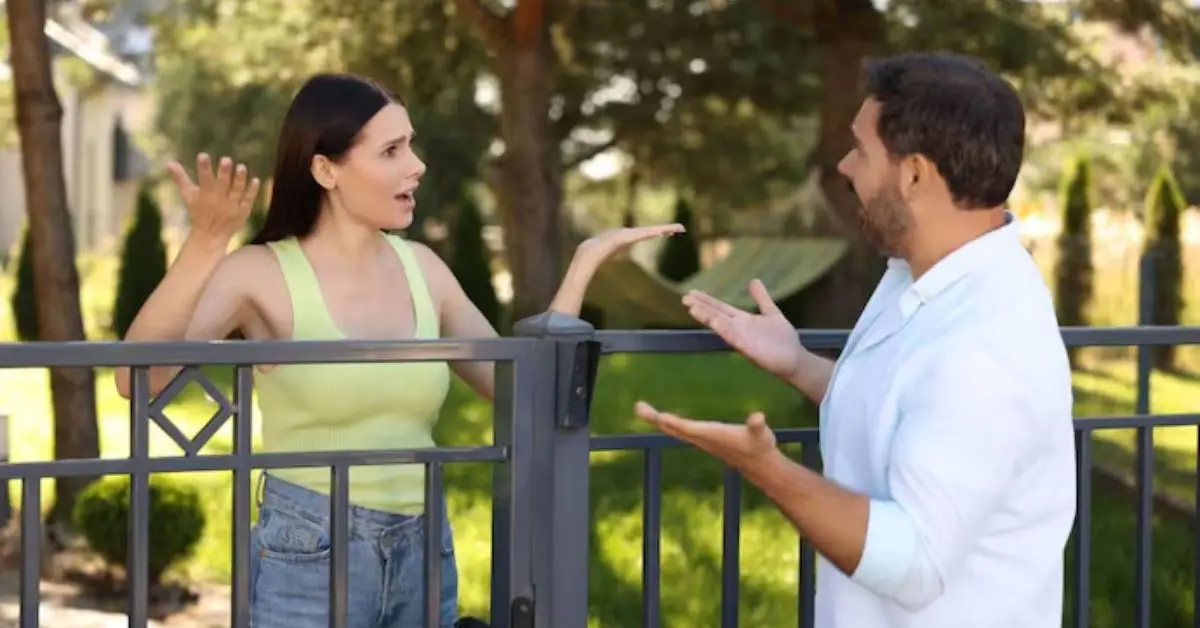
Define & Communicate Your Boundaries
If something is bothering you — the noise, the shared driveway, the fence line — spell it out clearly. People don’t automatically know what feels intrusive to you.
What works for me is breaking it down to:
- The exact behavior
- The limit you need
- A neutral tone
You’re not accusing them; you’re giving them clarity.
Understand the Local Rules (HOA, Ordinances, Covenants)
Before bringing anything up, check what your city, county, or HOA already allows or restricts. For more guidance on handling boundary questions the right way, this resource on avoiding fence disputes with neighbors over property lines offers practical steps you can apply early. Noise limits, parking rules, and fence requirements often give you a factual base instead of relying on assumptions.
Knowing the rules helps you approach the conversation calmly instead of making it personal.
Use Physical or Structural Boundaries
Sometimes the best way to keep the peace is to create a little space — a hedge, a privacy screen, or a properly placed fence.
Before adding anything permanent:
- Confirm your property line
- Check easements
- Follow local fence rules
A quick survey or property check helps you avoid long-term conflicts. If your situation involves repainting or maintaining a shared fence, this breakdown of what to know before painting a shared fence with a neighbor can help you avoid misunderstandings.
Physical boundaries aren’t walls — they’re tools to make everyday living smoother for both sides.
Way 3 — Document Everything Strategically
Maintain an Incident Log
Whenever a situation repeats, I keep a simple log. It doesn’t have to be complicated — just consistent.
Here’s what I usually record:
- Date and time
- What happened and how it affected me
- Any witnesses
- Photos or videos if they’re legally allowed in my state
- Description of the neighbor’s response, if any
This approach lines up well with general expert advice: written notes combined with lawful audio or video provide a strong foundation if you ever need to present a pattern of behavior.
Legal vs Mediation Evidence
The type of documentation you need depends on how far things go.
For mediation, you mainly need:
- A clear timeline
- Specific examples
- Notes showing attempts to talk respectfully
For legal action, you may need:
- Photos or video showing the recurring issue
- Property surveys
- Saved messages, emails, or HOA notices
- A documented pattern of violations
Professionals often emphasize showing a consistent pattern rather than a single heated moment — it demonstrates that the problem is real and ongoing.
Use Technology to Help
I use everyday tools instead of anything complicated.
Some useful options include:
- Notes apps
- Voice memos
- Timestamped photos
- Cloud folders where everything stays organized
If you’re considering security cameras, they can help — as long as they’re used legally. Cameras should face your own property, avoid filming inside someone’s home, and follow local privacy rules. For a deeper look at whether home-security devices are actually worth adding to your setup, you can read this guide on doorbell cameras and how effective they are for home security. Arlo’s general guidance on responsible home-security camera placement is a good reference.
Way 4 — Use Third-Party Help When Necessary

Mediation — How to Approach It
Mediation isn’t about proving who’s right. It’s about finding a workable solution with someone trained to keep things balanced.
How I usually approach it:
- Contact a local community mediation center or city service
- Bring my incident log so everything stays factual
- Stay open to compromise
- Expect a structured session: introductions, statements, discussion, and possible agreements
Mediation gives both sides a voice, and most people feel less defensive when a neutral person is guiding the conversation.
Involve HOA or Community Boards
If you live in an HOA, it often has a formal process for complaints.
This can include:
- Writing a report
- Sharing your documentation
- Asking the board to issue warnings or request compliance
If you don’t have an HOA, many US cities have community associations or neighborhood dispute-resolution programs. These groups have authority or influence that can make a difference, especially when rules or property guidelines are involved.
Legal Escalation — When and How
Legal action should be a last step, but sometimes it becomes necessary.
You may need to consult an attorney if you’re dealing with:
- Repeated violations despite multiple warnings
- Property encroachment or fence disputes
- Harassment or threats
- Damage to your property
Your options can include noise complaints, small-claims court, restraining orders, or asking an attorney to send a formal notice. But attorneys and mediators often warn that legal escalation can raise hostility, take time, and increase costs — so it’s worth attempting lower-intensity solutions first.
Way 5 — Protect Your Peace (Mental & Physical)
Emotional Self-Care & Resilience
When things get tense, I remind myself that my reactions are the only part I can fully control. Simple habits like deep breathing, a ten-minute walk, or writing down what happened help take the edge off.
Another tool that works well is the “gray rock” method — staying calm, neutral, and hard to provoke when someone tries to pull you into conflict. It saves energy and keeps you from feeding the drama.
These aren’t escape strategies; they’re what keep you steady so the situation doesn’t take over your day.
Create a Safe, Private Space at Home
Your home should feel like the place where you can exhale. A few practical changes can make it easier to tune out whatever is happening around you.
Some things that work well:
- Thick curtains or blackout blinds
- Indoor plants placed to create soft privacy barriers
- Simple privacy screens for balconies or patios
- Rugs, bookshelves, or panels that help absorb noise
For more structured ideas, the home-living guidance shared by Julie Cobalt offers practical ways to improve comfort and privacy at home. Whether it’s soundproofing a wall or creating a quiet corner with plants and soft lighting, the goal is the same: protect your mental space.
Know When to Walk Away
There’s a point where trying “one more conversation” or “one more complaint record” stops being productive. If you’ve tried communication, boundaries, documentation, and mediation, and you still feel drained every day, it may be time to consider a bigger change.
For some people, relocating — even to a similar place in the same area — ended up being the biggest relief. Others moved after a long legal dispute left them emotionally exhausted. It’s not about giving up; it’s about choosing peace over ongoing tension when nothing else works.
Prevent Problems Before They Start

Introduce Yourself Early & Build Rapport
I’ve learned that a simple introduction on day one sets the tone. A quick hello, a smile, and exchanging contact details helps you start off on a positive note. People tend to be more considerate when they’ve met you face-to-face.
Set Expectations from Day One
You don’t need a long conversation — just a friendly chat about the basics: parking routines, noise expectations, or shared driveways. When people know what you prefer, misunderstandings become less likely.
If something matters a lot, you can follow up with a short, warm note. It keeps things clear without feeling overbearing.
Use Tech & Agreements
Sharing your number or WhatsApp makes communication smoother than knocking on doors. For shared spaces, you can even suggest a simple neighbor agreement:
- quiet hours
- guest parking
- trash or garden rules
- pet boundaries
Clear expectations early on usually prevent the bigger problems that show up months later.
Wrap-Up: Your 3-Point Action Plan
Here’s the action plan I’ve seen work the most consistently:
1. Speak Early, Calmly, and Clearly
Give yourself a set time — maybe the next two or three days — to talk to your neighbor using the calm, respectful approach we covered. Keep it short, focus on how the issue affects you, and leave space for them to respond.
If you avoid this step, the resentment builds. If you handle it early, you usually prevent the problem from growing.
2. Document What Happens Next
After that first conversation, track what changes. Keep a simple log for two weeks: dates, times, and what happened.
If things improve, great — you’re done.
If not, your notes help you figure out whether you need mediation, HOA support, or legal steps. Documentation isn’t about “catching” someone; it’s about having clarity so you don’t act out of emotion.
3. Protect Your Peace No Matter What
Set a deadline for yourself — maybe 30 days — to reassess your calm. Are you sleeping better? Feeling lighter? Or still tense every day?
If the stress remains, shift focus to what you can control: privacy fixes, noise solutions, or stepping back emotionally. And if the situation still impacts your daily life, that’s when you decide whether to escalate or explore other living options. Your well-being always comes before the conflict.
If you learned something useful here or have your own story about a difficult neighbor, share it in the comments — your experience might help someone dealing with the same thing. And if you want more practical guides like this, visit Build Like New for deeper tips on home, stress-free living, and smart problem-solving.
Disclaimer: This guide is for general information only and isn’t a substitute for legal or professional advice. Neighbor laws and regulations vary by location, so always check your local rules or speak with a qualified professional before taking action.