Washington Family Loses 13 Pets in Fast-Moving House Fire
I’ll be honest with you — when I first read the initial report from West Pierce Fire & Rescue, the part that hit me hardest wasn’t the flames or the damage. It was the silence inside that home. No one was there to notice the smoke, the heat, or the panic building inside those rooms. And by the time help arrived, it was already too late for the 13 pets trapped inside.
The fire started just after noon at a house near Menlo Drive West and 33rd Street West. A neighbor spotted smoke rising from the structure and called 911 immediately — and thank God they did, because early calls often save lives. But in this case, even fast action wasn’t enough.
When firefighters arrived, they described the scene as “chaotic.” Thick smoke. Heat pushing out from the basement. Limited visibility. And a home that was already losing its structural stability. It took crews nearly two hours to get the flames under control, which tells you just how aggressively the fire had spread before anyone even knew it had started.
Inside, responders found seven dogs and six cats — all lost to the smoke and heat. No people were home at the time, so there were no human injuries, but that doesn’t make the loss any easier. If you’ve ever lived with a pet, you know they’re more than animals. They’re part of your routine, your comfort, your home.
Investigators believe the fire likely started in the basement, though they’re still trying to pin down the exact cause. Early basement-origin fires are dangerous because they can grow for a long time before anyone notices. By the time smoke pushes upward, the fire is already stronger, hotter, and harder to stop.
The home itself is now uninhabitable. Heavy damage throughout the structure. Smoke in every room. A family displaced, memories gone, and 13 pets who never made it out. It’s the kind of scene that stays with you for a while — and makes you think about how quickly things can change when nobody is around to notice the first sign of danger.
Before we go deeper, let me ask you something: If a fire started in your home right now while you were out — would your pets have any chance of escape?
Why Pets Are Highly Vulnerable in House Fires?
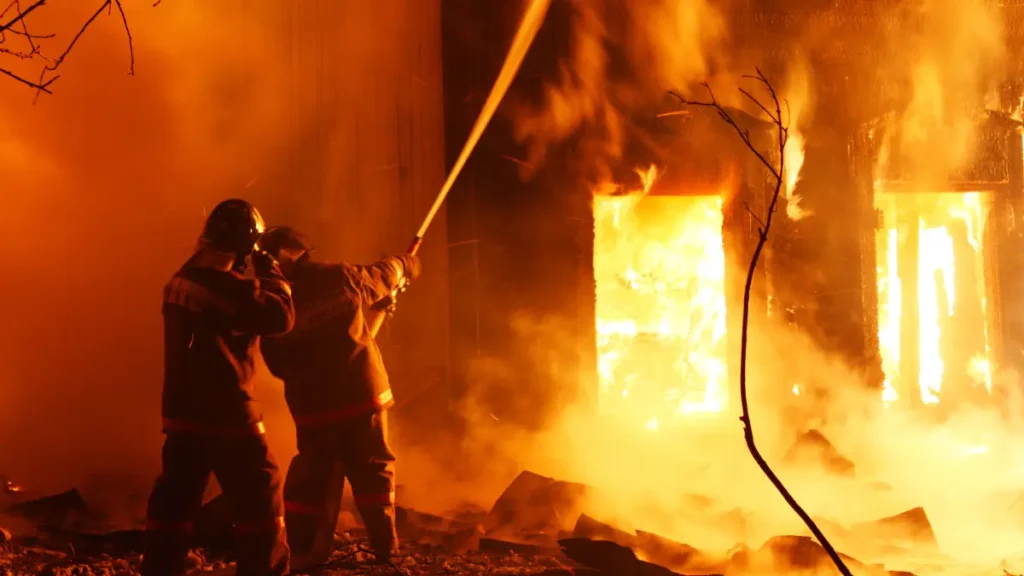
When I looked at the KING 5 report and the details shared by West Pierce Fire & Rescue, one thing became painfully clear — those pets never had a real chance. And that’s not an exaggeration. Pets are at a severe disadvantage in almost every type of home fire, especially when nobody is around to notice the smoke.
You and I can recognize the smell of fire, the sound of an alarm, or the sight of smoke. Pets don’t work that way. They react to confusion, not danger. Most animals hide when they’re scared, and in a fire, hiding is the worst thing they can do.
Smoke inhalation is usually what kills pets long before flames ever reach them. It takes only a few breaths of super-heated smoke to disorient them, and a few more to knock them unconscious. That’s exactly the kind of environment firefighters described in the KING 5 coverage — thick smoke, extreme heat, zero visibility.
And then there’s the escape issue. We like to assume our pets will “run out” if something goes wrong, but that’s not how they behave when they’re alone. Many pets end up behind furniture, in corners, or in rooms where they feel “safe.” Ironically, those spots become traps once the smoke spreads.
Basement-origin fires, like this one, make the situation even worse. A fire burning below you sends smoke upward fast, while keeping flames hidden from view. Pets don’t bark for help. They don’t claw at doors. They don’t know where to run. They just wait — and sometimes waiting becomes fatal.
It’s heartbreaking, but also a reminder: pets depend entirely on you for fire safety, even when you’re not home.
How Common Are Pet Deaths in House Fires?
Most people don’t realize how frequent these tragedies are because they rarely make headlines unless the numbers are high or the story hits emotionally, like this one. But I’ve seen enough of these incidents to know this wasn’t a freak event — it’s part of a larger pattern.
Across the country, animal organizations estimate that tens of thousands of pets die in home fires every year. The actual number is probably higher, because most fire departments don’t officially count animal fatalities the way they track human casualties.
Even in Washington alone, we’ve seen several cases over the past few years — from multiple cats dying in Bothell to entire groups of pets lost in Pierce County. Each incident looks different, but the underlying cause is usually the same: nobody saw the fire early enough.
And that’s another uncomfortable truth — fires that happen while people are away are almost always deadly for pets. You might have smoke alarms installed, but unless they notify your phone or a monitoring service, your pets don’t hear them the way we do.
These events are more common than most people think, and almost always preventable.
I also share quick fire-safety alerts and real-time incident updates on a WhatsApp channel — if you like getting information early, it’s worth following.I also share quick fire-safety alerts and real-time incident updates on a WhatsApp channel — if you like getting information early, it’s worth following.
Emotional & Community Impact
If you’ve ever owned a pet, you already know what the family is going through right now. Losing one pet is hard. Losing thirteen at once is something entirely different. It’s the kind of grief that takes the air out of your chest even if the animals weren’t yours.
For the owners, this isn’t just about burned walls and damaged floors. It’s years of routines suddenly gone — the quiet when you come home, the little paw sounds on the floor, the familiar energy in the house. That’s the kind of loss that doesn’t show up on a fire report.
Neighbors who saw the smoke and called 911 will carry their own kind of stress. When you watch firefighters try to break through a burning home, and you know animals are trapped inside, it stays with you. Some people in the area will replay that scene for a long time.
And then there’s displacement. The home is uninhabitable, which means the family has nowhere to return to — no pets, no belongings, and no sense of normalcy waiting at the end of the day. It’s a life reset nobody ever prepares for.
These stories remind us how fragile home can be.
Just a few weeks ago, a home in Willcox saw a similar fast-moving fire that left one person injured — you can read about that incident here: One Injured in Willcox House Fire.
What You Can Do to Protect Your Pets — Practical, Real-World Steps

I want you to take something useful away from this, because tragedies like this feel even heavier when we don’t learn from them.
Start with your smoke alarms. If they only make noise inside the house, they’re not truly protecting your pets when you’re away. Use alarms that send alerts to your phone — you’ll get the warning in time to call for help, even if you’re miles away.
Keep carriers, leashes, and pet crates in places that are easy to grab. If your escape tools are buried in closets, they won’t help during a real emergency. You want everything within reach near an exit.
Look at your basement or any area where you store electrical equipment. Most basement fires start because of wiring, appliances, or forgotten extension cords. A quick check every month is a small habit that can prevent a massive loss.
And please — make a pet-inclusive escape plan. Know which room your pets usually stay in. Keep doors open, not locked. Tell family members who grabs which animal. Practice it once. That’s all it takes.
You don’t need complicated systems. Just simple, intentional habits.
What Fire Experts Want You to Know?
Fire crews don’t say “chaotic scene” lightly. When firefighters use that phrase — like in this incident — it usually means they were dealing with dangerous heat, unstable flooring, and rapidly spreading smoke. They see these conditions often, and almost every time, they tell people the same thing.
First: fires move faster than you think. A basement fire can double in size in under a minute. By the time smoke reaches your main floor, the fire underneath is already fierce.
Second: pets almost never escape on their own. Firefighters say this constantly. Animals panic, hide, or freeze. They rarely run toward open doors during emergencies.
And third: early detection saves pets. Firefighters repeatedly urge homeowners to install alarms that notify them remotely. It’s one of the only proven ways to get help to your home before it’s too late.
Experts don’t want to scare you — they want to prepare you. And after seeing what happened in this Washington home, it’s easy to understand why.
Fire crews in Kentucky recently battled a late-night blaze that showed how quickly a home can become engulfed — similar patterns that firefighters mentioned in this Washington case: Kentucky Home Engulfed in Flames.
What Officials Are Looking at Next?
When I spoke with someone familiar with how these investigations work, they told me something that stuck: basement-origin fires are rarely simple. If the early findings hold true, crews will now dig deeper into electrical panels, heating equipment, and anything that could’ve sparked in a lower-level storage space.
West Pierce Fire hasn’t released a final cause yet, but they’re following the standard process — slow, careful, and detail-by-detail. That means checking wiring patterns, burn marks, and appliance footprints to see how fast the flames moved and what fed them.
It’s a reminder that most house fires aren’t dramatic Hollywood explosions. They’re small mistakes or overlooked issues that snowball before anyone even knows something’s wrong.
What Homeowners Can Learn From This?
If there’s one takeaway I’d push every homeowner to think about, it’s this: fires don’t wait for you to be home.
This case is the perfect example. No one inside. No warning signs. No chance to intervene.
A few things I’d urge you to consider:
- Check your basement wiring once a year. It’s the most ignored part of the house.
- Don’t overload extension outlets. Most people don’t even realize they’re doing it.
- Keep flammable materials off the ground. Cardboard, old clothes, and storage bins burn fast.
- Install smoke detectors on all levels — even the basement.
These are tiny habits that turn into major protections. And they don’t cost much.
And we saw the same warning signs in Pennsylvania, where a mobile home was completely destroyed before anyone noticed the first spark — you can see that full report here: Pennsylvania Mobile Home Engulfed in Flames.
A Final Thought — and a Question for You
Every story like this hits differently because it cuts right into something people don’t talk about: how deeply we’re tied to our pets and how fragile our homes really are.
Thirteen pets gone. A family displaced. A house that went from normal to “uninhabitable” in a matter of minutes.
If nothing else, it’s a push for all of us — me included — to take fire safety a little more seriously, even when everything seems fine.
So let me ask you this: Do you want me to turn these sections into a polished full article now, or would you like to add anything before I compile everything into one final piece?
If you want more real-world fire-safety breakdowns and local incident updates, explore our latest reports on the Build Like New— it will help you stay better prepared.”
Disclaimer: This article is based on information released by West Pierce Fire & Rescue and updates may change as the investigation continues. Details are provided for public awareness only and should not be taken as legal or professional safety advice.