Leaving Chargers Plugged In? Here’s How It Can Impact Your Energy Bill and Home Safety
I’m guessing you’ve left a phone charger plugged in more than once and thought, “It’s fine — it uses almost no power.” I used to think the same. Then I started looking at bills, safety reports, and easy fixes, and the small stuff stopped feeling so small.
In this piece I’ll show you, plainly: how much money those idle chargers can quietly steal, when they’re actually a fire risk, and the simple habits and tools that save both cash and worry. No scare tactics — just the facts, a quick worked example, and what to do tonight.
If you want practical steps you can start now (and a few sources you can trust), keep reading — I’ll walk you through the numbers and the best fixes so you don’t have to guess.
What Happens When a Charger Remains Plugged In (Even Without a Device)
“Vampire Power” / Standby Energy Drain
When I say a plugged-in charger still uses power, I’m not guessing. Energy experts call it standby power (also known as phantom load). Even when nothing is charging, the adapter stays “awake,” ready to respond the moment you connect a device. That readiness costs electricity.
Here’s what that looks like in real life:
- A typical idle phone charger can draw around 0.1 to 0.5 watts continuously
- One charger alone feels harmless
- Multiple chargers, plugged in 24/7, start to add up quietly
Let’s make it tangible. If you have:
- 5 idle chargers
- plugged in all year
- averaging ~0.3 watts each
That’s power being used every hour of every day for nothing you’re actually doing. Over a year, it shows up as wasted energy on your bill — small line items that never announce themselves, but never stop either.
Wear & Tear – Charger Lifespan and Device Risk
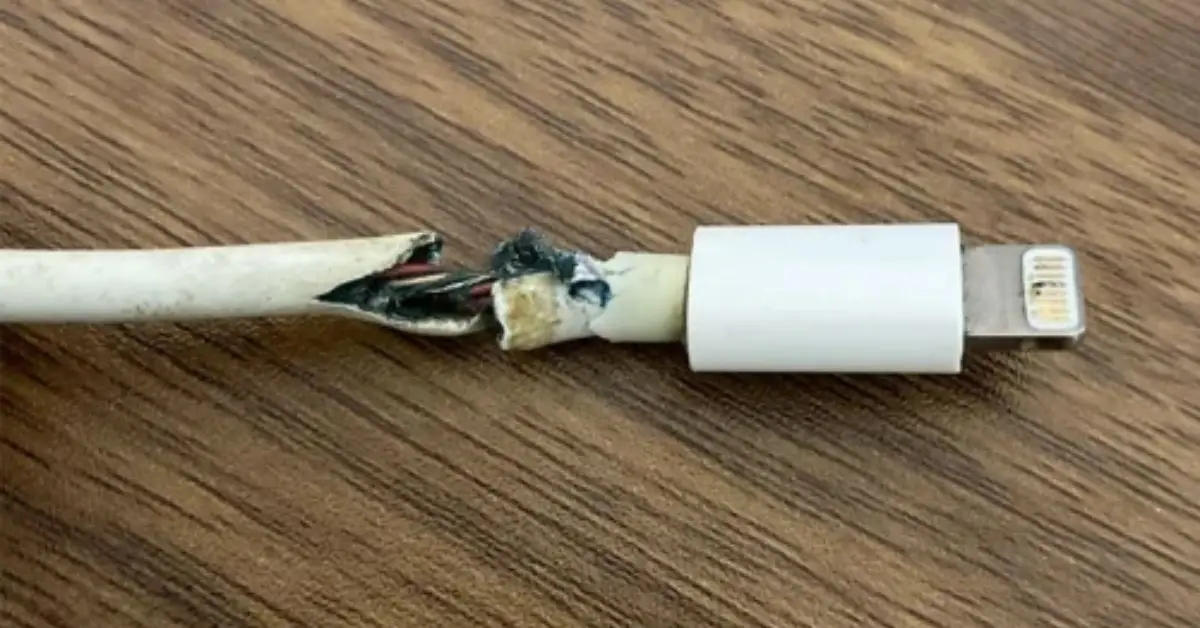
Here’s the part almost no one talks about. When a charger stays plugged in, its internal components are still energized. Heat, tiny voltage shifts, and constant current stress the circuitry over time — even if no phone is attached.
You don’t notice it day to day. But you do notice it later when:
- The charger runs warmer than it used to
- It charges slower
- The cable starts failing sooner than expected
- You end up replacing chargers more often than you think you should
This wear happens faster:
- with cheaper or third-party chargers
- in homes with voltage fluctuations or inconsistent power
- when chargers stay plugged in for months without breaks
The real cost isn’t just a few cents of power. It’s the replacement cycle you didn’t plan for — buying new chargers sooner because the old ones quietly aged while doing “nothing.”
Potential Safety Risks of Leaving Chargers Plugged In
Fire Hazard & Short Circuit Risk
Most chargers are safe when they’re in good condition. The problem is that many aren’t — and leaving them plugged in increases exposure time.
Electricians consistently warn that:
- Damaged cables
- Loose wall outlets
- Cheap or counterfeit chargers
can overheat or short-circuit when energized nonstop. Even without a device attached, current is still flowing through components that can fail without warning.
Unplugging reduces:
- outlet overheating
- spark risk
- electrical fire chances
- damage during sudden power changes
Leaving chargers plugged in is only one part of the picture — following broader electrical fire prevention practices helps reduce risks from overloaded outlets, worn wiring, and hidden electrical faults across the home.
You might ignore a few cents of power waste. You won’t ignore a burned outlet or a near-miss fire. Safety changes behavior faster than savings.
Risk Amplified in Unstable Electrical Environments
Not all homes get clean, stable power. Voltage spikes, sudden cutoffs, and surges stress electronics — especially devices that stay connected 24/7.
Chargers are more vulnerable when:
- the power grid isn’t stable
- storms or outages are common
- surge protection isn’t used
Power problems don’t stop at chargers — electricians warn that many everyday habits during outages can silently increase fire and damage risks, which is why understanding these power outage mistakes that can put your home at risk matters more than most people think.
And the risk is higher if the charger is:
- old
- off-brand
- visibly warm or damaged
Leaving a charger plugged in increases the time window for something to go wrong. Unplugging simply removes the risk when you’re not actually using it.
Hidden Costs People Often Miss — Why Wallets & Safety Take a Hit Over Time
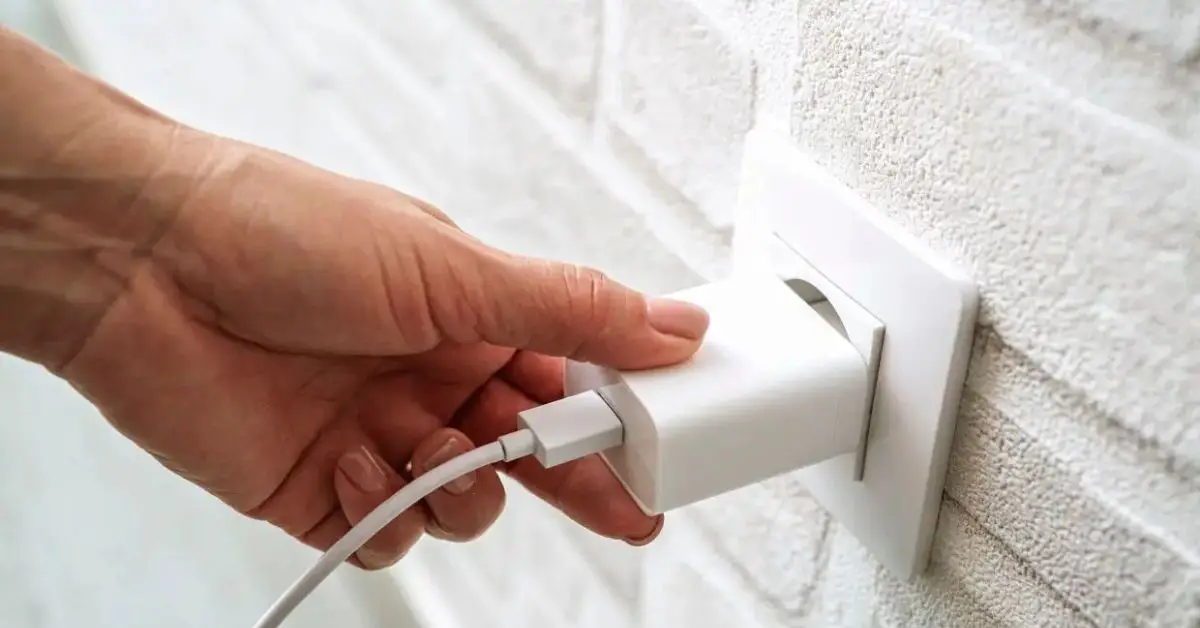
Accumulated Energy Costs — When “Small Wattage” Adds Up
I used to assume a plugged-in charger without a phone attached was basically inactive. But energy experts don’t see it that way. As Better Homes & Gardens explains in its breakdown of idle chargers and standby power, many chargers continue drawing electricity even when nothing is charging.
Now let’s ground this in reality.
Say a typical household has:
- 5 chargers left plugged in
- Each drawing about 0.3 watts
- Running 24 hours a day, all year
That turns into:
- ~36 watt-hours per day
- ~1 kilowatt-hour per month
- ~12–13 kWh per year
On its own, that number feels small. But homes don’t stop at five chargers anymore. Phones, tablets, laptops, earbuds, smart accessories — they all add up. And once this pattern runs for years, you’re paying for power you never consciously chose to use.
Seeing the math removes the guesswork. “Almost nothing” becomes a slow, steady drain — not dramatic, but real.
Environmental & Sustainability Angle — Lesser-Known but Important
There’s also a bigger picture most people miss. Electricity wasted at home still has to be generated somewhere. In many regions, that means burning fuel to cover demand that didn’t need to exist in the first place.
Idle chargers contribute to:
- higher baseline electricity demand
- more strain on power infrastructure
- unnecessary energy generation
When millions of homes leave multiple chargers plugged in around the clock, the impact scales fast — even if each device seems insignificant.
Common Myths & Counterarguments — And Why They’re Not Enough
“Modern chargers draw negligible power, so it doesn’t matter.”
Modern chargers are more efficient — that’s true. But efficient doesn’t mean zero. A tiny draw, repeated constantly, still becomes usage. Efficiency reduces waste; it doesn’t erase it.
“One plugged-in charger won’t raise my bill much.”
Neither will one light left on. The issue isn’t one device — it’s patterns.
Most homes now have:
- multiple phones
- secondary and backup chargers
- work and personal devices
The accumulation is where the cost lives.
“Unplugging is inconvenient; the benefit feels minimal.”
I get that nobody wants more friction. That’s why the solution isn’t effort — it’s setup.
- power strips with switches
- smart plugs
- unplugging once before bed or leaving the house
A one-second habit beats paying for something you didn’t use.
Practical Steps — How to Reduce the Risk & Save Money Without Hassle
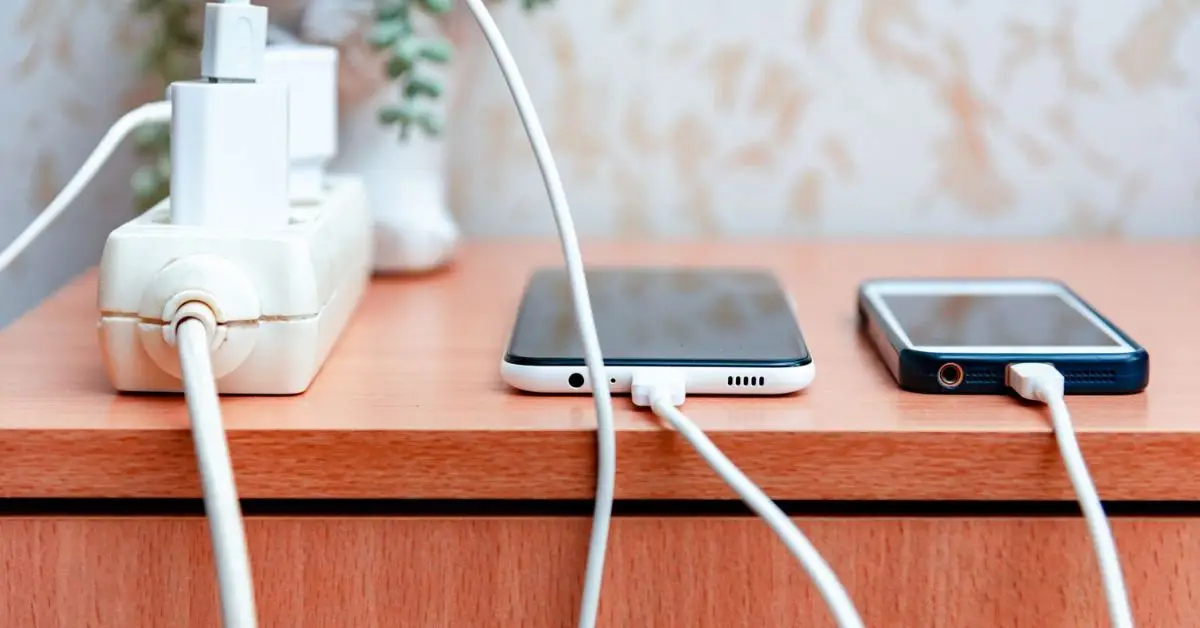
Simple Habit Change — Unplug After Charging
I’m not going to tell you to overhaul your life. This starts with one small habit: unplug after charging.
Think of it the same way you think about turning off lights when you leave a room. You don’t do it because the bulb might explode — you do it because wasting power doesn’t make sense. Chargers work the same way.
As explained in this report on what actually happens when chargers stay plugged in, even idle chargers stay energized and exposed to electrical stress the longer they remain connected.
What helps in real life:
- Unplug once the battery hits 100%
- Do a quick sweep before bed or before leaving home
- Keep chargers visible, not buried behind furniture
This isn’t about perfection. Even unplugging most of the time adds up over months.
Tiny habits are the only ones that stick. This one costs almost no effort and quietly saves money and reduces risk.
Use of Power Strips, Smart Plugs, and Surge Protectors
If unplugging every charger feels annoying, don’t rely on willpower — rely on setup.
A few simple tools make this almost effortless:
- Switched power strips — one button cuts power to multiple chargers
- Smart plugs — schedule shutoff times or control power remotely
- Surge-protected strips — reduce damage from sudden voltage changes
According to this AOL breakdown of charger safety and risks, keeping chargers plugged in during power fluctuations increases stress on internal components — which is why cutting power entirely when not needed matters.
This setup is especially useful if:
- your area has frequent power cuts or surges
- several devices charge in one location
- you want safety without daily effort
Electrical safety isn’t only about what’s inside your home — exposed wiring outside can also trigger surges and instability, which is why covering outdoor electrical boxes before winter plays a bigger role in overall protection than most homeowners realize.
You remove multiple risks in a single move. One switch replaces five unplugging decisions.
Prioritize Quality — Original or Certified Chargers Over Cheap Third-Party Ones
Not all chargers are built the same, even if they look similar. Cheaper options often skip proper insulation, heat control, and internal safety features.
Safer choices usually mean:
- original chargers from device makers
- certified third-party chargers from trusted brands
- visible safety markings and solid build quality
If you already use third-party chargers, pay attention. If they:
- get unusually warm
- feel flimsy or extremely lightweight
- are several years old
they’re worth replacing.
A good charger lasts longer, runs cooler, and lowers the chance of failure — saving money and reducing safety risks at the same time.
When It Might Be Acceptable to Leave a Charger Plugged In — And When It’s Not
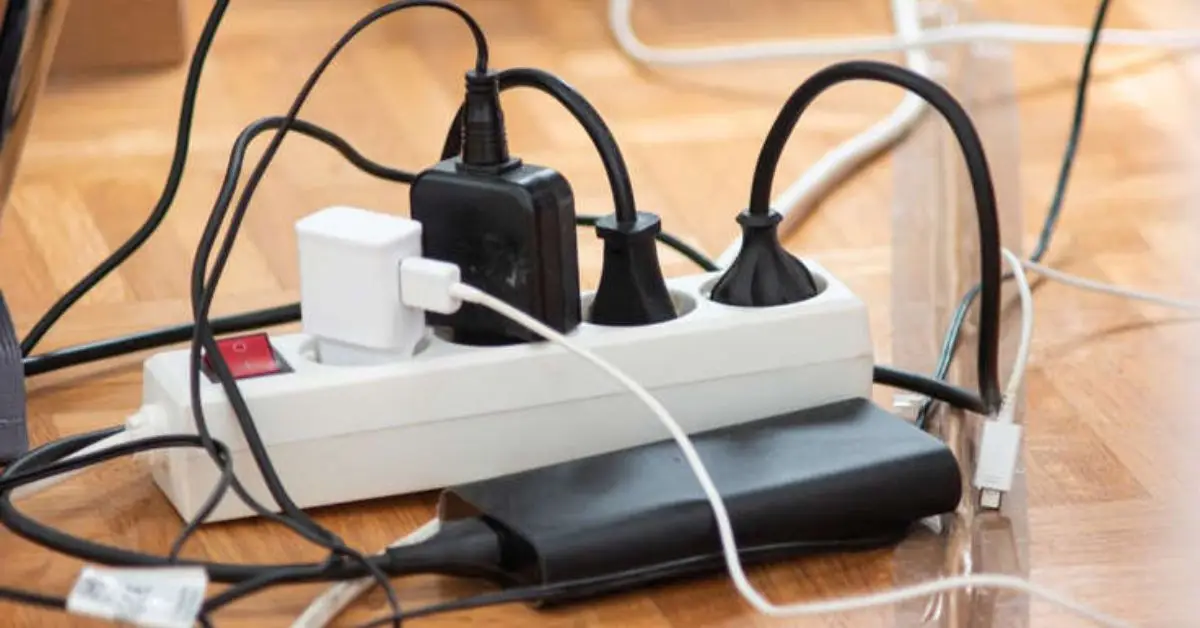
I’m not going to say “never.” Context matters.
Leaving a charger plugged in is generally low-risk when:
- it’s a modern, efficient charger
- the power supply is stable
- it’s placed in a cool, open area
- it’s plugged in only occasionally
But it’s best avoided when:
- the charger is old, cheap, or damaged
- the outlet runs hot
- voltage fluctuations or outages are common
- chargers stay plugged in during long trips
- devices charge overnight, unattended
This isn’t about fear. It’s about judgment. Knowing when something is fine — and when it’s not — lets you stay practical instead of careless.
Final Thoughts — Make a Small Change, Reap Big Benefits
After digging into the numbers, the risks, and the fixes, one thing becomes clear: this isn’t about fear or penny-pinching. It’s about awareness. Leaving chargers plugged in is one of those habits that feels harmless — until you see how quietly it adds up over time.
When you unplug after charging, use smarter setups, and choose better-quality chargers, you’re doing three things at once:
you’re cutting wasted electricity, lowering avoidable safety risks, and using energy more responsibly. No drama. No lifestyle overhaul. Just better defaults.
If this made you pause and look at the chargers around you, I’d love to hear your take.
How many did you just notice — and will you unplug any of them today? Share your thoughts in the comments.
And if you like practical, no-nonsense guides that help you build smarter habits at home, explore more insights on Build Like New — where small changes lead to lasting improvements.
Disclaimer: This article is for general information and awareness only. It does not replace professional electrical advice. Always follow manufacturer guidelines and consult a qualified electrician if you notice damaged chargers, faulty outlets, or ongoing electrical issues in your home.