Tried Everything for Water Rings on Furniture? Vaseline Is Worth a Look
I’ve seen this happen more times than I can count. You place a cold glass on a wooden table, get busy talking, and a few minutes later — there it is. A cloudy white ring staring back at you.
It doesn’t matter whether it’s a coffee cup, a flower vase, or a chilled water glass. The problem isn’t the object itself — it’s moisture.
When wood furniture is finished, it’s sealed with a protective layer. That layer looks solid, but it’s not airtight. Steam from hot mugs, condensation from cold drinks, or even a small spill can slip through and get trapped under the finish.
That trapped moisture scatters light, which is why most water rings look white or hazy instead of dark. The wood underneath usually isn’t damaged yet — it’s just reacting to the moisture sitting where it shouldn’t be.
This is also why timing matters so much. If the moisture stays there too long, it can move deeper into the wood fibers. That’s when a harmless white ring slowly turns into a darker stain — and fixing it becomes a lot harder.
The good news? If you’re seeing a white ring, you’re still in the safe zone. And that’s exactly where simple fixes like Vaseline can actually work.
Have you noticed when your water ring first showed up — right after a drink, or days later?
Why Treating Water Rings Early Makes a Big Difference?
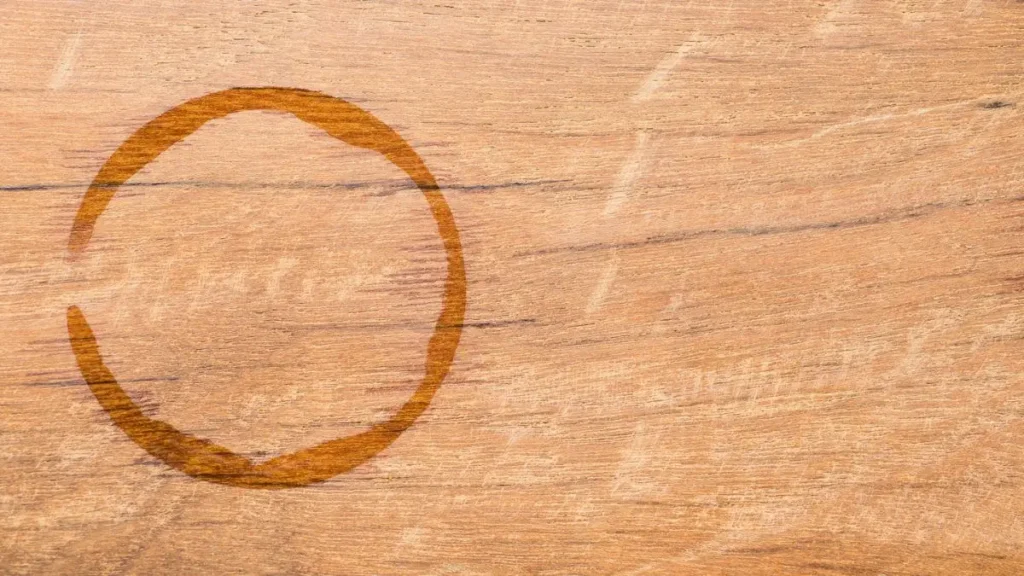
One thing I always tell people — don’t ignore a water ring and hope it disappears on its own. That’s the fastest way to make a small problem permanent.
According to The Spruce, most white water rings form because moisture is trapped in the wood’s finish, not deep inside the wood itself. At this stage, the damage is mostly cosmetic and reversible.
But here’s the catch.
If that moisture sits there for too long, it slowly seeps deeper. The white haze can turn into a darker stain, which means the wood fibers themselves are affected. Once that happens, simple home remedies usually won’t cut it. You’re looking at sanding, refinishing, or professional repair.
So if you’re seeing a white ring right now, you’re actually lucky. You still have time to fix it the easy way — before it turns into something much more expensive.
How Vaseline Removes White Water Rings?
This is where many articles stop at “just try Vaseline” without explaining why it works. Let me break it down simply.
White water rings exist because water is trapped under the finish. Vaseline is petroleum-based, which means it’s oily and water-repelling by nature.
When you apply Vaseline to the ring, the oils slowly penetrate the finish and push the trapped moisture out. Think of it as replacing water with oil. At the same time, those oils help condition dry or stressed wood finishes.
That’s why Vaseline works best on white rings, not dark ones. It doesn’t bleach stains or repair damaged wood — it simply removes moisture where it doesn’t belong.
Once you understand this, the method makes a lot more sense — and you’ll use it more carefully.
How to Use Vaseline to Remove Water Rings?
This is the part you want to get right. Rushing or overdoing it can cause more harm than good.
First, wipe the area with a soft cloth. You just want to remove dust or grit that could scratch the surface.
Next, apply a thin layer of Vaseline directly over the water ring. You can use your finger or a soft cloth — both work fine. Don’t pile it on. More isn’t better here.
Now comes the most important step: wait.
Leave the Vaseline on for at least four hours. If the ring has been there for a while, overnight is even better. This gives the oils time to penetrate and do their job.
After that, gently wipe off the excess Vaseline and buff the surface with a clean cloth. In many cases, the ring will already look lighter or completely gone.
If you still see a faint mark, repeat the process once more. Don’t keep going endlessly — two rounds is usually enough to know whether it’s working.
It’s surprising how many everyday kitchen items can solve household problems when used the right way — even things you’d never expect, like ketchup.
Test First — Why This Step Isn’t Optional
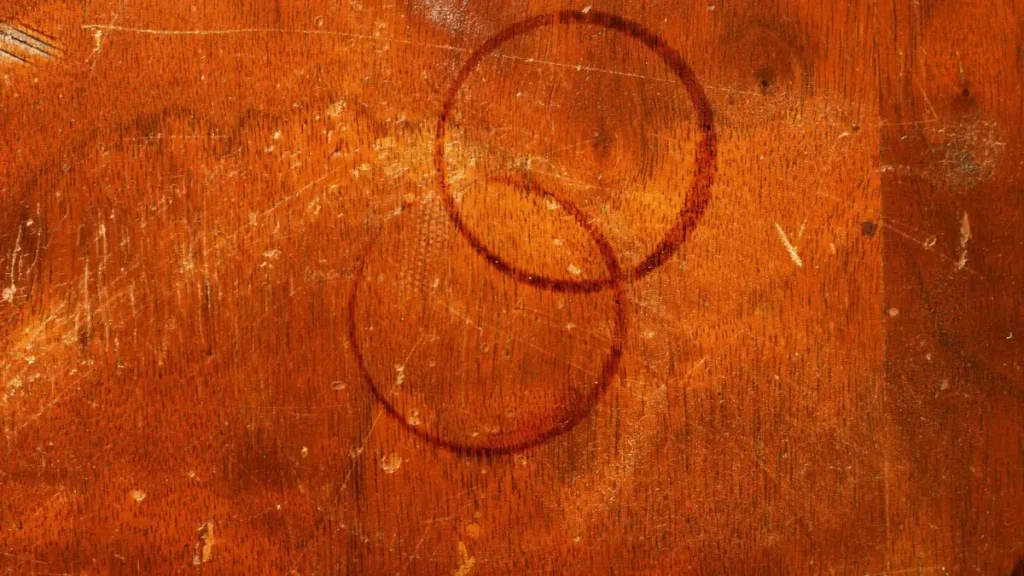
I know most people skip this part. I’ve seen the regret afterward too.
Vaseline — and any oil-based method — can darken wood if the finish is worn or the wood underneath is very dry. This doesn’t happen often, but when it does, it catches people off guard.
That’s why you should always test the method in a hidden spot first. The underside of a table edge or a back corner works well.
If the test area darkens unevenly, you’ll need to either stop or be prepared to treat the entire surface for a uniform look. Skipping this step is how small fixes turn into bigger projects.
I regularly share small, practical home-care tips like this when people run into common furniture or cleaning issues — especially the kind that aren’t obvious until damage is already done.
Other Household Items That Can Remove White Water Rings
Vaseline isn’t the only option. The key idea is the same across most remedies — add oil to displace moisture.
Mayonnaise is a popular alternative because it contains oil and mild acids. You can use it the same way as Vaseline, applying a thin layer and letting it sit before buffing.
Mineral oil works well too, especially on finished wood. Rub it in with the grain, let it sit overnight, then wipe off the excess in the morning.
Coconut oil is another option. Its semi-solid texture makes it easy to apply, and it behaves much like petroleum jelly on white rings.
In a pinch, butter, margarine, or even solid shortening can help. Nut butters have also worked for some people, though they’re messier and less predictable.
A walnut is the most old-school method. Crack one open and rub the nut meat over the ring. The natural oils can pull out moisture, especially on fresh stains or lightly finished wood.
Each of these works best when the ring is new and still white — timing matters more than the product.
If you’re looking at your table right now, what does the ring look like — bright white, faint, or already dark?
If you’re into old-school fixes like these, some forgotten cleaning tricks still work surprisingly well — we’ve covered a few of them.
How to Prevent Water Rings Before They Happen?
Once you’ve dealt with a water ring, you usually don’t want to go through it again. And honestly, prevention is much easier than fixing the damage later.
The simplest habit is using coasters — not just for cold drinks, but also for hot coffee and tea. Steam can be just as harmful as condensation.
If something spills, wipe it up right away. Even a few minutes can be enough for moisture to seep into the finish.
For serving hot dishes, always use heat-resistant mats or trivets. Direct heat weakens the finish, making it easier for moisture to get trapped later.
Regular furniture polishing also helps. A well-conditioned finish acts as a better barrier against water.
If the furniture gets heavy use, a polyurethane sealant can provide long-term protection. It’s not always necessary, but it makes a real difference on dining tables.
And one thing people often overlook — place leak-proof saucers under flower pots and vases. Slow, hidden moisture is one of the most common causes of stubborn rings.
A lot of surface damage starts in places we rarely clean or check, especially around heavy furniture — here are some smart ways to deal with that without hurting your back.
The Bottom Line on Removing Water Rings
Here’s the honest takeaway.
If the ring is white, you still have a good chance of fixing it at home. Vaseline is one of the easiest and safest first things to try because it works with the problem, not against it.
If the ring is dark, it’s no longer just a surface issue. At that point, household fixes usually won’t be enough, and forcing them can make things worse.
The key is acting early, understanding what kind of stain you’re dealing with, and knowing when to stop.
So before you reach for sandpaper or give up on a table you like, take a closer look at the mark.
What does your water ring look like right now — and how long do you think it’s been there?
If you enjoy practical, no-nonsense home care fixes like this, I share more everyday problem-solving ideas on X and inside our Facebook community, where people discuss what actually works — and what doesn’t.
Disclaimer: Results can vary depending on the type of wood and the condition of the finish. Always test any method on a hidden area first to avoid unexpected darkening or damage. These tips are for light, white water rings and may not work on deep or permanent stains.