Tree Falls on Neighbor’s Property? Here’s Who Pays and Who Cleans
You walk outside after a storm and see it — your tree is down, and half of it is sitting in your neighbor’s yard.
Your first thought probably isn’t legal theory. It’s panic.
Am I responsible for this? Do I have to pay? Is my neighbor going to be mad?
I’ve seen this situation confuse homeowners again and again, and honestly, the answers online often make it worse. Most articles jump straight into legal jargon or give a one-line rule without explaining what actually happens in real life.
Here’s the truth: responsibility depends on why the tree fell, what it damaged, and what you knew before it fell. Miss even one of those pieces, and you can walk away with the wrong assumption — or a surprise bill.
In this guide, I’ll break it down the same way I would for a homeowner friend: clear, practical, and grounded in how insurance companies and local laws actually treat fallen trees in the U.S.
Before you assume you’re at fault — or that your neighbor is — let’s slow down and look at how responsibility really works when a tree from your yard lands in someone else’s.
Have you ever dealt with a fallen tree issue before, or is this your first time facing it?
The Basic Legal Principle — What Happens When a Tree Falls Naturally
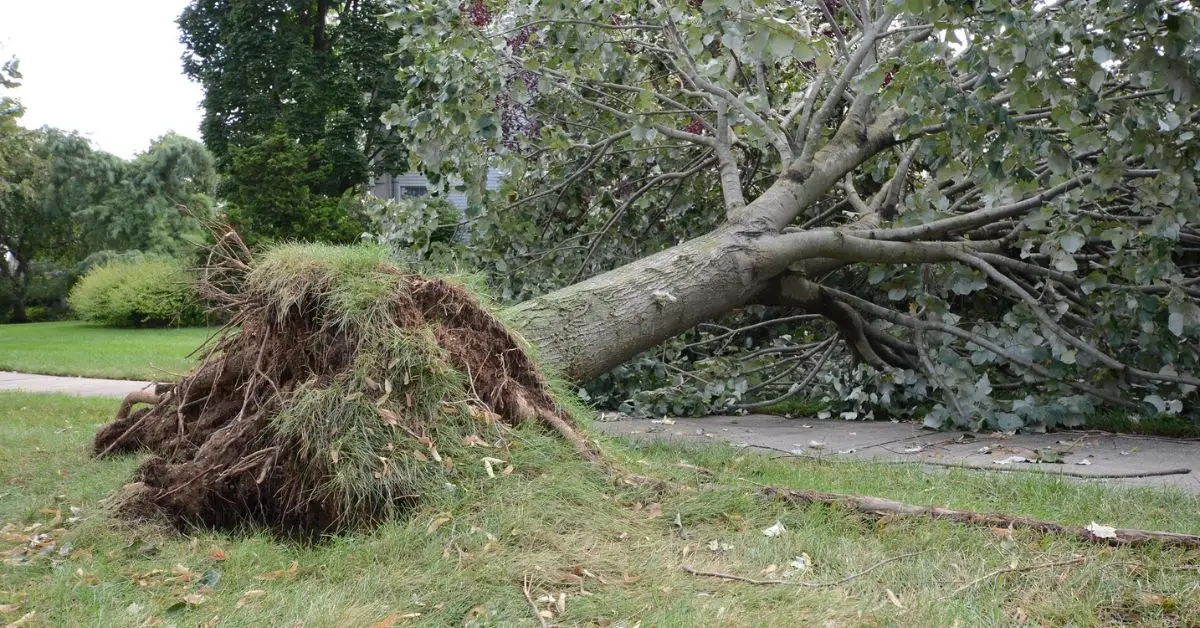
Let’s start with the rule that applies in most cases, even though many people don’t like hearing it.
If a healthy tree falls because of a storm, heavy wind, or lightning — the law usually treats it as an “Act of God.” That’s just a legal way of saying: no one planned it, no one caused it, and no one could reasonably stop it.
Here’s what that means for you in real life:
- If your tree falls naturally and lands in your neighbor’s yard,
your neighbor is usually responsible for cleanup on their side - It does not matter that the tree grew in your yard
- What matters most is where the tree landed, not where it started
This is why many homeowners are shocked. They assume, “It’s my tree, so it’s my problem.” But that’s not how the law typically sees it.
From an insurance point of view, it works the same way. Each homeowner’s policy usually covers damage and cleanup on their own property, as long as the fall was caused by a covered event like a storm. I’ve seen this explained clearly by experts at The Spruce, and the same logic shows up across local government and insurance sources.
The key idea to remember is simple:
Natural fall = no automatic blame.
But this rule has an important exception — and that’s where things get tricky.
Negligence and Liability — When You Can Be Held Responsible
This is the part people miss, and it’s also where most disputes start.
If your tree falls and there’s proof you knew it was dangerous and ignored it, the situation changes fast. At that point, it’s no longer “bad luck.” It can become negligence.
Here’s what usually counts as a hazardous tree:
- The tree was clearly dead or dying
- Large limbs were rotting or falling regularly
- The tree was visibly leaning toward your neighbor’s property
- An arborist had already flagged it as unsafe
Tree disputes often don’t start with a full collapse — they begin with smaller boundary issues, similar to questions around whether you have the right to trim your neighbor’s overhanging bushes.
Now let’s talk about notice, because this matters a lot.
You can be held responsible if:
- Your neighbor warned you in writing (email, letter, text)
- A professional report documented the risk
- The danger was so obvious that ignoring it looks unreasonable
Once there’s proof you were aware of the risk, liability can shift to you. Courts and insurers look closely at documentation — complaints, photos, inspection reports — not just verbal claims.
Here are common scenarios where the tree owner may be liable:
- A dead tree falls after months of warnings
- A diseased tree collapses despite professional advice to remove it
- Prior limb failures were ignored
So if you’re ever worried about a tree on your property, the smartest move is to deal with it early. Doing nothing can cost far more than trimming or removal.
Let me ask you this — if a neighbor had warned you about a risky tree, would you document your response or just brush it off?
Cleanup Responsibility vs. Damage Responsibility
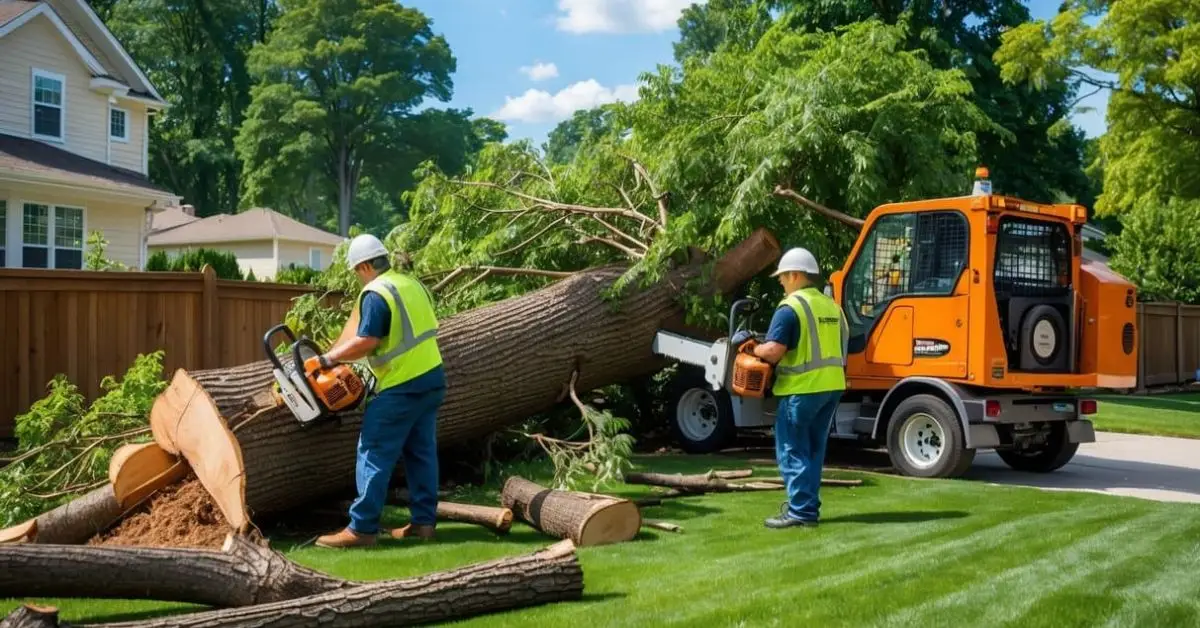
This is where most confusion starts, even among smart homeowners.
Cleaning up a fallen tree and paying for damage are not the same thing, and the law treats them differently.
If a tree falls into a yard and nothing is damaged:
- The homeowner where the tree lands usually handles the cleanup
- That includes cutting branches and removing debris
- It doesn’t automatically matter whose yard the tree grew in
Insurance often won’t step in here. As explained by NerdWallet’s homeowners insurance guide on tree removal many policies only cover tree removal when there’s actual property damage or blocked access — not just debris in the yard.
If a tree fall does cause damage:
- The homeowner with the damaged property usually files a claim with their own insurer
- Damage could be to a roof, fence, garage, or vehicle
- Liability still depends on why the tree fell — damage alone doesn’t prove fault
The key thing to remember: Cleanup responsibility and damage responsibility are two different legal buckets.
Homeowners Insurance — How Claims Usually Work
Most people don’t think about legal rules first. They think about insurance.
Will the claim be approved?
Will rates go up?
Will I be stuck paying out of pocket?
Here’s how it usually works:
- You file a claim with your own homeowners insurance
- The insurer checks whether the fall was caused by a covered peril, like wind or a storm
- They also look for signs of neglect or prior warning
A few things you should know:
- You’ll still pay your deductible
- Debris removal is often capped
- If negligence is involved, insurers may recover costs through subrogation
This is why documentation matters more than opinions.
Practical Steps When a Tree Falls (Immediate Actions)
When a tree comes down, the first few hours matter more than people realize.
Here’s what I recommend you do right away:
1. Check for safety risks
- Look for downed power lines
- Stay away from unstable limbs
- Call emergency services if there’s danger
2. Document everything
- Take photos and videos before moving anything
- Capture damage, tree condition, and where it landed
3. Communicate early
- Inform your neighbor calmly
- Stick to facts, not blame
4. Notify your insurer
- Report the incident promptly
- Ask what documentation they need
5. Bring in a professional if needed
- An arborist’s opinion can matter if fault is questioned
- Legal explanations like those outlined by LegalClarity on tree liability and negligence show how professional reports can affect responsibility
Most disputes don’t happen because of the tree itself — they happen because people rush cleanup or assume fault too early.
If this happened today, would you know exactly what to document first — or would it already be cleaned up before insurance ever saw it?
Preventing Tree Liability Problems (Proactive Measures)
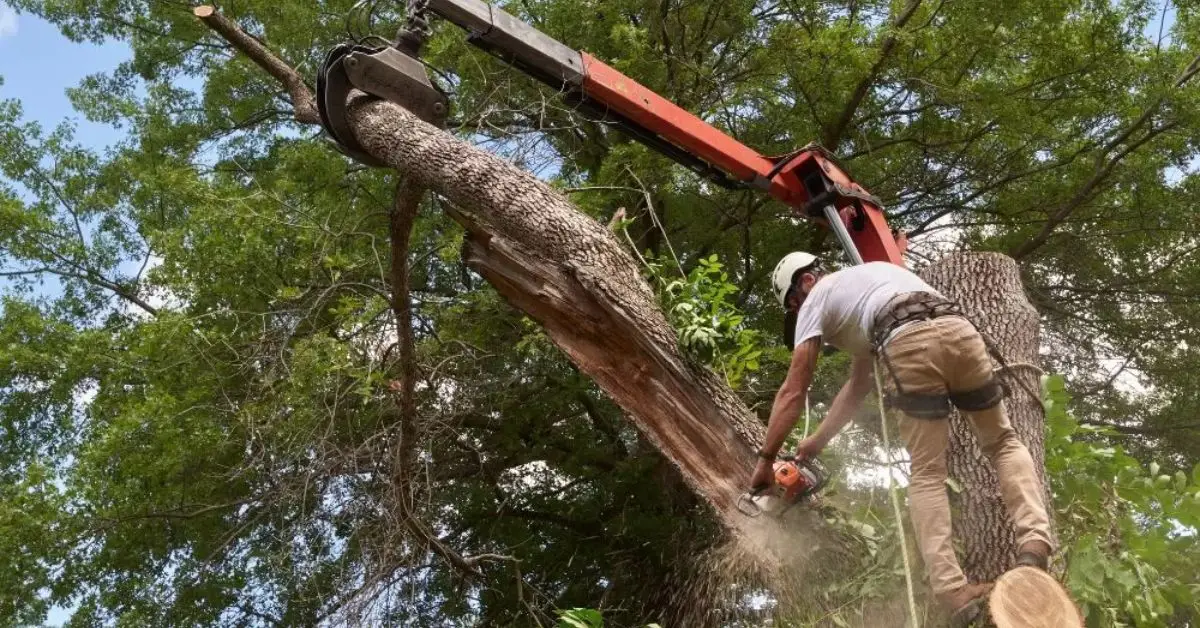
Most tree disputes don’t start with the fall.
They start months — sometimes years — before it.
If you want to avoid ever asking, “Am I legally responsible for this?” the smartest move is prevention.
Here’s what actually helps in the real world:
- Get regular inspections: A quick check by a certified arborist can identify dead limbs, disease, or structural risk early. If something ever happens, proof of inspection works in your favor.
- Talk before it becomes a problem: If a neighbor mentions concern about a tree, don’t brush it off. A calm conversation now is cheaper than a legal argument later.
- Keep records: Save inspection reports, invoices, and emails. If warnings or concerns ever come up, written proof shows you acted responsibly.
Let me give you a quick real-life pattern I’ve seen more than once: A neighbor ignored repeated warnings about a visibly dead tree. No inspection. No trimming. When it finally fell and caused damage, the paper trail made liability almost impossible to avoid.
Prevention isn’t just about trees. It’s about protecting yourself.
Neighbor Relations — Legal vs. Practical Responsibility
Here’s something the law doesn’t always capture well: You still have to live next to this person. Situations like fallen trees often follow storms, and small gestures can make a big difference — even simple actions like those shared in meaningful things you can do for your neighbors after a snowstorm can keep a stressful situation from turning into a long-term conflict.
A few practical truths:
- Sometimes being a good neighbor matters more than being legally right
- Offering to split cleanup costs can defuse tension fast
- Calm communication early prevents small claims court later
I’ve seen neighbors stay friendly because they handled things fairly — and others stop speaking for years over a few hundred dollars.
You don’t have to admit fault to show goodwill. You just have to act like a reasonable human.
Special Scenarios People Don’t Think About
This is where most quick-answer articles fall short.
Some situations don’t fit the “normal” rules at all:
- Trees on shared property lines: These are often considered jointly owned. The same confusion shows up with other shared plants too — issues like whether you can legally trim your neighbor’s ivy follow a similar gray-area logic. Responsibility can be shared, especially for maintenance.
- Trees that fall partially across both properties: Cleanup and claims may be split, depending on damage and access.
- If your neighbor doesn’t live there: Rental properties, vacant homes, or absentee owners can slow everything down. Insurance and documentation become even more important.
- Local ordinances or HOA rules: Some cities and HOAs have tree-specific rules that override general assumptions. Ignoring them can create liability even when state law seems clear.
If your situation feels “different,” it probably is — and that’s where careful documentation really matters.
Legal Takeaways Summary
If you’re skimming, here’s what you need to remember:
- A healthy tree that falls due to weather is usually no one’s fault
- Cleanup responsibility depends on where the tree lands
- Damage doesn’t automatically mean liability
- Negligence changes everything — warnings and records matter
- Insurance cares more about cause than ownership
- Documentation protects you more than opinions
Final tip from experience: Take photos before cleanup and call your insurer early. Those two steps alone prevent most disputes.
If you’ve dealt with a fallen tree before — or you’re worried one might come down — share your situation in the comments. Real experiences help other homeowners more than generic advice.
And if you want more clear, practical home guidance like this, you’ll find it on Build Like New — where we break down confusing homeowner problems without the legal fluff.
Disclaimer: This content is for general informational purposes only and is not legal or insurance advice. Tree liability and insurance coverage can vary based on state laws, local ordinances, and individual policy terms. For advice specific to your situation, consult a licensed attorney, arborist, or your insurance provider.