Decluttering Alert: 5 Cleaning Tools Professionals Say to Toss Now
I’ll be honest — most homes don’t have a cleaning problem. They have a too-many-tools problem.
I’ve seen kitchens with five different sprays for the same surface. Closets stuffed with mops, brushes, and gadgets that sounded useful once but never come out. And the funny part? The more tools people own, the harder cleaning starts to feel.
Professional cleaners and organizers often say something that surprises people: a crowded cleaning setup makes your home harder to clean, not easier. Too many options slow you down, create confusion, and quietly turn into clutter you stop noticing — until it feels overwhelming.
What actually helps is knowing which tools pull their weight and which ones just take up space. Not because they’re “bad,” but because they don’t fit how real people clean day to day.
In this guide, I’ll walk you through the cleaning tools experts quietly let go of — and more importantly, how simplifying your setup can save space, time, and mental energy.
As you read, think about this: Which cleaning tools do you use without thinking — and which ones are just sitting there, waiting for “someday”?
Understanding Why Cleaning Tools Contribute to Clutter
I’ve noticed something over the years: people rarely buy cleaning tools because they truly need them. Most of the time, they buy them because a product promises ease, speed, or a “better system.”
Marketing plays a huge role here.
You’re told one tool isn’t enough. That a special brush will clean better. That a new organizer will finally make everything feel under control. Slowly, tools pile up — not because cleaning improved, but because buying felt like progress.
Here’s what usually leads to clutter:
- The efficiency myth: More tools feel productive, but they actually slow you down with extra decisions.
- Over-specialization: Tools made for one small task get used once, then forgotten.
- Visual reassurance: If something looks organized or professional, we assume it must be useful.
What this creates isn’t a messy home — it creates mental overload. You open a cabinet and feel tired before you even start. That’s usually the sign that clutter isn’t about laziness; it’s about owning too much. Most people only use a small fraction of what they own anyway — which is exactly why the 80/20 decluttering rule works so well when you’re deciding what tools actually deserve space in your home.
Once you understand this, letting go becomes easier. You stop blaming yourself and start questioning the tools instead.
Tool #1 — Compartmented Cleaning Caddies
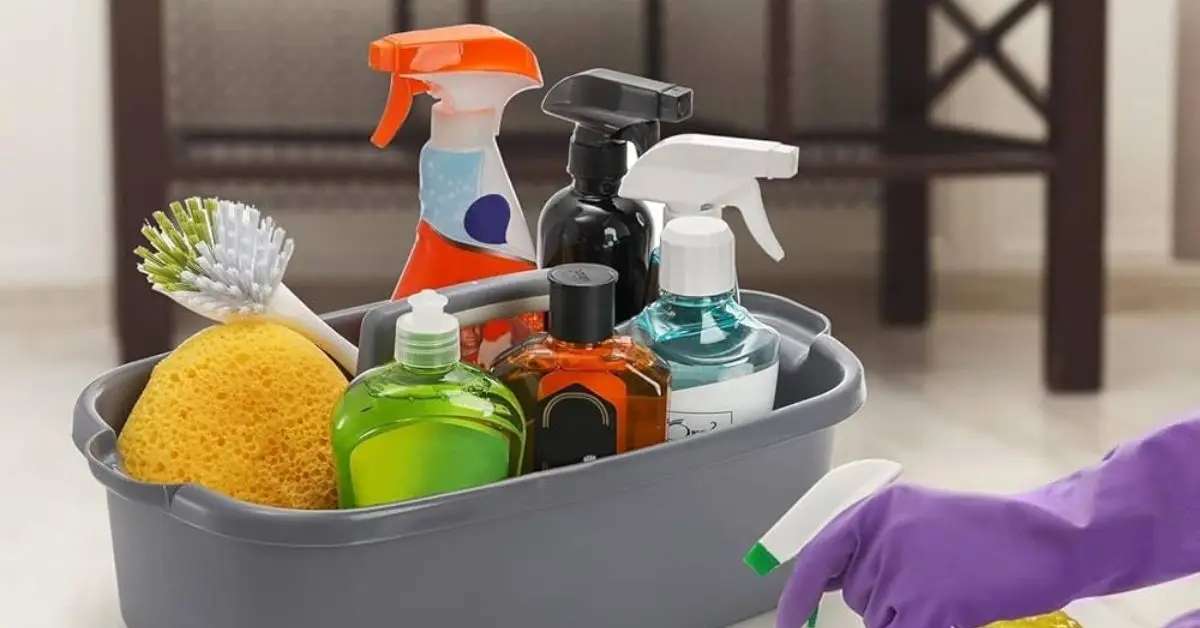
What They Are and Why Pros Avoid Them
Compartmented cleaning caddies look smart at first glance. Everything has a slot. Bottles stand neatly. Brushes look organized.
But here’s what actually happens.
Those fixed compartments quietly tell you how much you’re supposed to own. Empty spaces feel wrong, so you fill them. One spray becomes three. One brush turns into a collection. Over time, the caddy doesn’t organize your supplies — it encourages you to buy more.
Professional cleaners interviewed by AOL have pointed out that these caddies often create clutter instead of preventing it.
From real homes and real routines, the pattern is clear:
- Built-in slots push you to keep duplicates
- Removing items feels harder once the space is “assigned”
- The caddy controls your supplies instead of supporting them
You end up managing the container instead of focusing on cleaning.
Smart Alternative: Open Buckets or a Single Tote
If your goal is less clutter, simpler containers work better.
An open bucket or plain tote doesn’t force decisions on you. It only holds what you actively choose to keep. And that small difference changes everything.
Why this works for you:
- No fixed sections means no pressure to fill space
- You naturally limit what you carry
- Unused items become obvious — and easier to remove
Here’s a good rule to remember: If a container decides how much you own, it’s not organizing — it’s adding clutter.
An open bucket keeps you in control, not the product.
Tool #2 — Multiple Specialized Poled Tools
The Problem with Proprietary Handles
If you’ve ever opened a closet and seen three or four long poles leaning awkwardly in the corner, you already know the problem.
Many cleaning brands design tools so that each attachment works only with its own handle. A mop needs one pole. The duster needs another. The scrubber comes with its own. Nothing fits together, and suddenly you’re storing a pile of sticks instead of a simple system.
What I see in real homes is this:
- Poles take up vertical space and never store neatly
- You hesitate to throw one away because “it goes with something”
- Buying one new attachment often means buying yet another handle
This isn’t accidental. Proprietary designs lock you into buying more — and storing more.
Expert Tip: Choose Universal Thread + Telescopic Pole
There’s an easy fix that most people overlook.
One telescopic pole with universal threading can replace multiple handles. It extends when you need reach and collapses when you store it. Most attachments fit it. Storage becomes simple.
Why this works better for you:
- One pole replaces several bulky handles
- Fewer parts to store and keep track of
- Future purchases don’t automatically add clutter
This is one of those swaps that feels small — but immediately frees up space.
Tool #3 — Excess All-Purpose Cleaner Bottles
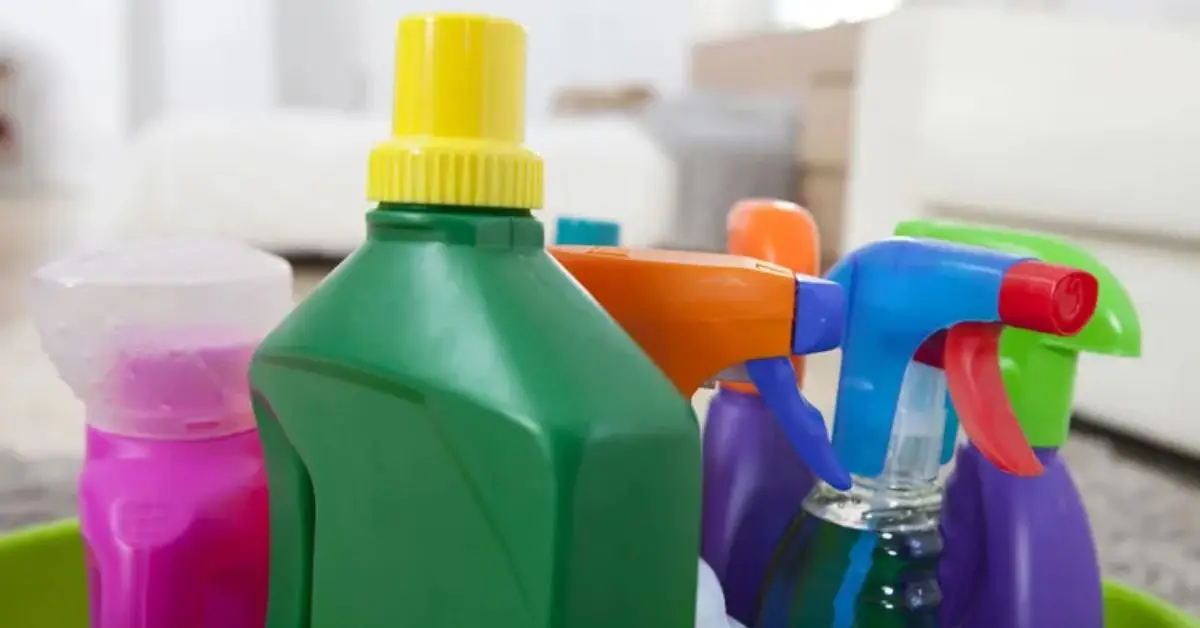
Why More Cleaners Doesn’t Equal Better Cleaning
This is one of the biggest clutter traps I see.
People often own separate cleaners for counters, floors, bathrooms, glass, appliances — even when they all do almost the same thing. The result isn’t better cleaning. It’s crowded shelves and a routine that feels harder than it should.
Too many bottles cause problems you don’t expect:
- You waste time deciding what to use
- Products expire before they’re finished
- Cabinets feel messy even when they’re “organized”
If your cleaning supplies are overflowing under the sink or in kitchen cabinets, these simple reverse-decluttering steps can help you clear space without pulling everything out at once.
According to cleaning experts quoted in The Spruce, most homes can function perfectly with far fewer products than they think.
Pro Advice: One All-Purpose Formula That Actually Works
Instead of collecting bottles, simplify.
A single, gentle all-purpose cleaner handles most daily messes. Some people even go one step further and use a basic DIY mix made from water, vinegar, and a small amount of mild soap.
Why this approach works:
- One bottle replaces several
- Your routine becomes predictable and faster
- Storage instantly looks calmer
If a product doesn’t clearly earn its place, it’s probably just taking up space.
Tool #4 — Mini Dustpans and Hand Brooms in Every Room
The Convenience Myth
Mini dustpan and broom sets are classic impulse buys. They’re cheap, small, and sold as “convenient.”
But here’s what usually happens.
You buy one for the kitchen. Then one for the bathroom. Then another for the garage. They get shoved behind doors, forgotten under sinks, or left unused because grabbing the main broom feels just as easy.
Over time, they multiply quietly.
Common issues I see:
- Sets break or lose pieces
- They collect dust instead of removing it
- You forget where half of them are
Keep One Quality Set — That’s It
One sturdy dustpan and broom that actually works will always beat several small ones that don’t.
When you limit yourself to a single set:
- You know exactly where it lives
- It gets used instead of ignored
- You stop buying replacements “just because”
Convenience isn’t about having something everywhere. It’s about having one tool you trust and actually use.
Tool #5 — Old Rags You Never Actually Use

When “Reuse” Turns Into a Rag Graveyard
Almost everyone has this drawer.
Old T-shirts. Towels cut into squares. Random cloths saved with good intentions. You keep them because throwing them away feels wasteful — and because “they might come in handy.”
But in reality, most of these rags never leave the drawer.
What usually happens is this:
- You keep adding rags but rarely remove any
- Many are too worn, too small, or not absorbent anymore
- You still reach for paper towels or one favorite cloth instead
Over time, reuse quietly turns into storage. The drawer fills up, but your cleaning routine doesn’t improve.
Saving something only makes sense if you actually use it.
Expert Rule: Replace Only When Worn, Use Microfiber Instead
Sustainability isn’t about keeping everything forever. It’s about keeping what works.
High-quality microfiber cloths clean better, last longer, and replace multiple old rags at once. They trap dust and dirt instead of just pushing it around, which means you need fewer cloths overall.
A practical rule I follow and recommend:
- Keep a small, fixed number of cloths
- Replace them only when they’re truly worn out
- Let go of anything you haven’t reached for in months
You’re not being wasteful — you’re being intentional.
Minimalist Cleaning Tools That Actually Reduce Clutter
Multi-Use and Space-Saving Tools
Once you start letting go, the next question is obvious: what’s actually worth keeping?
The answer is tools that do more than one job and don’t demand extra storage.
Minimalist cleaning setups often rely on:
- Extendable dusters that replace multiple reach tools
- Collapsible buckets that disappear when not in use
- One reliable multipurpose cleaner instead of a lineup of bottles
Sites like Habitatista, which focus on minimalist living, consistently highlight how choosing flexible, compact tools reduces both physical and mental clutter.
These tools don’t look flashy — they just work.
Why Choosing Versatile Tools Beats Specialized Ones Every Time
Every specialized tool comes with hidden costs: storage space, maintenance, and another decision during cleaning.
Versatile tools simplify everything.
Here’s what changes when you choose them:
- Fewer items to store and organize
- Faster cleaning because there’s less to think about
- Less temptation to buy “just one more tool”
In my experience, the best cleaning setups aren’t the most stocked — they’re the most intentional.
If a tool can’t earn its place by doing more than one job, it probably doesn’t deserve the space it takes.
Common Mistakes When Downsizing Cleaning Tools
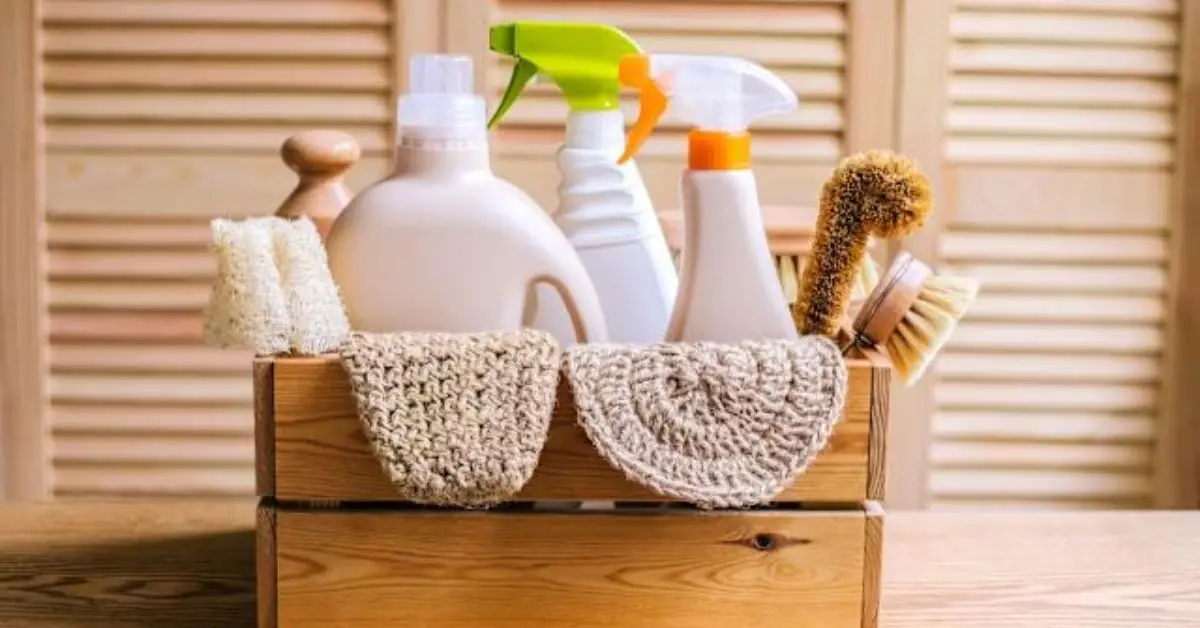
Letting go sounds simple, but this is where most people get stuck. Not because they don’t want less clutter — but because a few mental traps creep in.
Keeping Things “Just in Case”
I hear this one all the time.
You keep a tool because maybe you’ll need it someday.
But here’s what usually happens: someday never comes.
That “just in case” item quietly earns permanent storage, even if you haven’t touched it in years. And the more of these you keep, the harder it becomes to see what you actually use.
A helpful check I use: If I didn’t know this item existed, would my cleaning routine suffer? If the answer is no, it’s probably safe to let go.
Replacing One Clutter Problem with Another
This one is sneaky.
You declutter old tools… then buy new organizers, upgraded gadgets, or “better” versions right away. The clutter leaves briefly, then comes back wearing a nicer label.
Downsizing works best when you pause between removing and replacing. Live with less for a bit. Let the gaps show you what you truly miss — and what you don’t.
Mistaking Quantity for Cleanliness
More tools feel like preparedness. Like you’re taking cleaning seriously.
But cleanliness doesn’t come from owning more — it comes from using a few things consistently. When your setup is simple, you clean more often because starting feels easier.
This shift in thinking is what makes downsizing stick.
Actionable Clutter-Cutting Checklist
If you want this to turn into real change, not just good intentions, start here. You can save this or print it.
- Evaluate tool usability: Ask yourself: do I reach for this without thinking, or do I avoid it?
- Assign storage limits: One shelf. One bin. One bucket. When it’s full, something has to go.
- Apply the one-in, one-out rule: When you buy a new cleaner or tool, remove one you already own. This rule is commonly recommended by professional cleaners like those at Sunshine Clean Pros.
- Set review dates: Every few months, quickly scan your supplies and remove what hasn’t been used.
This turns decluttering into a habit, not a one-time project. If getting started still feels overwhelming, using short, timed sessions like these Pomodoro decluttering tricks can help you make progress without burning out.
How Simplifying Tools Improves Cleaning Efficiency
When you own fewer tools, something unexpected happens — cleaning gets easier.
I’ve seen it again and again:
- Shorter cleaning times because you’re not deciding what to use
- Less overwhelm when cabinets and closets aren’t packed
- More consistency because starting doesn’t feel heavy
You stop “preparing” to clean and just clean.
That’s the real payoff here. Not a perfect setup, not an aesthetic shelf — but a home that’s easier to take care of with less effort from you.
Conclusion
Before you close this page, let’s quickly ground everything you just read.
Most cluttered homes don’t suffer from neglect — they suffer from too many tools doing too little. When you step back, the pattern is clear:
- Compartmented cleaning caddies push you to own more than you need
- Multiple proprietary poles turn storage into a headache
- Extra cleaner bottles crowd shelves without improving results
- Mini dustpans multiply and quietly get ignored
- Old rags pile up long after they’ve stopped being useful
When you replace excess with smarter, multi-use tools, cleaning becomes lighter. Fewer decisions. Less storage stress. More consistency. The goal isn’t minimalism for the sake of it — it’s building a setup that actually works for you.
If you’ve made it this far, I’d love to hear from you:
Which cleaning tool in your home feels the most unnecessary right now? Drop it in the comments — your answer might help someone else let go too.
And if you want more practical, no-nonsense advice on maintaining your home, decluttering smartly, and making spaces feel new again, explore more guides on Build Like New. It’s all about creating homes that work better without adding more stuff.
Disclaimer: This article is based on expert opinions, research, and real-world cleaning experiences. Cleaning needs and preferences can vary by household. Use your judgment and choose tools and methods that best fit your space, lifestyle, and safety requirements.