Chris Simms Puts His Connecticut Horse Farm Estate on the Market for $8M
The NFL season may be over, but Chris Simms isn’t exactly stepping away from big plays.
I was going through the latest celebrity real-estate listings when this one stood out—not just because of the price tag, but because of who is selling and why. Former NFL quarterback and current sports analyst Chris Simms, along with his wife Danielle, has officially put their Greenwich, Connecticut home on the market for $8 million.
If you follow football, you probably know Simms for his years in the league or his sharp takes on TV. But if you follow luxury real estate—or even just enjoy a good behind-the-scenes story—this listing hits a different nerve. This isn’t a quick flip or a trophy home bought for status. It’s a place the Simms family actually built their life around.
They’ve lived in Greenwich for years, sold a previous home nearby for just under $2.7 million, and moved here for one simple reason: space. Space to breathe. Space for family. And space for horses. Now, as they plan a move out of state, this equestrian estate is entering the market at a moment when buyers are paying close attention to lifestyle homes, not just square footage.
So the real question isn’t just what does an $8 million Chris Simms home look like?
It’s what kind of life was lived here—and who is it meant for next?
If you were in their shoes, would you hold onto a place like this… or know when it’s time to move on?
Who Is Chris Simms (And Why His Homes Matter)
If you hear the name Chris Simms today, you probably think of his football analysis on TV. But long before the studio debates and hot takes, there was a real NFL career behind that name—and that background is exactly why his real-estate decisions carry weight.
Chris Simms played quarterback in the NFL for multiple teams, including the Tampa Bay Buccaneers, Denver Broncos, and Tennessee Titans. He wasn’t a one-season headline player; he lived the grind that comes with competing at the highest level, where pressure, performance, and long-term decisions matter.
After stepping away from the field, he built a second career as a sports analyst, earning credibility on his own terms. If you want a clean snapshot of his playing history and post-NFL path, his profile on Wikipedia lays out the full arc clearly and factually.
What adds another layer here is the football lineage:
- His father, Phil Simms, was the MVP of Super Bowl XXI
- His younger brother also played quarterback
- Football isn’t branding for the Simms family—it’s generational
So when someone like Chris Simms buys a home, lives in it for years, and then decides to sell, readers don’t see it as a casual transaction. You and I both read it as a life move—one shaped by experience, timing, and long-term thinking. That’s the context most listings miss, and it’s why this one stands out.
Why Greenwich? A Longtime Relationship With the Area
Whenever I look at celebrity home listings, I ask one basic question: Was this bought to flip, or to live in?
With Chris Simms, the answer is clear—it was about lifestyle.
The Simms family are longtime Greenwich residents, not newcomers chasing a luxury zip code. Before moving into their current property, they sold another home in the same area for just under $2.7 million. The move wasn’t about upgrading status; it was about upgrading space.
Here’s what pushed that decision:
- They wanted more land
- They needed room for horses
- They were thinking long-term, not short-term
Greenwich offered a rare balance—privacy, acreage, and community—without feeling cut off from the world. For high-profile families, that sense of privacy also comes with real security considerations, something that’s become increasingly visible in incidents like Joaquin Phoenix’s car theft and the wider celebrity home security concerns.That’s why this listing doesn’t come across as a quick cash-out. It feels like the end of a meaningful chapter, especially now that the family is planning a move out of state.
If you’re a buyer reading between the lines, this matters. Homes built around real life tend to age better than ones built for headlines.
Inside Chris Simms’ Greenwich Equestrian Estate
Let’s get practical, because this is where curiosity usually peaks.
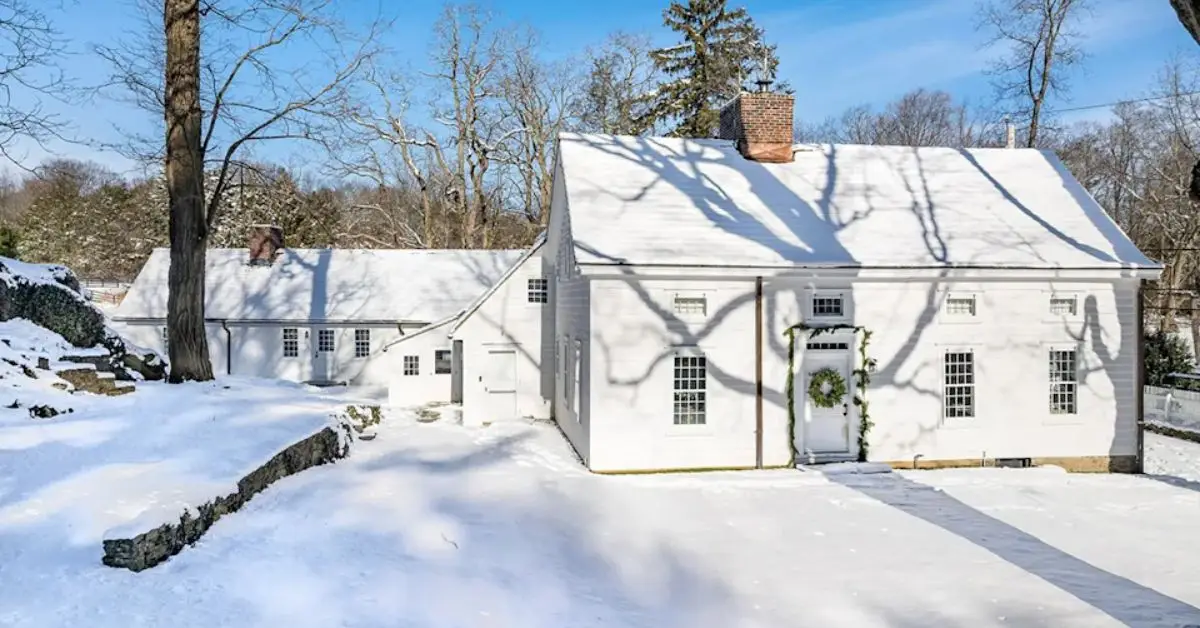
The property, located at 640 Round Hill Road, isn’t massive just to impress. It’s scaled for comfort, privacy, and everyday living—something you don’t always see in high-end listings.
At a glance, here’s what defines the estate:
- 3,700-square-foot farmhouse designed for daily use, not show
- Six bedrooms and five full bathrooms, ideal for family and guests
- Four acres of land, a major differentiator in Greenwich
- Space that supports both indoor living and an equestrian lifestyle
This isn’t a mansion filled with unused rooms. It’s a home where each area serves a purpose—whether that’s gathering with family, working in peace, or spending time outdoors. That same focus on livability over flash shows up in other thoughtfully designed celebrity properties as well, including James Packer’s Beverly Hills mansion, where privacy and functionality shape the entire layout.
And that’s really the reason this listing is getting attention. Beyond the $8 million price tag, it offers something harder to measure: a home that reflects how its owners actually lived.
If you were walking this property yourself, what would matter more to you—how big it is, or how naturally your life could fit into it?
Rustic Farmhouse Design With Pro-Athlete Comfort
When I picture this home, it doesn’t feel staged or overly polished. It feels lived in—in a good way. The design leans rustic, but not dated. Comfortable, but not casual. It’s the kind of space where you can host people without worrying about everything being perfect.
What sets the tone right away are the details you actually notice when you’re living there:
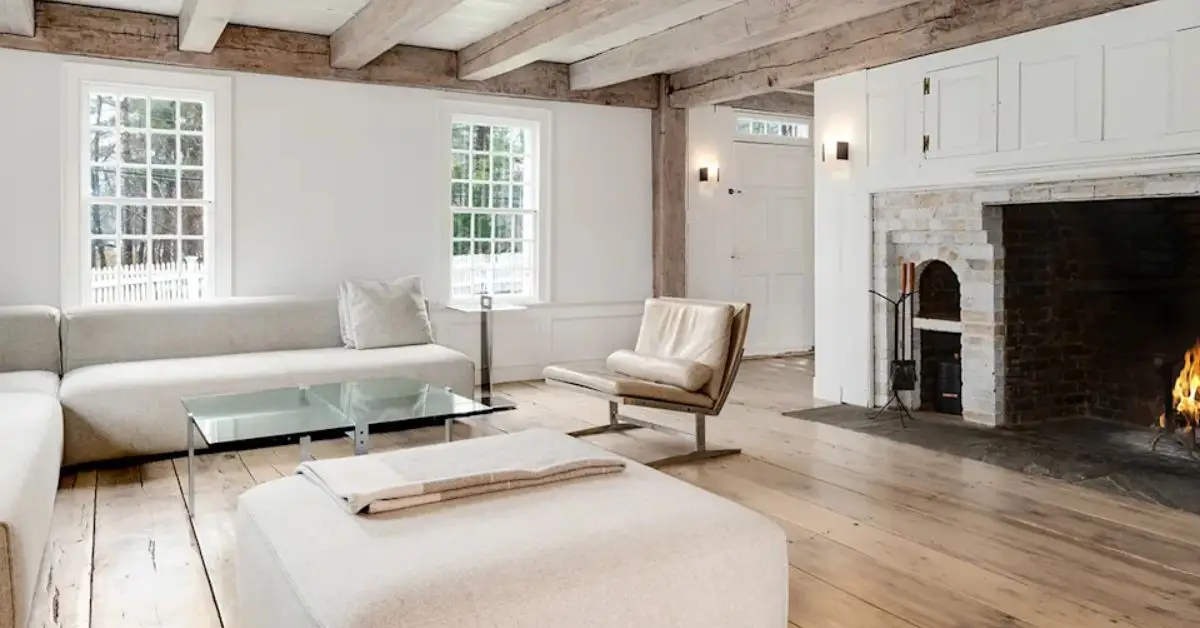
- Wide-plank antique floors that make the rooms feel grounded and warm
- Exposed wood beams that add character without trying too hard
- Preserved brick fireplaces that quietly anchor multiple gathering spaces
The layout flows the way a real family home should. The living room, family room, and media room all feel distinct, yet connected. You’re never far from people, but you’re also never forced into one space.
The kitchen is where the farmhouse feel meets modern life. Clean white cabinetry keeps it bright, functional, and unfussy. You can cook without being cut off from guests, and meals naturally spill into the nearby dining area instead of feeling boxed in.
This isn’t a home designed to impress strangers. It’s designed to feel good when you wake up, sit down, and actually live in it—something most listings forget to explain.
A Primary Suite Built for Privacy and Post-Career Life
If you’ve ever worked from home—or imagined doing so long-term—you’ll immediately understand why this primary suite matters.
The owners didn’t just renovate a bedroom. They created a private zone that feels separate from the rest of the house, without feeling isolated.
Here’s what stands out:
- A newly built primary suite positioned toward the back of the home
- Cathedral ceilings that make the space feel calm, not cramped
- A bathroom with large windows overlooking rolling meadows
- A bespoke dressing room connecting bedroom and bath
The most interesting detail, though, is the staircase tucked inside the dressing room. It leads up to a private office, away from the noise of daily life.
If you’re an analyst, executive, or remote professional, you already know how valuable that separation is. You can work, think, and disconnect—without leaving the house or sacrificing privacy.
This suite doesn’t scream luxury. It quietly supports the kind of life people actually want after long, high-pressure careers.
A Home Designed for an Athlete’s Routine
Downstairs, the house shifts gears—but it stays practical.
The lower level includes a recreation room and a dedicated gym, and neither feels like an afterthought. This is the part of the home that makes it clear a professional athlete actually lived here.
You can imagine early workouts, recovery sessions, or just blowing off steam after a long day. At the same time, the rec room keeps things balanced—it’s not all training and discipline. There’s space for family time, kids, and downtime.
It’s a layout built around rhythm:
- Train
- Recover
- Relax
- Repeat
That kind of balance is hard to fake, and it shows.
Horses, Land, and a True Greenwich Equestrian Setup
This is where the property really separates itself from other Greenwich listings.
The land wasn’t added as a bonus—it was the point.
Across four acres, the estate includes:
- Three horse stalls
- A dedicated tack room
- Three paddocks ready for daily use
- Access to neighborhood riding trails
What I appreciate most is that the equestrian setup feels integrated, not decorative. It was built for owners who actually ride, not just admire the idea of it.
Even the historic barn reflects that mindset. Instead of being preserved as a museum piece, it’s been repurposed into a gathering and party space—functional, social, and full of character. Details like these were originally reported by Robb Report, which is where the equestrian angle first stood out.
If you’re someone who values land, animals, and breathing room—but still wants refinement—this setup is rare. And once you see it, it’s hard to compare this home to anything else in the area.
If you had the choice, would you prioritize interior luxury—or land that actually shapes how you live day to day?
Rustic Farmhouse Design With Pro-Athlete Comfort
When I imagine actually living in this house—not touring it for five minutes—the design starts to make sense. It doesn’t feel like a showroom. It feels calm, grounded, and easy to settle into.
The farmhouse style isn’t loud or trendy. It shows up in ways you feel more than notice:
- Wide-plank antique floors that give the rooms warmth and weight
- Exposed wood beams that add character without making the space feel heavy
- Multiple preserved brick fireplaces that quietly anchor the main gathering areas
The living room, family room, and media room all serve different moods, which matters more than square footage. You can host people, watch a game, or spend a quiet night in without rearranging your life around one “formal” space.
The kitchen keeps things modern and practical. White cabinetry keeps it bright, clean, and functional, and the flow into the dining area feels natural—not forced. You cook, people gather, conversations happen. That’s usually the real test of a good home.
Most listings stop at features. This one passes the bigger test: it feels comfortable the moment you imagine waking up there.
A Primary Suite Built for Privacy and Post-Career Life
This primary suite tells you a lot about where the owners were in life when it was built.
It’s newly constructed and placed toward the back of the home, away from everyday noise. The cathedral ceilings give the bedroom and bathroom a sense of air and quiet, not drama. Large windows look out over open meadows, which changes how the space feels first thing in the morning and at night.
Between the bedroom and bath sits a bespoke dressing room, and that’s where one of the smartest design choices shows up. A private staircase leads from the dressing area up to a dedicated office.
If you’ve ever worked from home seriously, you know why that matters. You can step into work mode without crossing the entire house—or sacrificing privacy. For an analyst or remote professional, that separation isn’t luxury. It’s functionality.
This suite wasn’t built to impress guests. It was built to support daily life after football.
A Home Designed for an Athlete’s Routine
The lower level makes one thing clear: this house was actually lived in by a professional athlete, not staged to look like one.
There’s a gym that feels intentional, not squeezed into leftover space. It’s paired with a recreation room that balances discipline with downtime. Training and recovery have their place, but so do family time and rest.
What I like most is the practicality of the layout. Nothing feels wasted. Nothing feels overly dramatic. It supports a routine that mixes fitness, work, and family without forcing everything into one zone.
That balance is hard to design—and even harder to fake.
Horses, Land, and a True Greenwich Equestrian Setup
The equestrian setup isn’t decorative. It’s functional, planned, and clearly used.
The land includes:
- Three horse stalls
- A dedicated tack room
- Three paddocks ready for daily care
- Riding access through the surrounding neighborhood
The historic barn adds another layer. Instead of being preserved just for looks, it’s been converted into a social space—something you can actually use for gatherings and holidays.
Listings like this are typically marketed through high-end brokerages that understand lifestyle buyers, which is why it’s being represented by Douglas Elliman— a firm known for handling properties where land, privacy, and use matter as much as interiors.
If you care about space that shapes your daily life—not just your address—this equestrian setup is the real headline.
If you were choosing, would you rather have more rooms indoors… or land that changes how you live every single day?
More Than a Celebrity Listing—A Lifestyle Exit
When you zoom out, this listing isn’t really about square footage or even the $8 million price tag. It’s about timing.
I see this as a clean transition from one chapter of life to the next. Chris Simms has already moved on from the daily grind of professional football. Now, this home marks another shift—from a phase built around peak competition to one shaped by intention, space, and long-term living.
What makes this place stand out in celebrity real estate is the balance it strikes:
- Privacy, without feeling isolated
- Land, without losing refinement
- Legacy, without leaning on hype
For sports fans, the appeal is obvious. You’re looking at a home lived in by someone who understands pressure, performance, and routine. For luxury buyers, the draw is different. This is a property that prioritizes how life actually unfolds—quiet mornings, focused workdays, time outdoors, and space to breathe.
That overlap is rare. Most celebrity listings lean hard in one direction: either flashy or purely functional. We’ve seen a similar life-stage shift in other high-profile sales too, such as Julianne Hough’s $8 million mansion, where the story was less about the home itself and more about what came next.
This one sits comfortably in the middle, which is why it feels authentic instead of staged.
If you’re interested in how homes are designed, lived in, and eventually passed on—not just sold—you’ll find more grounded, real-world stories like this on Build Like New, where we break down properties beyond the headlines.
Now I’m curious— Do you see this home as a dream lifestyle upgrade, or as the perfect exit after a high-pressure career? Drop your take in the comments.
Disclaimer: Property details, pricing, and availability are based on publicly available information at the time of writing and may change without notice. This article is for informational purposes only and does not constitute real estate, financial, or legal advice.