Avoid These 7 Trees If You Care About Your Home’s Structure
I’ve seen homeowners fall in love with a tree at the nursery… and regret it years later.
At first, it’s just a small sapling. It adds shade. It boosts curb appeal. The yard looks complete. But what’s happening underground is a different story.
Some trees don’t just grow up — they spread out. Their roots move toward moisture, and your home’s foundation, sewer lines, and water pipes often become the target. The damage doesn’t show up overnight. It builds slowly. A hairline crack. A backed-up drain. Uneven concrete.
By the time you notice, the repair bill can be in the thousands.
Most people focus on how tall a tree will get. Very few think about how far the roots travel or how aggressive they can be. And that’s where costly mistakes begin.
If you’re planning to plant near your house — or you already have trees close to your foundation — this is something you need to understand before it turns into structural damage.
Let’s walk through the seven trees that can quietly cause problems for your foundation and underground pipes — and what makes them risky in the first place.
Before we get into the list, take a quick look outside. How close is that large tree to your home?
How Tree Roots Cause Damage to Homes: Foundation Cracks, Sewer Lines, Sidewalks
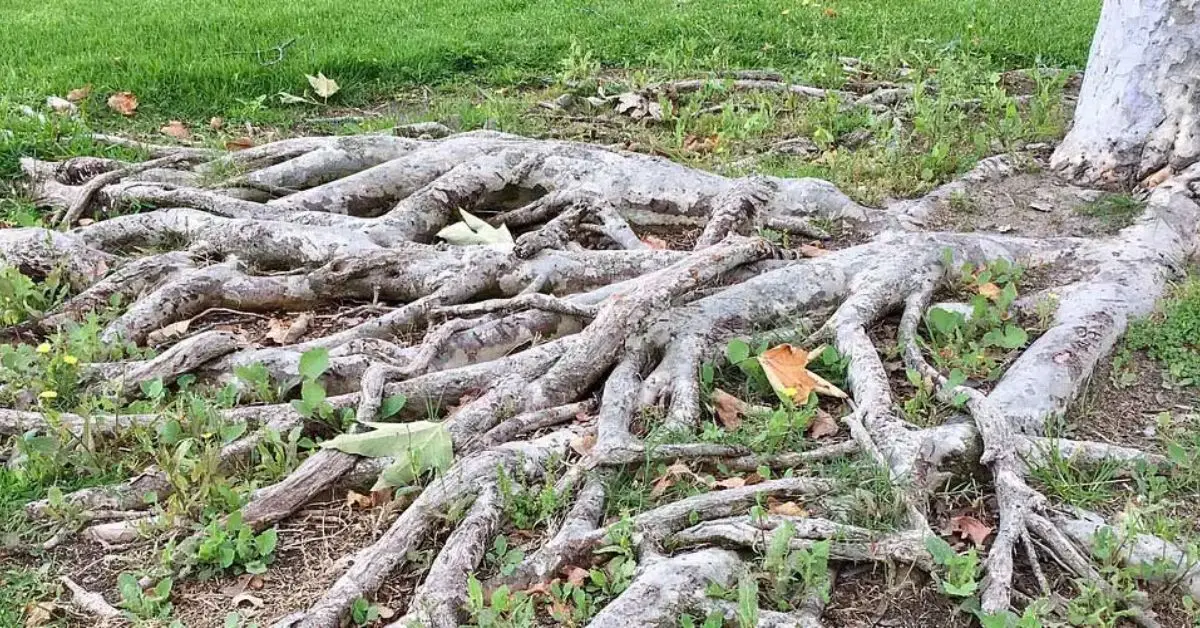
Most people think tree roots “break” foundations by brute force.
That’s usually not how it starts.
Roots grow toward moisture. If there’s even a tiny crack in a sewer pipe or a small gap in your foundation, roots sense the water and nutrients inside. They don’t need to smash through solid concrete — they expand inside weak points and slowly make them worse.
Here’s what typically happens underground:
- Roots follow moisture trails from leaking pipes
- They enter through hairline cracks or loose joints
- As they thicken, they widen those openings
- Soil shifts around expanding root systems
- Concrete slabs and walkways start to lift or tilt
Over time, that pressure changes the soil structure under your home. When soil dries out or becomes uneven because of aggressive root systems pulling moisture, foundations can settle or shift.
According to industry cost estimates shared by Forbes Home, foundation repairs in the U.S. can range from several thousand dollars depending on severity. Sewer line repairs can cost even more once excavation is involved.
I’ve seen homeowners ignore slow drains for months, only to discover a root mass inside their main sewer line. What could have been prevented with smart planting turned into a full yard excavation.
This is why the tree you choose today can affect your home ten years from now.
Before we move to specific trees, I want you thinking differently — not just about tree names, but about root behavior.
How to Choose Safe Trees for Near Your Home
If you only remember one thing, remember this: don’t choose a tree based on looks alone. Choose it based on how it behaves underground.
When you start thinking like this, you avoid 90% of common mistakes.
Root Characteristics to Avoid — Aggressive, Invasive, Wide Spreading
Instead of memorizing a list of “bad trees,” focus on patterns.
Be cautious with trees that:
- Grow very fast (fast growth often means aggressive roots)
- Are known to seek water aggressively
- Have surface roots that lift sidewalks
- Reach large mature heights (big canopy usually means wide root spread)
- Are commonly planted in cities and later removed for infrastructure damage
When I evaluate a tree for planting near a house, I ask:
“How far will this root system realistically travel in 10–20 years?”
If the answer makes you uncomfortable, it’s not worth the risk. And if roots or overhanging branches start creeping into your neighbor’s space, you’ll want to understand how to avoid legal trouble while managing a neighbor’s creeping tree before tensions escalate.
Soil & Climate Considerations for Your Region
Your soil type changes everything.
If you have clay-heavy soil, it expands and contracts with moisture changes. When tree roots pull water out of clay soil, it can shrink — and that movement affects your foundation.
If you live in a dry climate, roots will travel even farther searching for moisture.
So before planting, consider:
- Is your soil clay, sandy, or loamy?
- Do you experience long dry seasons?
- Is your irrigation system close to your foundation?
- Are sewer and water lines running near planting areas?
The same tree may behave differently in Texas than it would in the Midwest.
That’s why you should never copy landscaping advice blindly from another region.
Planting Distance Guidelines from Structures and Pipes
Distance is your biggest defense.
A simple rule many arborists follow:
- Small ornamental trees: at least 10–15 feet from foundation
- Medium trees: 15–20 feet away
- Large shade trees: 20–30 feet or more
- Keep trees well away from known sewer line paths
And if you don’t know where your underground lines run, call 811 before digging. It’s free, and it can save you from serious damage.
I always tell homeowners this: If you wouldn’t park a heavy truck on that spot near your foundation, don’t plant a massive root system there either.
Now that you understand the mechanics and the risk factors, let’s get into the specific trees that have caused the most trouble for homeowners over the years.
7 Trees to Never Plant Near Your Home
I’m not saying these are “bad” trees.
Many of them are beautiful. Strong. Popular. Widely planted.
The problem isn’t the tree itself — it’s planting it too close to your house, foundation, driveway, or sewer lines. If that tree ever falls and lands in your neighbor’s yard, the legal side can get complicated — here’s a clear breakdown of who’s responsible when a tree from your yard falls into a neighbor’s property. That’s where things go wrong.
Let’s go tree by tree so you understand exactly why each one can become expensive over time.
1. London Plane Tree (Platanus × acerifolia)

Sacramento Tree Foundation
Why It’s Risky: This tree grows fast and large. Its root system spreads wide and aggressively, especially in urban environments where soil is compacted. When roots can’t go deep, they go outward — often toward foundations and underground utilities.
Typical Problems Reported:
- Sewer line intrusion
- Lifted sidewalks
- Cracked driveways
- Soil displacement near foundations
2. Silver Maple (Acer saccharinum)
Why It’s Risky: Silver Maple is known for extremely fast growth. Fast growth often means shallow, wide-spreading roots. These roots stay near the surface and travel far beyond the canopy.
Typical Problems Reported:
- Surface roots lifting lawns and walkways
- Frequent root intrusion into sewer lines
- Structural stress near foundations
Real-World Example: Arborists regularly warn that Silver Maples are high-maintenance near homes. The Arbor Day Foundation notes that large shade trees require significant planting distance from structures.
If you plant this 10 feet from your house, you’re setting yourself up for future repairs.
3. Weeping Willow (Salix babylonica)
Why It’s Risky: Willows are water-seeking machines. Their roots aggressively chase moisture sources — and underground pipes are a steady supply.
Typical Problems Reported:
- Sewer pipe blockages
- Drain field damage
- Rapid root spread toward irrigation systems
4. Poplar Trees (Populus spp.)
Why It’s Risky: Poplars grow very quickly and send roots long distances. Some species can spread roots two to three times their height in search of moisture.
Typical Problems Reported:
- Foundation shifting due to soil moisture imbalance
- Sewer line invasion
- Surface root damage to patios and pavers
5. Sweetgum (Liquidambar styraciflua)
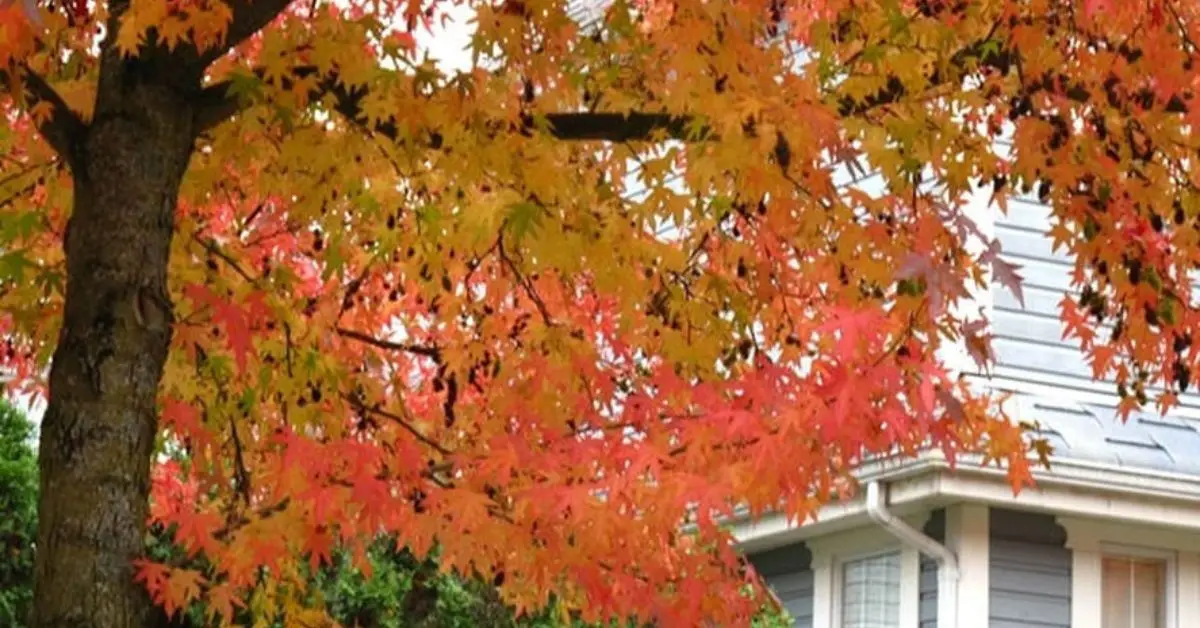
Why It’s Risky: Sweetgum roots spread wide and can grow close to the surface. As the tree matures, roots thicken and expand outward unpredictably.
Typical Problems Reported:
- Lifted sidewalks
- Cracked driveways
- Uneven front yards
- Underground utility disruption
6. American Elm (Ulmus americana)
Why It’s Risky: American Elms grow tall and wide. Their roots are extensive and often close to the surface, especially in compacted soil conditions.
Typical Problems Reported:
- Sidewalk upheaval
- Surface roots interfering with lawns
- Foundation stress when planted too close
7. Northern Red Oak (Quercus rubra)
Why It’s Risky: Red Oaks grow large — very large. Their root systems expand proportionally to their canopy. While they’re not as aggressive as willows, their size alone makes them risky in confined spaces.
Typical Problems Reported:
- Soil shifting near foundations
- Driveway cracks
- Competition with underground utilities
Trees People Think Are Bad, But Can Be Safe at the Right Distance
Here’s where a lot of homeowners get confused.
Not every tree near a house is dangerous. The real issue isn’t the tree itself — it’s how close you plant it and how large it eventually becomes.
I’ve seen people remove perfectly safe ornamental trees simply because they read that “trees damage foundations.” That’s not the full picture.
Let’s clear up a few common misconceptions.
Crepe Myrtle
Why people worry: Visible surface roots make it look aggressive.
What actually happens: Crepe Myrtle has a relatively compact root system compared to large shade trees. When planted 10–15 feet away from your foundation, it rarely causes structural issues.
When problems show up:
- Planted too close to driveways
- Soil compacted tightly around the base
Give it space, and it’s generally low risk.
Dogwood
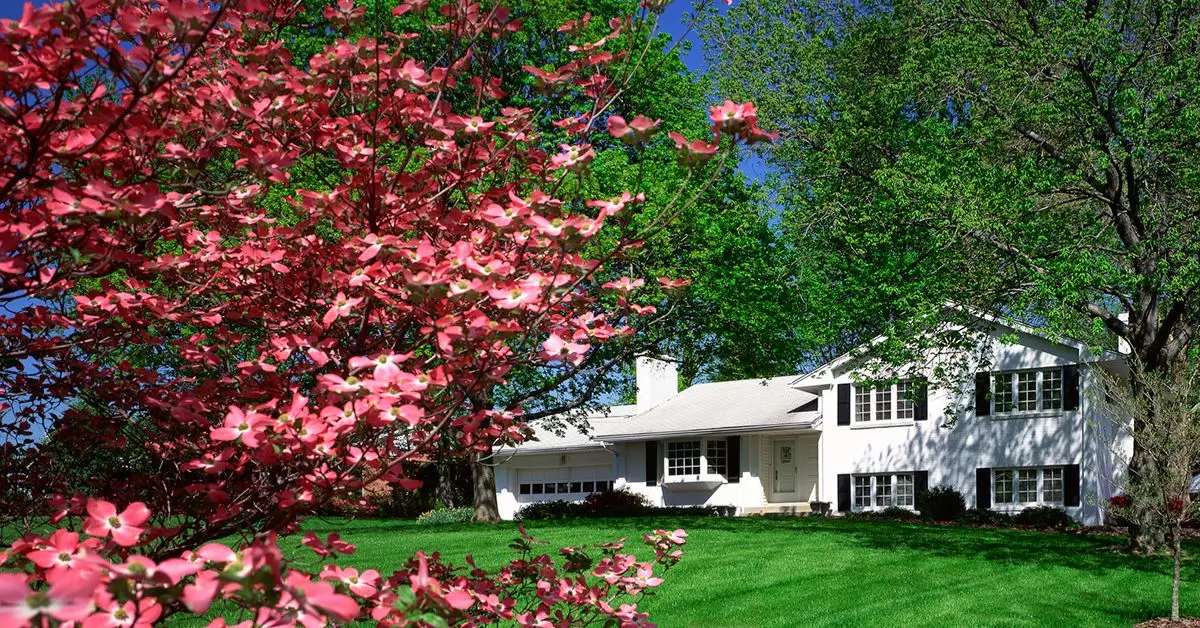
Why people worry: It’s labeled as “surface-rooted.”
What actually happens: Dogwoods are small, slow-growing trees. Their roots are not typically strong enough to crack solid foundations.
When problems show up:
- Poor drainage
- Planted directly above utility lines
With proper spacing, Dogwood is considered a safer option for residential lots.
Japanese Maple
Why people worry: It’s a maple — and people associate maples with aggressive roots.
What actually happens: Japanese Maples are much smaller and more controlled than Silver Maples. Their root systems are compact relative to their mature size.
When problems show up:
- Tight planting beds
- Hardscapes installed too close to the trunk
In most suburban yards, they’re manageable when given adequate clearance.
Dwarf Fruit Trees
Why they’re overlooked: Some assume fruit trees are messy or root invasive.
What actually happens: True dwarf varieties are bred to stay compact both above and below ground.
When to be cautious:
- Avoid planting directly over sewer lines
- Follow nursery spacing guidelines carefully
If you want something productive near your home, dwarf fruit trees are often a practical and safer compromise.
The lesson here is simple:
Don’t avoid trees. Avoid planting mistakes.
Now let’s make sure you don’t make one.
Pre-Planting Checklist for Homeowners
Before you dig, slow down and walk through this with me.
1. Call 811 Before Digging
This step protects you from serious underground damage.
By contacting the national Call 811 utility marking service, you can have underground gas, water, sewer, and electric lines marked before you plant. It’s free and required in many areas.
One phone call can prevent thousands of dollars in repairs.
2. Test Your Soil and Plan Irrigation
Your soil type changes how roots behave.
- Clay soil expands and shrinks, increasing foundation movement risk
- Sandy soil drains quickly, pushing roots to travel farther for moisture
- Poor drainage encourages shallow root spread
If your irrigation system runs near your foundation, roots may move toward that water source. Plan your watering zones carefully.
3. Follow a Practical Spacing Rule
Here’s a simple rule I recommend:
- Small ornamental trees: 10–15 feet from foundation
- Medium trees: 15–20 feet
- Large shade trees: 20–30+ feet
- Keep all trees well away from sewer line paths
If your yard can’t handle that spacing, choose a smaller species. Don’t squeeze a large tree into a tight lot.
4. Consult a Certified Arborist
If you’re investing in landscaping, getting professional input makes sense.
An arborist can:
- Evaluate soil conditions
- Identify root risk factors
- Recommend safe species for your region
- Flag underground danger zones
It’s a small upfront cost compared to foundation or sewer repairs later.
Before you plant anything, take a step back and ask yourself:
Is this tree truly right for my space — or am I just thinking about how it looks today?
Making Smart Tree Choices That Protect Your Home and Landscape
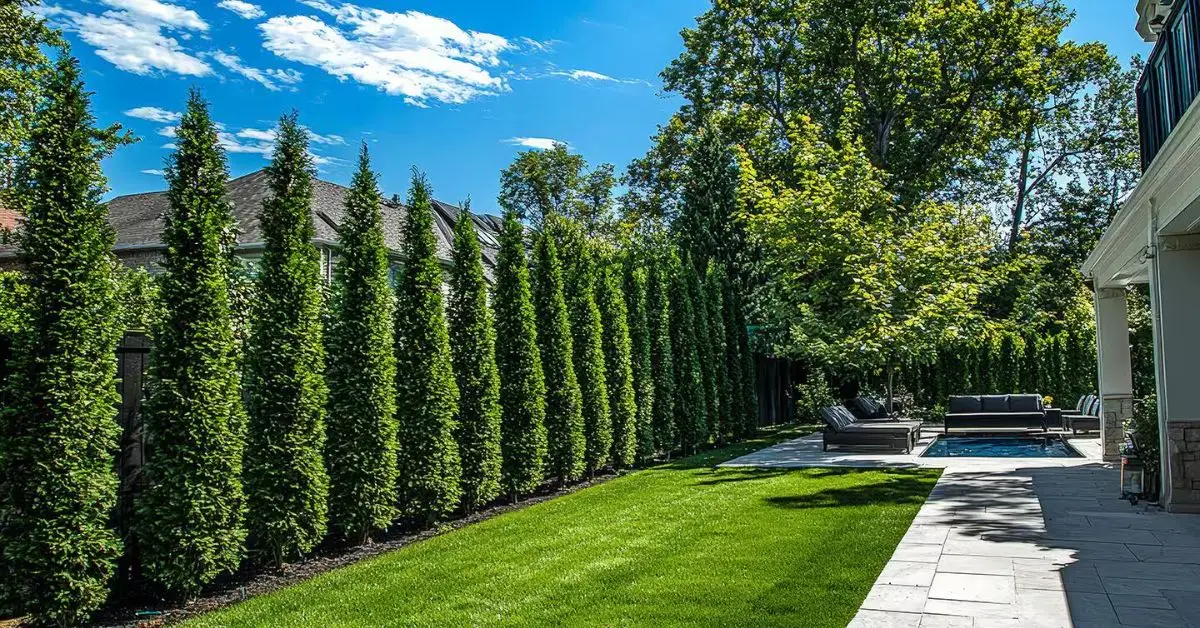
If you remember nothing else from this guide, remember this:
It’s not about avoiding trees.
It’s about planting the right tree in the right place.
Most foundation and sewer problems don’t happen because homeowners were careless. They happen because no one explained how roots actually behave underground. Fast-growing, water-seeking, large-canopy trees need serious space. Smaller ornamental or dwarf varieties can work beautifully — if you respect distance and soil conditions.
Before you plant, keep this short checklist in mind:
- Think long-term growth, not current size
- Match tree size to lot size
- Keep large trees 20–30+ feet from foundations
- Never plant near known sewer line paths
- Call 811 before digging
- When unsure, ask a certified arborist
These small decisions today can prevent five-figure repair bills later. And if you’re already dealing with storm damage, it’s important to know whether you’re liable when a neighbor’s tree falls in your yard — or if they are.
If you’d like a simple, printable spacing chart and pre-planting checklist, I’ve put one together for homeowners who want to plan properly. You can download it directly from Build Like New and use it before your next landscaping project.
Now I’d like to hear from you.
Do you already have large trees close to your home?
Have you ever dealt with root damage or sewer line issues?
Drop your experience in the comments. Your story might help another homeowner avoid the same mistake.
Disclaimer: This article is for general educational purposes only. Tree behavior varies by soil type, climate, and property conditions. For specific advice about your home, foundation, or underground utilities, consult a certified arborist, licensed contractor, or local building professional.