Forget the Nursing Home Because California’s ADU Boom Is Keeping Families Together
I drive through neighborhoods in Los Angeles these days and notice something different. Backyards have cranes. Driveways have permit notices. Families are not offering the spare bedroom anymore. They are pouring concrete.
The guest room model is quietly dying. The ADU – Accessory Dwelling Unit, or what people used to call a “granny flat” is replacing it. Not because it is trendy. Because the old way stopped working.
California’s ADU boom is not a real estate fad. It is a response to broken housing economics, aging parents, adult children who cannot afford to leave, and a state that finally rewrote its laws to match how families actually live.
The Numbers Are Not Subtle
Nationally, nearly 4 million owner-occupied households – 4.5% of all homes are made up of three or more generations of the same family, up from 4.3% in 2019, according to a Realtor.com report based on U.S. Census Bureau data from 2024.
California is leading this shift in a way no other state is.
Los Angeles tops the country with nearly 24% of active for-sale listings being multigenerational homes, followed by San Diego at 22.7%, San Jose at 18%, San Francisco at 17.4%, and Riverside at 14.9%.
And here is the part that should make every California homeowner pay attention: properties with ADUs saw their median appraised value reach $1,064,000 by 2023, compared to $715,000 for properties without and they appreciated at an annualized rate of 9.34% versus 7.65% for non-ADU properties, according to the FHFA.
You can see a similar shift in how properties are being evaluated, where places like this rare Santa Fe Moon Mountain estate highlight the growing importance of flexible, multi-use living spaces.
Why Families Are Really Doing This
Most articles will tell you it is about rental income. That is part of it. But it is not the whole story.
Among buyers choosing multigenerational setups, 36% cited cost savings as their main reason — but 25% said it was to care for aging relatives, and 21% said it was to bring adult children back home.
Those last two numbers are the ones nobody talks about loudly enough.
A memory care facility in California runs $8,000 to $12,000 per month. An ADU is a one-time build. For families doing that math, the backyard home is not an upgrade. It is a rescue plan.
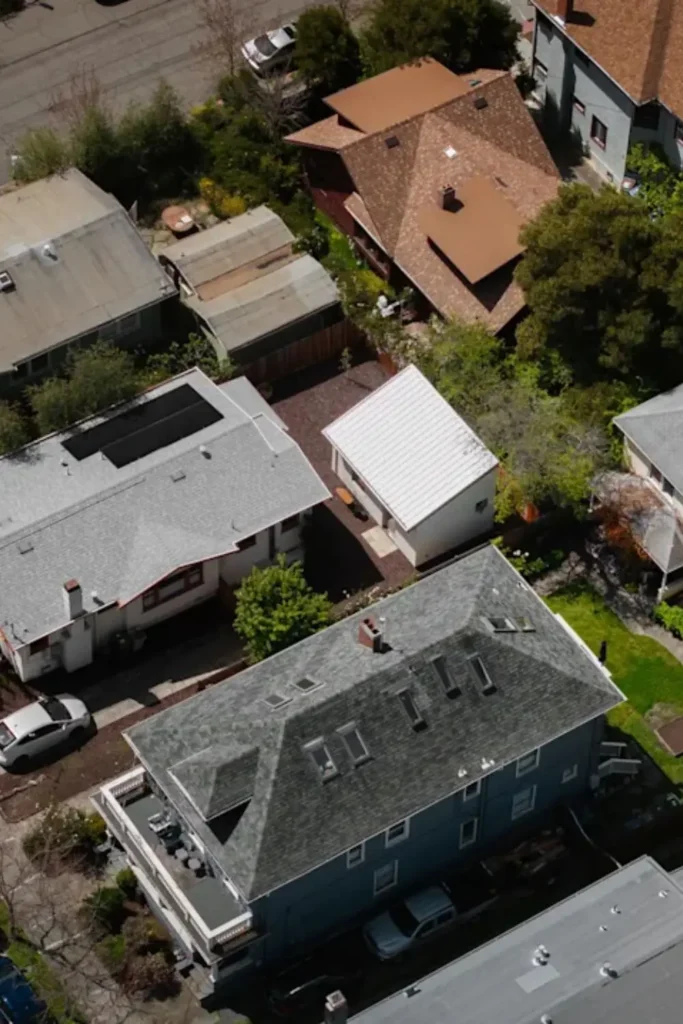
For adult children priced out of buying their own home, an ADU gives them a low-cost place to save while parents get either help with the mortgage or just the comfort of having someone nearby.
In the Bay Area, luxury clients are using ADUs as a “step-down” for aging parents who want to maintain independence without moving far away, according to Alexander Kalla, a Silicon Valley real estate agent who specializes in multigenerational properties.
This is proximity without the loss of privacy. That combination is rare. That is why families are paying for it.
California Changed the Rules – Most Homeowners Have Not Caught Up
For years, California cities used slow permitting and zoning red tape to quietly kill ADU projects. That era is largely over.
Under SB 543, signed into law in October 2025, if a city fails to act on a complete ADU application within 60 days, the permit is automatically deemed approved. Cities can no longer use delay as a de facto denial.
After the 2025 LA wildfires, the state went further.
Local governments began issuing rebuilding permits at nearly three times the pace seen in the five years before the fires and ADUs became both emergency shelter and a permanent reimagining of how fire-affected families would live together going forward.
The legislative momentum is also covered in detail by the New York Times’ recent reporting on how California homeowners are rethinking their properties entirely, a shift now visible in markets well beyond California’s borders.
What It Actually Costs and What Nobody Tells You First
In California in 2025, homeowners can expect to spend between $75,000 and $450,000+ depending on ADU type, location, size, and site conditions.
Garage conversions sit at the lower end. Detached backyard homes with full kitchens and separate entrances sit at the top. The gap is wide, and your lot, city, and soil conditions will all shift that number.
Financing has also quietly improved. ADU-specific loans, HELOCs, and cash-out refinances are all viable paths in 2026, and many lenders now underwrite against the ADU’s future rental value — not just the home’s current equity.
But here is the thing most articles skip entirely: the financial plan matters less than the family conversation you have before permits are pulled.
Who owns the space? Who pays for repairs? What happens if the parent needs more care than proximity can provide? These questions, left unanswered, turn a good investment into a family conflict.
Build the home second. Build the agreement first.
Why This Matters Beyond One Family’s Backyard
California needs an estimated 2.5 million new housing units by 2030. Traditional construction cannot close that gap fast enough.
ADUs are not the whole solution. Even in premium markets, homes like this Los Angeles property once owned by a famous DJ reflect how buyers are shifting toward adaptable living setups rather than just traditional luxury features.
But they are the fastest, most politically viable, least disruptive piece of it. No new land needed. No neighborhood character destroyed. Just underused backyard space converted into homes where real families can actually live.
Realtor.com economist Jiayi Xu describes California’s multigenerational housing surge as a “perfect storm” driven by deep-rooted cultural traditions, surging housing costs, and a housing stock increasingly built or adapted for multiple family units.
For the data behind how dramatically ADU values have outpaced standard homes over the last decade, the FHFA’s full analysis on California ADU appraisal trends is worth reading before you make any decision.
What California is proving right now is that the backyard home is not a workaround. It is a preview of how the rest of America will house its families within a decade.
What Are You Building For?
If you are a California homeowner sitting on a backyard that has been doing nothing for years, this is the moment that math changed around you.
The laws are better. The financing is better. The family reasons have never been clearer.
The guest room was a compromise. The backyard home is a decision.
Have a question about starting an ADU project in California – permitting, costs, or family planning? Drop it in the comments below. And if you found this useful, visit Build Like New for more practical guides on home construction and renovation decisions that actually matter.
If you want to keep up with how modern homes and smart building trends are evolving, you can follow along on X and also join the conversation with other readers on Facebook.
Disclaimer: This article is for informational purposes only. ADU laws, costs, and financing options vary by city and county across California. Always consult a licensed contractor, real estate attorney, or financial advisor before beginning any ADU project.