Going East in SW Florida Could Save You Hundreds of Thousands on Your Next Home
Every few months, another ranking drops, and somehow, Southwest Florida is on it again.
Naples. Cape Coral. Fort Myers. Bonita Springs. One of them is always near the top. And if you’ve been watching this region for a while, you already know it’s not a coincidence.
But here’s what most “best places to live” articles get wrong: they tell you what ranked, not why it keeps happening. That’s what I want to break down here.
The Rankings Are Real, and They’re Stacking Up
Naples just claimed the #1 spot on U.S. News & World Report’s 2025-2026 Best Places to Live list among 150 major U.S. cities.
That’s not a fluke. The city also holds the top position on WalletHub’s best places for families in Florida (based on education, health, and safety) and ranked #1 on U.S. News’ Best Places to Retire list for 2024-2025.
Fort Myers? WalletHub ranked it the #2 best small city in the United States to start a business in 2026, out of 1,300 cities.
Cape Coral has appeared on Forbes’ best places to live in Florida and routinely shows up in national livability studies.
Four Florida cities made Livability’s 2026 “100 Best Places to Live” list. Cape Coral was among them.
The pattern is too consistent to dismiss.
What’s Actually Driving the Rankings
It comes down to three things working together: tax advantages, lifestyle access, and a migration wave that keeps validating both.
Florida has zero state income tax. No tax on Social Security, no tax on pensions, no tax on IRA or 401(k) withdrawals at the state level. For a retired couple moving from New York or Illinois, this alone can mean saving tens of thousands of dollars per year.
The effective property tax rate sits at roughly 0.79%, which is below the national median of 0.90%.
That’s not a lifestyle selling point. That’s math.
The outdoor lifestyle is genuinely unmatched at this price range. SW Florida averages 271 sunny days a year and 74°F year-round. Cape Coral has over 400 miles of navigable canals, more than Venice, Italy, with thousands of homes offering direct Gulf access.
There are 200+ golf courses across the region, from public courses under $40 to exclusive Naples clubs. Beaches like Sanibel Island and Fort Myers Beach consistently rank among the best in the country on TripAdvisor and USA Today.
And it’s not just the beaches and golf. Florida’s wildlife is a whole other world, sometimes literally at your front door.
A Florida mom recently discovered two alligators fighting on her porch, which honestly tells you everything about how close nature gets when you live here.
And the migration keeps coming. The Cape Coral-Fort Myers metro area grew 38.76% between 2010 and 2024.
Cape Coral’s population has risen 28.85% since the 2020 census alone, growing at roughly 3.88% annually. The metro area is projected to exceed one million residents by 2050.
People are voting with their U-Hauls.
The Angle Nobody Is Writing About: Go East
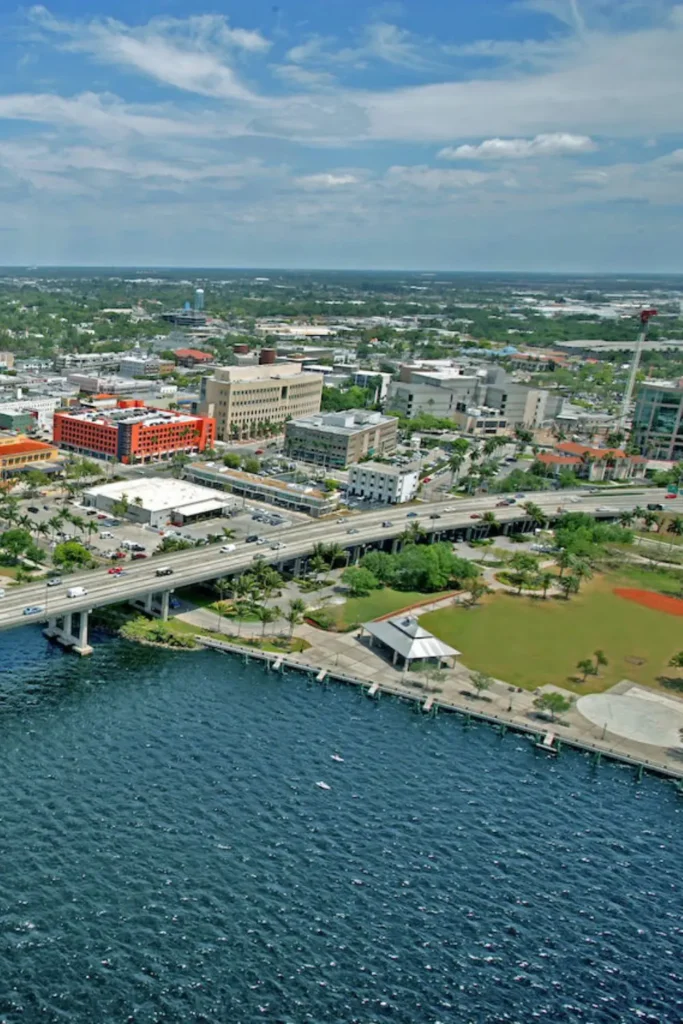
Here’s the part that most ranking articles completely miss, and it’s the most important shift happening in SW Florida right now.
According to Naples News, being near the beach is no longer the primary driver of home sales in the Naples area.
Buyers are moving east, into Collier County’s inland communities, where they can access the same lifestyle infrastructure at significantly lower prices.
Eastern Collier County ZIP codes (34114, 34117, 34120, 34137) saw closed single-family home sales jump 19.1% in February 2026, per NABOR® data.
Multiple developers have announced plans for 14,000 new homes in this corridor, with construction expected to begin within 9-12 months.
Fort Myers’ median home price sits at $308,876 as of April 2026. Naples’ median is $551,996. That’s a 44% price gap for access to roughly the same beaches, events, golf courses, and employment base.
The smart money has already noticed.
If you want to stay updated on Florida real estate shifts and local news as they happen, this WhatsApp channel covers exactly the kind of ground-level updates that don’t always make the headlines.
Why This Matters: The Numbers Behind the Hype
The NABOR® February 2026 Market Report tells the story clearly. Pending home sales in Collier County surged 55.9% in February 2026 compared to February 2025. Condo pending sales specifically shot up 82%, from 392 to 714 contracts in a single month.
Year-to-date pending volume through March 2026 is running 34.1% above the same period in 2025.
This isn’t speculative enthusiasm. This is buyers signing contracts.
What the Rankings Won’t Tell You
I’d be doing you a disservice if I stopped there.
Insurance costs are real. Post-Hurricane Ian, homeowners insurance in coastal SW Florida is among the most expensive in the country.
Depending on your location and flood zone, annual premiums can run $4,000-$10,000+ before flood insurance, which is separate and often required.
CDD and HOA fees are hidden costs most buyers underestimate. New construction communities, especially in eastern Collier, often carry Community Development District fees of $1,500-$4,000 per year on top of HOA dues.
These don’t always show up in the listed home price.
The luxury market is cooling at the top. Naples home prices were down 9.62% year-over-year as of March 2026, with days on market averaging 83+ days.
This isn’t a crash; it’s a correction. But buyers who overpay in the $1M+ range right now may face slower appreciation than the headline rankings suggest.
Wildlife and safety incidents are part of Florida life too. It’s not just alligators. Officers recently had to remove a venomous cottonmouth snake found curled at a Florida home’s front door.
And in a completely different kind of threat, a Florida teen was arrested for swatting a Germantown home twice, a reminder that knowing your neighborhood goes beyond just checking the school rating.
These aren’t reasons to avoid SW Florida. They’re reasons to research it properly.
Do your insurance math before you do your mortgage math.
If this section raised questions for you, drop them in the comments below. Whether it’s about flood zones, specific ZIP codes, or insurance costs in a particular area, I’ll do my best to address what comes up most.
Key Takeaways
- SW Florida’s rankings are structural, not seasonal. The tax advantage, climate, and lifestyle infrastructure create a self-reinforcing cycle.
- The eastern Collier corridor is the 2026 buyer opportunity. Lower prices, same region, 14,000 new homes incoming.
- Fort Myers is the most accessible entry point with the highest business growth upside.
- Insurance, CDD fees, and flood zone status should be researched before you fall in love with a listing.
- The region is cooling at the luxury end and heating up in the mid-range and east. Know which market you’re entering.
Conclusion
SW Florida doesn’t keep landing at the top of these lists by accident. There’s a formula behind it, and that formula is getting smarter as buyers learn to look east instead of west for value.
If you’re thinking about buying, investing, or relocating here in 2026, the window before those 14,000 new eastern Collier homes hit the market is real. Do your research now.
For more on Florida real estate, home safety, and practical buyer guides, visit Build Like New.
And if you want to follow along as we cover these stories in real time, we’re on X (Twitter) and in our Facebook community, where we regularly share updates, discuss what’s happening in local markets, and answer questions people are actually asking.
Disclaimer: This article is for informational purposes only and does not constitute financial, legal, or real estate advice. Always consult a licensed real estate professional before making any property decisions.