Massive Water Oak Falls on Page Avenue Home and Leaves Atlanta Couple Counting Their Lucky Stars
I’ve covered a lot of storm damage stories, but this one stopped me cold.
On May 28, a massive water oak came crashing down on a home along Page Avenue in Candler Park, northeast Atlanta. It didn’t just damage the roof. It split the house in two. Steven Renner and his wife were inside when it happened.
They walked out alive. That’s the only good part of this story.
“It Sounded Like a Violent Storm”
Renner described the impact as thunderous. The house shook, the ground shook. Within seconds, what had been a peaceful backyard garden built over years, full of birds and bees, looked like, in his own words, a bomb had gone off.
The part that should concern every Atlanta homeowner?
An arborist had inspected that exact tree just days before. The root structure was assessed as healthy. The tree didn’t uproot. It split at the base and dropped.
You can read the full original report from Atlanta News First for the on-scene details and video footage.
What Nobody Is Telling You About Water Oaks
Water oaks (Quercus nigra) are everywhere in Atlanta’s older neighborhoods, and they are one of the most structurally deceptive trees in the Southeast.
According to Clemson Cooperative Extension, water oak wood is weaker than most other oaks and far more prone to internal decay. Trunks often begin rotting from the inside by the time the tree hits 50 years old, sometimes earlier.
Here’s the dangerous part: that rot doesn’t always show on the outside. A tree can look full, green, and stable while being hollow at the base.
The Candler Park incident is a textbook example. The roots were fine. The trunk gave out.
Why This Matters: The Numbers Are Serious
This isn’t a once-in-a-decade freak event. Falling trees cause far more structural damage than most people realize.
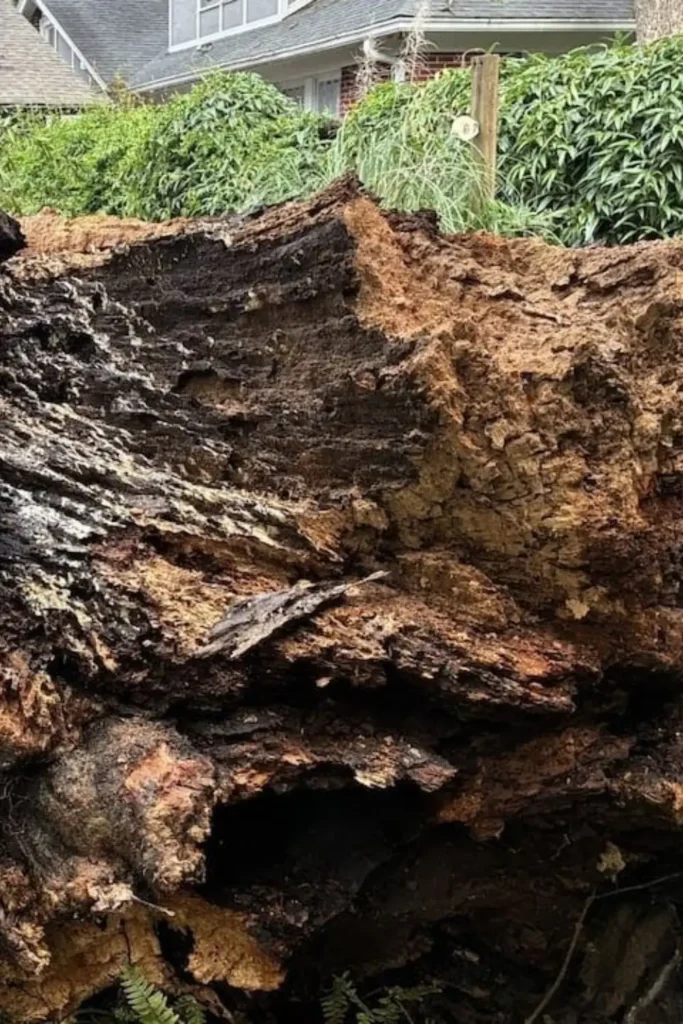
Atlanta News First
According to data from Richmond Tree Service, after Hurricane Ike, the Ohio Insurance Institute found that out of $550 million in structural damage claims, approximately $300 million from around 50,000 incidents was caused directly by falling trees.
That’s a number the insurance industry quietly folds into “storm damage” categories.
And the same week this happened in Candler Park, a separate massive tree toppled onto a Sandy Springs street, barely missing nearby homes. This is a pattern, not a fluke.
Structures get hit fast, with almost no warning. It’s the same brutal reality seen in this golf cart crash in Delaware that sent a person to the hospital. Different cause, same unforgiving speed of impact.
If these kinds of sudden home-damage incidents interest you, there’s a good community discussion happening on this WhatsApp channel where homeowners share real experiences and damage updates worth following.
What You Should Check Right Now
If you have a mature water oak on your property, especially one over 40 years old, here’s what to look for:
- Mushrooms or fungal growth at the base of the trunk
- Visible cracks where major limbs branch off
- A hollow sound when the trunk is knocked
- Excessive small branch drop during calm weather
Don’t just ask an arborist “is it healthy?” Ask specifically: Is there internal trunk decay? Has the base been resistance-tested? A visual inspection alone can miss what’s rotting inside.
It’s not just trees either. Homes in residential neighborhoods face structural threats from multiple angles, including a 15-year-old driver who lost control and crashed into a Clearwater home and car.
Whether it’s a tree or a vehicle, your home’s structural integrity matters more than most people think about day-to-day.
On Insurance: Know This Before You Need It
Standard homeowners insurance in Georgia typically covers sudden, accidental tree damage to your home. But debris removal is usually capped between $500 and $1,000, which barely covers the cleanup, let alone repairs.
If you knew the tree was compromised and didn’t act, your insurer may deny the claim on negligence grounds. Document everything. Call your insurer before hiring contractors.
Coverage gets even more complicated when the structure involved isn’t a traditional home, as seen in this case where a car crashed into a Smith County mobile home on US Highway 271 and left residents with a pile of questions about liability and coverage.
The basics apply regardless of structure type: document, call your insurer, and don’t sign anything with contractors first.
Final Thought
The Renners lost their garden and a big piece of their home. But they walked out of that house. Not everyone does.
Atlanta is called the “City in a Forest” for a reason, and that canopy is beautiful. But some of those trees are ticking quietly. The question is whether you check before or after.
Do you have a mature water oak near your home, or have you dealt with tree or storm damage before? Drop a comment below. I read every one, and your experience might help someone else catch a problem before it becomes a crisis.
For more real-world home safety and damage recovery coverage, visit Build Like New.
If you want to stay updated on stories like this as they happen, follow along on X (Twitter) and join the conversation in the Build Like New Facebook group. Both are active and worth your time.
Disclaimer: This article is for informational purposes only. For tree risk assessment, consult a certified ISA arborist. Insurance coverage varies by policy. Contact your provider for specifics.