A Six Foot Black Rat Snake Was Removed From a Meriden Home After Eight Snake Skins Were Found in the Attic
Bill Schwabe thought he had a wildlife visitor passing through his yard. He didn’t realize that visitor had already moved in and had been living above his head for years.
The Day the Camera Told the Truth
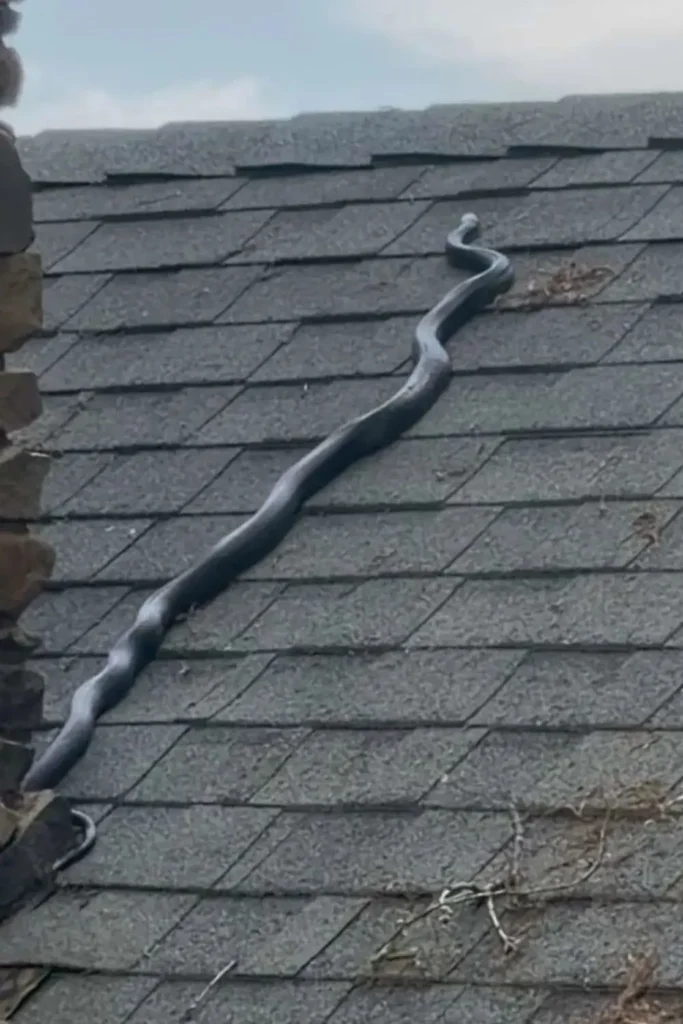
It started on a Tuesday in Meriden, Connecticut. Schwabe spotted a large snake in his backyard on Westfield Street and watched it climb straight up the roof.
“I saw him in the backyard and then he slithered up the roof. I didn’t realize he was going into my house,” Schwabe said.
Instead of panicking, he set up motion cameras to track when the snake came and went. Three nights later, that footage reached Don Dandelski, a wildlife handler with 34 years of experience. His reaction? “That’s a big snake.” That was an understatement.
Seventy Inches. Three Inches Thick. And Not Alone.
Schwabe’s tenant spotted the snake exiting the roof, grabbed it, and dropped it in a barrel. The tape measure read just over 70 inches. Nearly six feet long, roughly three inches thick.
The real shock was already inside. Schwabe found eight shed skins in the attic, all around six feet long. This snake had been living there for years, shedding and hunting completely unnoticed.
What Kind of Snake Actually Does This?
The snake was a northern black rat snake (Pantherophis alleghaniensis), and this species is built for exactly this.
According to the Connecticut DEEP Wildlife Division, the eastern rat snake is Connecticut’s largest native snake, typically 46 to 68 inches. At 70 inches, this one was beyond what even Dandelski had seen in three decades.
Its body is square in cross-section, built for climbing walls, trees, and gaps where shingles meet the gutter. It follows mice. When it finds a warm attic with easy prey, it stays.
Schwabe wasn’t even bothered: “It keeps down my mice population. Which is a good thing.”
The black rat snake is non-venomous, but not every snake that shows up in a home is. If you’ve been following stories like the rise of copperheads in American homes, you know that telling the difference isn’t always easy.
Have you ever found a snake or anything unexpected in your home? Drop it in the comments.
Why This Matters and Why It Could Happen to You
This isn’t a one-off story. It’s a pattern.
According to the National Wildlife Federation, eastern rat snakes are the species most likely found around buildings, hunting rodents across most of the eastern U.S.
Of Connecticut’s 14 native snake species, only two are venomous. The black rat snake isn’t one of them. Still, eight shed skins in your attic is not nothing.
Meriden isn’t even the most extreme case. A Montana family once found an entire snake den underneath their home’s foundation, a situation that took far longer to resolve. This is a growing pattern in suburban America.
Connecticut law also doesn’t allow snakes to be relocated far. Dandelski will move this one further into Schwabe’s own backyard.
For updates when stories like this break, there’s a WhatsApp channel covering home and wildlife news as it happens.
What You Should Actually Do
Schwabe’s approach is the right one. Don’t go poking around. Set up a camera near the suspected entry point, confirm the pattern, then call a licensed wildlife control operator.
A few steps to prevent it:
- Check your roofline. Seal the gap where shingles meet the gutter with hardware cloth or metal flashing.
- Deal with rodents first. Remove the food source, remove the attraction.
- Trim trees near the roof. Overhanging branches are a direct ramp for climbers.
If you find one, don’t kill it. It’s illegal in Connecticut and it’s probably keeping your mouse count down. Removal handling matters too. In one Florida case, officers caught a venomous cottonmouth right at a homeowner’s front door, and how it was handled made all the difference.
Follow along on X or in our Facebook community for updates like this as they happen.
Wrapping Up
Schwabe’s calm approach turned a six-foot attic snake into a manageable situation. Camera, expert, removal. That’s the real takeaway here.
Read the original WFSB report here. For more practical homeowner guides, visit Build Like New.
Disclaimer: This article is for informational purposes only. If you encounter a snake or wildlife issue, contact a licensed wildlife control professional or your state wildlife agency.