Millions of Families Fight Over the Thermostat Every Summer and Nobody Ever Wins
Living with three generations under one roof is a beautiful mess. But nothing turns it ugly faster than the thermostat.
Grandma’s wrapped in a blanket at 74°F. Your teenager just cracked the window. Dad’s arguing with everyone. And somehow, you’re stuck in the middle of a fight nobody wins.
Here’s the thing. It’s not a personality clash. It’s biology.
Why Everyone Feels a Different Temperature in the Same Room
Your body produces heat based on age, metabolism, and gender. As people get older, their metabolic rate drops and they lose the ability to stay warm. That’s not drama. That’s physiology.
Women tend to feel comfortable around 77°F while men prefer closer to 72°F. Babies can’t regulate body temperature at all. Teenagers with fast metabolisms run hot no matter what season it is.
So when you set one thermostat at 70°F, you’ve already made at least one person miserable before breakfast.
If you’ve also had guests staying over and wondered why they’re never comfortable either, here’s how different people experience the same temperature differently and what actually helps.
The Real Problem Is Your Home’s Setup
Most multigenerational homes run on a single thermostat built for a nuclear family, not three generations with completely different needs.
Heat rises. The upstairs bedroom where grandma sleeps can easily run 4°F warmer or cooler than the main floor. One thermostat setting doesn’t fix that. It just moves the fight to a different room.
On top of that, most thermostats are installed in hallways where nobody actually spends time. So the temperature reading driving your entire home’s cooling isn’t even accurate for the rooms people live in.
Here’s What Actually Works (By Budget)
Start free with the 2-degree rule. Set the upper floor to your desired temperature. Each floor below goes 2°F warmer in summer. In winter, flip it. Set the lowest floor to your target and each floor above it 2°F cooler. Warm air naturally rises and does the balancing for you.
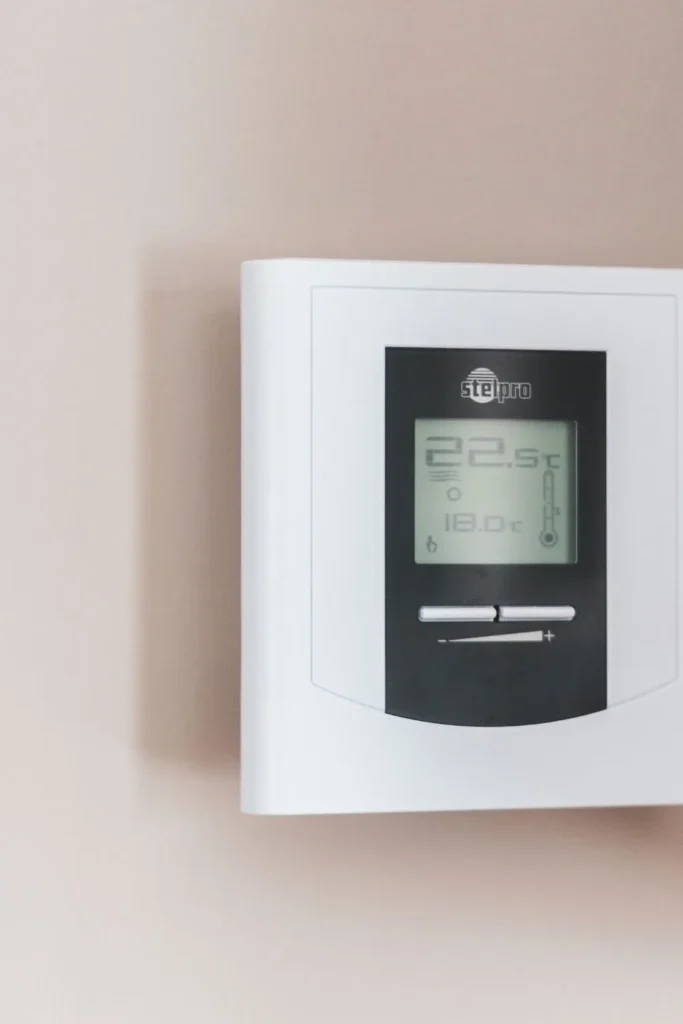
The U.S. Department of Energy recommends 78°F in summer and 68°F in winter as the energy-efficient baseline to build from.
Add ceiling fans. Run them counterclockwise in summer to push cool air down. In winter, switch direction to low speed so warm air comes back down from the ceiling. This alone can make a room feel 4°F different without touching the thermostat.
Remote sensors cost around $30 to $40 each. These tell your AC to cool based on the room where your family actually sits, not the empty hallway where the thermostat lives. Small upgrade, big difference.
A smart thermostat runs $80 to $300. Schedule different temperatures for different times of day. Voice control through Alexa or Google means elderly family members don’t have to touch anything. Rooms cool down when occupied, ease up when empty.
A lot of families dealing with this are also quietly switching to heat pumps. One system that both heats and cools, with better zone control than traditional HVAC. Here’s a full breakdown of whether a heat pump actually makes sense for your home and energy bills.
If you want practical, real-world fixes from homeowners in the same situation, there’s a WhatsApp channel covering home comfort and improvement tips worth checking out. People share what’s actually working, not just what sounds good on paper.
An HVAC zoning system runs $1,500 to $8,500. Dampers go inside your existing ductwork. Each zone gets its own thermostat. Grandma’s wing stays warm. The kids’ rooms stay cool. Nobody compromises.
A ductless mini-split costs $2,000 to $14,500. One outdoor unit, up to 8 indoor units. Every room gets its own temperature and its own remote. This is the permanent end to the argument.
And before any of this works at full efficiency, your AC unit itself needs to be in shape. Experts explain exactly when to uncover your AC unit in spring so it’s ready before the season hits.
Match the Fix to Who’s Actually Struggling
Not every family needs the expensive upgrade. Think about who’s most affected first.
If elderly parents or grandparents are moving in, their bodies genuinely can’t compensate for cold the way younger people can. Priority is consistent warmth in their room. A simple programmable thermostat with a large display works better for them than a complicated app.
If you have babies or toddlers, the American Academy of Pediatrics recommends 68°F to 72°F for infant rooms. This isn’t preference. Overheating in infants is a documented SIDS risk factor.
If your home has a basement suite or in-law addition, set it independently. Basements have their own thermal behavior and don’t follow the floor-by-floor rule that works for the main house.
Why This Matters More Than You Think
Nearly 60 million Americans now live in multigenerational homes. That’s 18% of the U.S. population according to Pew Research, and the number keeps climbing. Thermostat conflict is one of the most common daily friction points in these households.
Women are significantly more likely to report ongoing temperature disputes, per a peer-reviewed Ohio State study published in PLOS ONE.
This isn’t a minor inconvenience. Prolonged cold exposure raises cardiovascular risk in older adults. Daily temperature arguments quietly erode what could be a genuinely good living situation for everyone involved.
What’s the thermostat situation in your home right now? One floor or multiple, and who’s always the one adjusting it? Drop it in the comments. I’ll tell you exactly which fix makes the most sense for your setup.
The Short Version
One thermostat, one temperature, multiple generations. That’s the actual problem. The fix isn’t getting everyone to agree. It’s building a home where nobody has to.
Start with the 2-degree rule today. Add a smart thermostat when ready. Upgrade to zoning or mini-splits when you want the permanent solution.
For more guides on making your home work better for your whole family, visit Build Like New.
We share practical home tips regularly on X (Twitter) and inside the Build Like New Facebook community. Join us where homeowners are sharing what’s actually working.
This article is for informational purposes only. Consult a licensed HVAC contractor before making system changes. Health-related temperature guidance should be confirmed with your doctor.