A Lightning Strike Set a Winona Home on Fire Wednesday. Here Is What Homeowners Need to Know.
Most people, if lightning hit their house, would panic first and think second. This homeowner did the opposite.
On July 8, 2026, a storm rolled through Winona, Minnesota. Lightning struck a home on the 650 block of West 5th Street, punched through the roofing, and started a fire inside the attic insulation. Before fire crews arrived, the homeowner had already put it out.
That kind of quick action is rare. But here is the part the news report did not cover.
What Actually Happened on West 5th Street
Around 4 p.m., Winona fire crews responded after the strike caused visible roofing damage and ignited insulation in the attic.
The homeowner had already dealt with the fire by the time 911 was called. Once crews arrived, they went through the house checking for fire extension and hidden hotspots. No injuries were reported, according to KTTC’s coverage of the incident.
That detail matters more than most people realize.
Why an Attic Fire After a Lightning Strike Is Never Really “Over”
When lightning ignites attic insulation, the visible fire is not always the whole story. Insulation holds heat. It can smolder quietly inside walls and crawl spaces long after the surface looks clear. What looks extinguished can reignite hours later with no warning.
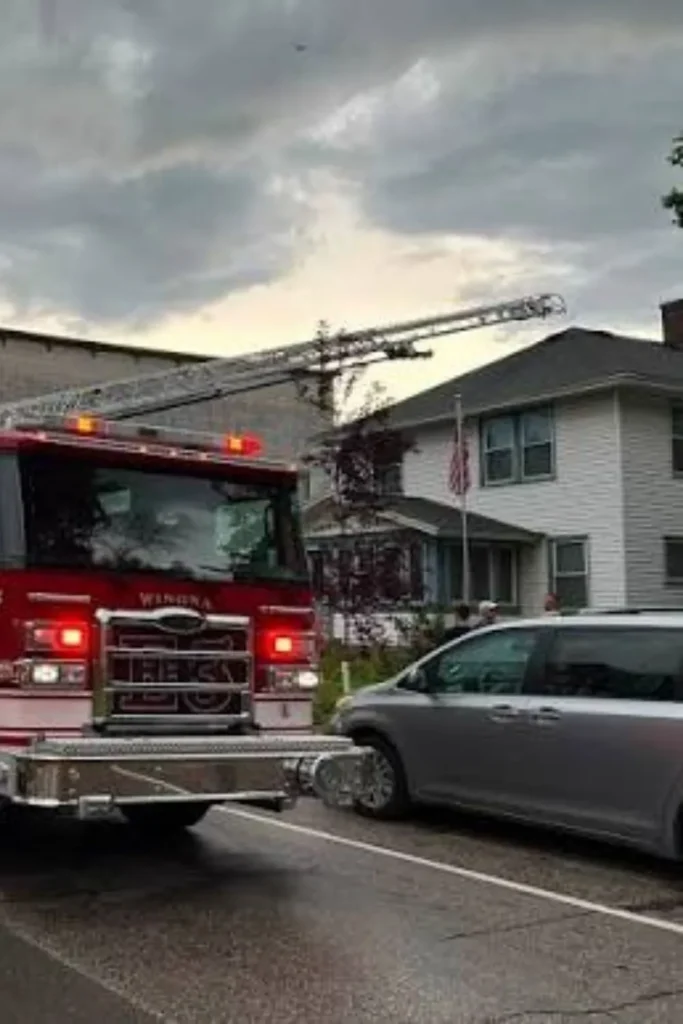
That is exactly why fire crews still checked the house top to bottom after the homeowner had already put the fire out. Thermal imaging and hotspot checks are standard for lightning-caused attic fires. Fire departments have tools no homeowner does.
This is why experts consistently say: call 911 after a lightning strike, even if you see no active flames.
July Is Peak Season for This, and 2025 Just Set an 8-Year Record
This is not a freak one-off. It fits a clear national pattern.
July is the highest-risk month for lightning-caused fires in the United States, accounting for 25% of all annual lightning fire incidents, per the U.S. Fire Administration.
And 2025 was not a normal year. Lightning activity hit an 8-year high with 252 million total strikes, a 20% jump from 2024.
This same week saw other homes dealing with fire in different ways. In a Las Vegas home fire that started in a casita and spread to a neighboring house, leaving one person hospitalized and $200K in damage, the pattern was the same: fire moves fast and does not stay where it started.
If you follow home fire and safety stories as they happen, there is a WhatsApp channel that tracks incidents like this as they break. Worth checking if you want to stay ahead of the news cycle.
Why This Matters
According to the National Fire Protection Association, U.S. fire departments respond to roughly 22,600 lightning-caused fires every year, resulting in $451 million in direct property damage annually.
Attic fires are one of the most common outcomes and one of the easiest to underestimate.
The instinct to act before crews arrive keeps showing up. Just recently, neighbors ran into a burning Antelope home to save a young man before firefighters arrived, pulling him out before the roof came down.
And in Hollywood Hills, a house fire spread fast into surrounding brush before crews could contain it, a reminder that contained fires can change direction fast.
Acting fast and calling for backup are not mutually exclusive. One handles the immediate. The other handles what you cannot see.
Key Takeaways
- Lightning struck a home on the 650 block of West 5th Street in Winona on July 8, 2026
- The strike damaged the roofing and started a fire in the attic insulation
- The homeowner put out the fire before calling 911
- Fire crews checked for hidden hotspots and fire extension after arriving
- No injuries were reported
- July accounts for 25% of all U.S. lightning fires annually
- The NFPA estimates 22,600 lightning fires per year with $451 million in property damage
- Always call 911 after a lightning strike, even if the fire looks out
Have you ever had lightning hit your home or a property nearby? What did you do in those first few minutes? Drop your experience in the comments. Genuinely curious what people do when everything moves that fast.
Wrapping Up
The Winona incident will not make national headlines. Small fire, no injuries, handled quickly.
But it carries a real lesson. The homeowner moved fast. The fire crews still came and did their job. Both mattered.
If stories like this are useful to you, Build Like New covers home safety, property news, and the real stories behind real decisions. Worth bookmarking if you want more than just the headline.
For more in real time, follow Build Like New on X (Twitter) and join the conversation on the Facebook community. That is where these stories get discussed as they break.
Disclaimer: This article is for informational purposes only. All details are based on publicly available reports at the time of publication.