The Space Rock That Destroyed a NJ Ceiling Just Revealed Something Scientists Did Not Expect
On the morning of July 16, 2024, a man in Hillsborough, New Jersey walked to his bedroom door and found a hole in the ceiling above his bed.
Black soot on the carpet. A sharp sulfur smell in the air. And several dark rock fragments scattered across the floor.
He had no idea he was looking at something that formed 4.5 billion years ago, long before Earth even existed.
The Rock Nobody Expected to Survive
Before it hit that bedroom, the object had screamed through Earth’s atmosphere at 32,000 miles per hour. It passed just south of the Statue of Liberty. A sonic boom shook New York City. Doppler radar at Newark Airport briefly picked up a cloud of falling debris stretching from Staten Island deep into New Jersey.
Hillsborough was at the far end of that cloud.
NASA had initially said the rock likely did not survive the fall. No ground impact had been reported. And then one suburban ceiling quietly proved them wrong.
The homeowner later told the New York Times: “Good thing I didn’t sleep in.”
The Decision That Changed Everything
He could have swept it up. Called a contractor. Moved on.
Instead, he called the American Meteor Society. Operations manager Mike Hankey walked him through exactly what to do: disposable gloves, aluminum foil, glass jars. No bare hands, no plastic, no moisture contact.
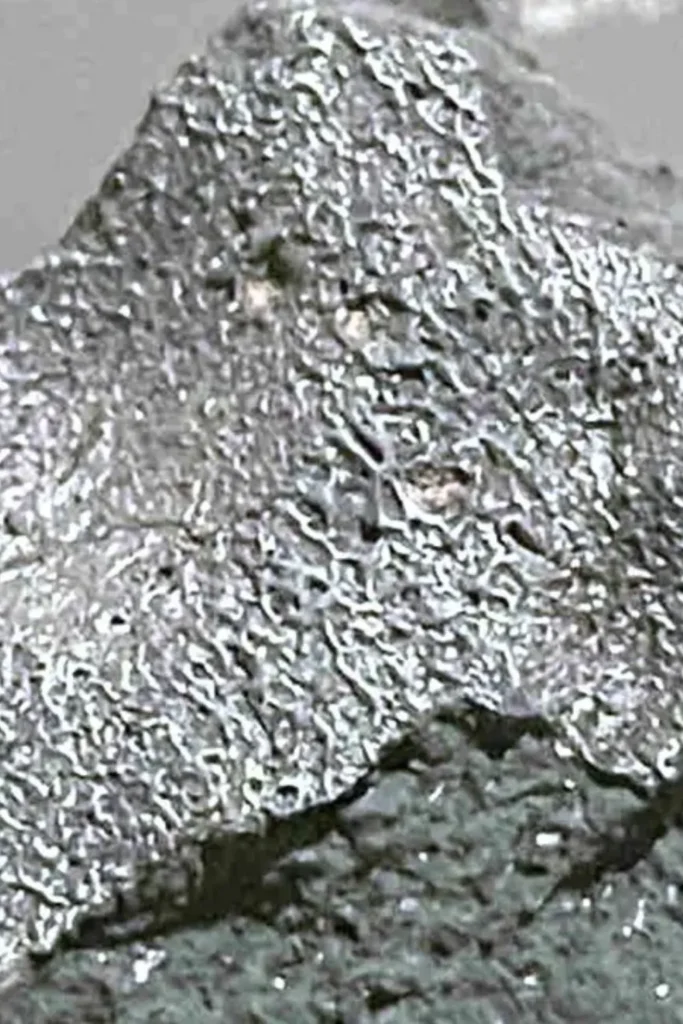
That mattered more than most headlines captured. This rock was porous. Fingerprint oils, rainwater, or even humidity from the air would have destroyed its original chemistry within hours. His careful handling preserved something scientists rarely get: a pristine, uncontaminated sample of primitive solar system material.
About 1.35 kilograms of fragments were recovered. All of them clean enough to study at the highest level.
What Was Actually Inside
Researchers from NASA, the SETI Institute, and universities across multiple countries spent two years on those fragments. Their findings were published July 15, 2026 in Science Advances, as reported by Fox News.
The rock was classified as a CM1/2 carbonaceous chondrite. Only the second meteorite of this exact type ever witnessed landing on Earth. The first was the Kolang meteorite in Indonesia in 2020.
Inside: hundreds of amino acids. The majority do not occur naturally on Earth.
Danny Glavin, senior scientist at NASA’s Goddard Space Flight Center, said the amino acid complexity here exceeded what his team found in purpose-collected samples returned from asteroid Bennu.
“It’s just more proof that the chemical building blocks of life could have been delivered, and are still being delivered, to Earth today by these carbonaceous asteroid fragments,” he said.
Microscopic fractures inside the rock were filled with sodium-rich material, pointing to a parent asteroid that once had salty liquid water flowing through it. Scientists traced its path back to the inner asteroid belt, likely tied to the asteroid Erigone.
It is also worth knowing that this kind of sudden, unannounced impact on a home is more common than people think. A space rock that crashed through a New Jersey bedroom is rare, yes, but what follows the impact is always what defines the outcome.
If you follow science and space stories closely, there is a WhatsApp channel that covers these kinds of discoveries as they break. Clean updates, no noise. Worth keeping around.
Why This Matters
Scientists have argued for decades that asteroids helped deliver the raw chemical ingredients for life to early Earth, not life itself, but the building blocks that made life chemically possible.
According to NASA’s astrobiology research, about 40,000 tons of meteoritic material reaches Earth every year. Most burns up completely. Almost none of it lands in a condition pristine enough to study at this depth.
The Hillsborough meteorite preserved 4.5-billion-year-old chemistry inside a New Jersey bedroom, and only because one homeowner did not touch it with bare hands.
That pattern of ordinary people facing extraordinary home impacts shows up more than once. Strong storms sent trees crashing into Conover homes and residents walked away calling it luck.
A driver who passed out at the wheel plowed straight into a Boise family’s home. In every case, the minutes right after impact were what mattered most.
Here, those minutes may have quietly advanced our understanding of how life began.
Key Takeaways
- Meteorite struck Hillsborough, NJ on July 16, 2024 at 11:15 AM through a bedroom ceiling
- Entered Earth’s atmosphere at 32,000 mph, triggering a sonic boom over New York City
- Nearly 3 pounds of fragments recovered, preserved using gloves and glass jars
- Classified as CM1/2 carbonaceous chondrite, only the second ever witnessed on Earth
- Hundreds of amino acids found, most not occurring naturally on Earth
- Material dates back 4.5 billion years to early solar system formation
- Study published July 15, 2026 in journal Science Advances
Does it change how you think about where life’s ingredients actually came from? Or does a rock falling through someone’s bedroom ceiling feel more like a home insurance nightmare than a scientific breakthrough? Drop your honest take in the comments.
If this kind of story is your thing, Build Like New covers the moments where science, disaster, and everyday life hit each other without warning. Worth bookmarking if you want more than just the headline.
For more as stories break, follow Build Like New on X (Twitter) and join the conversation on the Facebook community. That is where these get discussed as they happen.
Disclaimer: This article is for informational purposes only, based on publicly available scientific reports and peer-reviewed research at the time of publication.