White SUV Smashes Through Miami Home Wall and Fire Rescue Rushed Over for an Explosive Alert
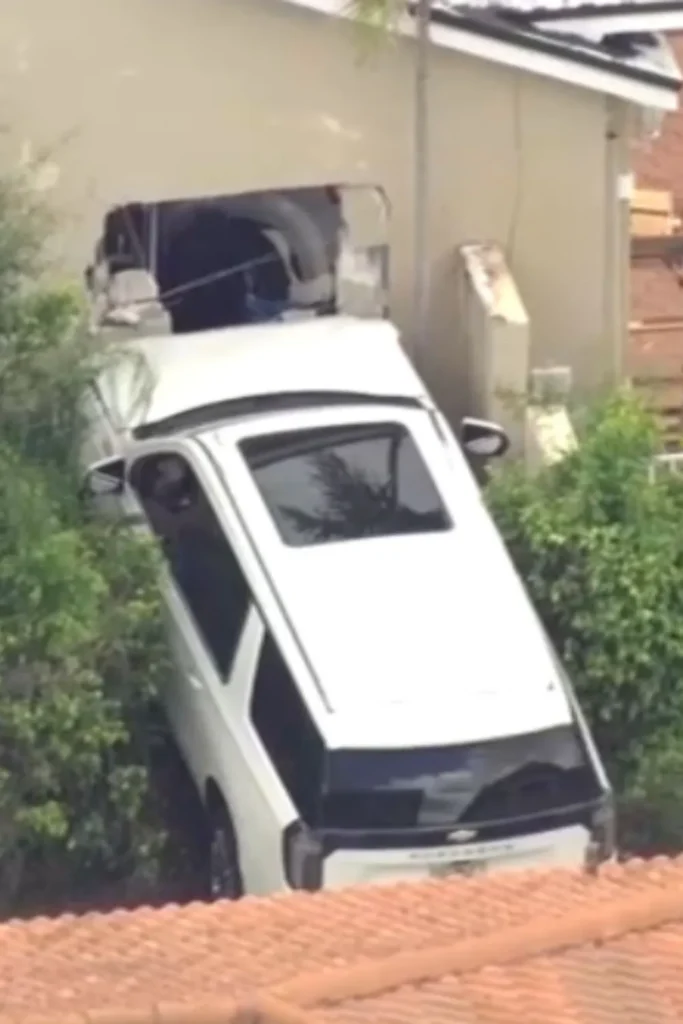
The moment that white SUV punched through the wall of a Northwest Miami-Dade home on July 22, 2026, it stopped being just a property damage story.
Miami-Dade Fire Rescue responded to an “explosive alert.” That phrase changes everything.
No injuries were reported. The gas company was called. And most people nearby probably had no idea how close the situation was to becoming something far worse.
What Happened That Wednesday Morning
Just before 11 a.m., a white SUV plowed through bushes and slammed into the side of a home near Northwest 189th Terrace and 88th Court in Miami-Dade.
Video from the scene shows a gaping hole where the wall used to be. The vehicle appeared to have hit a gas line.
Miami-Dade Fire Rescue confirmed the explosive alert call. The gas company was notified. The cause of the crash is still under investigation, according to NBC Miami.
Nobody got hurt this time. That is not always how it goes.
This Is Not As Rare As You Think
People treat these stories like freak accidents. They are not.
Vehicles crash into buildings across the US at a rate of roughly 100 times per day. That is not a typo. The Storefront Safety Council, which tracks vehicle-into-building incidents, puts annual injuries from these crashes at more than 16,000 people per year.
South Florida had two gas-line-related vehicle crashes within 24 hours this week alone. A Miami-Dade bus struck a building on Harding Avenue in Miami Beach on July 21st and triggered the same gas leak protocol.
A car hitting a residential gas line is not rare. What is rare is knowing what to do when it happens near you.
What Neighbors Near a Crash Like This Should Actually Do
This is the part nobody explains in the breaking news coverage.
It also is not the first time a residential neighborhood has dealt with a car ending up inside a home. The car crash near 8th and Chambers Streets in Milwaukee left residents in a similar state of shock, and most of them had no idea what steps to take either.
The signs a gas line has been hit:
- Smell of rotten eggs or sulfur, even faint
- Hissing or roaring sound near the impact area
- Neighbors or pets acting suddenly disoriented or ill
- Physical symptoms: headaches, dizziness, nausea
What not to do (most people get this wrong):
Do not flip any light switch. Do not use your phone inside the house. Do not start your car if it is parked in a garage attached to the home. Even static electricity can ignite accumulated gas.
What to do instead:
Leave immediately. Leave a door open as you go out so gas can escape. Move at least 100 feet upwind of the scene. Call 911 from that safe distance, not from inside the building.
If a neighbor’s home is involved, alert them only if it is safe to approach. Then step back. Let fire rescue handle it.
If you want to stay ahead of stories like this as they happen across different cities, there is a channel worth checking out on WhatsApp. They cover neighborhood incidents and property safety stories in real time, usually well before the evening news catches up.
Why This Matters
A gas line struck by a vehicle is not a minor maintenance issue. It is a pressurized system under stress in a residential structure.
According to the Storefront Safety Council, roughly 42% of vehicle-into-building crashes involve at least one injury, and 8% result in a fatality. Gas line involvement raises that risk sharply because the threat is invisible and does not always announce itself immediately.
Miami-Dade’s residential streets have almost no bollards, barriers, or setback protection between a drifting vehicle and a gas meter. The wall between a car losing control and your home’s gas line is often just landscaping and stucco.
This is not just a Miami problem. A bakery truck that slammed into a Kingston home earlier this year shows how fast a routine morning can turn dangerous when a vehicle leaves the road. And it is not always cars.
The tree that crashed into a Cary home and left a hole bigger than a truck is another reminder that structural damage to a home can come from directions most residents never think about.
The common thread in all of them: people were not prepared for what to do next.
Key Takeaways
- A white SUV crashed into a home near NW 189th Terrace and 88th Court on July 22, 2026
- Miami-Dade Fire Rescue responded to an “explosive alert” following reports the vehicle hit a gas line
- No injuries were reported; the gas company was notified
- The cause of the crash is under investigation
- Vehicles crash into buildings over 100 times per day in the US
- A gas smell, hissing sound, or sudden dizziness near a crash site means leave immediately and call 911 from a safe distance
- Never flip switches, use your phone indoors, or start your car if a nearby gas line may have been struck
What would you have done if this happened on your street? Did you know these steps before reading this? Drop your take in the comments. Genuinely curious how many people actually have a plan for something like this.
Wrapping Up
Nobody got hurt on Wednesday. That matters. But the “explosive alert” call tells you exactly how thin that margin was, and most people in that neighborhood probably did not know the difference between a gas smell and just something burning outside.
If this kind of story is your thing, Build Like New covers South Florida property, neighborhood safety, and the human side of incidents like this one regularly. Worth bookmarking if you want more than just the headline.
For more stories like this in real time, follow Build Like New on X (Twitter) and join the conversation over on the Facebook community. That is where these stories get discussed as they break.
Disclaimer: This article is for informational purposes only. All details are based on publicly available reports at the time of publication.