
A Neighbor’s Tree Crashed Into Your Yard — Who’s Legally Responsible?
If you’ve ever walked outside after a storm and found your neighbor’s tree lying across your yard, your first thought probably wasn’t about liability. You’re staring at the mess, maybe a damaged fence or roof, and wondering, “Okay… who pays for this?”
I’ve seen this situation play out more times than I can count — sometimes it ends calmly, sometimes it turns into a long argument between neighbors who were friendly just a week earlier. And the reason it gets messy is simple: most people think they know the rule, but the real answer depends on a few details that homeowners often overlook.
In this guide, I’ll break down how responsibility is actually determined in cases like this, why insurance companies focus so much on tree health, and what steps you should take before making assumptions or confronting your neighbor. The goal is to help you avoid confusion, avoid conflict, and handle the situation the right way from the start.
Before we get deeper into the legal and insurance angles, let me ask you this: has this already happened to you, or are you trying to understand the rules before it does?
Who Owns the Tree and Why It Matters
When a tree falls across property lines, most people jump straight to “who pays?” But before insurance or liability enter the picture, there’s a simpler question that decides almost everything: Who actually owns the tree?
Ownership usually comes down to one thing — where the trunk sits. If the trunk is on your neighbor’s land, it’s considered their tree. If it’s on yours, it’s yours. And if the trunk sits right on the boundary line, both of you may share ownership and responsibility.
That sounds basic, but it’s the part homeowners skip, and it creates misunderstandings. I’ve seen neighbors argue for weeks simply because nobody bothered to confirm the trunk location. Insurance companies start here too, because ownership influences how claims are processed and whether negligence is even on the table.
You can also learn how property boundaries affect neighbor relationships in this guide on fence etiquette rules every homeowner should know, which helps prevent confusion long before a tree issue ever comes up.
Act of God vs. Negligence: What Makes the Difference
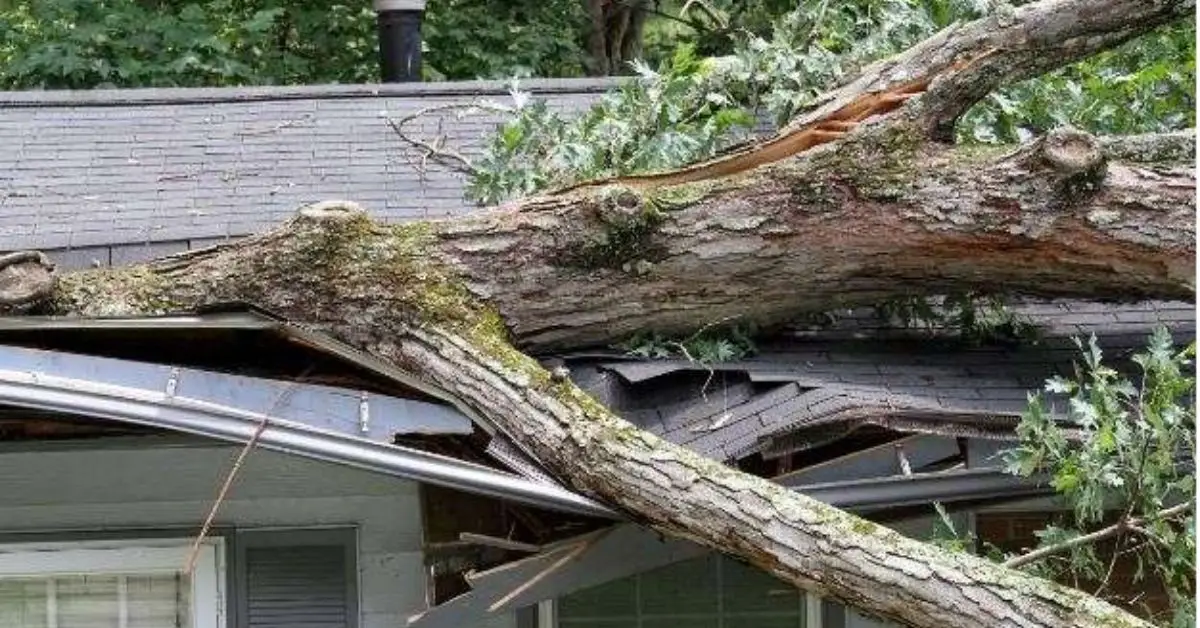
Once ownership is clear, the next question is why the tree fell. This is the real deciding factor.
Here’s the way adjusters usually break it down:
- Act of God:
A healthy tree falls during a storm or strong winds.
In most cases, each homeowner handles their own damage. - Negligence:
The tree was clearly dead, diseased, leaning, or your neighbor ignored warnings.
In this case, the tree owner may be responsible for the damage caused.
If you want a deeper legal explanation, this guide by Nolo is a solid reference.
Typical Scenarios and Who Pays What
Now let’s walk through the real situations homeowners deal with. Match your case to the closest scenario to understand how responsibility usually plays out.
Scenario A: Tree on Neighbor’s Land, Healthy, Storm Knocks It Down
In most cases, you handle your own damage.
A healthy tree falling during a storm is treated as a natural event, not someone’s fault.
Your homeowner’s policy may cover:
- Roof or home damage
- Fence repair
- Debris cleanup (depending on coverage)
This is the most common — and most misunderstood — outcome.
Scenario B: Tree on Neighbor’s Land, Decayed, and Neighbor Ignored Warnings
This is the situation where responsibility can flip.
If the tree was:
- Dead
- Rotting or diseased
- Leaning dangerously
- Previously reported
…then your neighbor may be liable for the damage. But you’ll need some proof — photos, old messages, or an arborist report help a lot.
Scenario C: Tree on Your Land, Falls Into Neighbor’s Yard or Garage
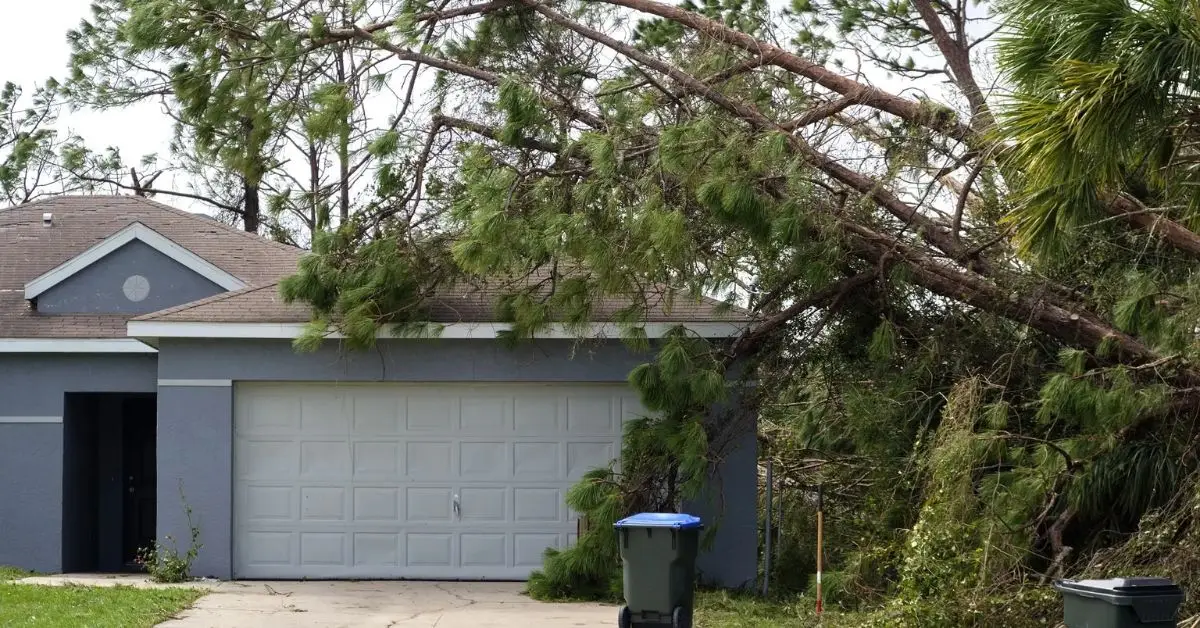
If your tree was healthy and a storm caused the fall, your neighbor files the claim with their own insurer.
If your tree was obviously unsafe and you ignored it, you may be held responsible for their repairs.
To protect yourself, it helps to:
- Photograph your trees once or twice a year
- Trim or remove weakened limbs
- Address concerns when a neighbor raises them
Scenario D: Shared Boundary Tree
Boundary trees are jointly owned, which means both parties share responsibility.
Depending on your state:
- Both neighbors may need to approve maintenance
- Both may share liability
- Both may need to cooperate on cleanup or claims
This is where calm communication matters the most, because shared ownership can create confusion fast.
Quick Comparison: Liability, Insurance Responsibility, and Clean-Up Obligation
When a tree crashes across property lines, most people get stuck on one question: Who’s supposed to pay? A clean side-by-side comparison makes the whole picture easier to understand.
| Situation | Who’s Usually Liable | Whose Insurance Pays | Who Handles Clean-Up | Why It Works This Way |
|---|---|---|---|---|
| Healthy tree falls during a storm | No one is “at fault” | The homeowner with the damage files their own claim | Each person cleans their own side | Considered a natural event, not negligence |
| Tree was decayed or dangerous and owner ignored it | Tree owner | Tree owner’s liability coverage may apply | Tree owner covers removal + damage | Negligence shifts responsibility |
| Your tree falls into the neighbor’s yard | Depends on tree condition; healthy trees → no fault | Neighbor’s insurer usually covers their damage | Each handles debris on their side | Storm damage rarely creates personal liability |
| Boundary tree falls | Shared responsibility | Each homeowner covers their own structures | Clean-up is often shared | Because the tree is jointly owned |
| Tree falls but nothing is damaged | Usually no liability | Often no coverage unless it hits a structure | Homeowner pays removal cost | Policies don’t cover debris-only events |
What Insurers Consider and How Courts Handle It
When insurance adjusters or courts evaluate a fallen-tree dispute, they don’t look at feelings or neighbor arguments. They look at evidence. That’s why understanding their criteria helps you know what to expect before you even make the call.
Key Factors Insurers Look At
Here’s what adjusters usually evaluate:
- Tree health — Was it healthy or clearly unsafe?
- Weather conditions — High winds, storms, lightning, or calm weather?
- Prior warnings — Did anyone raise concerns earlier?
- Actual damage — Only insured structures count, not just yard mess
- Maintenance history — Basic, reasonable care goes a long way
This is how they decide who pays and whether negligence is involved.
Legal Precedent and Negligence Liability
Courts lean heavily on one concept: reasonable knowledge. If a homeowner knew — or should’ve known — the tree was dangerous, liability can shift quickly.
A simple example: When a tree is visibly dying, leaning, splitting, or dropping branches, courts often say the owner had enough notice to act. But if the tree looked perfectly healthy and a storm knocked it over, that’s treated very differently.
For a clear explanation of how courts interpret liability, this guide from FindLaw breaks it down well in plain language.
This link supports the point that negligence — not ownership alone — decides responsibility.
Step-By-Step: What To Do When a Neighbor’s Tree Falls in Your Yard
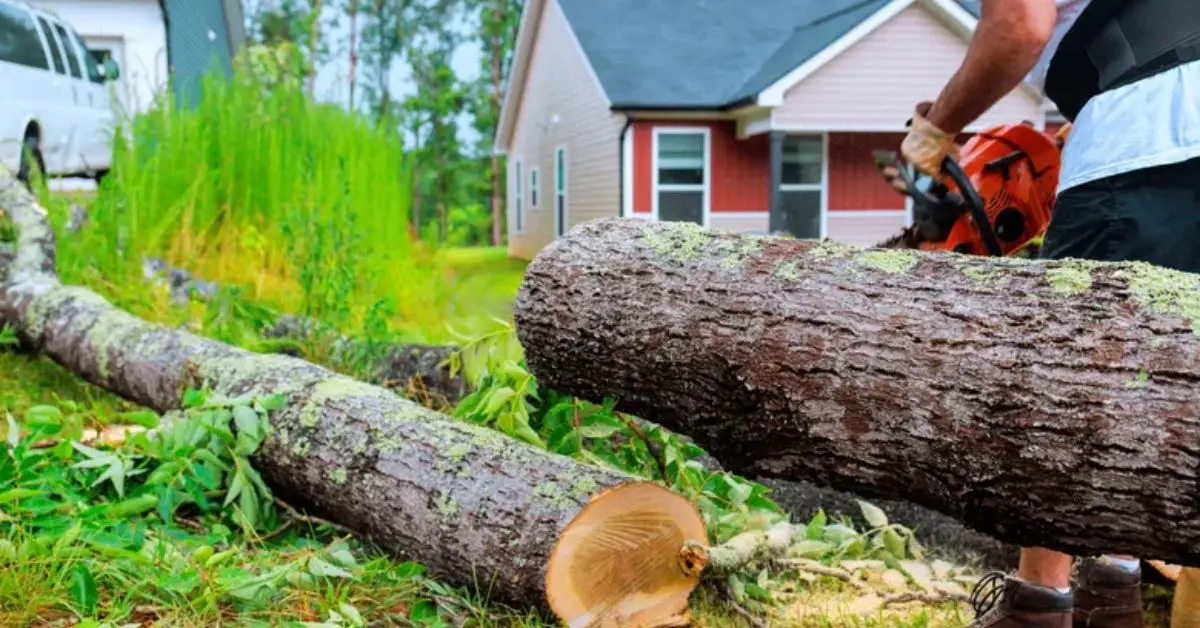
When a tree suddenly lands in your yard, your first instinct might be to panic — but your steps in the first few minutes actually shape how smooth (or stressful) the whole process becomes. Here’s what I’d personally do, in order:
Document the Damage and the Likely Cause
Before anyone touches anything, grab your phone and record everything.
- Clear photos of the tree
- Where the trunk sits
- Any signs of decay or previous damage
- The direction it fell
- Damage to structures, fences, or cars
You’re not overdoing it — this evidence protects you if questions come up later.
Contact Your Insurer and Review Your Policy
Call your insurer early. Even if the tree came from your neighbor’s yard, your policy may still be the one covering the damage.
Ask them:
- What’s covered?
- What’s the deductible?
- What counts as storm damage vs. negligence?
- Do they send an adjuster or want more photos?
Talk to Your Neighbor Calmly and Early
You don’t want this to turn into a feud.
Keep it simple: “I just wanted to update you — the tree fell during last night’s storm. I’m checking with insurance now and will share what they say.”
Most neighbors appreciate transparency. For more guidance on communicating respectfully during home-related situations, this breakdown of open-house etiquette essentials offers helpful tips you can apply in conversations like these.
Understand Removal vs. Repair Costs
Tree removal can get pricey, and rules vary depending on whose structure was damaged.
Ask your insurer:
- Do they cover debris removal?
- Will they pay only if it hit a structure?
- Do they cover partial clean-up on your side?
Knowing the difference helps you plan your next move without guesswork.
How Both Neighbors Can Avoid This Dispute in the First Place
Most tree disputes aren’t really about trees — they’re about communication, timing, and respect. A little prevention goes a long way.
Regular Tree Inspections and Trimming
You don’t need an arborist every month. A simple walk-around twice a year helps. Look for:
- Leaning trunks
- Hollow sections
- Fungus at the base
- Dead branches
- Roots lifting the soil
Small maintenance today prevents expensive problems tomorrow. If you’re also thinking about improving your yard while keeping things clear between properties, these budget-friendly fence ideas offer simple upgrades that support better boundaries and fewer disputes.
Share Concerns Early With Your Neighbor
If you ever notice a worrying branch or trunk near your fence, tell your neighbor before it becomes serious.
A quick message like: “Hey, just noticed the branch leaning over the shed — worth keeping an eye on.”
You’re not accusing anyone. You’re just being helpful.
Consider a Boundary/Shared Tree Agreement
If a tree sits right on the property line, both neighbors own it.
A simple written agreement can save headaches later:
- Who handles pruning?
- How often?
- Who pays if removal becomes necessary?
It’s not legalese — just clarity between two adults.
When You May Need a Lawyer, Mediator, or City Authority
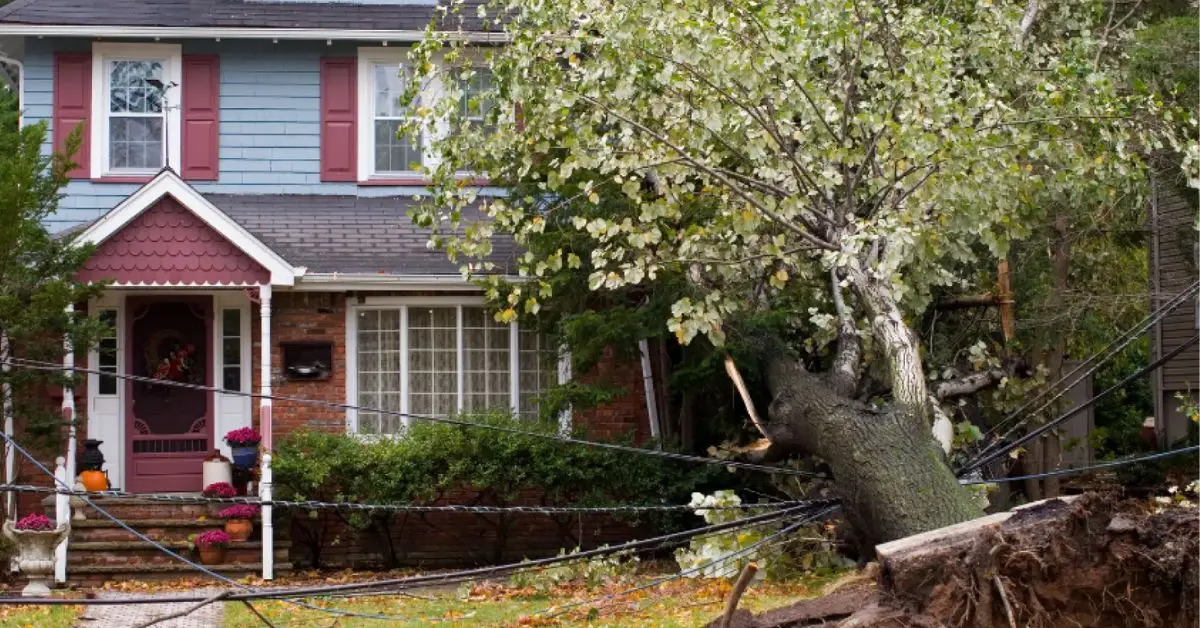
Most cases resolve with insurance and a simple conversation — but not all.
Here’s when to consider outside help:
- Your neighbor refuses to communicate or cooperate
- There’s a clear safety hazard and the tree owner ignores repeated warnings
- The fallen tree caused serious structural damage
- The tree violates city codes or local ordinances
- You believe negligence is obvious but the insurer disagrees
- The tree owner denies responsibility despite clear decay or danger
Sometimes bringing in a mediator or city official solves the issue faster than a legal fight. Other times, an attorney is the only path to protect yourself.
Your Next Move: Check Your Situation and Choose the Right Path
Now that you understand the rules, the scenarios, and the differences between natural damage and negligence, here’s what I’d do next if I were in your place:
- Look at your specific situation and match it with the scenarios above
- Gather photos and documentation before anything is moved
- Call your insurer and get a clear answer on coverage
- Talk to your neighbor early so nothing gets misinterpreted
- If you spot signs of neglect or risk, address it now instead of waiting
And if you want help navigating this smoothly, or you’re unsure which category your case falls into, you can always reach out through Build Like New — I can walk you through the safest, most practical next steps.
If this breakdown helped, drop a comment telling me your exact situation — or visit Build Like New for personalized guidance you can trust.
Disclaimer: This article provides general information, not legal or insurance advice. Tree-related liability rules vary by state, policy, and individual circumstances. For guidance specific to your situation, consult a licensed attorney or insurance professional in your area.