Baldwin County Blaze Leaves Home in Ruins; Pets and Vehicles Lost
I’ll be honest with you — some stories hit harder than others, and this one stayed with me from the moment I read the first incident report. Around 4:30 a.m., while most of Lake Sinclair slept, a Baldwin County family woke up to something no one should ever face: their home already filling with heat and smoke, flames moving faster than anyone could react.
They made it out. All three adults. That’s the only good part.
But their two dogs and two cats didn’t survive. And if you’ve ever loved a pet, you know that kind of loss doesn’t go away when the smoke clears.
By the time fire crews got there, the entire backside of the house was burning through the roof. The attic had already become a tunnel of fire, pushing flames 10 to 12 feet high. Their Christmas decorations — the lights, the tree, the sense of the season — were gone. The garage collapsed into itself, taking both cars with it.
Standing in a moment like that, you don’t think about insurance or reports or cleanup. You just think about what you lost… and what could’ve happened if you woke up a minute later.
I’m starting with this because you should feel the reality of it — not in a dramatic way, but in a human way. Fires don’t give warnings. They don’t wait for you to prepare. And as we walk through this incident, I want you to see not just what happened to this family, but what it means for anyone who lives in a home like yours or mine.
If you were in their place, what’s the first thing you’d try to save?
What Exactly Happened? A Clear, Human Breakdown of the Fire
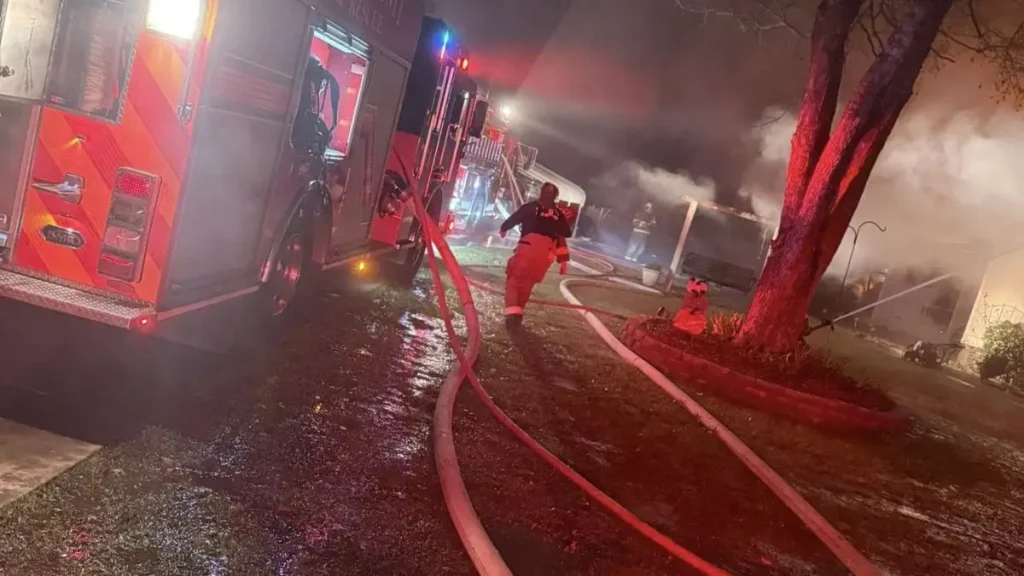
When I went through the Union-Recorder’s report, one thing stood out immediately: the fire didn’t start small. It was already “showing heavy fire through the roof” by the time Baldwin County and Putnam County crews pulled up. That tells you how fast the situation escalated before anyone even got a chance to respond.
The 911 call came around 4:30 a.m. — the most dangerous time for house fires because people are in their deepest sleep. And if you’ve lived in a two-story or attic-heavy home, you know how quickly fire can move once it reaches those upper spaces. In this case, flames shot 10 to 12 feet high through the attic. That’s not a normal fire. That’s a fully involved structure racing ahead of human reaction time.
Firefighters said half the home was already burning when they arrived. And honestly, once the attic becomes a tunnel of fire, you’re fighting a losing battle. The structure doesn’t stand a chance.
The home sat near Lake Sinclair — about 2,600 square feet, decorated for Christmas, quiet neighborhood, nothing unusual about the night. Yet in a matter of minutes, the back side of the house turned into the ignition point for a total loss.
That’s the part that hits me the hardest: how normal the night started… and how fast everything flipped.
How Firefighters Responded: A Hard Fight Against a Fast Fire
If you’ve never stood near a fully involved house fire, let me tell you — the heat alone can push you back several feet. So when I read that firefighters used around 30,000 gallons of water, I wasn’t surprised. That’s what it takes when a structure’s burning from the roofline down.
Crews from Engines 6, 7, 8, Squad 17, Battalion 1, and Putnam County’s Engine 2 all showed up — a full, coordinated response. When multiple agencies respond before sunrise, you know the call was serious.
What stayed with me was how long they had to stay after controlling the fire. Hot spots don’t die easily in a large home, especially when the garage collapses and traps burning material beneath it. Every ember has to be drowned before investigators can even begin stepping inside.
This wasn’t a quick extinguish-and-leave. It was hours of work, teamwork, and careful dismantling of what remained.
This reminded me of the Kentucky home fire where crews worked through the night, proving that early morning calls are almost always the most dangerous.
The Family: Safe, But Carrying the Kind of Loss You Don’t See in Photos
The report mentioned three adults living in the home. All of them escaped. That’s a blessing — and they’ll know it every single day going forward. But escaping physically doesn’t mean escaping the emotional hit that comes after.
Their two dogs and two cats didn’t make it out. And let’s be real — losing pets isn’t “losing animals.” It’s losing the ones who greet you at the door, sit at your feet, follow you around the house, and make your home feel like home.
The family didn’t want to be publicly identified, and I respect that. When you lose both your home and the living beings who shared it with you, the last thing you want is a spotlight pointed at your grief.
The detail that their home was fully decorated for Christmas made the whole thing feel even heavier. Imagine stepping outside in the cold at 4:30 a.m. watching the lights you hung, the ornaments you placed, the gifts you wrapped — all burn in front of you.
That’s not just a fire. That’s a life turned inside out.
What We Know About the Cause?
One thing Deputy Chief Bradley Towe made clear is that the fire started at the backside of the home, possibly near the laundry room — but even that isn’t confirmed. And as someone who has followed dozens of fire investigations over the years, I can tell you: laundry rooms are more dangerous than people think.
Dryer vents clog. Old wiring overheats. Appliances run overnight because the house is quiet.
But here’s the important part — no cause is official yet.
Large homes take longer to investigate because so much of the evidence gets destroyed in the collapse. The attic burned aggressively, and once flames travel upward, they erase the clues investigators usually rely on.
This isn’t a case where someone walks in the next morning and says “Oh, here’s the cause.”
It could take days. It could take weeks. That’s how fire behaves — destructive, unpredictable, and often impossible to read until the rubble cools.
Community Reaction: What People Are Saying and Why It Matters
The Baldwin County Fire Rescue Facebook post drew what you’d expect in moments like this — shock, sympathy, and a lot of “how can we help?” comments. Even people who didn’t know the family felt the weight of the situation. That’s the thing about small communities: loss doesn’t stay within one address. It spreads.
Some commenters talked about losing pets in past fires. Others offered spare rooms, clothes, food, or simply prayers. And whether you’re religious or not, you know what those prayers mean — it’s people trying to put their arms around a family who can’t stand up right now.
Moments like this remind me why community still matters. When someone loses everything, strangers rise up in a way you don’t see in the big, loud world. And even if the family stays private, that support is still felt.
If you like staying updated on real incident alerts and safety-first stories that communities are talking about, WhatsApp channels that share on-ground fire updates can be incredibly helpful — especially during peak emergency hours.
What This Fire Teaches the Rest of Us About Home Safety?
Every time I read a fire report like this, I ask myself one thing: If this happened to me tonight, would I be ready? And I think that’s the question all of us should sit with for a moment.
Most people assume fires start in the kitchen or because someone left a candle burning. But the truth is, many of the worst fires begin in places we don’t think about — the attic, the garage, the laundry room. Exactly like this one.
If you live in a home with older wiring, heavy attic insulation, or you run appliances overnight, here’s what I’d tell you as someone who has studied too many of these tragedies:
- Check your smoke alarms every few weeks, especially near bedrooms.
- Don’t run the dryer while you sleep — lint buildup is more dangerous than people realize.
- Look at the attic and wiring once a year. Even a quick visual check can show issues.
- Keep Christmas lights and holiday wiring in good shape — frayed cords start fires fast.
- And most importantly, have a plan. Even a simple “what do we grab first?” conversation can save lives.
You never think you’ll need any of this… until you’re standing in the cold watching your home burn.
If a Fire Ever Hits Your Home: What You Should Do in the Hours After
I hope you never need this section, but I also don’t want anyone standing where this family stood without a sense of direction. When the flames stop, the confusion starts — and that’s when people make mistakes that cost them later.
Here’s what I’d tell you if we were talking over coffee the morning after a fire:
- Start documenting right away. Photos, videos, lists — even if everything looks ruined.
- Call your insurance before anyone else. They’ll guide you on temporary housing and next steps.
- Ask the fire department for a written incident report — you’ll need it for insurance, repairs, and claims.
- Don’t enter the home until officials say it’s safe. Hot spots can reignite even after hours.
- If you have pets, call local vets, shelters, or emergency clinics immediately — pets sometimes escape and hide.
- Lean on relief organizations if needed — Red Cross and local churches often step in within hours.
Fire takes a lot from you in one night. The decisions you make in the next 24 hours help determine how quickly you can rebuild.
And in cases where a structure is completely destroyed — like the Pennsylvania mobile home fire that burned everything down— the first 24 hours become even more critical for documentation and recovery.
Are Fires Becoming More Common in Baldwin County? A Pattern Worth Noticing
If this were a one-time tragedy, we’d treat it like an isolated event. But Baldwin County has seen a string of serious house fires in recent years, including other cases where families lost pets or entire structures before firefighters even arrived.
When you look at these incidents together, a pattern shows up:
- Many homes are older structures with aging electrical systems.
- Rural and lake-area homes are farther apart, so flames grow before anyone sees them.
- Winter months and holiday season → higher fire load, like decorations, heaters, and wiring stress.
- Several fires involve attic or back-of-house ignition, where fires go unnoticed longer.
This doesn’t mean Baldwin County is unsafe. But it does mean the area has the kind of conditions where a small spark can turn into a life-changing disaster in minutes.
If you live anywhere near Lake Sinclair or in a similar community, it’s worth taking a fresh look at your home’s fire safety habits. One small change might prevent the next headline.
We’ve seen similar patterns in recent cases too — like the Willcox house fire where one person was injured, showing how quickly flames can overtake a home before help arrives.
Why This Story Should Stay With You?
When I finished reading every report, post, and detail about this fire, one thought stayed with me: this could’ve been any of us. A quiet night. A regular home. A normal routine. And then everything changes in a few minutes.
This family lost their pets, their home, their cars, and their sense of normal life — all before sunrise. But they walked out alive. And that alone tells you how thin the line is between escape and tragedy.
If you’re reading this, take one small action today — check a smoke alarm, clean a dryer vent, walk through your home with fresh eyes. Do the thing you’ve been putting off. Fires don’t wait for the “right time.”
And since stories mean more when we talk about them:
What’s the one safety check you know you should do in your home… but haven’t done yet?
For more real incident breakdowns and safety insights, explore our full Home Incidents category for practical guides that actually help when it matters most.
Disclaimer: This article is based on publicly available reports and information from local authorities. Details may change as officials release updated findings, and readers should verify facts with the Baldwin County Fire Rescue or local news sources.