Connecticut Enacts New Affordable Housing Law After Governor’s Signature
Connecticut is finally taking a serious step toward fixing its housing problem—and this time, it actually stuck.
Last week, Gov. Ned Lamont formally signed a new affordable housing bill into law, setting the stage for more housing growth across the state. The signing ceremony may have been quiet, but the implications are anything but. If you’ve been watching home prices climb or rents stretch budgets thinner every year, this law is meant for you.
What makes this moment stand out is how it happened. Just a few months ago, Lamont vetoed a similar version of the bill during the regular legislative session after strong pushback from towns worried about local control. Instead of dropping it, he went back to the table—spending months negotiating with lawmakers, mayors, housing advocates, and nonprofit groups. The revised version passed during a special session right before Thanksgiving, with bipartisan backing this time.
From the governor’s perspective, the message is blunt: affordability and housing are inseparable. At the signing, Lamont framed the law as a way to give people real choices—young families trying to buy their first home, workers priced out of the towns they work in, and older residents who want to downsize without leaving their communities.
Whether this law delivers on that promise is the big question—and it’s one that will matter to renters, homeowners, and local governments alike. As someone who’s watched housing policy stall again and again, I see this as a rare moment where Connecticut is at least trying to move from talk to action.
Do you think this kind of statewide push is what Connecticut actually needs—or will local resistance slow it down again
From Veto to Bipartisan Support

If you’re wondering why this bill took so long to become law, the short answer is resistance—and a lot of it.
Back in June, Gov. Lamont vetoed the original version of the housing bill after towns across Connecticut pushed back hard. Local leaders feared the state was moving too fast and stepping into zoning decisions they felt should stay local. That veto wasn’t symbolic; it was an admission that the bill, as written, wouldn’t survive politically.
Instead of forcing it through, Lamont paused. Over the next several months, his team worked behind the scenes with lawmakers from both parties, mayors, housing advocates, and nonprofit groups. The goal was simple but difficult: rewrite the bill so it encouraged housing growth without outright dictating what every town must build.
That reset mattered. By the time the revised bill came up during a special legislative session just before Thanksgiving, it had enough bipartisan support to pass—and this time, the governor signed it.
What Gov. Lamont Says the Law Will Change?
Lamont has been very clear about why he believes this law matters—and he’s not softening his language.
In a written statement released by his office, the governor said the new legislation is designed to create “real-world impact” by giving towns practical tools to build more housing. At the signing ceremony, he put it even more plainly: affordability doesn’t exist without enough places to live.
He framed the law as a way to expand choice—not force one type of housing everywhere. Young workers trying to stay in the state. Families looking to “step up.” Seniors who want to downsize without leaving their towns. In Lamont’s view, the housing shortage hurts all of them.
Housing experts agree the shortage is real. Hannah Jones, senior economic research analyst at Realtor, has pointed out that strong demand combined with very low inventory has pushed prices higher across Connecticut, making it harder even for higher-income households to buy or rent.
That context helps explain why the governor keeps tying this bill directly to affordability rather than treating it as a zoning debate.
What’s Inside House Bill 8002?
So what does the law actually do? This is where things get more practical—and less dramatic than some of the headlines suggest.
House Bill 8002 requires every Connecticut town to plan for housing growth. That means setting goals for how many units they intend to support and updating zoning accordingly. What it doesn’t do is tell towns exactly how many homes they must build or where they must go.
Think of it as a planning requirement, not a construction order.
Lamont described it this way at a press conference: towns are being asked to decide what they want to look like in five or ten years—and start zoning with that future in mind. The state, he said, wants to act as a partner, not a hammer.
For residents, this matters because housing policy often fails at the planning stage. This law forces towns to confront growth instead of avoiding it.
Zoning and Development Changes That Could Shift the Market
The bill also makes some targeted changes that developers—and renters—are paying close attention to.
First, it becomes easier to convert commercial buildings into housing. Office space that’s sitting empty can now be reused without going through special hearings before local planning and zoning commissions. That cuts time, cost, and uncertainty, which are major reasons projects never get built.
Second, the law removes minimum off-street parking requirements for most new developments with up to 16 housing units. This may sound small, but parking rules often kill affordable housing projects before they start. Fewer parking mandates can mean lower construction costs and more usable space for homes.
These changes don’t guarantee a wave of new housing. But they remove some of the barriers that have quietly slowed development for years.
When the Law Takes Effect—and What Happens Next

Timing matters, especially if you’re a town official, builder, or resident watching this closely.
The new housing law officially goes into effect on January 1, 2026. Between now and then, municipalities are expected to develop housing plans, review zoning rules, and decide how they want to accommodate future growth. The state will also offer incentives to towns that take steps to allow more housing, rather than punish those that don’t.
This gap between passage and implementation is intentional. It gives towns time to plan instead of react—and gives residents a window to engage before decisions are finalized.
If you live in Connecticut, this isn’t just a statehouse story. These conversations will eventually land in local meetings, planning boards, and zoning hearings near you.
Are you planning to pay attention when your town starts talking about housing—or do you think most of these decisions will still happen quietly?
Why Some Lawmakers and Towns Still Oppose the Bill?
Not everyone is convinced this law will do what the governor promises—and the opposition hasn’t been subtle.
Many Republican lawmakers argue that House Bill 8002 opens the door for the state to override local zoning decisions. In their view, once towns are required to plan for housing growth, real control slowly shifts away from local voters and elected officials.
House Minority Leader Vincent J. Candelora has been especially vocal, warning that the bill promises too much without clear guarantees. He’s questioned the idea that easing rules for developers—especially large, well-funded ones—will automatically lead to affordability or reduced homelessness.
For critics, this isn’t about denying the housing crisis. It’s about whether state-level pressure will actually fix it, or simply create tension between Hartford and local governments.
Lamont’s Response to Critics and “Naysayers”
Lamont isn’t pretending the criticism doesn’t exist—but he’s clearly not backing down.
At the signing ceremony, he acknowledged the pushback and then reframed it. In his words, this law is about the future of the state. Without more housing options, young people leave. Seniors get stuck in homes that no longer fit their lives. Workers commute farther and farther away from where jobs actually are.
From Lamont’s perspective, doing nothing is the real risk. He’s argued that if Connecticut wants to stay competitive and livable, it has to make room for people at different stages of life—not just those who can already afford today’s prices.
Whether towns agree or not, the governor is betting that pressure plus incentives will move things forward.
Even as demand grows, occasional home listings surge gives buyers more negotiating power, as seen in other parts of the market.
Connecticut’s Housing Affordability Problem, by the Numbers
To understand why this bill exists at all, you have to look at the data—and it’s not flattering.
Connecticut recently earned an F grade on the Realtor.com® State-by-State Housing Report Card, part of the “Let America Build” campaign. The state’s total score was just 28.3, placing it near the bottom nationwide.
Here’s where the gap becomes obvious: the median home listing price in Connecticut sits around $499,000, while the median household income is about $89,700. That mismatch makes homeownership difficult even for middle- and higher-income families.
The affordability score backs that up. At 0.64, it shows that many households simply can’t buy what’s available—even when they earn more than average.
On the construction side, the state is falling behind too. Connecticut accounted for just 0.4% of new-home permits in 2024, despite making up roughly 1.1% of the U.S. population. That imbalance explains why supply keeps falling short of demand.
For daily updates on housing trends, market shifts, and expert commentary, many residents turn to dedicated WhatsApp channels that track affordability and local developments.
Why Housing Supply Keeps Coming Up in This Debate?
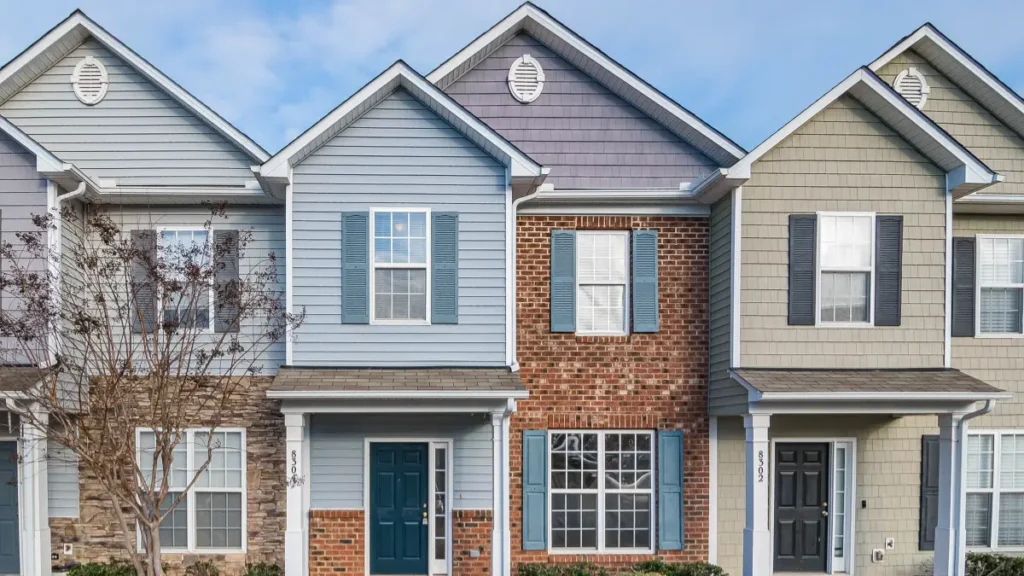
This is where experts tend to agree, even if politicians don’t.
According to Hannah Jones, Connecticut’s affordability problem isn’t just about demand—it’s about long-term underbuilding. When inventory stays low year after year, competition intensifies and prices keep climbing.
Jones has pointed out that policies removing barriers to new construction are among the most effective tools states have. More homes don’t instantly make housing cheap, but they do give buyers and renters more options—and over time, that helps stabilize prices.
That’s the theory behind HB 8002: fix the pipeline first, then let supply catch up.
Policies aimed at improving affordability in 2026 show how increasing supply can actually help first-time buyers finally enter the market.
How Connecticut’s Approach Fits a National Trend?
Connecticut isn’t acting in isolation.
Earlier this year, California passed a similar housing law aimed at easing zoning restrictions and speeding up development. Other states facing affordability crises are experimenting with the same idea: reduce friction, encourage planning, and push local governments to think beyond short-term opposition.
The details vary, but the direction is consistent. States are increasingly stepping in where local zoning has limited housing growth for decades.
For Connecticut, HB 8002 puts it firmly in that national conversation—whether residents are ready for it or not.
Other cities, like Boston, are also making bold moves—recently announcing a property tax hike—highlighting how local policy impacts housing markets.
Will This Law Actually Make Housing More Affordable?
That’s the question hanging over everything.
This law won’t lower rents overnight. It won’t suddenly make homes cheap next year. What it can do is change how Connecticut plans for housing—forcing towns to confront growth instead of quietly blocking it.
If municipalities engage honestly, use incentives, and allow smarter development, the long-term impact could be real. If they resist at every step, progress will be slower—and critics will feel justified.
As a resident, renter, or homeowner, this is one of those policies that only works if people pay attention locally, not just at the Capitol.
So when your town starts talking about housing plans, zoning updates, or new developments—will you show up, or tune it out?
Want to explore more on housing trends and affordability strategies? Visit our Government & Policy
section for the latest analysis and guides.
Disclaimer: This article is for informational and journalistic purposes only and does not constitute legal, financial, or policy advice. Details may evolve as the law is implemented and interpreted by state and local authorities. Readers are encouraged to consult official state sources or local officials for the most current and accurate information.