9 Nightstand Items You Can Get Rid of Today Without Any Regret
I’ve noticed something funny about nightstands. They start with good intentions—a lamp, a book, maybe your phone—and then quietly turn into a dumping ground. A half-empty water glass. Old receipts. Skincare you don’t even use at night. Before you know it, the first thing you see in the morning is clutter.
If you’ve ever felt a little irritated before bed and couldn’t explain why, your nightstand might be part of it. I’ve seen this again and again: when that small space is messy, your brain never really shuts off. You’re still processing stuff—literally.
I’m not here to tell you to live like a minimalist or buy fancy organizers. I want to help you clear out the things you truly won’t miss—and keep only what actually earns its spot next to your bed.
As you read, ask yourself this: when was the last time your nightstand made you feel calm instead of cluttered?
The Hidden Cost of Nightstand Clutter
I used to think nightstand clutter was harmless. It’s just a small table, right? But once I started paying attention, I realized how much it quietly messes with your head.
When your nightstand is crowded, your brain never fully powers down. Sleep experts often point out that your sleep environment matters more than you think. According to guidance shared by the Mayo Clinic, visual clutter can increase stress and make it harder for your mind to relax before bed. That means even if you’re tired, your body doesn’t get the “safe to rest” signal it needs.
What makes this worse is the kind of clutter that builds up there without you noticing:
- Mail you meant to open
- Random charging cords
- Old receipts
- Half-used supplement or water bottles
These are the exact items cleaning and organizing pros call out as sneaky clutter traps. They don’t look dramatic, but together they create mental noise. You waste time searching for things in the morning, and at night, your brain is still “on.”
If your goal is better sleep and calmer mornings, clearing this space isn’t optional—it’s foundational.
Nightstands are just one of those sneaky problem areas—if clutter keeps piling up here, chances are it’s happening elsewhere too. I’ve broken down other common trouble zones in your home in this guide on hot spots you must declutter first, because once you fix these areas, everything else feels easier.
1. Extra Books and Magazines You’re “Going to Read”
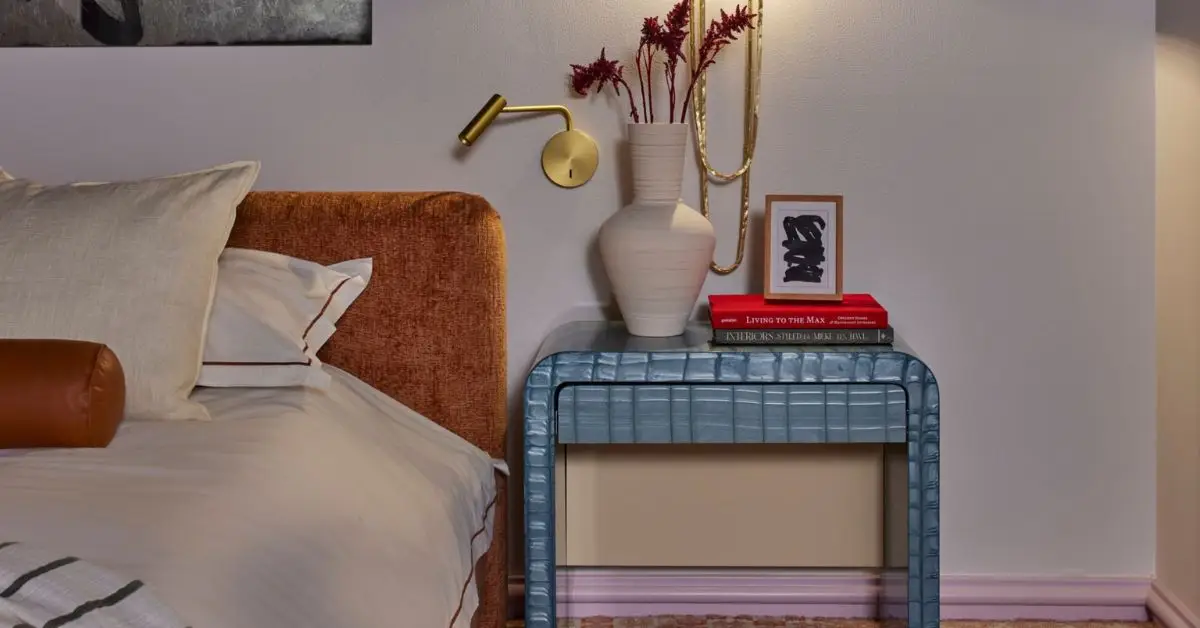
I love books, so this one was hard for me at first. But stacking five or six books on your nightstand doesn’t make you more productive—it makes bedtime feel like homework.
Lifestyle experts at Real Simple consistently recommend limiting bedside reading to one or two books at most. Anything beyond that turns into visual clutter and subtle pressure.
Here’s why extra books work against you:
- Your eyes keep scanning the spines
- Your brain registers unfinished tasks
- Decision fatigue kicks in (“Which one should I read?”)
What works better:
- Keep one current book and maybe one backup
- Move the rest to a shelf or another room
- If you haven’t touched it in a month, it doesn’t belong by your bed
Your nightstand should support sleep, not remind you of everything you haven’t done.
2. Dirty Cups, Bottles, or Dishes
This is one of the most common nightstand habits I see—and one of the easiest to fix.
An empty mug or half-finished water bottle seems harmless, but it instantly makes your space feel messy. Cleaning experts regularly warn that bedside dishes attract germs and add visual stress, even if you don’t consciously notice it.
A simple rule I follow:
- If it’s empty when you wake up, it leaves the room that morning
Better alternatives:
- One reusable water bottle you actually use
- No more than one cup at a time
- Clear the surface before bedtime
That small reset creates a calmer start and end to your day.
3. Paperwork, Mail, Receipts, and Loose Notes
Your nightstand is not an inbox. I say this because I learned it the hard way.
Bills, receipts, and random notes trigger your “to-do” brain the moment you see them. That’s the opposite of what you want right before sleep.
What to do instead:
- Keep mail in a designated basket outside the bedroom
- Move bills and paperwork to a workspace
- Use one small notebook for urgent notes only—and store it in a drawer
If an item doesn’t support rest, it doesn’t belong next to your bed.
4. Random Electronics and Excess Chargers
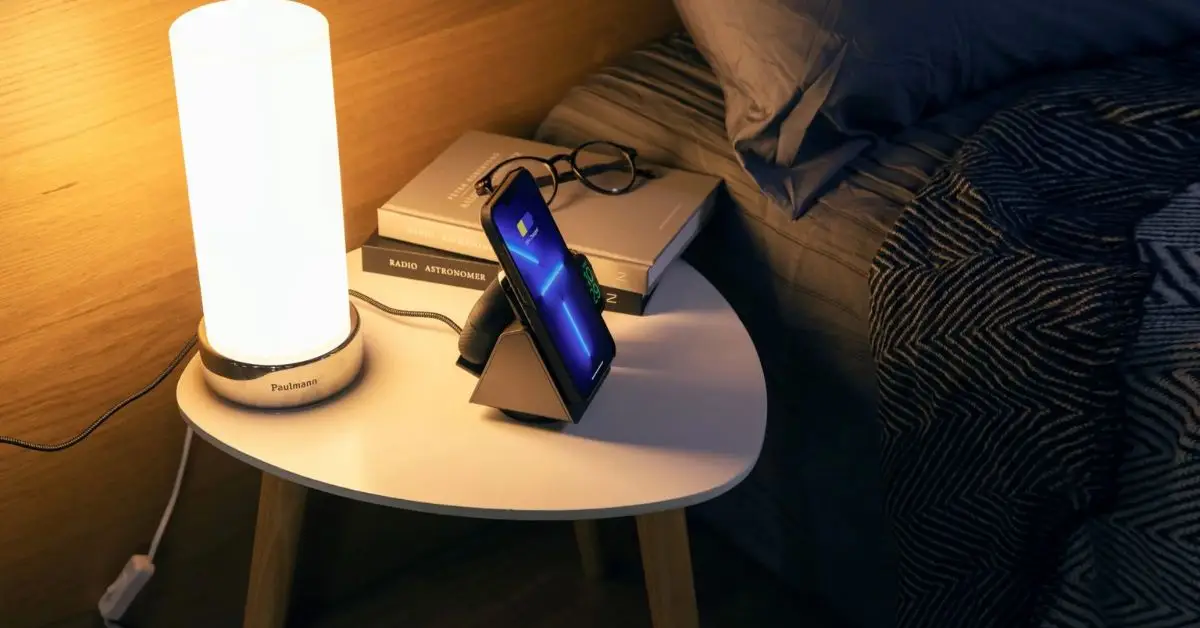
I’m not anti-tech, but nightstands often become charging stations gone wrong.
Extra cords, old devices, and unused gadgets eat up space and quietly affect sleep. If your nightstand is overflowing with old chargers and unused devices, that’s usually a sign of deeper tech clutter. I walk through a practical reset in this guide on how to declutter your electronics step by step, and the same rules apply here.
A cleaner setup:
- One essential charger only
- Phone face down or in a drawer
- Consider a simple drawer charging solution
Less tech in sight makes it easier for your brain to unplug too.
5. Unnecessary Beauty Products and Skincare Bottles
I’ve seen nightstands that look like mini bathroom counters. The truth is, most skincare products don’t belong there.
Keep on your nightstand:
- Lip balm
- Hand cream
Move elsewhere:
- Serums, sprays, masks
- Backup products
Your wind-down routine should feel simple, not crowded.
6. Jewelry, Loose Change, and Small Trinkets
These tiny items pile up faster than you expect. Rings, coins, and random trinkets often end up scattered—and that’s how things get lost or damaged.
If you must keep them nearby:
- Use one small dish
- Empty it regularly
Otherwise, relocate them entirely. Your nightstand shouldn’t double as storage for valuables.
7. Decorative Items That Crowd Function
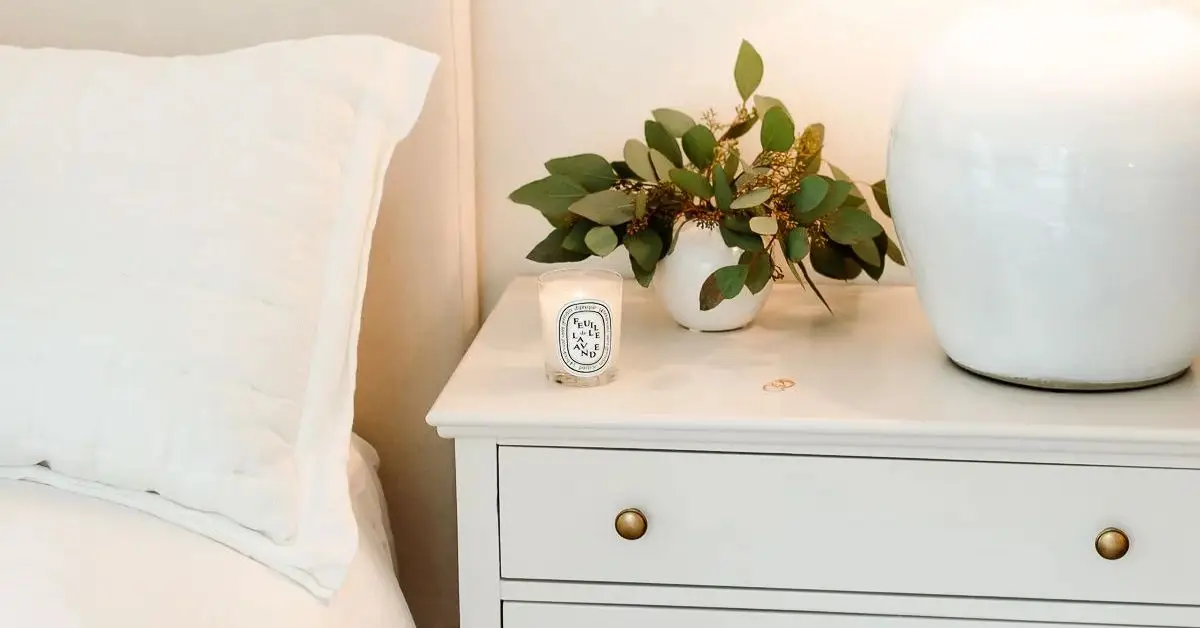
I love decor, but I’ve learned that nightstands are functional first.
Too many candles, frames, or decorative objects block the space you actually need.
Ask yourself:
- Does this serve a purpose?
- Does it make the space feel calmer?
If not, it’s probably just visual noise.
8. Extra Hair Ties, Clips, and Random Accessories
These items multiply without warning. One hair tie turns into ten.
What helps:
- Store extras in the bathroom
- Keep one container only if needed
- Donate or toss the rest
Small clutter still counts.
9. Items With Negative Mental Associations
This is the one most articles miss—and the one that matters most.
Anything that reminds you of stress, guilt, or unfinished business does not belong beside your bed. That includes:
- Work notes
- Unpaid bills
- Objects tied to difficult memories
Professional organizers often talk about emotional clutter, and they’re right. Your brain reacts to these cues even when you’re not aware of it.
Move these items to a neutral space. Your bedroom should feel safe, not stressful.
How to Decide What Really Belongs on Your Nightstand
Most people get stuck here. Lists are helpful, but what you really need is a simple decision system you can reuse every time clutter creeps back.
I’ve noticed this exact struggle come up again and again in real-life discussions on Reddit’s decluttering community—people don’t know where to draw the line. So let’s make it clear.
Here’s the framework I personally follow and recommend:
The one-use rule: If you use an item every single night, it earns a spot on your nightstand. If not, it doesn’t.
The “home” rule: Every item must have a real home elsewhere. If it’s living on your nightstand because you don’t know where else to put it, that’s your signal.
Quick before-bed checklist
Before you turn the light off, ask:
- Did I use this tonight?
- Does this help me sleep or wind down?
- Would I miss this if it weren’t here tomorrow?
If the answer is no, it’s clutter—even if it’s small.
This approach works because it removes emotion from the decision. You’re not asking “Do I like this?” You’re asking “Does this support my rest?”
Professional Tricks That Make Decluttering Stick
Decluttering once feels good. Keeping it that way is where most people slip.
Professional organizers and long-time declutterers tend to rely on habits, not motivation. I’ve found that simple time-based systems work far better than waiting to “feel motivated”—especially the 5–7 decluttering hack that helps you reset small spaces without feeling overwhelmed. The patterns shared by real users and experts boil down to a few practical systems.
What actually works long-term:
- Monthly reset: Pick one day a month to clear the surface completely and put back only essentials.
- Drawer organizers: If your nightstand has drawers, use simple dividers so items don’t mix and multiply.
- Cable control: Use cable clips or a charging station so cords don’t spill onto the surface.
The key is friction. When clutter is easy to drop, it piles up. When everything has a clear spot, clutter slows down.
Before You Toss: Storage and Alternatives That Still Feel Calm
I know the hesitation. Sometimes you don’t want to get rid of something—you just don’t want to see it all the time.
That’s a fair middle ground.
Instead of tossing immediately, try:
- Nightstand pockets or slim trays for essentials
- Closed storage boxes that hide visual mess
- Under-bed containers for rarely used items
These options keep your nightstand calm without forcing extreme decisions. Often, once items are out of sight, you realize you don’t need them as much as you thought.
A Calmer Nightstand Equals Better Rest
This isn’t really about furniture. It’s about how you start and end your day.
A clear nightstand means:
- Less visual stress at night
- Fewer distractions in the morning
- Better sleep cues for your brain
You don’t have to do everything at once. Start with one item. One drawer. One night.
If you found this helpful, I share more practical, no-fluff home reset guides over at Build Like New—focused on simple changes that actually stick.
And I’m curious: What’s the one thing on your nightstand you know doesn’t belong there anymore?
Drop it in the comments.
Disclaimer: This article is for general information and practical organization tips only. It is not intended as medical, mental health, or professional advice. Always follow guidance from qualified professionals if sleep or health issues persist.