Lebanon City House Fire Injures One, Displaces 10 Residents
When a house fire breaks out in the middle of the afternoon, people aren’t asleep or away. They’re home. Cooking, resting, watching TV. That’s exactly why Wednesday’s fire in Lebanon City caused such immediate chaos.
Authorities say the fire started inside a second-floor apartment along the 200 block of South 5th Street. Once flames were spotted, the situation escalated fast. This wasn’t a “stay inside and wait” moment.
I’ve covered enough residential fires to know this pattern well: second-floor fires are dangerous because heat and smoke have nowhere to go but sideways and up. That’s why officials ordered evacuations along the entire block, not just the building where the fire began.
If you live nearby, imagine being told to leave your home with little warning—no idea how bad the damage is, or when you’ll be allowed back. That’s the reality residents faced within minutes of the first emergency call.
What stands out here is the scale of the response for what initially sounds like a single-apartment fire. Entire-block evacuations don’t happen unless crews see real risk of spread or structural danger. That early decision likely prevented more injuries.
If you were in that area on Wednesday afternoon, or live in a similar multi-unit neighborhood, ask yourself this: Would you know what to grab—and where to go—if you had five minutes to leave?
Firefighters Break Through Walls as Flames Get Trapped Inside
This fire wasn’t visible in the way people expect. Flames weren’t rolling out of windows right away. Instead, the danger was hidden—burning inside the structure.
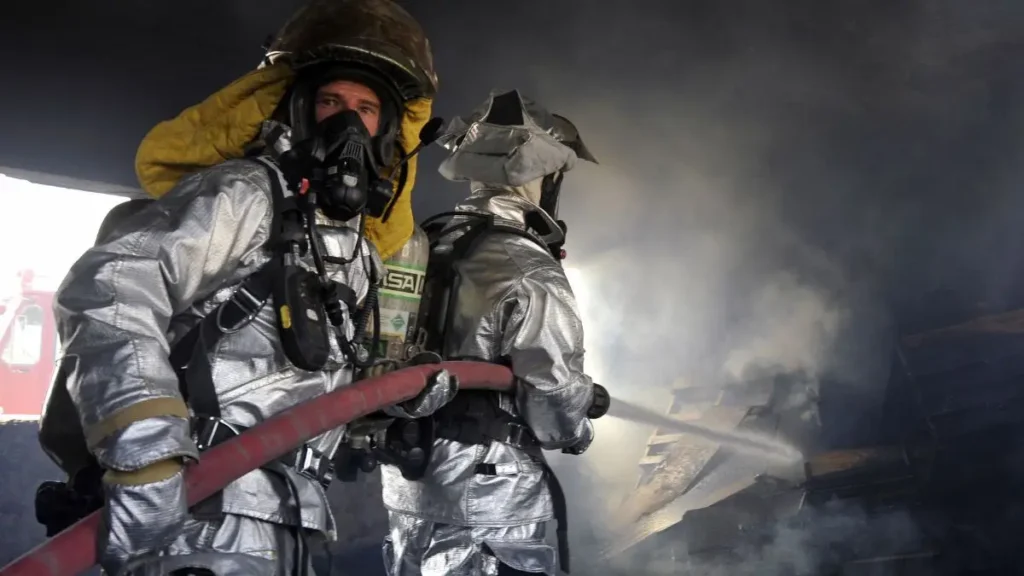
According to Local 21, which was on the scene, firefighters were forced to tear through walls and ceilings to reach the fire. That detail tells you a lot. When crews start cutting into a home, it usually means the fire has spread into enclosed spaces, where heat builds fast and becomes unpredictable.
I’ve seen this before, and it’s one of the hardest situations firefighters face. A fire trapped behind walls doesn’t show itself until it’s already strong. By the time smoke thickens, damage is often extensive.
Lebanon City Fire Chief Aaron Sweitzer confirmed that the fire didn’t stay contained. The exterior flames affected two houses at once, increasing the risk and forcing crews to move aggressively.
This wasn’t about saving drywall anymore. It was about stopping the fire from taking the entire block with it.
One Man Suffers Severe Burns as Pets Don’t Make It Out
While crews worked to control the fire, the human cost became clear.
Authorities say one man was injured and later taken to the hospital, where he was treated for severe burns. Burn injuries are no small thing. They’re painful, dangerous, and often life-changing—even when someone survives.
What makes this harder to read is what didn’t survive the fire.
Two cats were found dead inside the residence. For many people, pets are family. Their loss hits deep, especially in fires where everything happens so fast that there’s no time to go back.
If you’ve ever had to leave a home in an emergency, you know that moment of panic—deciding what you can grab, and what you can’t. Fires don’t give second chances.
Ten People Displaced After Building Declared Uninhabitable
Beyond injuries and loss, fires leave a quieter damage behind—displacement.
Officials confirmed that ten people were forced out because of this fire. The residence has been deemed uninhabitable, meaning there’s no quick return, no overnight fix.
Displacement isn’t just about finding a place to sleep. It’s about clothes, medications, documents, work schedules, kids’ routines. In one afternoon, normal life is gone.
This is the part most short news updates rush past. But for the people affected, this is where the real struggle begins.
If you’ve never been displaced by a fire, it’s hard to understand how long recovery can take—even when the flames are out.
Fire Cause Still Unknown as Investigation Continues
Right now, one major question remains unanswered: what caused the fire?
Authorities say the cause has not yet been confirmed, and the investigation is ongoing. That’s important. Speculation spreads fast after incidents like this, especially in close-knit neighborhoods.
From experience, these investigations take time. Crews have to wait until the structure is safe, then trace burn patterns, electrical points, and possible ignition sources.
Until officials release details, anything else is guesswork—and that helps no one.
Fire Chief Confirms Damage Extended Beyond One Home
Lebanon City Fire Chief Aaron Sweitzer didn’t downplay the situation.
He confirmed that the exterior fire impacted two houses simultaneously, which explains the scale of the response and the decision to evacuate the entire block.
When a fire jumps from one structure to another, it changes everything. Resources stretch thin. Risk rises fast. And the margin for error disappears.
That’s why Wednesday’s fire wasn’t treated as an isolated incident—it was a neighborhood threat.
If you live in a row home, duplex, or closely packed street, this should make you pause.
Do you know how quickly fire can move from one building to the next where you live?
Tell me—have you ever witnessed a fire like this in your area, or had to evacuate suddenly?