The Right Way to Clean Granite Countertops in 8 Easy Steps
If you’re like me, your kitchen counters take a lot of daily hits — coffee spills, crumbs, quick meals, and the occasional “I’ll clean it later” moment that turns into tomorrow. Granite can handle a lot, but it’s not invincible. Most people assume it’s a wipe-and-forget surface. It isn’t. Granite has pores, it needs the right cleaner, and it reacts badly to a few common habits I see all the time.
I’ve spent years testing different cleaning routines, talking to stone-care pros, and reviewing what leading home-care sites recommend. And honestly, the internet makes this topic more confusing than it needs to be. Every site repeats the same half-answers, misses small but important details, or jumps straight to harsh chemicals you don’t actually need.
So in this guide, I want to make things simple. I’ll walk you through the exact way I clean granite countertops — the method that keeps them streak-free, safe, and looking like they were installed last week. No complicated products. No risky shortcuts. Just a clear, practical routine you can do in a few minutes without second-guessing whether you’re damaging the stone.
Before we dive in, I’m curious: what’s the biggest issue you face with your granite right now — streaks, dullness, stains, or something else?
Why Proper Granite Cleaning Matters
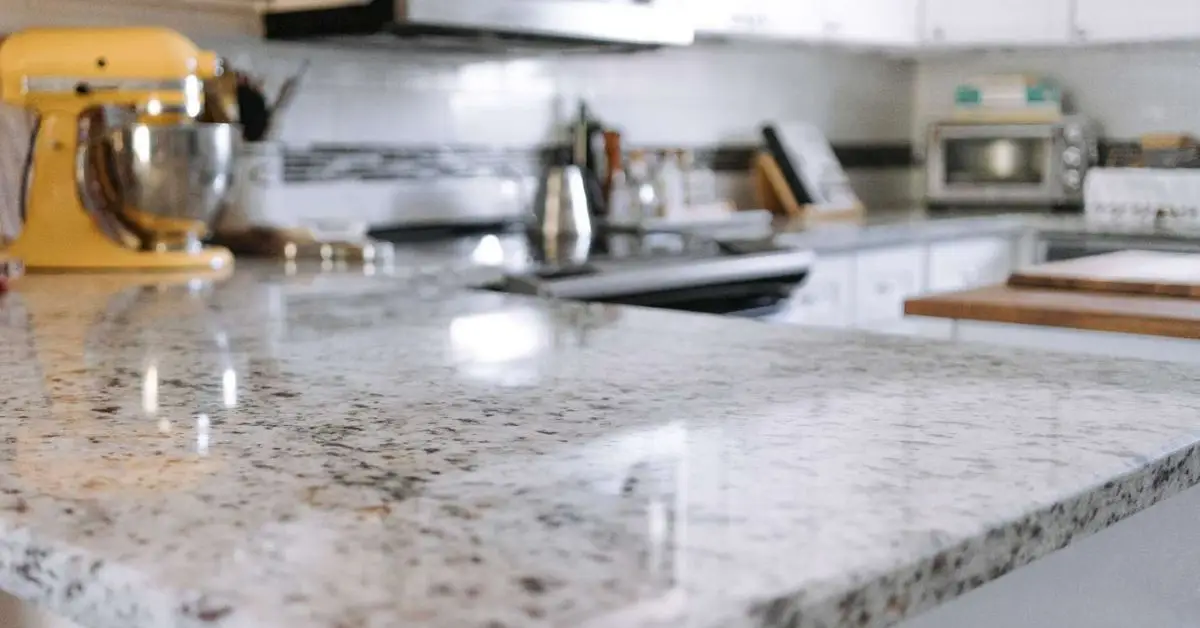
If you’ve lived with granite long enough, you already know it doesn’t behave like a regular countertop. It looks solid and strong, but underneath, it’s still a natural stone with tiny pores you can’t see. Those pores decide how your counters age — whether they stay glossy or start turning dull and uneven over time.
The truth is, most damage doesn’t happen in one day. It happens slowly through the wrong cleaners, harsh scrubbing pads, or letting spills sit a little too long. Once I understood how granite actually responds to daily use, my cleaning routine changed completely — and the shine stayed longer.
What Makes Granite Different
Granite is durable, but it still reacts to what you put on it. A regular all-purpose spray might seem harmless, but many contain acids or solvents that quietly wear down the seal.
Here’s what’s happening behind the shine:
- Granite is strong but naturally porous, so weakened sealant lets liquids seep in.
- Acid-based cleaners slowly strip the protective layer.
- Abrasive scrubbers form tiny scratches that make the surface look cloudy.
- When the seal thins, stains show up faster and are harder to remove.
If you want a clear breakdown of what types of cleaners are safe, Southern Living explains it well.
The Hidden Risks People Don’t Notice
Granite rarely shows damage in the moment. Most issues build up quietly.
- Spills left too long can settle into the pores and leave dark marks.
- Even sealed granite can stain if the seal has weakened.
- Wrong cleaners used regularly cause dullness, faded polish, and sometimes light etching.
- Over months or years, the surface starts looking older even if you clean it often.
Once you understand these hidden risks, taking care of granite becomes simpler — and a lot more effective.
Before we continue, tell me this: have you seen any dark spots or cloudy patches on your countertops lately?
Step-by-Step: 8 Simple Steps to Clean Granite Countertops Right
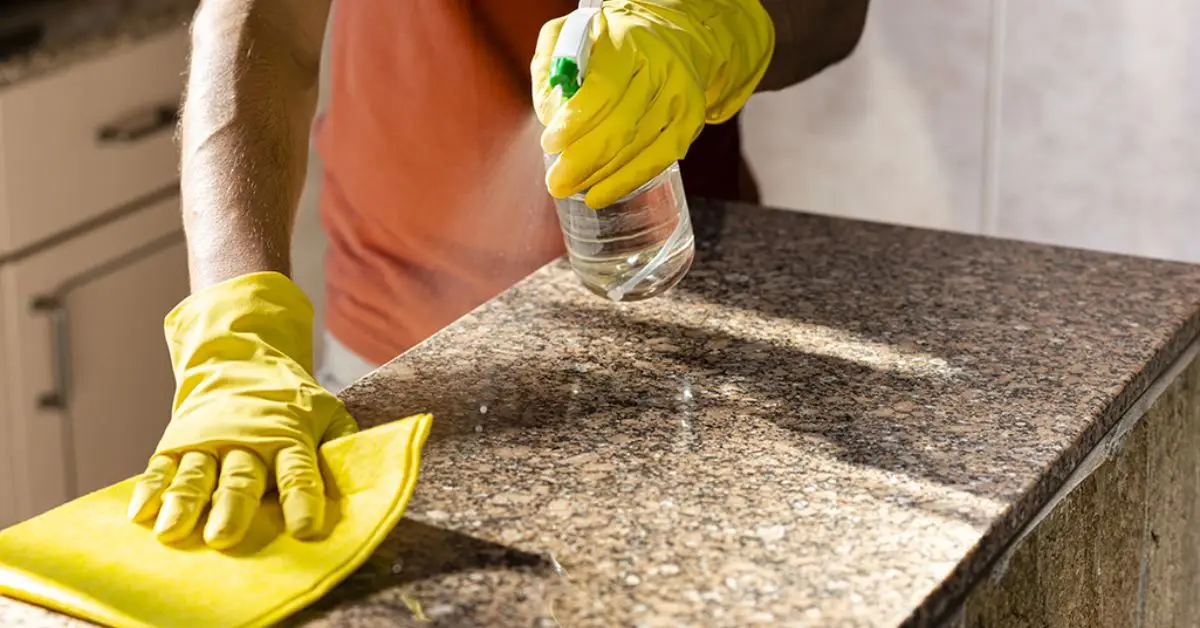
Cleaning granite isn’t complicated, but the right routine makes a huge difference. I’ve seen so many countertops lose their shine because of tiny everyday habits — the wrong soap, too much water, or using rough scrubbers without thinking. If you follow these eight steps the way I walk you through them here, your granite will stay smooth, bright, and protected for years.
Step 1: Remove all items and loose debris
Start by clearing everything off your counters — appliances, jars, dishes, all of it.
You want a fully open surface so nothing gets in the way.
Then use a soft dry cloth to dust away crumbs or grit. This prevents scratches once you start wiping with water.
- Empty the entire surface
- Dust crumbs before cleaning
- Avoid dragging debris around the stone
Step 2: Mix a gentle cleaning solution (warm water + mild dish soap)
Granite doesn’t need anything fancy. Warm water and a small amount of mild, pH-neutral dish soap work perfectly.
Avoid citrus-based soaps or heavy detergents — they may contain acids that wear down the seal over time.
- Warm water + a few drops of gentle soap
- Skip citrus or harsh detergents
- Mix in a bowl or spray bottle
Step 3: Wipe the surface with a soft cloth or microfiber towel
Use a microfiber cloth — never abrasive pads or rough sponges.
Wring it out well so it’s damp instead of dripping. Excess water around seams can slowly weaken them.
- Only microfiber or soft cloth
- Damp, not soaking
- Clean in small sections
Step 4: Rinse with clean water and dry immediately
Soap residue is one of the biggest reasons granite turns dull. After wiping, rinse your cloth in clean water and go over the counters again to remove leftover soap.
Then dry the surface completely with a fresh microfiber towel to avoid water spots or mineral marks.
- Rinse with fresh water
- Remove all soapiness
- Dry thoroughly
Step 5: For deeper cleaning or disinfection — use diluted isopropyl alcohol
When I want to disinfect (especially after cooking meat), I use a 50/50 mix of water and isopropyl alcohol.
It sanitizes without harming the seal the way bleach or strong chemicals do.
- Mix half water, half rubbing alcohol
- Spray lightly
- Wipe dry with a soft cloth
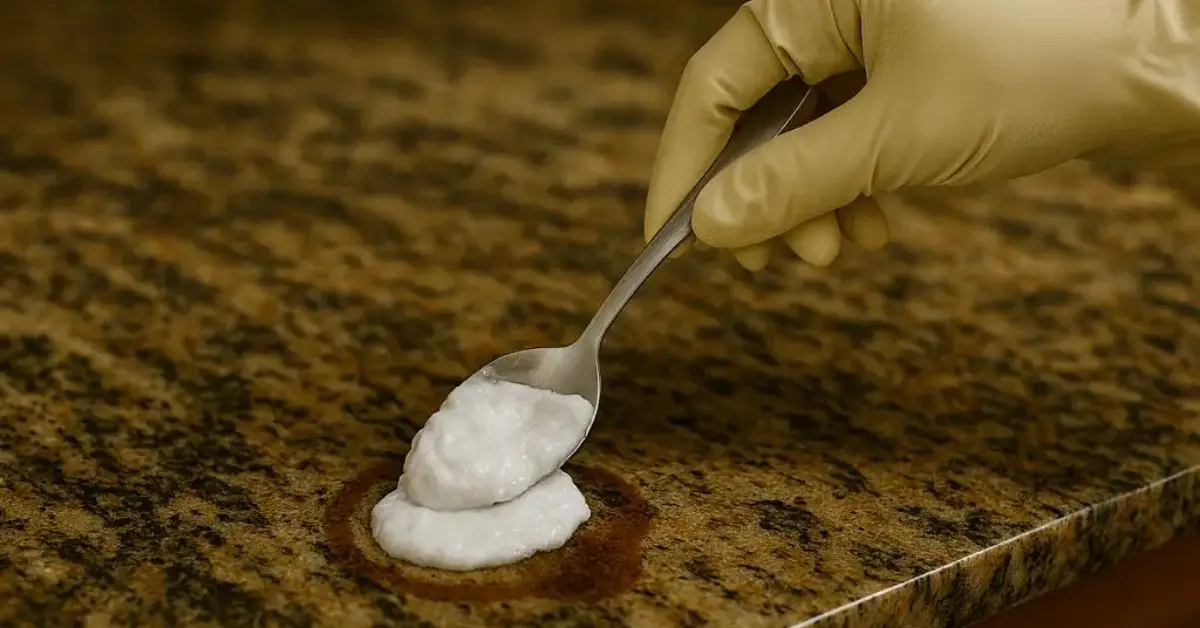
Step 6: Deal with stains using a poultice
Granite stains usually sit just under the surface, so you need a poultice to pull them out.
Oil-based stains: baking soda + water
Water-based stains: baking soda + hydrogen peroxide
Apply the paste, rub gently, and for deep stains, cover it with plastic wrap for 24–48 hours before rinsing.
- Use baking soda paste for stain removal
- Cover with plastic for tough spots
- Rinse and repeat if needed
Step 7: Buff or polish for shine
Once the surface is dry, buff it with a clean, dry microfiber cloth. This quick step brings back the natural gloss and evens out the finish.
- Buff after drying
- Use a dry microfiber towel
- Helps reduce streaks and restores shine
Step 8: Seal or re-seal to preserve protection
Granite stays stain-resistant only when the seal is healthy.
Do a quick water test: sprinkle a few drops of water — if they soak in within a few minutes, it’s time to reseal.
Most homes need sealing every 12–24 months. If you want a simple, clear explanation of how sealing works and how to keep granite looking new, I recommend this breakdown from Legg Lumber.
- Test with a few drops of water
- Reseal every 1–2 years
- Strong seal = easier cleaning + fewer stains
What Not to Do: Common Mistakes That Damage Granite
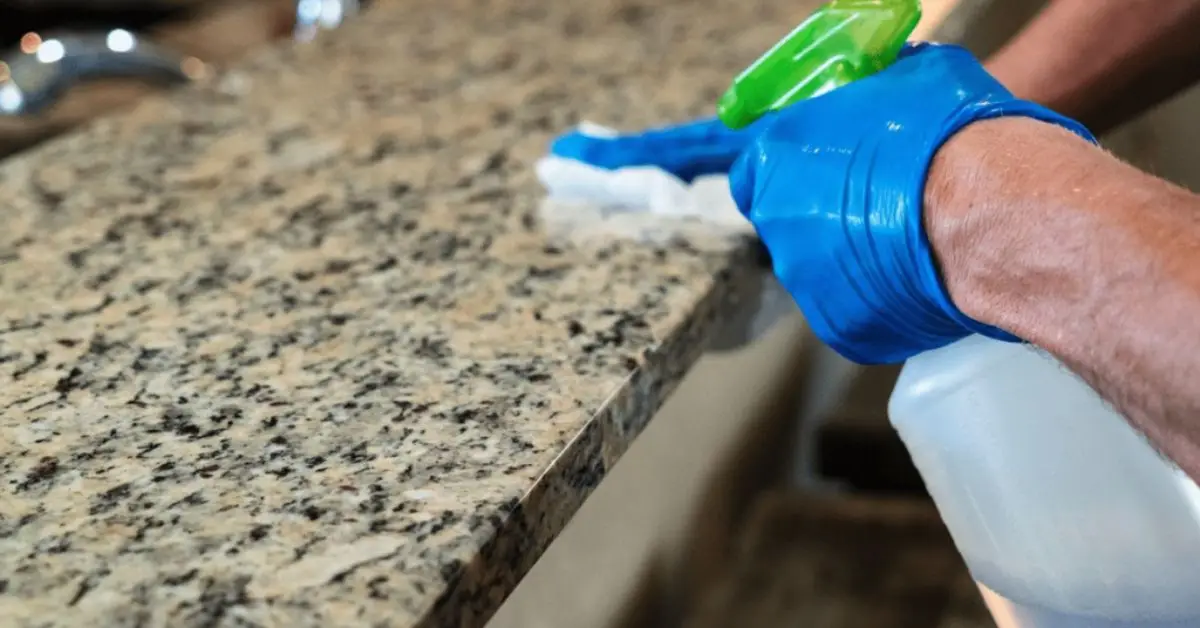
When I talk to people about granite care, I notice the same mistakes come up again and again. These habits seem harmless in the moment, but over time they wear down the seal, invite stains, and leave the surface dull. If you avoid these, your granite will stay stronger, cleaner, and easier to maintain.
Never use acidic or abrasive cleaners
I know it’s tempting to grab vinegar, lemon cleaners, bleach, or ammonia because they smell “clean,” but granite doesn’t respond well to them. These products slowly erode the seal, dull the shine, and can even roughen the surface. There’s a simple breakdown of why these ingredients cause damage.
If you keep wooden cutting boards on your counters, be mindful of the products used on them too. Some common cleaners can seriously damage wood over time, and here’s a detailed list of which ones to avoid: cleaning products that could damage your wooden cutting board.
Don’t use abrasive sponges, steel wool, or powdered cleansers
Anything gritty will scratch granite. You and I might think a quick scrub will lift stubborn spots, but it ends up leaving tiny scratches that build up over time. Stick to microfiber or soft cloths only.
Avoid leaving spills — especially acidic or colored liquids — sitting
Granite looks tough, but it’s still porous. When spills like wine, tomato sauce, or coffee sit too long, they can seep into the stone and leave stains that are hard to reverse. A quick wipe makes a huge difference.
Clean countertops are also one of the first things guests notice when they walk into a kitchen. If you want to see what else stands out immediately, here’s a helpful breakdown: 6 things guests notice instantly in your kitchen.
Don’t cut directly on granite or put hot pans on it
Granite feels like it can handle anything, but direct cutting can scratch the surface. And while a hot pan might not crack the stone instantly, it can stress the seal and weaken it. A cutting board and trivet are still your best friends here.
If you’ve already noticed small scratches forming, many of them can be fixed at home. Here’s a simple guide that shows practical methods to remove countertop scratches: 10 proven ways to remove kitchen countertop scratches at home.
Weekly / Monthly Maintenance & Best Practices
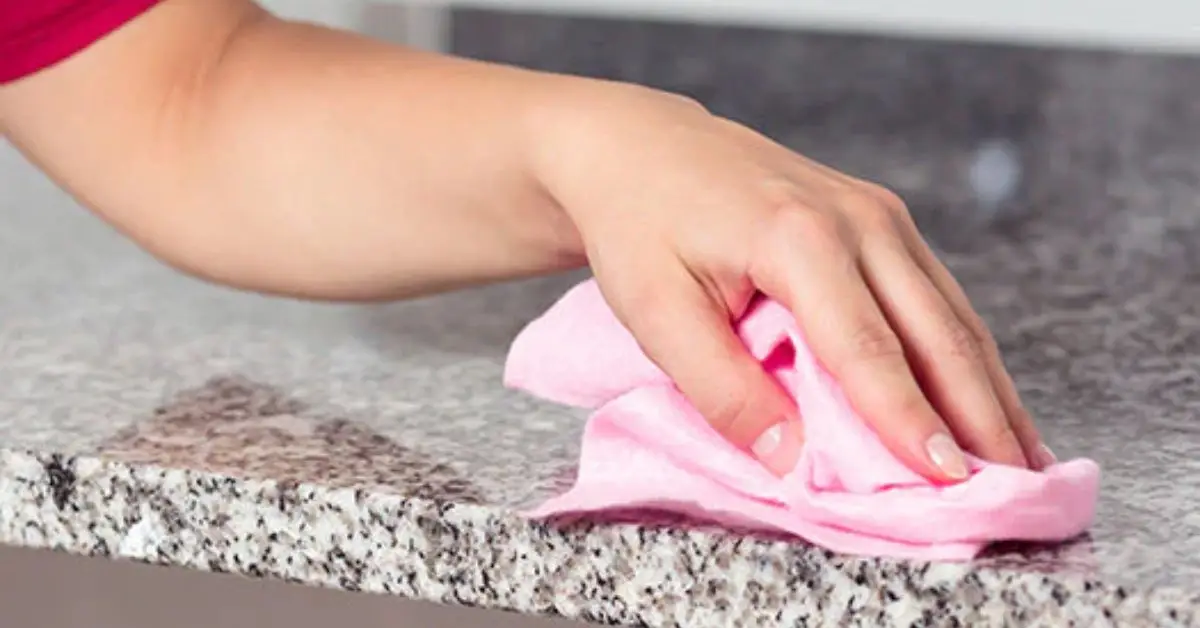
A simple routine keeps granite looking polished without much effort. You don’t need fancy products or hours of scrubbing. Just a few steady habits keep the countertop protected year-round.
Daily wipe-down after cooking
A quick wipe with a damp cloth followed by a dry pass helps remove grease, dust, or splashes from the day. It keeps the surface clean without letting buildup form.
Weekly deeper clean and light disinfection
Once a week, I use mild dish soap or a stone-safe cleaner to reset the surface. If I need extra sanitation, a diluted alcohol mix works well and doesn’t damage the seal.
Regular sealing schedule
Every 6–12 months, I test the surface by sprinkling a few drops of water. If the water disappears quickly, it’s time to reseal. This simple step keeps granite protected from stains and moisture.
Quick Reference: Granite Cleaning Do’s & Don’ts (Cheat-Sheet Table)
I like having a quick cheat sheet nearby because it saves time and keeps mistakes at bay. If you want something easy to print or pin on your fridge, this table does the job. It’s a fast reminder of what keeps granite healthy — and what quietly damages it over time.
| Do’s | Don’ts |
|---|---|
| Use warm water + mild, pH-neutral dish soap | Use acidic or bleach-based cleaners like vinegar, lemon, ammonia, or straight bleach |
| Use soft microfiber towels or cloths | Use abrasive pads, scrubbers, steel wool, or powdered cleansers |
| Rinse and dry immediately after cleaning | Leave spills or water puddles sitting on the surface |
| Use diluted isopropyl alcohol (50/50 mix) for safe disinfection | Use undiluted alcohol or strong disinfectants |
| Reseal as needed based on water-absorption test | Assume the seal lasts forever and skip resealing |
| Wipe spills quickly and use coasters or trivets | Put hot pans directly on the surface or cut food on the stone |
When DIY Doesn’t Work: Call a Pro
Sometimes granite needs more than at-home care, and I’ve learned it’s better to call a specialist before things get worse. If you notice any of the issues below, getting help from a stone-care pro can save you time, money, and a lot of frustration.
When stains or etches don’t lift with a poultice
If you’ve already tried the right poultice for the stain type and nothing changes, the granite may need professional polishing or refinishing.
Chips, cracks, or worn-out sealer
Any structural damage or seal failure (especially after repeated heavy cleaning) is something a pro should handle.
When you’re unsure about the stone itself
If you don’t know what type of granite you have or what treatments were used before, a professional assessment avoids guesswork and prevents the wrong product from making things worse.
Final Action Plan: 5-Minute Daily Routine + Monthly Checklist
Here’s a simple routine I use myself — it keeps granite looking new without turning cleaning into a chore. You can start this today, and it fits easily into a busy schedule.
Daily (1–2 minutes)
- Wipe the surface with a damp microfiber cloth
- Dry completely to avoid water spots or dullness
Right after spills
- Blot, don’t rub
- Rinse and dry so nothing soaks into the pores
Weekly (about 10 minutes)
- Clean with mild soap or a stone-safe cleaner
- Rinse well
- Dry fully
- Optional: quick buff with a dry microfiber cloth for a natural shine
Monthly / Every 6–12 months
- Do the simple water-absorption test
- Reseal if the water darkens or absorbs quickly
If a stain appears
- Apply a poultice based on whether it’s oil- or water-based
- Cover if needed
- Check again in 24–48 hours
You can also explore more home-care guides and practical cleaning routines on Build Like New.
Disclaimer: The information in this guide is for general cleaning and home-care purposes. Granite types, sealants, and surface conditions can vary, so always test any product or method on a small, hidden area first. For serious damage, structural issues, or uncertain stains, consult a licensed stone-care professional.