Indy House Fire Leaves Four Hurt, One Dog Dead; Cause Traced to Space Heater
When I first read about the fire on Calhoun Street, the part that struck me the most wasn’t the flames or the damage — it was how quickly everything unfolded. Just before 3 p.m., Indianapolis firefighters were sent to a home on the near southeast side after someone reported smoke and a possible entrapment. Within minutes, 13 units were racing toward the scene.
By the time crews reached the house, heavy fire and dark smoke were already pouring out. They pushed in fast. Their search wrapped up at 3:14 p.m., and by 3:19 p.m., the fire was under control — which tells you how aggressively they attacked it.
Inside, five people had already escaped, thanks to working smoke alarms. That detail alone probably saved lives. Still, four adults had to be taken to the hospital to get checked out. And even though everyone made it out, the tragedy didn’t end there. Two dogs were in the back room. One survived. One didn’t.
Moments like this remind you how fragile the line is between “everything is normal” and “everything is gone.” A house fire doesn’t give you time to think. It forces its way into your life and takes what it wants in seconds.
What hit me even more was why the fire started — and why it could easily happen to anyone.
I’ll get into that next, but before we move on, I want to know: Have you ever used a space heater in a room with pets or flammable materials without thinking twice about it?
How the Fire Started?

When I went through the FOX59 report, one detail stood out immediately: the space heater wasn’t just sitting in any room — it was kept in a back room where the floor was covered with straw to keep the dogs warm. That combination alone is a fire risk most people never even think about.
According to FOX59, firefighters believe one of the dogs accidentally tipped the heater over. And once a hot surface lands on dry straw, the timeline from “small flame” to “full room on fire” becomes frighteningly short. You don’t have minutes. You barely have seconds.
What makes this even more heartbreaking is that the heater wasn’t running for carelessness — it was running for the dogs. The owners were simply trying to keep their pets warm, and that good intention ended up creating the perfect fuel-and-heat scenario.
I’ve seen homeowners make similar decisions, especially in winter. You set up a temporary heater, think it’s harmless, and forget how quickly things can go wrong. This fire is a tough reminder that even a small, everyday device can turn deadly when it meets the wrong material.
The Straw Factor — The Part WTHR Mentioned But Didn’t Explain
When I checked the WTHR coverage of the fire, they did mention the straw on the floor but moved on quickly. And honestly, this is the part most people gloss over — even though it’s the real trigger point.
Straw isn’t just flammable. It’s super flammable. It behaves almost like kindling. It catches fire with very little heat, spreads fast, and pushes flames across a surface in a way carpets or tile don’t.
WTHR reported that the back room was lined with straw for the dogs, but they didn’t dive into what that means in real-world fire behavior. If you’ve ever lit a campfire, you know exactly what straw does: it accelerates everything. It makes a small mistake grow into a full-blown blaze.
This is the kind of detail that transforms a simple “heater tipped” story into a much bigger lesson. Most pet owners never think twice about putting down warm bedding for animals. And most don’t realize that pairing it with a space heater turns the room into a fire trap without meaning to.
This wasn’t just a heater accident. It was a dangerous combination waiting to ignite.
Just a few weeks ago, I covered a case where a family in Rhode Island lost a home to a similar heat-source accident — the pattern is nearly identical.
Space Heater Fires Are More Common Than People Think
As someone who’s reviewed dozens of winter fire reports over the years, I can tell you this: space heater fires aren’t rare. They happen all the time, and the numbers are consistently alarming.
The National Fire Protection Association has repeated one thing for years — space heaters cause the majority of deadly home-heating fires. Not furnaces. Not fireplaces. Space heaters.
And when you look deeper, the causes repeat like clockwork:
– heaters too close to bedding or furniture
– heaters tipping over
– heaters plugged into extension cords
– heaters left running unattended
The Indy fire checks off one of these boxes exactly. A simple tip-over.
What makes this story even more uncomfortable is how ordinary the setup was. A small room. A heater. Some bedding for pets. That’s not unusual at all. If anything, it’s familiar.
This is why these fires keep happening. They don’t start in extreme situations — they start in everyday homes doing everyday things.
By the way, I often share short fire-safety alerts and real-time incident updates on a WhatsApp channel I follow — it’s useful if you like getting important reminders without hunting for them.
Why Pets + Heaters Are a Hidden Fire Risk People Don’t Talk About?
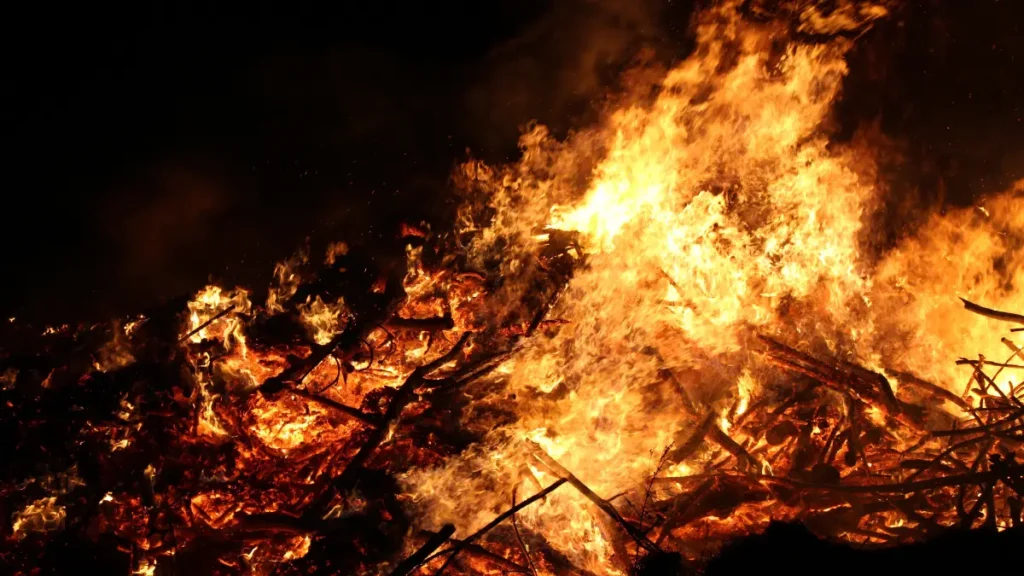
Something I’ve learned over the years: pets don’t understand danger. They don’t know that nudging a heater or brushing against a cord could start a fire. They just move the way pets move — curious, restless, unpredictable.
Stories like this one remind me how often people overlook this. The heater wasn’t tipped over by a kid or by faulty wiring. It was the dog. And if you’ve lived with pets, you know how easy that is to imagine. One playful jump. One bump. One push. That’s all it takes.
When I skimmed through social media reactions to similar incidents, pet owners regularly share the same worries — “My dog knocked over my heater once.” “My cat sits too close to it.” “I didn’t realize how dangerous it was.”
But here’s the even bigger problem: many people set up extra bedding, straw, blankets, hay, or fabric flooring for warmth. And all of it is fuel.
Pets + loose bedding + heaters = a serious fire hazard that almost no one talks about until something like this happens.
Maybe that’s why the story hits harder. It wasn’t carelessness. It was routine.
I’ve seen this happen in other cases too — like a West Phoenix fire where residents were forced out after a small spark escalated fast.
Lessons From the Indy Fire — What You Can Do to Stay Safe
Whenever I read a report like this, I try to think about what I would tell someone face-to-face. And honestly, the lessons here are simple but incredibly important.
- First, never place a heater near anything that burns easily. Straw, blankets, pet bedding, clothes — all of it can ignite in seconds.
- Second, only use heaters with automatic tip-over shutoff. This single feature could’ve prevented the Indy fire entirely.
- Third, don’t leave heaters running in closed rooms with pets. Animals move, jump, bump, and wander. They don’t know what’s risky.
- Fourth, plug heaters straight into a wall outlet. No extension cords. No power strips. Those fail fast.
- And finally, keep your smoke alarms working. In this fire, they’re the reason five people made it out alive.
These aren’t big changes. They’re tiny habits that can make the difference between a warm room and a life-changing disaster.
Before I wrap this section, let me ask you something: If you use a space heater at home, do you genuinely feel confident about how safe your setup is — or is there one thing you know you should change after reading this?
What We Still Don’t Know About the Indy Fire?
Even with everything officials have shared, there are a few details that haven’t been clarified yet — and they matter if we want to understand how this fire escalated so fast.
For example, we still don’t know what kind of space heater was being used. Was it an older model? Did it have a built-in tip-over shutoff? Many cheaper heaters don’t, and that feature alone can be the difference between a scare and a tragedy.
We also don’t know how close the heater was to the straw, or whether the room had any ventilation. Small enclosed rooms tend to trap heat, and that can make ignition even faster.
And then there’s the question of how long the heater had been running before it tipped over. Was it minutes? Hours? That detail tells you a lot about the room’s heat buildup and the conditions leading up to the fire.
None of these unanswered points change what happened, but they help us understand the “why” behind it — and how a similar situation could be prevented somewhere else.
Some investigations take weeks, like a fire I wrote about in Russell Springs, where early reports revealed almost nothing.
Key Takeaways for You
If there’s one thing I want you to walk away with, it’s that this fire wasn’t about bad intentions or carelessness. It was about a setup most of us wouldn’t question: a heater, a pet room, and something soft on the floor.
But here’s the truth — space heaters demand more respect than we give them.
So before you move on, ask yourself:
– Is your heater near anything flammable?
– Does it have a tip-over sensor?
– Are you using it around pets or kids?
– Are your smoke alarms working?
– Do you leave it running when you’re not paying attention?
A few small adjustments can protect your home, your family, and your pets. That’s all it takes.
Now I’m curious — after reading everything about this Indy fire, what’s the first thing you’re going to change (or check) in your own home setup?
If you want to stay updated on real home safety stories and fire-incident breakdowns, you can explore more reports on our home incidents section — it’s where I track incidents like these and the lessons we can all learn from them.
Disclaimer: This article is based on publicly available reports and official statements at the time of writing. It’s meant for informational purposes only and shouldn’t replace professional safety guidance. Always follow local fire officials’ recommendations and consult certified experts for home safety decisions.