Sticky Doors in Winter? The Real Reasons They Happen — and Fast Fixes That Work
I hate when a door that used to glide now fights you every time you try to close it. If your door suddenly sticks when the temperature drops, you’re not imagining things — and you don’t need to call a contractor straight away. I’ve fixed enough of these myself and helped others troubleshoot the same problem without wasting time or money.
I looked at what builders, manufacturers, and homeowners say about this — and the truth is simple: seasonal moisture, alignment shifts, and a few avoidable maintenance mistakes cause most winter “sticking” issues. In this piece I’ll show you how to quickly figure out which of those is happening to your door, what to try right now, and what to do to stop it coming back next season.
Read on and I’ll walk you through a clear, step-by-step triage: quick fixes you can do in an evening, how to decide when a deeper repair is needed, and the preventive checks that actually prevent repeat problems. Ready? Let’s start with the easiest checks you can do in under five minutes.
Quick Verdict — Root Causes & Immediate Fixes
If you want the short answer before getting into details, here it is.
In most homes, winter door issues come down to wood reacting to indoor moisture. Once the heat is on, we cook more, shower more, and keep windows shut. That moisture stays inside. Wooden doors and frames absorb it, swell slightly, and start rubbing against the jamb. This behavior is well documented by door and window manufacturers, including what’s explained in this guide on why doors swell and stick in winter.
From my experience, swelling is usually the trigger — but not the only factor.
Other common causes that often pile on:
- Hinges or strike plates shifting slightly as temperatures change
- Loose screws throwing the door out of alignment
- Old paint buildup creating friction once the door expands
- Unsealed or poorly sealed wood edges absorbing moisture
- Lubricants that thicken instead of reducing friction
- In fewer cases, long-term settling or frame distortion
Quick fixes you can try today:
- Improve ventilation or run a dehumidifier
- Find the rubbing spot and lightly sand it
- Tighten hinge screws and recheck alignment
- Apply candle wax or bar soap to tight edges
- Reseal or repaint bare wood once movement improves
Why Winter Makes the Problem Worse
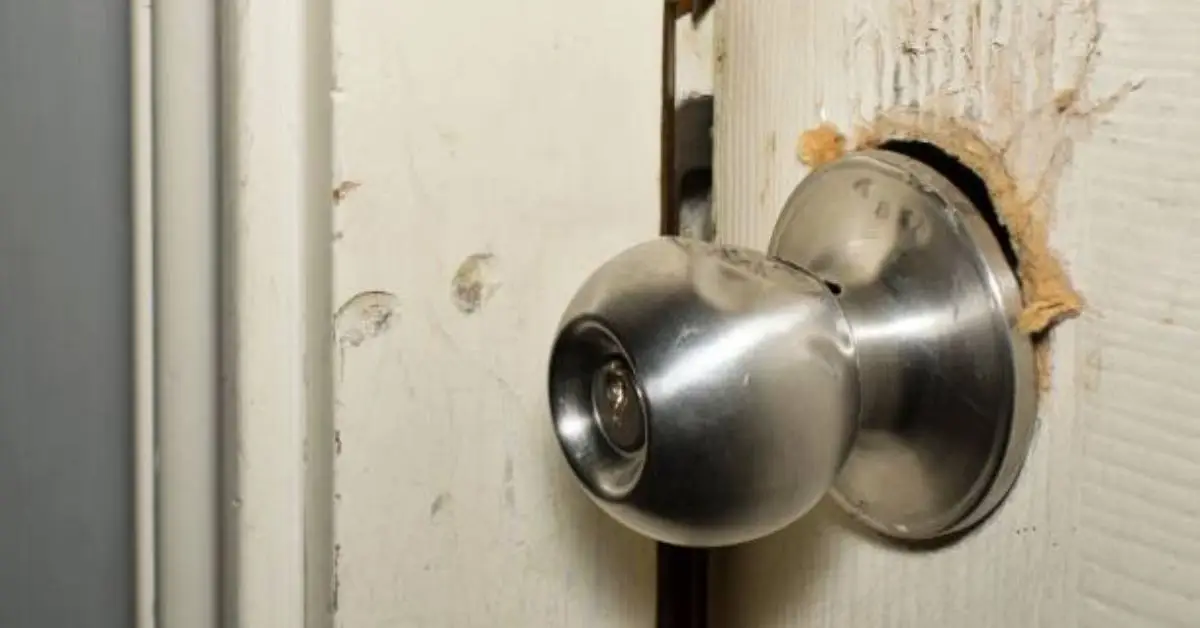
Wood + Humidity = Swelling (And Sometimes Misalignment)
Here’s what surprises most people: cold weather itself doesn’t make doors stick. Indoor humidity does.
Once winter sets in, warm indoor air traps moisture. Wood naturally absorbs it, especially along unfinished edges. That slight expansion is often all it takes for a door that used to close perfectly to start catching.
What I want you to remember:
- Your door isn’t suddenly “bad”
- This is normal wood behavior responding to seasonal conditions
Over time, repeated winter cycles can lead to:
- Small but permanent warping
- The same rub points showing up every year
- Doors that never fully recover without adjustment
If moisture isn’t addressed, surface fixes like wax or lubricant only mask the issue. The sticking almost always comes back.
Hardware And Alignment Issues Get Worse In Cold Weather
Doors depend on tight tolerances. Winter exaggerates small problems you could ignore before.
Here’s a pattern I see a lot:
- Hinges loosen slightly as wood expands and contracts
- Screws back out just enough to shift alignment
- Metal hardware tightens tolerances as temperatures drop
- Thick paint layers become friction points once swelling begins
Individually, these don’t seem serious. Together, they’re enough to turn a minor seasonal change into a door that jams.
That’s why sanding fixes some doors instantly — and why hinge adjustments solve others just as fast.
Poor Sealing And Skipped Maintenance Make Everything Harder
This is the unglamorous part, but it matters.
Unsealed edges — especially the top and bottom of doors — absorb moisture first. Old paint cracks. Bare wood drinks humidity. Once that happens, winter sticking becomes a yearly routine.
Proper sealing:
- Limits swelling
- Turns sanding into a one-time fix
- Protects the door long-term
Skipping it saves effort now, but guarantees repeat frustration later.
When The Problem Isn’t Seasonal Anymore
Most winter sticking is harmless. But if you notice:
- The door sticks year-round
- Multiple doors develop issues at once
- Gaps change or frames look twisted
You may be dealing with a structural issue rather than seasonal movement. That’s when DIY fixes stop helping, and continuing to sand can actually make things worse.
Fixing The Problem: Immediate + Seasonal Solutions
If your door is already sticking, don’t overthink it. I always start with the easiest things first — the stuff that fixes the problem in a day, not a weekend.
Regulate Indoor Humidity And Ventilation
Nine times out of ten, this is the real trigger.
When indoor moisture drops, wood relaxes. When it relaxes, doors move again.
Here’s what actually works:
- Run a dehumidifier in the problem area for a few days
- Use kitchen and bathroom exhaust fans regularly
- Stop drying wet clothes indoors during winter
- Crack windows briefly on dry days if weather allows
You don’t need fancy tools. Even small changes can bring indoor humidity back into a safer range.
Lubricate Or Wax Door Edges And Hinges (Quick Friction Fix)
If the door only catches slightly, friction is your enemy.
I’ve seen plenty of doors behave after nothing more than this:
- Rub candle wax or plain soap on the tight edge
- Apply wax where the door touches the frame
- Add light lubricant to hinges if movement feels stiff
- Avoid heavy grease — it traps dust and gets gummy in winter
This won’t fix structural problems, but it’s a smart first move.
Light Sanding Or Planning Of Rubbing Areas
When the door rubs in the same spot every time, sanding becomes unavoidable.
Here’s how to do it without ruining the door:
- Open and close the door slowly to find contact points
- Mark the tight area with chalk or lipstick
- Sand lightly — remove as little material as possible. This same slow, careful approach applies anywhere paint or finish causes friction — I’ve explained it step by step in this guide on how to unstick painted-over windows without damaging them.
- Test often instead of overdoing it
Once the door moves freely, reseal the exposed wood. If you don’t, the problem will return.
Adjust Hinges, Tighten Screws, Or Realign The Strike Plate
Sometimes the door isn’t swollen — it’s just out of alignment.
I always check these next:
- Tighten all hinge screws (replace stripped ones if needed)
- Look for hinges pulling away from the frame
- Adjust the strike plate if the latch hits too high or too low
Small alignment fixes make a big difference once winter movement starts.
How To Winter-Proof Your Doors: Preventive Maintenance And Long-Term Protection
Fixing the door once is good. Stopping the problem from coming back is better.
Based on manufacturer guidance like this breakdown on preventing wooden doors from expanding in winter, long-term protection comes down to sealing and consistency.
Here’s what I recommend:
- Seal all door edges — top, bottom, and sides (not just what you see)
- Use weather-resistant paint, varnish, or sealant
- Install weather stripping or door sweeps to block moisture entry. If cold air and moisture are still getting in around the door, fixing the sticking alone won’t solve the root problem — that’s where these affordable draft-proofing hacks for doors that actually look good and work well come in handy.
- Keep indoor humidity steady rather than letting it spike
- Make door checks part of your pre-winter routine
I tell people this all the time: most sticky doors aren’t emergencies — they’re maintenance reminders you didn’t know you were getting.
Red Flags That Point To Bigger Problems
Most winter door problems are harmless and temporary. But every now and then, a sticky door is a warning sign — and ignoring it only wastes time.
If I’ve already reduced humidity, sanded lightly, and fixed alignment, yet the door still fights me, I stop treating it as a seasonal issue.
Pay attention if you notice any of these signs:
- The door stays tight even after humidity levels drop
- Sanding or lubrication barely helps, or only works for a day or two
- Cracks appear near door frames or along walls
- Floors feel uneven or slopes seem worse over time
- The frame itself looks twisted or pulled out of square
- Hinges loosen repeatedly or screws won’t stay tight
When several doors in the house start sticking at once, that’s another big clue. At that point, the problem usually isn’t the door — it’s movement in the structure.
Foundation and structural specialists consistently warn that door problems often show up before homeowners notice larger shifts, which is exactly how it’s explained in this overview on why doors stick due to structural movement.
A Step-By-Step Door-Sticking Triage For Homeowners
Groundworks
When a door starts sticking, random fixes lead to frustration. This is the order I follow every time — and it works.
Step 1: Identify where it sticks
- Top edge
- Bottom edge
- Hinge side
- Latch side
- Only after rain, showers, or cooking
Where it sticks tells you why it sticks.
Step 2: Reduce indoor moisture
- Improve ventilation
- Run a dehumidifier for a few days
- Then test the door again
If it improves, swelling was the cause.
Step 3: Reduce friction
- Wax or soap the tight areas
- Lubricate hinges lightly
- Test again
Step 4: Make physical adjustments
- Mark rub points
- Sand or plane gently
- Reseal exposed wood
Step 5: Check alignment
- Tighten hinge screws
- Adjust strike plate if needed
Step 6: Step back and reassess
- Look for wall cracks or uneven floors
- Check if multiple doors are affected
- Decide whether a professional inspection makes sense
This process keeps you from guessing. It narrows the cause fast and helps you fix the right thing instead of everything at once.
If you checked where your door sticks earlier, does this flow confirm what you suspected — or did it surprise you?
Extra Tips, Common Mistakes & Myths
By the time someone reaches this section, they’ve usually tried something. And this is where I see most people accidentally create new problems while trying to fix the old one.
Here are the mistakes I want you to avoid.
- Don’t over-sand or over-plane the door: I’ve seen people get aggressive with sanding just to make the door move again. It works — until humidity drops. Then the door suddenly feels loose or rattles in the frame. Always sand in small passes, test often, and reseal exposed wood when you’re done.
- Don’t use greasy lubricants: Heavy grease feels smooth at first, but it attracts dust and thickens over time. That gritty buildup actually increases friction, especially in colder weather.
- Don’t ignore the top and bottom edges: Most paint jobs only cover what you can see. The top and bottom edges are often bare — and they absorb moisture first. If those edges aren’t sealed, the door will keep swelling no matter what you do on the sides.
- Don’t blame cold weather alone: Cold isn’t the enemy. Moisture trapped inside your home is. Temperature, humidity, and ventilation work together. If you’re unsure, a simple hygrometer can tell you if humidity is the real cause.
After The Fix — Maintain Smooth Doors All Season
Once the door finally moves the way it should, the goal shifts from fixing to maintaining. This part takes less effort than the repair — and it’s where most long-term success comes from.
Here’s what I personally stick to:
- Keep indoor humidity steady, ideally around 30–50%
- Wipe condensation or spills off door frames as soon as you notice them
- Check exterior doors after heavy rain or snow for early signs of swelling
- Do a quick door inspection before winter and again before summer. When you’re already in inspection mode, it’s smart to extend the check beyond doors — especially in winter-exposed areas — which is why these genius ways to secure and protect basement windows are worth reviewing too.
- Reseal, realign, or lubricate early instead of waiting for sticking to return
Doors usually give you early warning. If you listen, they rarely become a big problem.
Have you dealt with a door that sticks every winter, no matter what you try? Drop your experience in the comments — your situation might help someone else troubleshoot faster.
And if you want more practical, no-nonsense home fixes like this, you’ll find them regularly at Build Like New.
Disclaimer: This article is for general informational purposes only. Home conditions, materials, and structures vary, so results may differ. If you’re unsure about a repair or notice signs of structural damage, it’s best to consult a qualified professional before proceeding.