5 Hidden Dangers of an Uninsulated Garage This Winter
Winter is coming, and if your garage is uninsulated, you might be in for more than just a chilly space. I’ve seen firsthand how ignoring this small corner of your home can lead to big headaches—soaring heating bills, frozen pipes, damaged belongings, and even car problems. You might think it’s just “extra cold air,” but in reality, an uninsulated garage can quietly drain your wallet and stress you out all season.
In this article, I want to walk you through the five ways an uninsulated garage could cost you—money, time, and peace of mind—so you can take action before winter hits hard. I’ll share practical insights, real homeowner experiences, and expert tips to help you protect your home and belongings. By the end, you’ll see why insulating that garage isn’t just about comfort—it’s about preventing serious, expensive problems.
1. Soaring Heating Bills Due to Heat Loss
Let’s be honest: when winter hits, your energy bill becomes something you dread opening. And if your garage is uninsulated, it’s like you’ve left a hidden window open in your home. Heat doesn’t just disappear into thin air — it flows out through the coldest surfaces: walls, ceilings, and especially that big garage door you use every day.
Here’s what actually happens:
- Heat flow basics: Warm air naturally moves toward cold areas — without insulation, there’s nothing to slow that down.
- R‑value matters: Insulation’s R‑value tells you how well it resists heat transfer. No insulation = low R‑value = rapid heat loss.
- Garage door heat drain: Your garage door alone can be responsible for a large percentage of heat escaping, especially if it’s thin or old. Even small gaps or a thin garage door can let in cold air — if you want practical ways to seal and weatherproof your garage door before winter, check out these 6 must-know garage door weatherproofing hacks.
- HVAC overdrive: When heat leaks into your garage, your heater works longer and harder to maintain comfortable indoor temps.
You might think the garage is separate from your living space, but if it’s attached to your house, that cold air is dragging down your whole home’s temperature. Most homeowners only realize this when they see their winter heating bill spike.
2. Frozen Pipes and Costly Water Damage
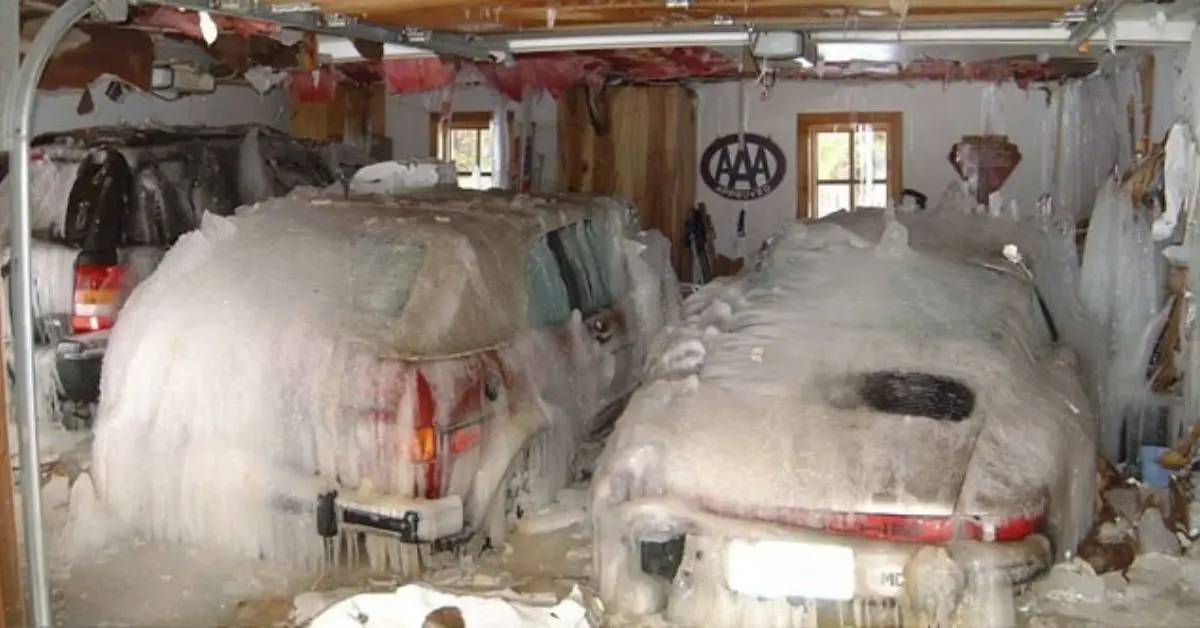
Now let’s talk about something that actually keeps me up at night when winter comes: frozen pipes. If you’ve ever dealt with a burst pipe, you know it’s not just cold — it’s incredibly expensive and stressful.
Here’s why an uninsulated garage is a threat to your plumbing:
- Cold air zones: Garages can get bitterly cold — especially at night — and pipes that run along exterior walls or near unsealed doors are extremely vulnerable.
- Freeze expands water: When water freezes, it expands. That expansion can crack even metal or PEX pipes.
- Repair costs add up: A frozen pipe that bursts can lead to flooding, structural damage, and costly repairs.
- Insurance pitfalls: In many cases, insurance won’t fully cover damage if the pipes froze because the space wasn’t properly maintained or insulated.
- Ruined belongings: Water spread everywhere — tools, stored furniture, boxes — all at risk.
I’ve seen real homeowners share their winter pipe horror stories online — people waking up to water spraying across their garage floor because they underestimated how cold it gets in there.
For practical advice on how cold impacts pipes and what you can do before winter gets really bad, this guide on when to drip faucets in freezing weather from Homes & Gardens gives a grounded, expert‑backed explanation you can trust:
3. Damage to Stored Items: Rust, Mold, and Warped Belongings
If you use your garage for storage, this is where things get personal. I’ve seen people lose expensive tools, furniture, and even electronics simply because their garage wasn’t insulated. The cold alone isn’t always the culprit — it’s the moisture and condensation that sneak in and quietly damage your belongings over time.
Here’s what you need to know:
- Condensation risk: Cold garage walls attract moisture, which can drip onto boxes, wooden furniture, and metal tools.
- Rust and corrosion: Tools, lawn equipment, and bicycles can start to rust in a matter of weeks if left in a damp, cold garage.
- Mold growth: Cardboard, fabric, and stored seasonal items are perfect breeding grounds for mold when the garage isn’t temperature-controlled.
- Seasonal gear: Winter coats, skis, boots, or garden equipment can warp or degrade when exposed to fluctuating temperatures and moisture.
- Real homeowner experiences: Reddit and home forums are full of stories about furniture warped and tools ruined due to uninsulated garages — these aren’t rare incidents.
Even if the damage seems minor at first, over the season, these losses add up — and that’s before you consider the emotional cost of losing things you’ve invested in. While protecting your garage from winter damage, don’t forget security — simple precautions can prevent break-ins and keep your tools and stored items safe. Here are 7 smart ways to protect your garage from burglars. For a detailed look at how uninsulated garages affect stored items and practical prevention tips, check out this guide from Garage Smart.
4. Vehicle Wear and Tear in Harsh Winter
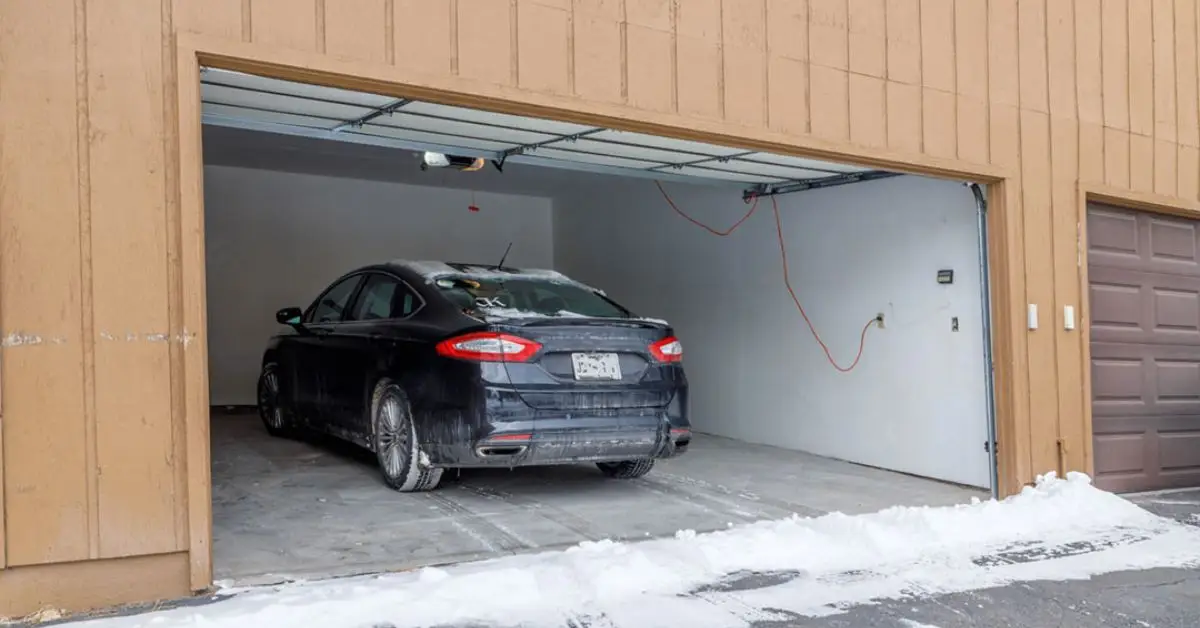
Let’s talk about your car — because no one wants to start the engine on a freezing morning and discover a dead battery or stiff fluids. I’ve seen garages where vehicles sat all winter in uninsulated spaces, only to come out with battery failure, worn tires, and even engine issues that could have been avoided.
Here’s the reality:
- Battery strain: Cold temperatures reduce battery efficiency, making it harder to start your car.
- Fluids and lubrication: Oil thickens, brakes and transmissions can feel sluggish — short-term performance suffers, long-term wear increases.
- Tire pressure fluctuations: Tires lose pressure faster in cold garages, affecting handling and safety.
- Electronics and sensors: Modern cars are full of delicate electronics that can behave unpredictably in extreme cold.
- Forum insights: Many car enthusiasts on forums report springtime repairs for vehicles that spent winter in unheated garages — batteries replaced, fluids flushed, minor rust treated.
Think about it: even a small repair for a frozen battery or damaged electronics can cost hundreds, and repeated cold exposure accelerates overall wear. Protecting your car isn’t just about comfort — it’s about avoiding preventable expenses and headaches.
5. Indirect Home Costs: Cold Floors, Drafts, and Structural Risks
If you think an uninsulated garage only affects the garage itself, think again. I’ve walked into homes where people were struggling to keep their living rooms warm, and the culprit was actually the garage. Cold floors, drafts, and hidden moisture from an uninsulated garage can creep into your home, affecting comfort and even your structure.
Here’s what usually happens:
- Drafts travel inside: Cold air from the garage moves through gaps into adjacent rooms, lowering temperatures and making your heater work harder.
- Chilly floors and walls: Rooms connected to or above the garage feel colder than the rest of the house, leading to uneven heating and discomfort.
- Hidden moisture risks: Condensation in the garage can migrate into walls and ceilings, potentially damaging drywall or insulation over time.
- Pest intrusion and mold: Moist, cold garages are a perfect home for pests and mold, which can eventually affect indoor air quality and health.
I always tell homeowners: the garage might seem like a small space, but in winter, it’s a hidden driver of comfort and cost for your entire home. Addressing it can make the difference between a cozy house and a drafty, uncomfortable one.
Quick Fixes and Smart Investments
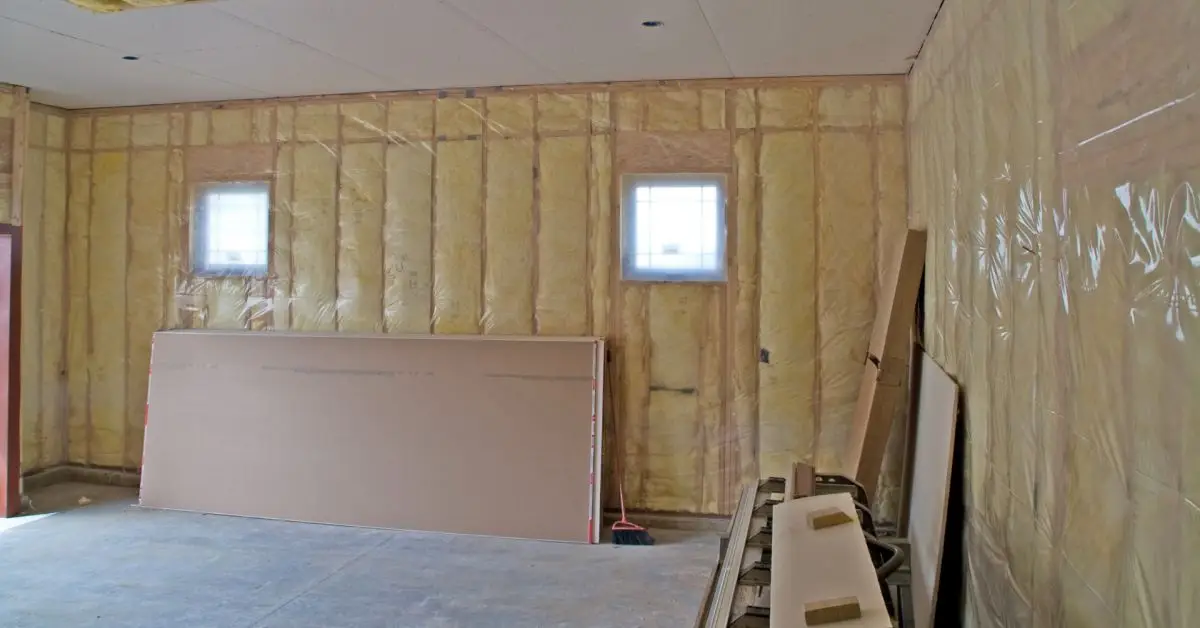
Okay, now that you know the risks, let’s talk about what you can actually do before winter hits. I’ve seen people hesitate because they think insulation is expensive or complicated — but small steps can make a big difference, and some upgrades pay for themselves in months.
Here’s how to approach it:
- Prioritize insulation: Start with walls and ceiling. If your garage door is thin, consider adding insulation panels or an insulated replacement.
- Seal gaps and weather-strip: Even small cracks around doors and windows let cold air in. A little sealing goes a long way.
- DIY vs professional: A DIY project is cheaper upfront, but professional installation ensures full coverage and correct R-values. Compare the cost vs potential winter savings before deciding.
- Smart investment: Insulating your garage can reduce energy costs, prevent damage to belongings, and protect your car — often paying for itself within a season or two. Proper insulation and sealing in winter isn’t just about heat — it also makes your garage easier to manage in summer. If you want simple ways to keep your garage cool without AC, check out these 6 affordable garage cooling hacks.
For a practical, step-by-step approach to garage insulation and small winter-proofing hacks, I like the clear tips from Stormor Sheds.
Final Takeaway: Protect Your Garage, Protect Your Home
After walking through these five costly consequences of an uninsulated garage, it’s clear that ignoring this space isn’t just about feeling a little cold. From soaring heating bills and frozen pipes to ruined belongings, vehicle damage, and hidden home comfort issues, the impact can reach far beyond the garage itself.
I’ve seen firsthand how a little preparation — proper insulation, sealing gaps, and smart winter-proofing — can save hundreds, if not thousands, of dollars, while keeping your home comfortable and your possessions safe. The garage might seem small, but in winter, it has an outsized effect on your home, your wallet, and your peace of mind.
So here’s what I want you to do: take a close look at your garage this week. Notice drafts, cold walls, or pipes that feel exposed. Even small fixes can make a huge difference.
And I’d love to hear from you: have you ever experienced winter damage in an uninsulated garage? Share your story in the comments below — your experience could help someone else avoid the same mistakes.
If you want more practical, expert-backed advice on home improvements that actually save money and protect your space, check out Build Like New. We share tips, guides, and real solutions to help your home feel safe, comfortable, and ready for every season.
Disclaimer: The information provided in this article is for general informational purposes only and is not a substitute for professional advice. Always consult a licensed contractor, plumber, or energy expert for guidance specific to your home and situation.