Remove These 8 Risky Things From Under Your Sink Today
I’ve opened hundreds of kitchen cabinets over the years — my own, friends’, even during home inspections — and the one spot people almost never think about is under the sink.
It looks harmless. Just a dark little storage zone for cleaners, paper towels, maybe a few random bottles you don’t know where else to keep.
But here’s the problem: that space is warm, damp, poorly ventilated, and one slow leak away from turning into a mold factory.
Most articles online talk about “organizing” under the sink. Cute baskets. Sliding drawers. Matching containers. What they don’t really stress is this — some of the things sitting down there right now can create fire risks, toxic fumes, pest problems, or hidden mold damage that costs thousands to fix.
And the scary part? You won’t notice until something goes wrong.
I’ve seen batteries corrode into cabinet floors. Paper goods turn black from moisture. Cleaning chemicals leak and mix. Pet food attract rodents. It starts small. It rarely stays small.
So before you organize anything, we need to talk about what shouldn’t be there in the first place.
Open your cabinet while you read this.
Look inside.
You might be surprised at what’s quietly becoming a problem.
Why Your Kitchen Sink Cabinet Is a Risky Storage Zone
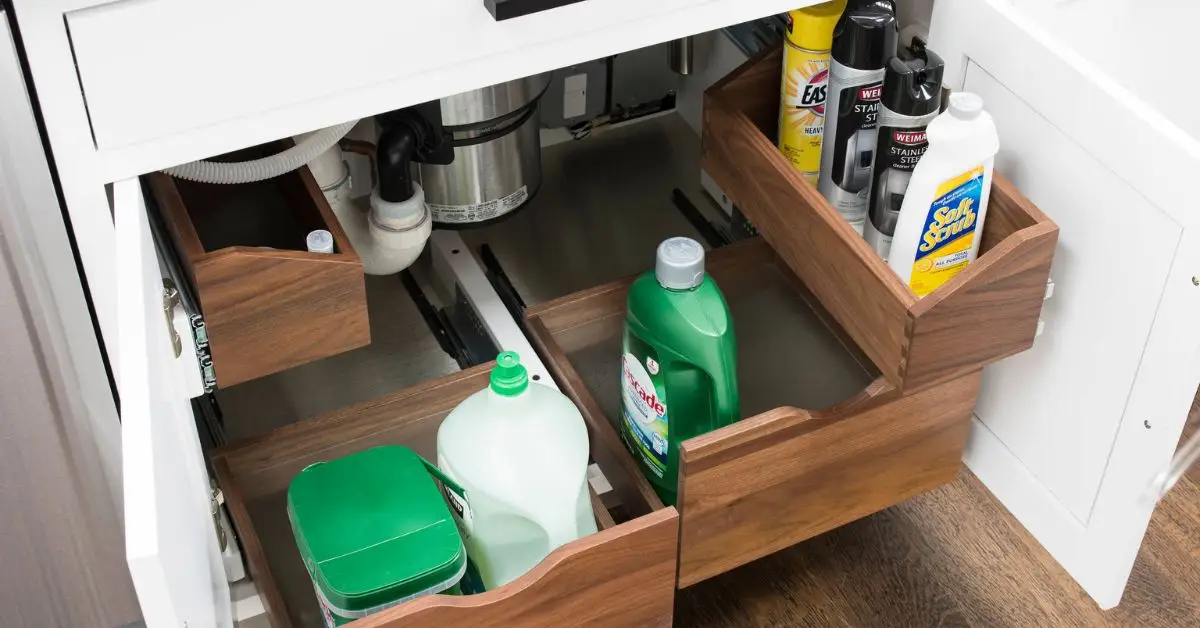
If I had to pick one place in the kitchen that quietly causes the most damage, it’s under the sink.
It feels convenient. It’s out of sight. You close the cabinet door and forget about it.
But that space works against you.
Here’s what’s happening down there:
- Moisture and humidity: Every time you run the faucet, wash dishes, or use the disposal, humidity builds up. And if you’re in the habit of leaving dishes soaking overnight, you’ll want to read Why Leaving Dishes in the Sink Overnight Is Riskier Than You Think — it adds even more moisture stress to this already vulnerable space. Even without a visible leak, that damp air sits in a dark, closed cabinet. I’ve seen paper towels turn soft and spotted within weeks. Mold doesn’t need much time when moisture is constant.
- Hidden leaks: Small drips don’t announce themselves. They soak the cabinet floor slowly. If you’ve been ignoring slow wear and tear in your kitchen, you might also want to check out 6 Things in Your Kitchen That Need Replacing Sooner Than You Think — many of them hide in plain sight. You usually discover the problem only when the wood swells, the smell changes, or something collapses.
- Poor ventilation: Unlike a pantry or open shelf, this space rarely gets airflow. That means any fumes from cleaning products just sit there and build up.
- Chemical off-gassing in a closed space: Many common cleaners release vapors over time. In a tight cabinet, those vapors concentrate instead of dispersing. As explained by YourLifeChoices, enclosed under-sink spaces often lack proper ventilation, which increases the risk of chemical buildup in small areas.
When you combine moisture, darkness, and trapped air, you create conditions for:
- Mold growth
- Corrosion
- Warped cabinet wood
- Rusted containers
- Chemical reactions
It’s not just “storage.” It’s a confined environment — and not a safe one.
What Makes a Stored Item Dangerous
Before we jump into the list, I want you to understand how I judge risk in this space.
Not everything under your sink is automatically a problem. But certain traits should make you pause.
When I evaluate under-sink storage, I look for items that are:
- Flammable: Aerosols, solvents, and certain cleaners can ignite if exposed to heat or electrical sparks from appliances nearby.
- Toxic if leaked or mixed: Cleaning products can become dangerous if containers crack or chemicals combine in a damp area.
- Moisture-sensitive: Paper goods, electronics, batteries, and even canned food can corrode, mold, or degrade faster in humidity.
- Attractive to pests: Pet food, food residue, or certain packaging can draw insects and rodents straight into your kitchen.
- Pressurized or reactive: Aerosol cans and some chemical containers don’t handle temperature swings and humidity well.
If an item checks even one of these boxes, I personally question whether it belongs under a plumbing fixture.
Now that you understand the environment — and what makes something risky — let’s look at the eight items I would remove immediately.
The 8 Items to Remove (and Why)
Now we get practical.
Open the cabinet under your sink and actually look at what’s there. Most of us toss things in and forget about them.
If you see any of the items below, I’d seriously consider moving them today.
1. Harsh Cleaning Chemicals & Flammable Liquids
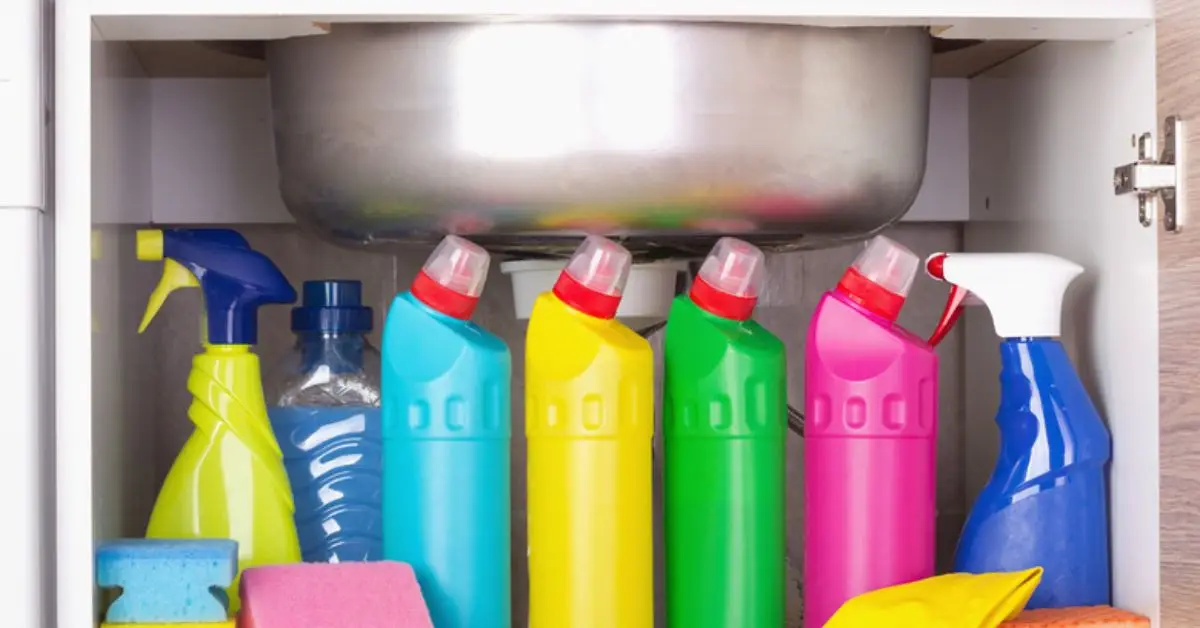
Bleach. Ammonia. Drain cleaners. Degreasers.
Many of these contain volatile solvents. In a humid, enclosed cabinet, they slowly release fumes. If a bottle cracks or leaks, those chemicals can mix — and some combinations are dangerous.
There’s also fire risk. Hot water pipes and garbage disposals generate heat. Flammable household materials stored in tight spaces increase overall risk. Fire safety experts referenced by HouseLifeToday highlight how improperly stored household hazardous materials can contribute to residential fire incidents.
If it’s corrosive, reactive, or flammable, it shouldn’t live under plumbing.
2. Aerosol Cans / Pressurized Containers
Spray cleaners. Air fresheners. Lubricants.
These are pressurized containers. Heat buildup inside a closed cabinet increases internal pressure. Poor ventilation makes it worse.
While rare, rupture or explosion is possible — especially if cans are stored near hot pipes.
Under the sink is not a safe place for anything that relies on internal pressure.
3. Batteries (All Types)
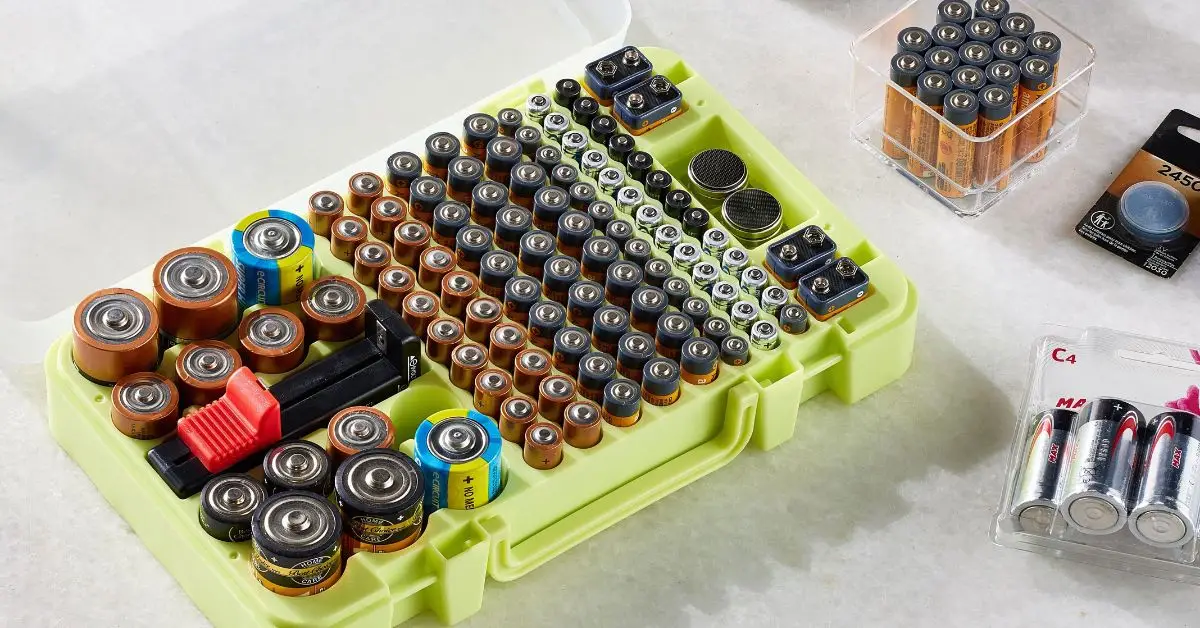
Loose AA batteries. Old 9-volts. Rechargeables tossed in a bag.
Humidity accelerates corrosion. Corroded batteries leak.
That leakage can damage cabinet surfaces and contaminate nearby items. Batteries need a dry drawer, not a moisture-prone cabinet.
4. Paper Products & Absorbent Items
Paper towels. Napkins. Extra sponges.
Paper absorbs humidity from the air — even without visible leaks. Over time, it softens and can develop mildew.
If you’ve ever pulled out paper towels that felt slightly damp, you’ve already seen early moisture damage.
Homeowner threads on Reddit are full of people discovering mold under sinks — and paper goods are often the first to go.
Dry items belong in dry spaces.
5. Perishable Food & Pet Food
Pet kibble. Treats. Potatoes. Onions.
That cabinet is dark and humid — not climate-controlled.
Moisture speeds up spoilage. Food also attracts pests. Rodents and insects are far more likely to investigate a cabinet that smells like food.
There’s another risk: storing food near chemical cleaners increases the chance of contamination if something leaks.
Food and chemicals should never share the same confined storage space.
6. Small Appliances & Electronics
Electric scrubbers. Backup appliances. Extension cords.
Water and electronics are a bad combination — even when unplugged.
Moisture slowly damages internal components. The real problem shows up later when you plug it in and something shorts.
If it runs on electricity, it deserves a dry shelf somewhere else.
7. Paints, Solvents & Other Hazardous Liquids
Leftover paint. Paint thinner. Adhesives.
These products release fumes over time. In a tight cabinet, vapors concentrate.
Temperature changes and humidity can degrade containers, leading to rust or leaks. Now you have chemical exposure inside a wooden cabinet under plumbing.
Hazardous materials require stable, ventilated storage — not the dampest cabinet in your kitchen.
8. Food Containers & Canned Goods
Even sealed cans can rust in humid environments.
When corrosion starts, the integrity of the can is compromised. That’s a food safety issue. Storing food in cool, dry areas. Under the sink doesn’t meet that standard.
If it’s something you plan to eat, don’t store it next to drain pipes.
Expert Tips for Safe Under-Sink Storage
I’m not telling you to leave that cabinet empty.
I’m telling you to use it wisely.
Most people either overload it or ignore it. The smarter approach is controlled storage.
Here’s what I personally recommend:
- Use a leak tray or waterproof liner: Even a minor drip can destroy cabinet wood over time. A waterproof under-sink mat creates a barrier and gives you early warning if something leaks. Product experts at Food & Wine have highlighted how under-sink liners help contain water damage before it spreads.
- Store only sealed, non-hazardous items: Garbage bags. Dishwasher tablets in airtight containers. Sealed plastic bins. If it can leak, corrode, ignite, or spoil — it doesn’t belong there.
- Add moisture control: A simple moisture absorber or small dehumidifier pouch makes a difference. You can also improve airflow slightly by avoiding overpacking the space.
- Inspect once a month: I tell homeowners this all the time: open the cabinet, touch the base, check for dampness. It takes 30 seconds and can save thousands in repair costs.
Under-sink storage should be intentional, not convenient. If you’re rethinking storage in other tight areas too, you might find 6 Smart Ways to Maximize Bathroom Storage Around a Pedestal Sink helpful — the same smart storage principles apply.
How to Child-Proof & Pet-Proof Your Sink Cabinet
If you have kids or pets, this cabinet becomes more than a storage issue — it becomes a safety issue.
Children explore. Pets sniff and chew.
Cleaning pods, bleach bottles, and chemical sprays are highly attractive to both.
Here’s what I suggest:
- Install child safety locks on cabinet doors
- Store chemicals in locked bins inside the cabinet
- Keep all original labels intact
- Never store food and chemicals together
- Move toxic products to higher shelves if possible
You don’t want your under-sink cabinet to be the weak link in your home safety plan.
Common Mistakes People Make With Under-Sink Storage
After reading hundreds of homeowner discussions, I see the same patterns over and over.
Let me share the most common mistakes I see people make:
- “It’s fine, there’s no leak.”: Leaks often start small and stay invisible for months.
- Mixing food and chemicals: Pet food sitting next to bleach is more common than you’d think.
- Storing bulk paper goods there: It feels practical — until they absorb moisture and grow mildew.
- Ignoring smells: A musty scent is usually the first warning sign of mold.
- Using it as a dumping zone: Random batteries, half-used paint cans, old cleaners — all shoved in and forgotten.
The cabinet under your sink should not be your kitchen’s junk drawer.
It should be controlled, dry, and boring.
Now I’m curious — when was the last time you actually checked the base of that cabinet with your hand?
Quick Checklist: What Should Stay Under the Sink
I don’t like articles that just tell you what not to do.
So here’s the practical part — what actually makes sense to keep under your sink.
If an item is sealed, non-flammable, moisture-tolerant, and low-risk, it can usually stay.
Here’s a simple checklist I use:
- Trash bags (kept in original packaging or sealed bin)
- Dishwasher tablets in airtight containers
- Non-toxic, plant-based cleaners in tightly sealed bottles
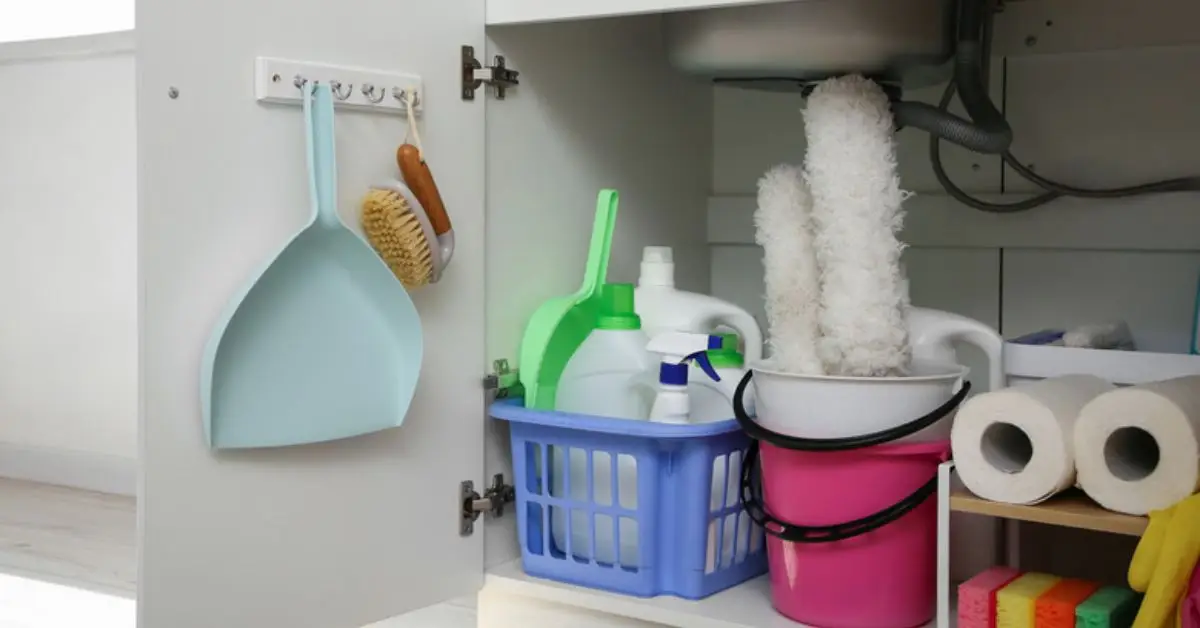
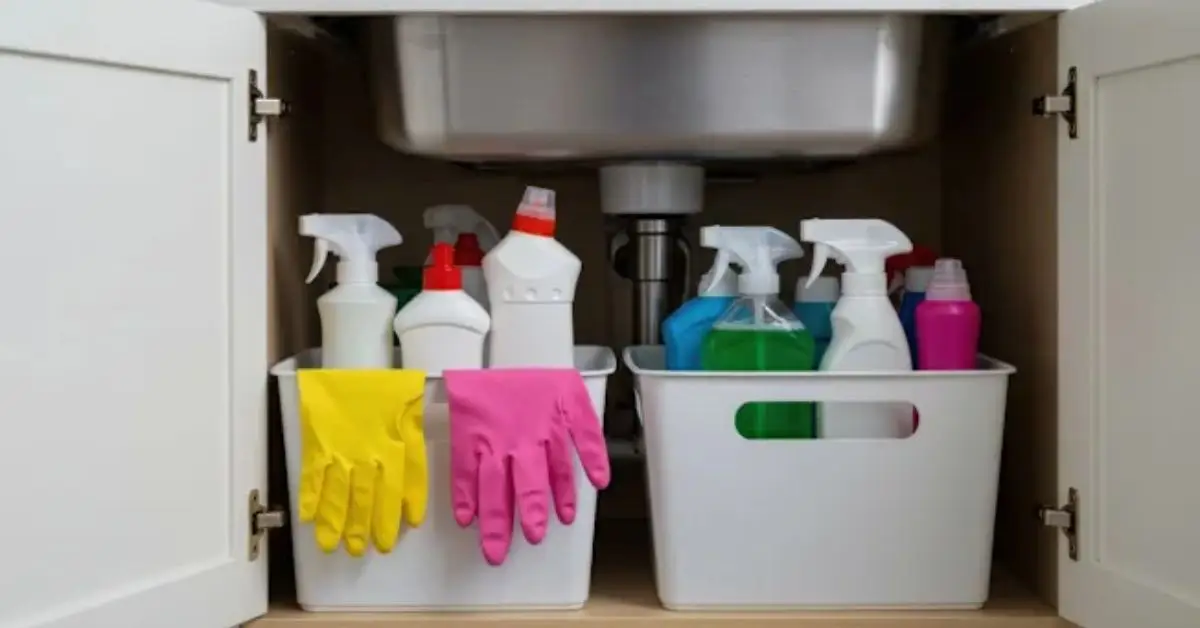
- Cleaning caddies (so items aren’t sitting directly on cabinet wood)
- Waterproof storage bins
- A leak detector or moisture alarm
- Under-sink liner or tray
That’s it.
If something doesn’t pass the “Would I worry if this got wet?” test, it probably shouldn’t be there.
Under-sink storage should be boring. Safe. Predictable.
Not a chemistry experiment.
Final Thoughts Before You Close That Cabinet
Most people don’t think about under-sink storage until there’s a problem.
A warped cabinet. A strange smell. A leaking bottle. A pest issue.
But this is one of those small home habits that quietly protects your health, your safety, and your wallet.
Take five minutes today.
Open the cabinet. Remove what doesn’t belong. Wipe the base. Check for moisture. Simplify it.
You’ll feel better knowing that one hidden risk in your home is gone.
Now I want to hear from you.
When you checked under your sink, what surprised you the most? Drop your experience in the comments — it helps other homeowners more than you think.
And if you care about practical, no-nonsense home advice that actually protects your space, visit Build Like New for more guides like this. I share real solutions for real homes — without the fluff.
Disclaimer: This article is for general home safety awareness and informational purposes only. It is not a substitute for professional advice. If you suspect mold, electrical damage, gas leaks, or chemical exposure in your home, consult a licensed contractor, electrician, or safety professional immediately. Always follow manufacturer guidelines for storing household products.