Pico-Union House Fire in Empty Property Forces Desperate Escape Attempts
I keep thinking about how quickly things turned.
A vacant home in Pico Union caught fire Monday morning, and within minutes, the flames spread to the building next door. People inside found themselves trapped, with fire blocking the exits.
Some had no option but to move toward windows and prepare to jump.
This was not just a sudden emergency. It was a moment where fear, timing, and survival instincts took over.
What makes it harder to ignore is what came after. Neighbors say this property had already been a problem for months.
What Happened at the Pico-Union Fire on Bonnie Brae Street
I want you to picture this clearly. A vacant two story home catches fire around 9 a.m., and at first, it feels like just another local incident.
But within minutes, everything changes. Flames grow fast and, as reported by FOX 11 Los Angeles, the fire spreads to the building right next door.
If you have ever lived in a dense neighborhood, you already know how dangerous that is. Buildings sit close, and one fire can quickly turn into multiple emergencies.
Now imagine being inside that neighboring building. Smoke starts filling the space. The exits are blocked. The doorway is already covered in flames. At that point, you are not thinking about a plan. You are just trying to survive.
Desperate Moments: Residents Forced to Jump to Survive
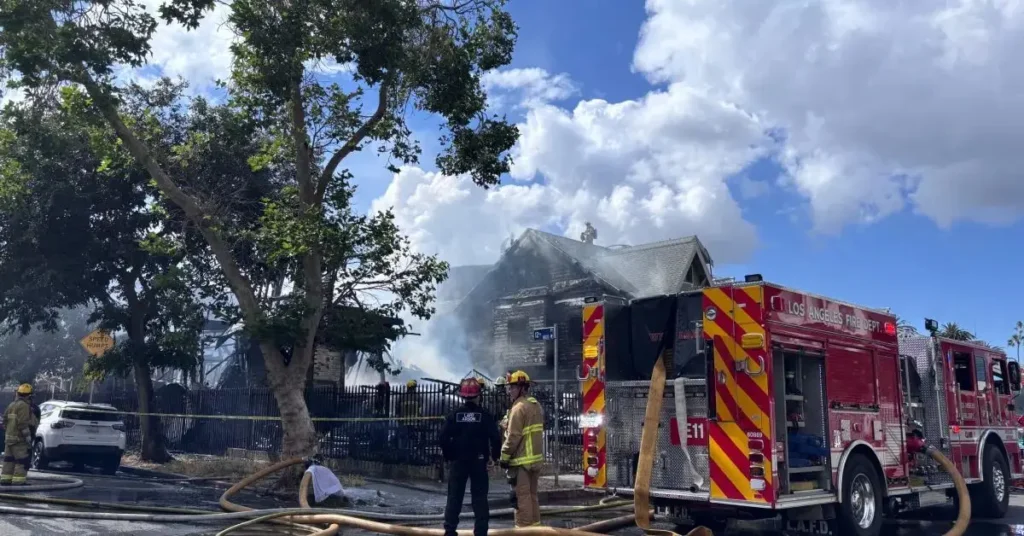
This is where things turn intense. People move toward windows because there is no other option left. Some prepare to jump, even knowing the risk.
A neighbor, Gregory Washington, runs toward the scene and starts shouting for people to jump. He positions himself below the window to catch them and even injures his hand trying to help. That tells you how chaotic those moments were.
Then there is Teresa. Her story feels real because you can relate to it. She knew jumping might be the only option, but fear stopped her.
Not everyone can make that call instantly. She waited, and luckily the fire department arrived with a ladder just in time to bring her down safely.
Why Residents Had No Way Out
If you think about it, the biggest issue was simple. Fire blocked the main exits. When your doorway is already in flames, your usual escape plan disappears.
Most buildings like these do not have strong emergency planning. No clear backup exits. No preparation for situations like this.
Even a short delay in emergency response feels long during a fire. Those few minutes are when people are forced to take extreme steps like jumping from windows.
A Disaster Waiting to Happen: Repeated Fires at the Same Property
What stands out to me is this was not the first incident. Neighbors say the same property had caught fire multiple times before.
People had already raised concerns. When warnings are repeated and still ignored, situations like this stop being unexpected.
At that point, it becomes a pattern. A vacant property, repeated issues, and no strong action. That is how small risks turn into serious danger.
I keep tracking patterns like this across multiple fire incidents, and what stands out is how often early warnings are ignored until something serious happens.
Vacant Property, Homeless Activity, and Safety Risks
There is another layer you should not ignore. Vacant properties often become easy entry points for unauthorized activity. Neighbors mentioned people regularly entering that space.
Over time, these buildings become high risk. No maintenance, no monitoring, and unpredictable use. According to data often highlighted by National Fire Protection Association, vacant buildings have a higher chance of fire incidents.
And the hardest part is this. You could be doing everything right in your own home, and still end up in danger because of what is happening next door.
Who Is Responsible for the Pico-Union Fire
If you listen to people living nearby, the frustration is clear. Many neighbors are directly blaming the city. From their perspective, this was not sudden.
Complaints had already been made about the vacant property, and still, nothing strong changed.
At the same time, you cannot ignore the role of property owners. A vacant home does not mean zero responsibility. It still needs to be secured and maintained.
When that fails, the risk spreads beyond that one structure.
Then comes the system issue you and I should think about. Gaps in inspection and enforcement. When repeated complaints do not trigger action, small risks quietly grow into serious incidents like this.
Official Response From City Leadership
After the fire, city leadership did respond. Eunisses Hernandez acknowledged the incident and highlighted how neglected properties can become real safety threats.
There is now a push to strengthen enforcement. That includes making sure property owners properly secure vacant buildings and that complaints from residents lead to quicker inspections.
There is also talk about better coordination between departments like building safety and the fire department. But if you think like a resident, the real question is simple.
Will these changes actually prevent the next fire, or will it take another incident?
Impact on Victims: Loss, Trauma, and Recovery
When you step back from the policy side, the human impact hits harder. People lost their homes. Personal belongings were destroyed in minutes.
I have seen similar situations before where families lose everything overnight, like in this case where a grandmother escaped with her grandson but lost her entire home — read the full story here.
And it is not just about things. Escaping a fire like that leaves a mark. The fear of being trapped, the pressure to jump, the uncertainty in those moments. That stays with you.
There is some support available. Organizations like the American Red Cross step in to help with shelter and immediate needs. It does not replace what is lost, but it gives people a starting point.
Why Fires Spread Quickly in Dense Areas Like Pico-Union
If you look at neighborhoods like Pico Union, the pattern becomes easier to understand. Buildings are packed close together, which means once a fire starts, it can spread fast to nearby structures.
Many of these homes are also older. That adds another layer of risk. Older construction, limited fire resistant materials, and outdated layouts make it harder to control flames quickly.
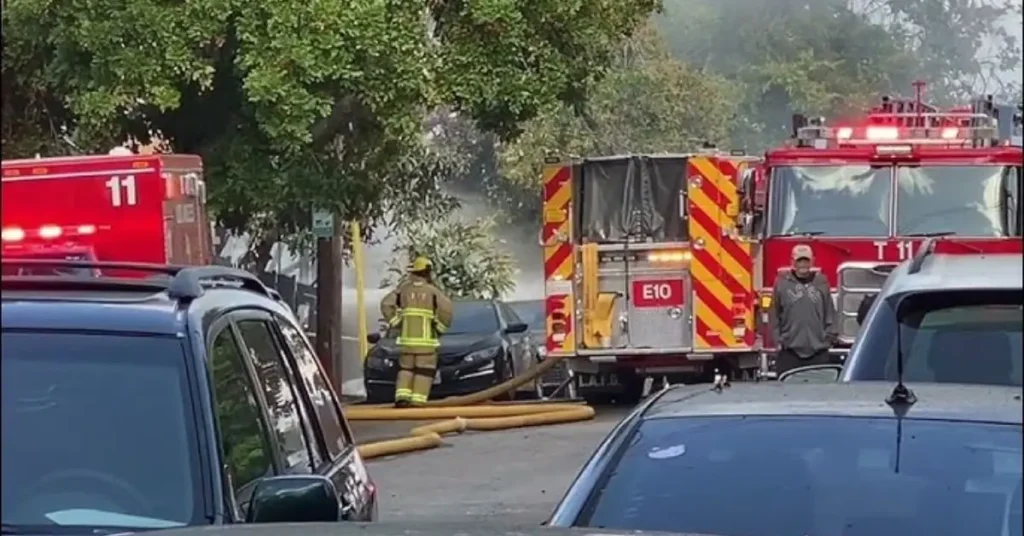
In fact, as reported by MyNewsLA, this fire spread to multiple adjacent buildings and even led to injuries, including residents and a firefighter.
When you combine close spacing, older structures, and limited modern safety systems, it becomes clear. One fire does not stay isolated for long in areas like this.
We have already seen how quickly things can escalate, like in this incident where a house fire destroyed an entire home and left a family homeless — read what happened here.
Fire Safety Lessons From the Pico-Union Incident
If you take anything from this incident, it should be this. Fires do not always give you time to think. You need to act fast, and sometimes your usual exit is not available.
If exit routes are blocked, your first instinct might be to panic. But what matters is finding the safest possible alternative.
Staying low to avoid smoke, checking doors before opening them, and moving toward windows only when there is no other option can make a difference.
Jumping should always be the last resort. It is risky, unpredictable, and can lead to serious injury. In this case, people were forced into that decision because there was no safer choice left. That is something you never want to rely on.
Basic preparedness matters more than most people think.
In fact, there are cases where simple precautions like working smoke alarms made all the difference — see how one family avoided tragedy.
Knowing your building layout, identifying multiple exits, and having a simple plan in your mind can save your life. You do not need anything complex. Just awareness and readiness.
What This Fire Really Tells Us
When I look at this incident, I do not just see a fire. I see a chain of missed warnings, delayed action, and people forced into dangerous decisions.
You might not control what happens next door, but you can control how prepared you are. That is the real takeaway here.
Now I want to hear from you. Do you think situations like this are more about system failure or individual responsibility? Drop your thoughts in the comments.
And if you want more real, practical insights like this, you can check out my platform Build Like New where I break down safety, construction, and real world risks in a simple way.
If you follow real incidents like this and want to stay updated on similar stories, you can also connect with me on X and be part of the discussion on Facebook.
Disclaimer: This content is based on currently available reports and real accounts from the incident. Details may change as the investigation continues.