This Backyard System Could Protect Your Home From Raging Wildfires
I’ve been watching California’s insurance market collapse in real-time. Here’s what most homeowners don’t realize: your insurance policy isn’t protecting you right now. It’s abandoning you.
If you live in a high-risk wildfire zone, you’re facing three problems at once. Insurance companies are canceling policies.
The FAIR Plan (the government’s last-resort insurer) is drowning in claims. And your premium keeps climbing. Exterior sprinkler systems won’t fix the market, but they might be your ticket out of this mess.
Why This Matters Right Now
The January 2025 Southern California wildfires destroyed over 18,000 structures with estimated economic losses reaching $250–275 billion. That’s not just a number. That’s families losing everything.
Over 1 million California homeowners are now trapped on the FAIR Plan waiting list, and State Farm just got approval for a 17% emergency rate increase. The market is imploding.
But there’s a window here. California’s new 2025 insurance regulations are forcing insurers to offer discounts for homes that reduce their own wildfire risk.
If you install an exterior sprinkler system now, you’re proving to insurance companies that you’re a lower-risk bet.
Check out this guide from Realtor.com on exterior sprinklers and insurance for additional perspective on how different sprinkler types work.
The 90% Problem Nobody Talks About
Here’s what fires actually do to homes: over 90% of homes destroyed in wildfires ignite from windblown embers or radiation heat, not direct flame. Embers. Tiny pieces of burning debris traveling over a mile through the air.
Embers slip under roofing, collect in gutters, enter through vents, land on wooden decks. One ember finds a fuel source, and your home is gone.
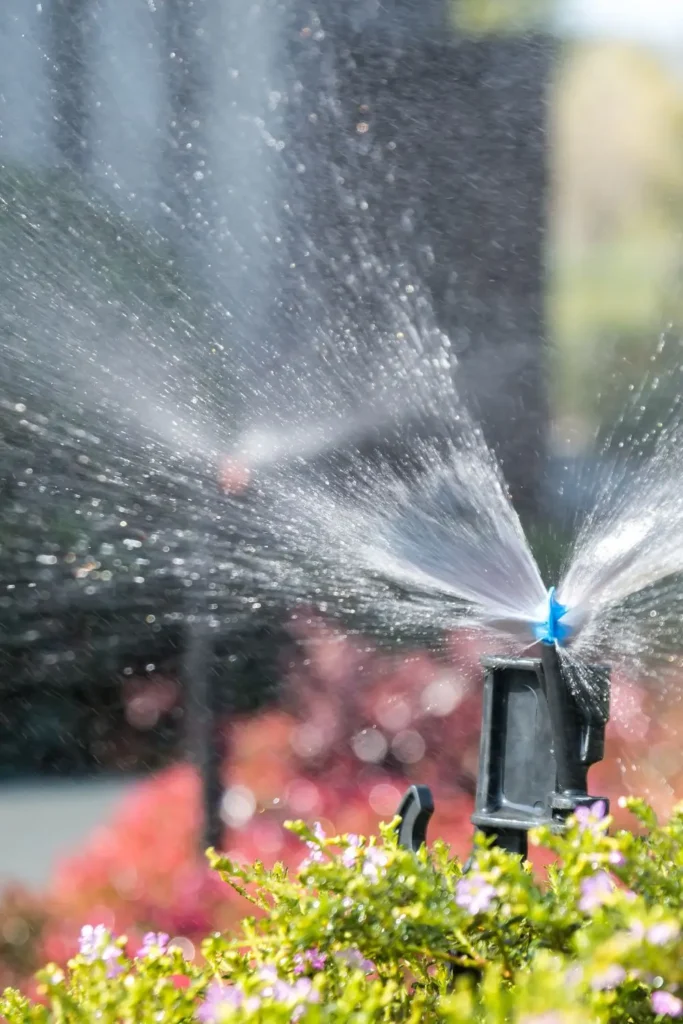
This is why exterior sprinkler systems exist. They’re keeping your home too wet for embers to ignite. Research shows that 90% of properties outfitted with rooftop sprinklers survived recent wildfires, compared to about 50% of unprotected homes.
Why Sprinklers Alone Don’t Cut It
Here’s what most articles won’t tell you straight: exterior sprinklers are not a silver bullet.
Jordan Blake, director of communications at Shoreline Public Adjusters, says it plainly: “Exterior sprinklers and gel applicators are a good idea but only as one piece of a real defense plan.
They can protect against ember showers, which is how most homes actually ignite during a wildfire event, but they can’t make up for a wood shake roof or fuel sitting against the siding.”
Michael Ashker, CEO of FortressFire, points out another critical issue: “Unless your home has a reliable private water source such as a dedicated underground tank, pool connection, or backup pump system, you should be cautious.
Don’t assume these systems will perform as intended under extreme conditions by themselves.”
This matters when a wildfire is actually bearing down on you. If your system depends on municipal water pressure and the infrastructure is compromised, your sprinkler might fail exactly when you need it most.
The smarter approach? Reduce your property’s actual ignition vulnerabilities first: ember intrusion, nearby combustible materials, vulnerable vents, decks, and roofs.
Ashker explains: “For many homes, the most important and cost-effective steps are screening vents, creating a noncombustible zone within the first 5 feet around the property, hardening vulnerable features, and addressing ember entry points.”
Speaking of pre-fire-season prep, if you’re not already locked in on the basics, here’s what your home needs before wildfire season hits.
The 2025 Insurance Regulation: What Actually Changed
California’s new “Safer from Wildfires” regulation requires insurance companies to offer discounts to homeowners who install wildfire mitigation measures, including exterior sprinklers. This isn’t voluntary. It’s mandated.
The discount amount varies by insurer, some offer a specific percentage for certified systems, others bundle it into broader “wildfire mitigation” discounts. You might see 5–10% off your premium.
But here’s the real win: the regulation helps you transition off the FAIR Plan into voluntary market coverage, giving you actual options instead of being forced into the state’s insurer of last resort.
A lot of homeowners I talk to are confused about whether sprinklers actually qualify for discounts right now.
If you’re in the same boat and want to stay updated on wildfire mitigation strategies and insurance changes as they roll out, there are good resources tracking these updates. I keep my community informed on things like this: it’s worth staying in the loop as regulations shift.
The Cost-Reality Check
A basic exterior sprinkler setup that ties into municipal water runs roughly $3,000 to $8,000 installed. A stand-alone version with its own cistern, pump, and generator costs $15,000 or more. DIY gel kits start around $500, but permanent systems cost significantly more.
If you’re expecting to break even on insurance savings in a few years, stop. A 10% premium reduction on a $2,000 annual premium is $200/year. At that rate, payback takes 15–25 years.
That’s not the point. The actual benefit is two-fold: you have a dramatically higher chance of your home surviving a wildfire (protecting your equity), and you become insurable again. You get options. You’re not trapped in FAIR Plan limbo.
What Actually Matters to Insurance Companies
Here’s the secret: insurers care about documented, credible mitigation.
Simply telling an insurer “I installed a sprinkler” is worthless.
You need to present the full picture: photos, receipts, contractor documentation, inspection reports, product specifications, and ideally a property-specific assessment showing which ignition risks were present and how they were reduced.
Ashker explains: “The stronger case is: Here were the specific vulnerabilities on this property; here are the actions we took; here is the verified condition of the home now.”
Professional installation matters. A licensed contractor provides documentation that carries weight with underwriters. A DIY job, no matter how good, lacks that credibility.
Beth Swanson, insurance analyst at The Zebra, says: “Whether you’ve already made changes to your home, or are planning to soon, check in with an agent to see if there are savings available for you.
Sometimes it’s as simple as checking their website, but oftentimes it’s better to call and explicitly ask what discounts are available and how to get them.”
If an insurance company pushes back even though you believe your system makes you eligible, appeal the decision directly to your state’s department of insurance.
What You Actually Need to Do
- Get a wildfire risk assessment from a fire protection company, insurer, or local fire department.
- Prioritize low-cost, high-impact measures first: vent screening, removing combustibles within 5 feet, maintaining gutters, hardening with noncombustible materials.
- Then evaluate whether a rooftop sprinkler or gel system makes sense for your specific exposure.
- Get 2–3 professional quotes. Ask about water supply reliability, automation options, and documentation provided.
- Tell your insurer before installation. Get a discount estimate in writing.
- Install professionally and document everything with photos, certificates, and inspection reports.
- File for the discount with complete documentation.
Here’s what I want to know from you: Have you already installed sprinklers, or is cost holding you back? Are you on the FAIR Plan right now? Drop a comment below. Your feedback shapes what I write about next.
If you found this helpful and want to stay on top of wildfire mitigation trends and insurance updates, follow us on X and join the Facebook group where we share real-time updates and discuss what’s actually working for homeowners.
And don’t forget: even with sprinklers, smoke during wildfire season is still a major threat indoors. Make sure you’re also prepared to keep wildfire smoke out of your house.
Disclaimer: This article is for informational purposes only and should not be construed as legal or insurance advice. Wildfire risk, insurance eligibility, and mitigation requirements vary significantly by location and individual property.
Consult with your insurance provider, local fire marshal, and a licensed contractor before making decisions about exterior sprinkler installation.