At Least 15 Homes Burned and One Person Is Dead After Ignoring Evacuation Orders in Spokane
The deputies knocked on the door. Nobody answered.
They entered through an unlocked front door, announced themselves, and warned anyone inside to leave immediately. The fire was already moving toward them. They had to retreat before anyone came out.
Later that afternoon, a family member called law enforcement, unable to reach their loved one who had reportedly refused to evacuate. When deputies arrived around 5:20 PM, the home was already gone.
The next morning, investigators returned and found human remains inside.
What the Fire Did in a Matter of Hours
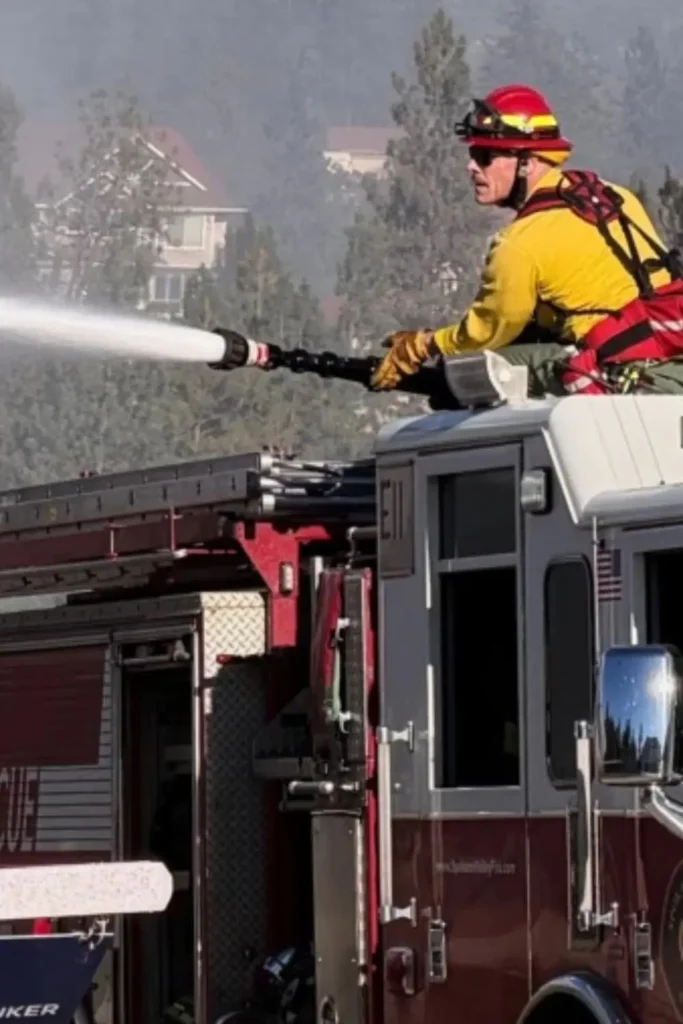
The Upriver Fire was reported at 12:30 PM on June 16, 2026, spreading from the forested Beacon Hill area into subdivisions near Camp Sekani.
Hot temperatures, low humidity, and gusting winds pushed it fast. By the time most residents processed the alert, the fire had already moved into neighborhoods.
A Level 3 “Go Now” evacuation order went out almost immediately. That is the highest level. It means leave now, not soon.
The Timeline Nobody Put Together Clearly
At around 2:30 PM, deputies and Spokane Police entered the address through an unlocked front door and repeated warnings before the fire forced them out. No response came.
At 5:20 PM, the family called for a welfare check. The home was already destroyed. On June 17 at 1:55 PM, detectives and forensic investigators returned and found what appeared to be human remains inside.
As reported by The Spokesman-Review, Sheriff John Nowels said: “We have far too many people who don’t recognize that danger or ignore it.”
Why People Stay When They Should Go
This is the part no other outlet covered.
A Chapman University survey found that 43% of Americans who refuse evacuation orders do so to protect their homes from looting. Another 34% cite not wanting to leave pets behind.
For many, the fire simply does not look close enough yet from inside the house.
That last reason is the most deadly.
Sheriff Nowels addressed it directly: “Just because you’re in your home and a fire is close, but you can’t see it, does not mean that that can’t change in a moment’s notice. It very much can and did yesterday.”
Wildfire does not move the way people imagine. Wind shifts in seconds. One neighbor who did evacuate, Kevin Winters, said it plainly: “When the police come through on a loudspeaker and tell you, ‘Leave now,’ well, I’m leaving.”
This pattern of staying too long shows up in fire incidents across the country. When an Oklahoma City man was found dead inside his own home after a late-night house fire, neighbors said the same thing: nobody realized how fast it moved.
For fire incidents and safety news that break before the news cycle catches up, there is a WhatsApp channel worth having in your feed.
Why This Matters
A study published in the Proceedings of the National Academy of Sciences, covering 342 wildfire deaths across the US from 2008 to 2024, found that 17.7 million Americans live in communities without enough road exits to safely evacuate during a fast-moving wildfire.
Of those, 2.5 million also live in high wildfire hazard zones.
The Upriver Fire became the first FEMA Fire Management Assistance Grant approved in Washington for the 2026 season. At least 15 homes were lost. Around 12,000 people were under evacuation orders. The fire burned roughly 230 acres.
The system worked: alerts went out, deputies knocked, the family called. Everything that was supposed to happen did happen.
It still was not enough.
This kind of outcome is rarely random. In a recent incident, 2 people were found dead after an overnight house fire fully engulfed a New Jersey home before anyone could get to them.
In another, a Florida home burned to the ground because the nearest fire hydrant was too far away, and firefighters had no water for 15 minutes. When fast fire meets a delayed response or a refusal to leave, the result is almost always the same.
Key Takeaways
- Upriver Fire started June 16, 2026 at 12:30 PM near Beacon Hill, Spokane Valley
- Level 3 “Go Now” evacuation issued almost immediately
- Deputies entered and warned anyone inside around 2:30 PM, no response
- Family welfare check called at 5:20 PM; home already destroyed
- Human remains found June 17 at 1:55 PM
- At least 15 homes lost; 12,000 people under evacuation orders
- FEMA approved Washington’s first fire grant of 2026 for this fire
- Cause of fire still under investigation
If an evacuation order came right now, what would it actually take for you to leave? And should authorities have more power to physically remove someone who refuses? Drop your answer in the comments below.
Wrapping Up
The deputies knocked. The family called. The system did everything it was supposed to do.
One person still did not make it out.
If stories like this stay with you, Build Like New covers fire incidents, community safety, and the human side of what happens behind the headlines.
For more stories as they break, follow Build Like New on X (Twitter) and join the conversation on the Facebook community. That is where these stories get discussed first.
Disclaimer: This article is for informational purposes only. All details are based on publicly available reports as of June 17, 2026. The investigation remains active and findings may be updated.