Built in 1755 and Steps from the Salem Witch House, This $2M Home Is Unlike Any Listing You Have Seen
If you’ve ever walked down Essex Street in Salem, Massachusetts, you know the feeling. The cobblestones, the old church on one side, the iconic black silhouette of the Witch House on the other.
It’s a street that holds more American history per square foot than almost anywhere else in the country.
Now, the private home sitting directly next door to that landmark just hit the market for the first time in 80 years.
What’s Actually for Sale at 314 Essex Street
The property is a 4,670-square-foot Georgian Colonial built in 1775 for a woman named Mary Lindall, a 50-year-old single woman who shared the home with her 15-year-old orphaned niece, Elizabeth Gray. Both were listed as owners.
Listed at $1.875 million by Andrew Pike of The Persac Group, the Lindall-Gibbs-Osgood House has six bedrooms and five bathrooms. The full listing is available on Realtor.com.
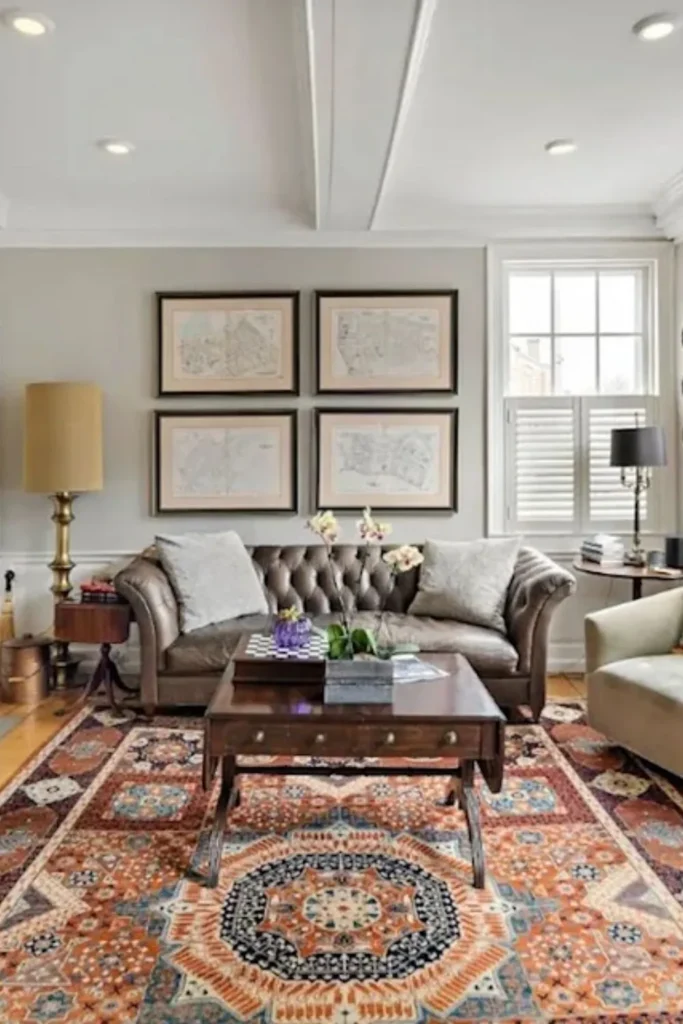
Inside, it earns its price in character alone. A commercial-grade kitchen with a wood-burning hearth, a beehive oven, and modern appliances sitting side by side.
Two wood-burning fireplaces on the main floor. A formal dining room. A reception foyer wide enough to actually use.
The second floor has three en-suite guest bedrooms, already set up for short-term rental. The third floor is a private owner’s apartment with a kitchenette, walk-in closet, and a primary suite with a full luxury bath.
Out back is a garden that Pike himself calls “quite peaceful,” which, given that The Witch House is literally next door, says something.
This isn’t a project. Someone spent three years and serious money making it work. The current owners bought it in 2013 for $608,437 and restored everything, HVAC, electrical, plumbing, before running it as an owner-occupied Airbnb.
Nearly 250 Years of Owners, Each One Remarkable
Mary Lindall was just the beginning. The second owner, Mercy Gibbs, ran a small shop out of one of the front rooms.
In 1815, it was purchased by William Osgood, a “master mariner,” and his family held it for 122 years straight, one of the longer unbroken ownership runs you’ll find in a property this age.
In 1947, the American Red Cross bought it for its Salem chapter house. It later became a law office. Then in 2013, the current owners came in, spent three years on a full restoration, and turned it into what it is today.
That’s six distinct chapters of American life: colonial, maritime, civic, legal, and now residential, all in one address.
Historic homes with this kind of layered past rarely surface twice. If you’re curious how another once-in-a-lifetime listing played out, Frank Lloyd Wright’s only Tennessee home hit the market for the very first time at $1.6 million and the backstory there is just as compelling.
You’d Be Living Right Next to Salem’s Most Famous Landmark
The Salem Witch House, formally the Jonathan Corwin House built around 1642, sits directly next door. It is the only structure still standing in Salem with a direct connection to the 1692 witch trials.
Judge Jonathan Corwin, one of the leaders of those trials, lived there for over 40 years. In 1944, the city moved it 35 feet to save it from demolition. It now runs as a seasonal museum.
On the other side is the First Church in Salem, a Unitarian Universalist congregation tracing its roots to 1629.
So you’d be living between a witch trial courthouse and one of the oldest churches in America, inside the McIntyre Historic District, a 10-minute walk from the commuter rail into Boston.
That’s not a pitch. That’s just the address.
If you had the chance to own a home like this, sandwiched between two of America’s most historically loaded landmarks, would you take it? Drop your answer in the comments. Genuinely curious what people think.
Why This Matters
Here’s the part most real estate articles skip entirely.
Salem draws 1.8 million visitors every year. In October 2024 alone, the city recorded over 1 million visitors in a single month, an 8.6% increase over the year before.
The city generates nearly $140 million in annual tourism spending, according to official city data reported by Boston.com.
October brings roughly 35% of that revenue in 30 days.
Essex Street is the center of all of it, not nearby, not a few blocks over. It is the pedestrian hub where the crowds actually move. And 314 Essex sits right between the two most-photographed structures on that street.
For someone who wants to live there full-time, that context matters. You are not moving into a quiet historic neighborhood. October turns this block into one of the busiest stretches in New England.
Security, privacy, and access management become real, daily considerations rather than afterthoughts.
This dynamic plays out in high-visibility real estate more often than people realize. When Jaylen Brown listed his $5 million Boston penthouse amid trade rumors, location premium and public exposure were just as central to that story as the price tag itself.
For an investor or hospitality operator, the math looks different. The Airbnb setup is already permitted and proven.
The city of Salem specifically allows owner-occupied short-term rentals, which is what makes this property workable. And with Salem’s median home price at $635,000 in late 2025, a $1.875M listing needs to justify itself, and this one does on location alone.
Stories like this one tend to move fast. If you follow real estate news and want to catch listings like this before they’re gone, there’s a WhatsApp channel that covers exactly this kind of news as it breaks.
Key Takeaways
- Address: 314 Essex St, Salem, MA, McIntyre Historic District
- Price: $1.875 million (reduced from $1.99M)
- Size: 4,670 sq ft | 6 bed | 5 bath
- Built: 1775, Georgian Colonial
- Purchase price in 2013: $608,437, fully restored since
- Notable owners: Mary Lindall (1775), Mercy Gibbs (shop owner), William Osgood (mariner, 122-year family hold), American Red Cross (1947)
- Neighbors: The Witch House (c. 1642) and First Church in Salem (est. 1629)
- Commute: 10-minute walk to rail, 30 minutes into Boston
It’s also worth noting that high-profile owners move on from remarkable properties more often than you’d think.
Peta Murgatroyd and Maks Chmerkovskiy recently listed their $18K/month California home after relocating to Florida, another reminder that even the most distinctive homes eventually change hands.
Final Thought
A house like this does not come up twice. The question for any serious buyer is not just whether they can afford it. It is whether they are ready for what it comes with: the history, the foot traffic, the responsibility of owning something that is, in every real sense, part of America’s story.
For more coverage on historic properties, high-profile real estate, and listings that go well beyond the price tag, visit Build Like New.
You can also follow along on X (Twitter) and join the conversation on the Build Like New Facebook group, where we discuss stories like this one and hear from readers who actually know their real estate.
Disclaimer: This article is for informational purposes only. Property details, pricing, and availability are subject to change. Consult a licensed real estate professional before making any buying or investment decisions.