Middle Income Earners in Grand Rapids MI Are Struggling to Find Homes
You earn a decent income. You have a stable job. You’ve saved up. And still, Grand Rapids is telling you quietly but clearly there isn’t a home for you here.
This isn’t about being poor. This is about being exactly in the middle, and that’s somehow the worst place to be right now.
If You Earn Around $75,000, the Market Is Working Against You
A joint May 2026 report from Realtor.com and the National Association of Realtors introduced a new metric called the Listing-Income Alignment Score. It measures how well available home listings actually match what local buyers can afford.
Nationally, that score sits at 74.9%, meaning buyers can access about one-quarter fewer homes than they could in a balanced market. The worst mismatch hits squarely in the middle-income range.
Buyers earning around $75,000 can afford homes priced up to roughly $261,000. But homes at or below that price point make up only about 23% of current listings nationally. In a balanced market, that number should be closer to 44%.
That’s not a small gap. That’s a wall.
Grand Rapids Is Feeling It More Than Most
Grand Rapids currently shows a moderate shortage of homes for middle-income earners, according to the 2026 Housing Mismatch Report. But the direction of that trend is what’s alarming.
In March 2025, affordable listings in Grand Rapids made up 23% of the market. By March 2026, that share had dropped to just 18.6%.
In one year, the already-thin slice of accessible homes got even thinner. The report estimates Grand Rapids is now missing roughly 610 affordable listings from its market. That’s 610 families circling a market that has no room for them.
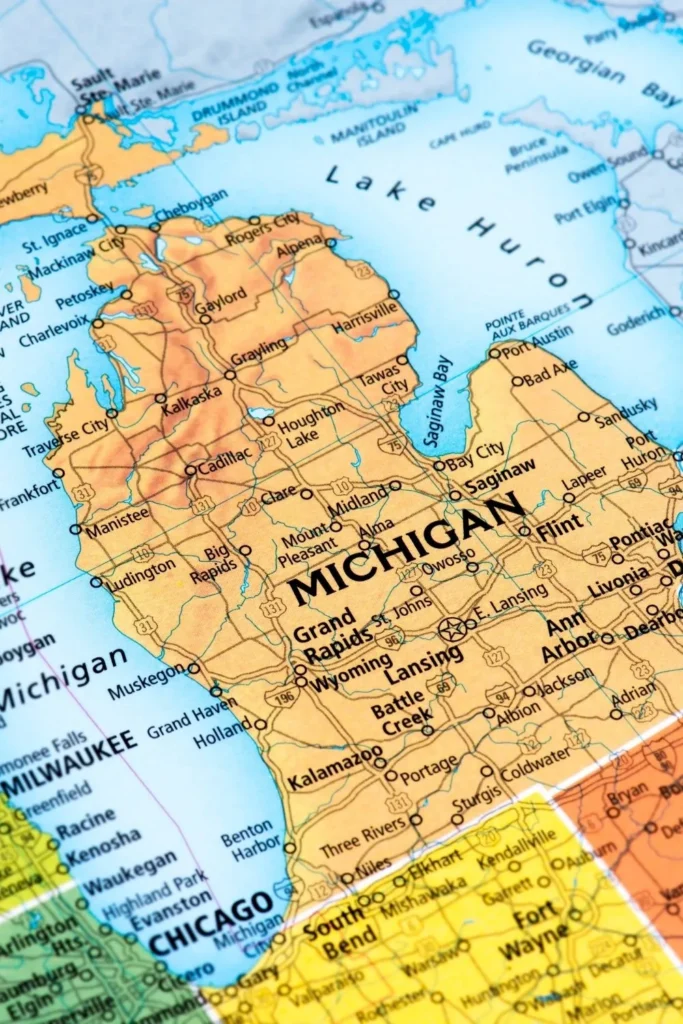
The median home price in Grand Rapids currently sits around $300,000, and homes are selling in about 6 days on average, which tells you exactly how little breathing room buyers have.
Across the country, even historically significant properties are drawing intense buyer interest, like Frank Lloyd Wright’s only Tennessee home, which recently hit the market for the first time ever at $1.6 million. The demand is real at every price point. The supply at the bottom just isn’t there.
More Inventory Hasn’t Fixed the Problem
This is the part most headlines miss.
Inventory has been going up and people assume that means the housing market is getting better. It isn’t. Not for middle-income buyers.
As Danielle Hale, Chief Economist at Realtor.com, put it directly: more inventory alone won’t be enough to unlock the housing market. A true recovery requires homes at the right price points.
The new supply coming in is largely aimed at the $400,000-and-above range. In Grand Rapids, properties priced above $400,000 in the central city are actually seeing extended days on market, while entry-level and mid-range homes still vanish in under a week.
The contrast is hard to miss. While mid-range inventory stays frozen, high-end listings keep moving.
Even celebrities are cashing out and relocating, like Peta Murgatroyd and Maks Chmerkovskiy, who listed their $18K/month California home after moving to Florida. The people with options are using them. The people in the middle are stuck.
Why This Matters
Michigan currently has only about three months of available housing inventory, half of what a balanced market requires. Grand Rapids, as one of the state’s fastest-growing metros, is carrying a heavy part of that burden.
In no city or town in Kent County does the median wage actually cover the cost of a typical entry-level home. That’s not an affordability challenge. That’s a structural failure.
When teachers, nurses, and tradespeople can’t afford to live in the city they work in, the city doesn’t just become expensive. It becomes fragile.
For the full national data behind this story, the May 2026 NAR and Realtor.com Housing Mismatch Report breaks down exactly how severe the listing gap has become for middle-income households across the country.
And for a deeper look at how this is playing out specifically in Grand Rapids, Realtor.com’s Grand Rapids housing shortage report has the local breakdown worth reading.
If you’re tracking stories like this regularly, there’s a WhatsApp channel covering local housing and real estate news as it breaks, good source to have in your feed without the noise.
Living or house-hunting in Grand Rapids? Drop your experience in the comments. Are you finding anything in that $250K to $300K range, or has it completely dried up?
What Needs to Change and What You Can Do Now
Hale’s position from the report is clear: until the supply of entry-level and middle-market homes grows to meet demand, buyers will keep finding the market out of reach no matter what the headline numbers say.
Local zoning reforms, ADU policies, and Michigan’s Housing Readiness legislation are steps in the right direction. But they take years to show up as real inventory on the ground.
In the meantime, if you’re actively searching in Grand Rapids, suburban areas like Wyoming and Creston still offer more realistic inventory than the city core.
Seller-paid rate buydowns are being used more frequently. And anything well-priced under $300K is gone fast, so pre-approval and a clear decision process matter more than timing the market.
Grand Rapids Is Growing, But Not for Everyone
The city is booming on paper. Jobs are here. People are moving in. Major employers like Corewell, Steelcase, Amway, and Meijer keep the relocation pipeline steady.
But a city that attracts workers and then prices them out of ownership isn’t a success story. It’s a slow squeeze.
The 610 missing listings in Grand Rapids aren’t just a data point. They represent 610 households trying to put down roots in a city that keeps moving the goalposts.
That’s worth paying attention to and talking about.
For more stories like this covering real estate, housing policy, and what’s actually happening in local markets, head over to Build Like New. We publish news-driven coverage that helps homeowners and buyers stay ahead of what’s coming.
Follow us on X (@buildlikenew) and Facebook so you don’t miss what we cover next.
Disclaimer: This article is for informational purposes only and does not constitute financial or real estate advice.