This $28M Beverly Hills Mansion by Harry Gesner Is Now Up for Sale
I don’t see many homes that make a $28 million price tag feel less like a number and more like a statement. But this Beverly Hills house by Harry Gesner does exactly that.
Set on Cole Place in Trousdale Estates, the home is not just another glassy luxury listing with big views and polished staging.
It has history, character, and the kind of design language buyers rarely find in today’s new build mansion market.
That matters because Gesner homes do not come up often. And when they do, serious buyers pay attention.
His Wave House and Sandcastle House in Malibu both found high profile owners, proving that his work still carries real weight with collectors, tech founders, and design driven buyers.
Now, Mezhgan Hussainy’s 1970 Gesner designed Beverly Hills home is back on the market for just under $28 million.
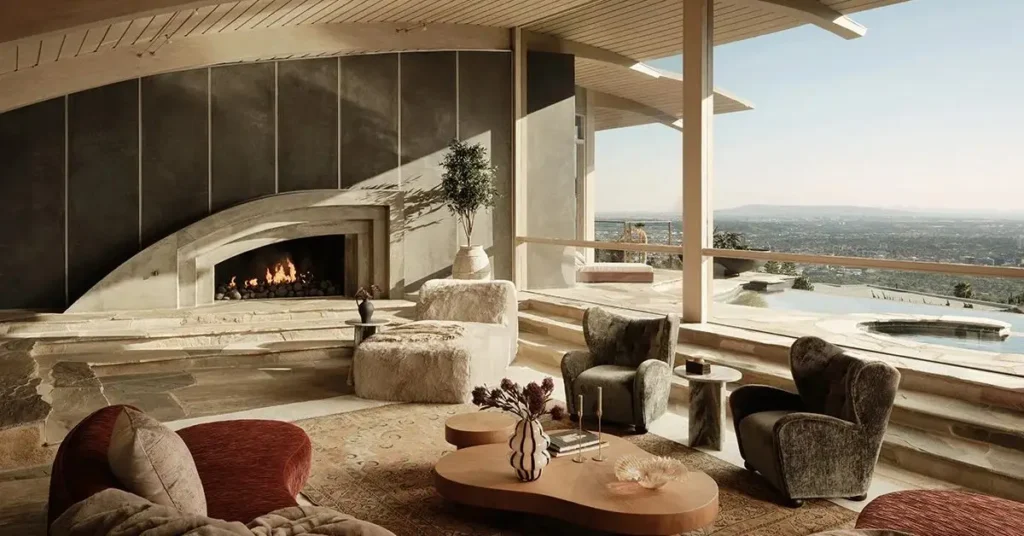
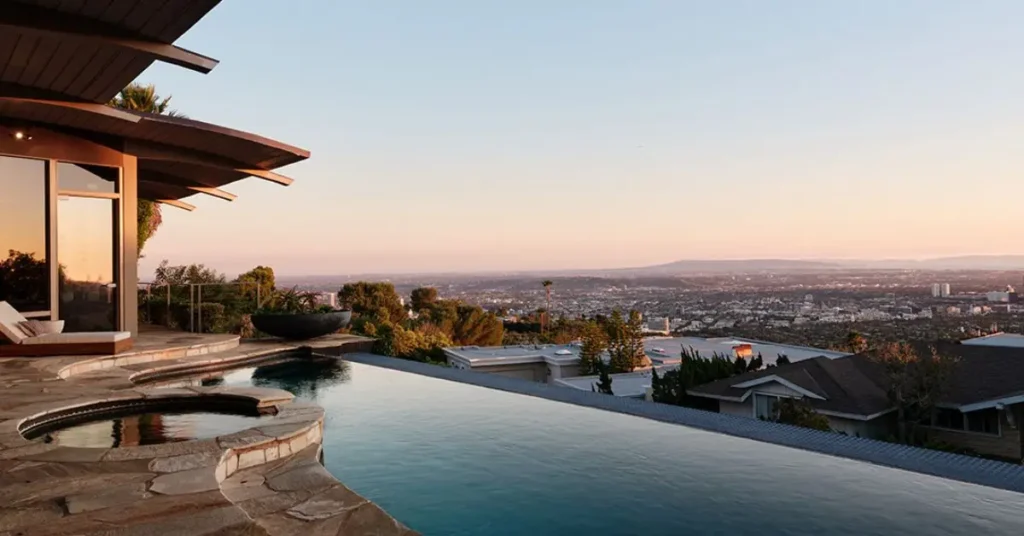
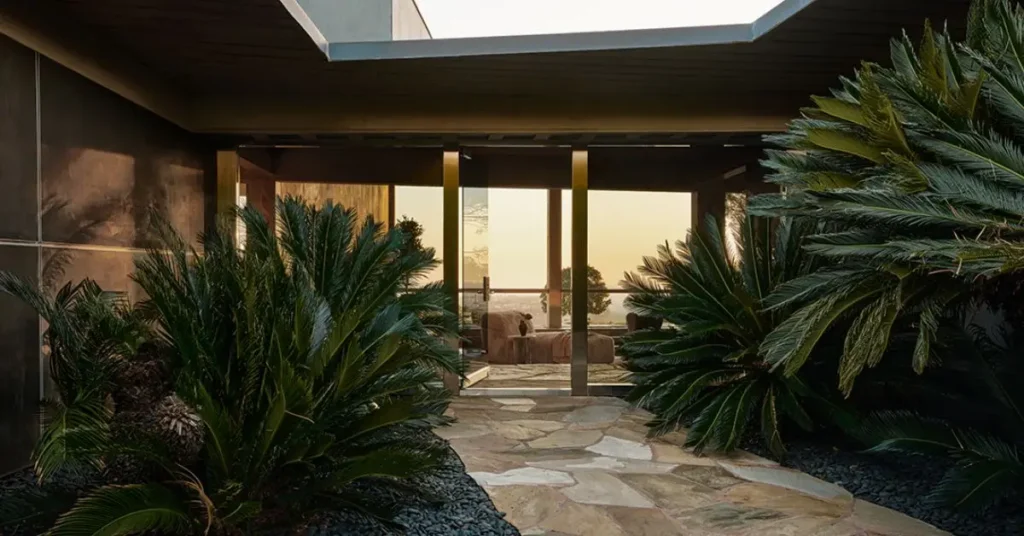
It has stone floors, huge fireplaces, walls of glass, a sculptural roofline, an infinity pool, and views that stretch toward Catalina Island.
But the real story is not just what the house has. It is why a home like this still feels rare, emotional, and worth watching in a market full of expensive properties that often look the same.
Why Harry Gesner Homes Are Selling Faster Than Ever
If you look closely at recent luxury home sales, you will notice something clear. Harry Gesner homes do not stay on the market for long. There is a pattern, and it is not random.
When Joshua Kushner and Karlie Kloss bought the Wave House in Malibu for close to $30 million, it was not just another celebrity purchase. It showed that buyers at that level are actively choosing design driven homes over newer, larger properties.
The same thing happened when Jason Fried bought another Gesner property for $13 million. Different buyer profile, same decision. That tells you demand is not limited to one type of buyer.
If you look at how lifestyle driven properties perform, you will notice a similar trend in this Hawaii estate once owned by supermodel Jessica Stam where identity and story mattered just as much as the property itself.
What you need to understand here is simple. These homes are not being picked for size or trends. They are being picked because they feel different from everything else available.
And the biggest reason behind this demand is supply. There are only a limited number of original Gesner homes.
You cannot recreate them in today’s market in the same way. The design, the time period, the intent behind them, all of it is hard to replicate.
So when one comes up for sale, buyers who understand this space do not wait. They already know how rare the opportunity is.
A Rare Trousdale Estates Listing With Architectural Pedigree
Now add the location into the equation. Trousdale Estates is one of those places where almost every home carries a certain level of status.
You are not just getting a Beverly Hills address. You are getting privacy, elevation, and views that stretch across the city. More importantly, you are in a neighborhood known for architecturally important homes, not just expensive ones.
That is why listings from platforms like Robb Report often treat properties here as more than just real estate. They position them as something closer to long term assets.
For you as a reader or potential buyer, this matters because location here directly impacts value. Even without the Gesner connection, homes in this area already command a premium.
When you combine that with a rare architectural background, the price is not just about square footage anymore. It is about how many factors come together in one place, and how often you will see that happen again.
Inside the Mogul’s Harry Gesner Designed House for Sale
If you look at this listing purely from numbers, the jump is hard to ignore. The home was bought in 2014 for $6.25 million, and now it is asking just under $28 million.
That kind of appreciation is not just market inflation. It reflects how buyers today are placing a premium on homes that feel original and hard to replicate.
The property spans around 6,400 to 6,500 square feet and sits on an elevated lot in Beverly Hills. It was originally designed in the late 1960s and completed in 1970, which already puts it in a very specific architectural era.
It is currently owned by Mezhgan Hussainy, who did not try to completely reinvent it. Instead, the updates were more about refining what was already there and keeping the original character intact.
In terms of layout, you get multiple bedrooms, flexible living areas, and a structure that separates private and social spaces without making the home feel closed off. It is the kind of layout that still works today without needing major changes.
Signature Design Elements That Define This Gesner Home
When you look at the design closely, it becomes clear why this home stands out. It is not trying to follow modern trends. It is following its own language.
The roofline is one of the first things you notice. It is sculptural, almost like it was shaped rather than built. That is a signature Gesner move, using bold forms to define the entire structure.
Then there are the glass walls. They are not just placed for aesthetics. They are positioned to frame views and pull the outside into the home. That connection to nature was always a core part of Gesner’s approach.
Materials also play a big role here. Stone floors, large fireplaces, and wood elements are used in a way that feels grounded. Nothing feels overly polished or artificial, which is why the home still feels relevant decades later.
A Walkthrough of the Living Experience Inside the Home
When you move through the house, the experience changes from space to space, but it never feels disconnected.
The upper level is where most of the daily living happens. You have a dining area, a kitchen that opens into an atrium like setup, and direct access to an outdoor terrace. It feels open, but still usable.
Then you step into the sunken living room, and the entire mood shifts. The ceiling curves above you, the fireplace becomes the focal point, and the space feels more intimate without being closed in. It is a design choice you do not see often anymore.
You can see the same emotional pull in legacy homes like Shirley Temple’s historic wedding house where the story behind the space shapes how people experience it.
Outside, the home fully opens up. There is an infinity pool, a spa, and views that stretch across the city and all the way toward the coastline. The positioning of the house makes those views feel constant, not occasional.
If you explore how this property is described on platforms like Cottages & Gardens, you will notice one consistent idea. It is being treated as more than a home.
It is being positioned as something closer to a designed experience, where architecture, location, and lifestyle all come together.
Private Spaces, Guest Areas, and Hidden Functional Luxury
What I like about this home is that it does not ignore the private side of living. It is not just built for showing off. It actually works for day to day life.
The primary suite is designed to feel separate without being isolated. You get a large fireplace, dual closets, and enough space to make it feel like its own zone inside the house. It is not trying to be flashy. It is trying to be comfortable in a way that lasts.
The guest bedrooms follow a similar approach. They are not afterthoughts. Each one feels usable, whether you are hosting people or turning one into a workspace. One of the rooms is already set up as an office with a wet bar, which tells you the house adapts to how you want to live.
Then there is the lower level. This is where the flexibility really shows up. You have additional bedrooms, a shared bath, a second kitchen, and a screening room. That setup gives you options. You can treat it as a guest wing, an entertainment zone, or even something more private if needed.
Why This Property Commands Nearly $28 Million
At first glance, $28 million sounds like a stretch. But when you break it down, the logic becomes clearer.
A big part of the value comes from the architectural legacy.
Harry Gesner homes are not being built anymore, and his work carries a certain identity that buyers recognize instantly. You are not just buying a house. You are buying a piece of design history.
Then comes the land. Beverly Hills, especially areas like Trousdale Estates, already sit in the top tier of pricing. The neighborhood itself has been known for high value homes for years, with average prices crossing eight figures.
And finally, there is scarcity. We have seen this kind of value buildup before in listings like the Wolf of Wall Street Manhattan penthouse where perception, story, and location together influence the final price.
There are only so many authentic Gesner homes left in the market. When supply is that limited, pricing naturally shifts upward, especially when demand is coming from buyers who understand what they are looking at.
I usually keep track of these kinds of rare listings and quick market shifts in real time, especially when something like this pops up unexpectedly.
From $6.25 Million to $28 Million: What Drove the Price Jump
If you compare the 2014 purchase price to today’s asking price, the increase looks dramatic. But it is not coming from just one factor.
The first is simple market appreciation. Over the past decade, Beverly Hills real estate has seen consistent growth, especially in the luxury segment. Homes in prime locations have moved into a completely different pricing bracket.
The second factor is how the home has been presented. It has not been over remodeled. Instead, it has been carefully restored and staged to highlight its original design.
The staging by Francesca Grace plays a role here. It does not change the structure, but it changes how you experience the space. That alone can influence how buyers perceive value.
When you combine market growth, design relevance, and presentation, the price jump starts to feel less surprising.
The Cultural and Collectible Value of Harry Gesner Homes
There is another layer here that most listings do not explain properly. These homes are not just real estate. They are part of a larger cultural and architectural story.
This particular home is featured in Houses of the Sundown Sea, which is the first major book dedicated to Gesner’s work and documents decades of his design approach.
If you look at how properties like this are covered in the Wall Street Journal report on Gesner’s Sandcastle House listing you will notice something consistent. These homes are treated more like collectible pieces than standard listings.
And that is really the shift you need to understand. You are not just buying space. You are buying something that holds meaning, history, and a level of uniqueness that is getting harder to find in today’s market.
So let me ask you this. When you look at a home like this, do you see it as a place to live, or as something you want to own because it cannot be replaced?
Final Perspective on This Beverly Hills Architectural Gem
If you step back and look at everything together, this is not just another expensive Beverly Hills listing. It is a mix of architecture, location, and timing that does not show up often.
You have a Harry Gesner design, which already puts it in a rare category. Then you add Trousdale Estates, where land alone carries serious weight. And on top of that, you have a home that has been updated just enough without losing what made it special in the first place.
For me, what stands out is how this property feels different from most luxury homes you see today. It is not trying to impress with size alone. It holds attention because it has identity.
And that brings you to a simple question. When you think about value in real estate, what matters more to you, scale or character?
I would love to hear your take. Drop your thoughts in the comments and tell me honestly, would you spend $28 million on a home like this or would you choose something newer and bigger?
If you are into real estate, design, or smart property decisions, you can also explore more breakdowns like this on my site Build Like New, where I share insights that actually help you think like a buyer, not just scroll like a viewer.
And if you enjoy breakdowns like this, you can follow along on Build Like New on X and join the conversation in the Build Like New Facebook group where I share more real estate insights beyond just listings.
Disclaimer: All property details, pricing, and information mentioned are based on publicly available sources at the time of writing. Real estate listings can change, so you should always verify details with official listings or agents before making any decisions. This content is for informational purposes only and does not constitute financial or investment advice.