Flames Took Over a Kentucky Home in Minutes and Families Had No Time to Think
Around 3:30 in the afternoon on June 10, 2026, someone in downtown Hopkinsville noticed smoke near East 7th and Thompson Street and called it in.
By the time Hopkinsville Fire Department arrived, the house was already well involved. Flames were pushing out from the front. Roads around the property were blocked. Crews were still working the scene nearly 30 minutes after that first call.
And every single resident was already outside.
What “Well Involved” Actually Means
Most news articles use that phrase and move on. They should not.
When firefighters say a home is “well involved,” fire has spread far enough that suppression is now the priority, not search. They are not looking for survivors at that point.
The fact that every resident was out before crews arrived is the real story. Two household cats were still unaccounted for as of the last HFD update.
The Window That Makes All the Difference
The most dangerous window in a house fire is not when flames are visible from the street. It is the minutes before that, when smoke is moving through the interior unseen.
A house fire can become life-threatening in under two minutes. A residence can be fully engulfed in five. That gap is shorter than most people imagine.
In Hopkinsville, the 911 call was about smoke in the area. Not flames. Smoke. That early notice is exactly what makes the difference between a close call and something far worse.
Why Some People Get Out and Others Do Not
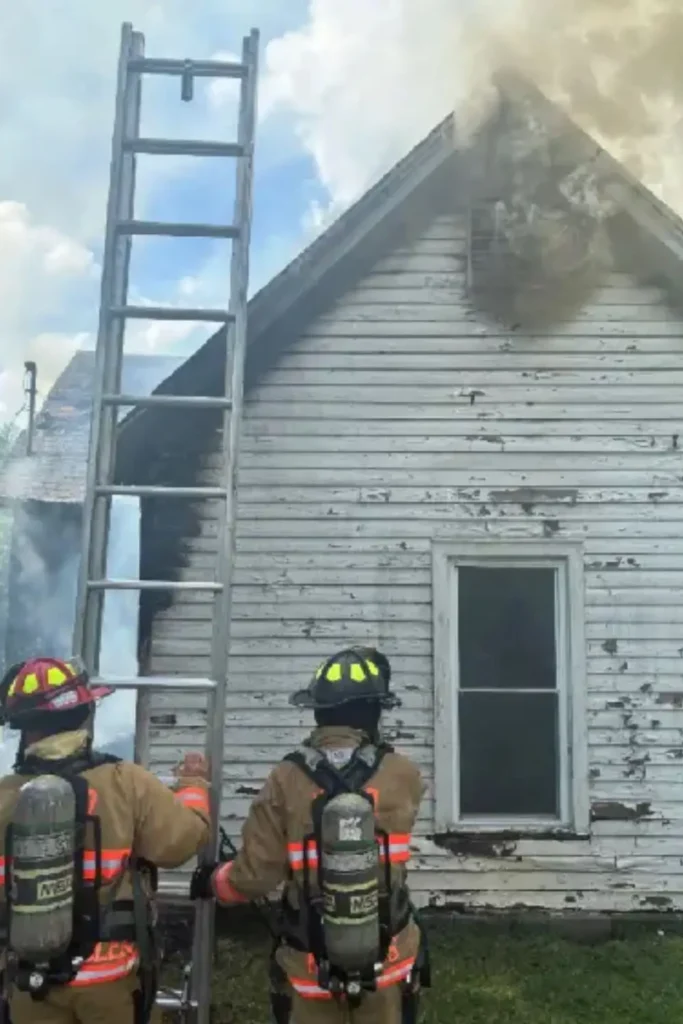
According to local reporting from Christian County Now, all residents evacuated before emergency crews reached the scene. No injuries among the people inside.
That outcome is not the norm.
The National Fire Protection Association reports that working smoke alarms cut the risk of dying in a home fire by 60 percent. Three out of five home fire deaths still occur in homes without a working alarm.
The Hopkinsville residents got out while there was still time. Something gave them that window. Not every household gets the same chance. Just days before this, an Ohio family survived because their dog sensed the fire before the alarm did.
That same week, a 70-year-old man in southern Kentucky did not make it out of his burning home. No early warning. No chance.
If you follow stories like this, there is a WhatsApp channel that covers fire incidents and home safety news as they break. Worth checking if you want to stay ahead without waiting on the news cycle.
Why This Matters
Home fires kill roughly 2,500 Americans every year and cause more than $8 billion in property damage, according to the US Fire Administration. Most of the deadliest scenarios are also the most preventable.
Older neighborhoods with older construction carry extra risk. Materials burn faster. That makes early detection even more critical.
The difference between a story like Hopkinsville and a story like a Cedar Rapids woman and her pets who never made it out before sunrise often comes down to one thing: did someone get a warning in time to move.
The cats are still missing. The house is severely damaged. But no person died. In a fire that was fully burning before help arrived, that is not luck. That is early warning doing exactly what it is supposed to do.
Key Takeaways
- Fire reported around 3:30 p.m. on June 10, 2026, near East 7th and Thompson Street in downtown Hopkinsville
- HFD arrived to find the home well involved with flames coming from the front
- All residents had evacuated before emergency crews reached the scene
- Two household cats remained unaccounted for as of the latest HFD update
- Roads around the property were blocked as crews worked past 4 p.m.
- Cause of fire has not been publicly disclosed
Does your household have a fire escape plan? Not a mental one. An actual, practiced one. Drop your answer in the comments below. Genuinely curious how prepared most people actually are.
Wrapping Up
A house in Hopkinsville burned hard on a Wednesday afternoon. The structure took serious damage. Two cats are still missing.
But everyone got out. That is the whole story, and it is the only part that really matters.
If this kind of story is your thing, Build Like New covers home safety, property news, and real stories behind the headlines on the regular. Worth bookmarking.
For more stories like this as they break, follow Build Like New on X (Twitter) and join the conversation on the Facebook community. That is where these things get discussed in real time.
Disclaimer: This article is for informational purposes only. All details are based on publicly available reports at the time of publication.