Diane Keaton’s Former Mansion Loses $2.5 Million in Value
When I first saw the headline about Diane Keaton’s Beverly Hills house getting a $2.5 million price cut, it felt like just another celebrity real estate update.
But the moment you look closer, it is not that simple. This is a home that started at $25 million and is now down to $20.5 million, and that kind of drop usually tells a deeper story.
What makes this interesting to me is not just the price. It is the fact that this house still carries Diane Keaton’s very personal design style, which is rare in luxury homes.
And that raises a real question you should care about. Does strong personality make a home more valuable, or harder to sell?
From $25 million to $20.5 million, what just happened
When I look at this price drop, the first thing I want is clarity, not hype. So here’s the simple timeline you should know.
The house first hit the market in October 2025 at $25 million. Then it dropped to $22.95 million. And now, it’s down again to $20.5 million, which clearly shows this is not a one-time adjustment but a pattern.
If you want to verify the details yourself, you can check the original report on Realtor.com, but the takeaway is simple. When a luxury home sees repeated cuts like this, it usually means the market is still trying to find the right buyer.
This is not just another celebrity home listing
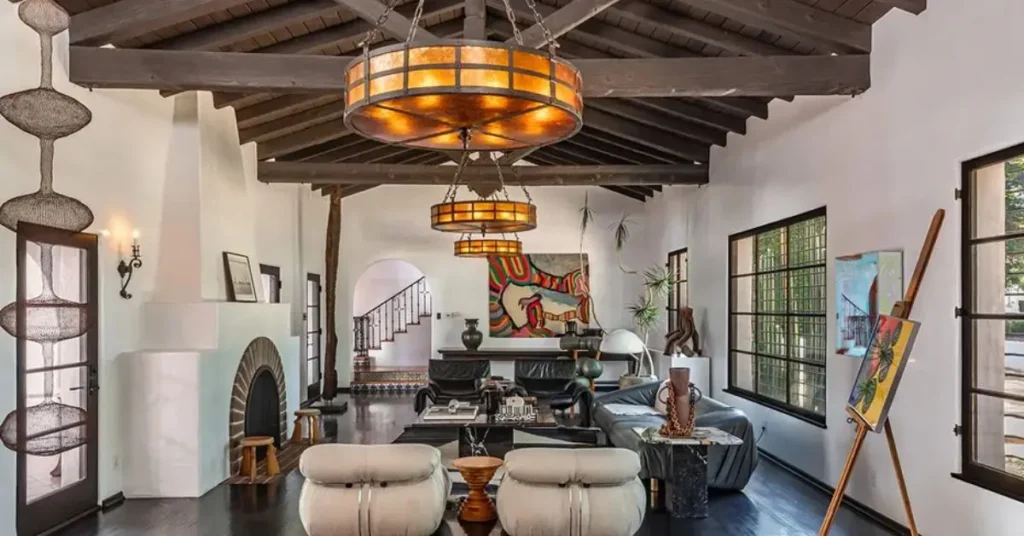
This is not just a big home with a famous name. It’s a Spanish Colonial estate designed by Ralph Flewelling, located in the Beverly Hills Flats, which is one of the most established and sought-after areas in Beverly Hills.
And when you look at homes like this, you’re not just looking at size or luxury features. You’re looking at design history, personality, and a very specific identity that you rarely see in modern listings.
That is exactly what makes this home stand out, and also why it doesn’t behave like a typical luxury sale.
The real story hidden in the price drops
When I look at repeated price cuts like this, I don’t see a simple discount. I see a market trying to figure out where this home actually fits.
In luxury real estate, this happens more often than you think.
In fact, we’ve seen similar pricing shifts in celebrity homes before, like in this breakdown of how a historic Queens property lost value despite strong demand.
These homes are not priced with a formula. They go through a process where the seller tests the market, adjusts, and waits for the right buyer to show up.
But here’s where it gets more interesting. Homes with a strong personality usually take longer to sell. What feels beautiful and meaningful to one buyer can feel too specific to someone else.
And even though this is tied to a celebrity, that doesn’t guarantee demand at a high price. Attention is easy. Finding the right buyer at that price is the hard part.
I keep breaking down these kinds of real estate patterns regularly, and once you start noticing them, you begin to see listings very differently.
Diane Keaton’s influence goes far beyond ownership
When I look at this home, I don’t see it as something Diane Keaton simply owned. I see it as something she shaped over time.
She had a clear pattern in her real estate journey. She bought historic homes, restored them carefully, and gave them a very distinct identity. Her work was never about making a house look new. It was about bringing character back.
Even outside this property, you can see how deeply involved she was in design. As highlighted by Elle Decor, her homes were often influenced by years of collected ideas, inspiration boards, and a very personal creative process that blended history with her own taste.
And that’s exactly what you feel in this house too. It’s not neutral. It’s intentional.
The most “Keaton” spaces inside the house
When I picture this home, I don’t think about luxury in the usual way. I think about how it feels to live inside it.
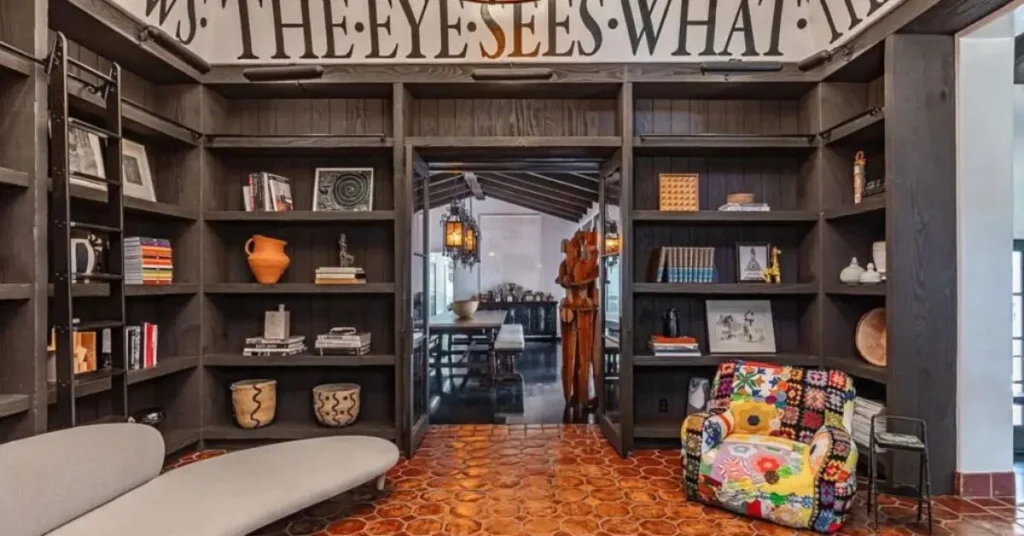
The entryway alone tells you everything. It’s designed like a library, not a grand showpiece. There’s a quote running across the walls, and the space feels built for someone who values books, quiet, and reflection.
Then you notice the textures. Warm wood, natural light, soft tones. It doesn’t feel staged for selling. It feels like someone actually lived there with purpose.
That’s what stands out to me. This is a home built around a lifestyle, not just aesthetics. And that’s powerful, but it also means not every buyer will connect with it.
A house shaped by multiple iconic owners
There’s another layer you shouldn’t ignore. This house has passed through some very recognizable hands.
It was once owned by Madonna, then transformed by Diane Keaton, and later owned by Ryan Murphy. That alone gives the property a kind of cultural weight that most homes simply don’t have.
But I always come back to the same idea. Ownership history adds story, not guaranteed value. And in a market like this, story helps attract attention, but it doesn’t always close the deal.
Inside the home, what today’s buyer actually gets
When I look at a home at this price point, I don’t just think about the story. I think about what you actually get in terms of space and lifestyle.
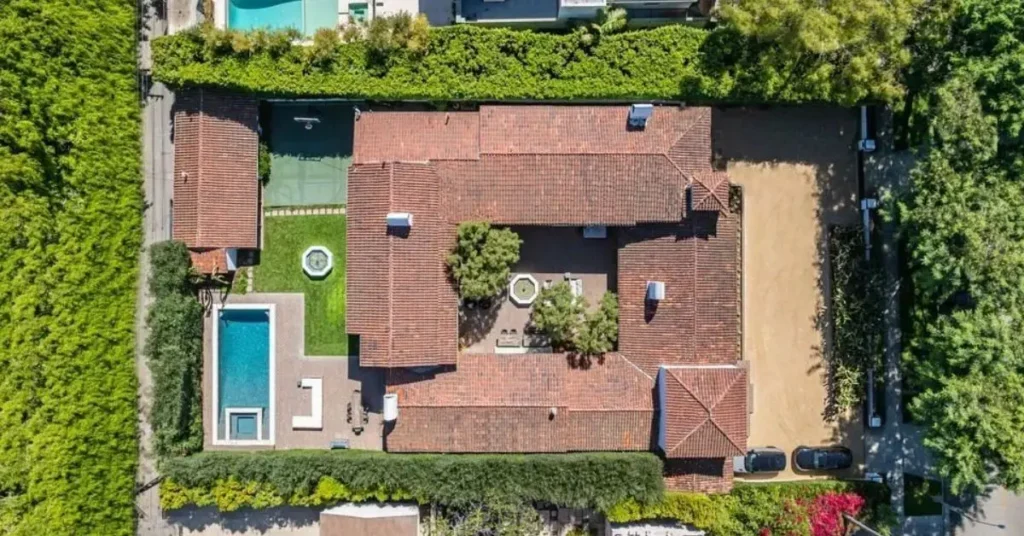
This property gives you six bedrooms and nine bathrooms, spread across nearly 8,500 square feet. But what really stands out to me is how the layout works.
It’s built around an indoor outdoor courtyard, which makes the whole home feel open, connected, and very livable.
Step outside and it keeps delivering. You’ve got a pool, a guesthouse, and even a sports court. So it’s not just a place to stay, it’s a place designed for hosting, relaxing, and living in a very California way.
Even large luxury estates with major upgrades don’t always sell instantly, which you can see in this case of a $42M Sea Island estate after renovation.
The design elements that define the experience
Numbers tell you what the house is. Design tells you how it feels.
Inside, you’ve got vaulted ceilings with exposed wood beams that immediately add character. Fireplaces across multiple rooms make the space feel warm instead of just luxurious.
Then there are terracotta floors, archways, and natural light that soften everything and keep it inviting.
What I notice is the balance. The home feels dramatic but still comfortable. And that emotional pull is often what makes someone say yes at this level.
Diane Keaton’s bigger real estate story
To really understand this home, I think you need to step back and look at Diane Keaton’s bigger pattern.
She has always been drawn to historic homes, especially ones that need restoration. She buys them, spends time bringing them back to life, and then moves on once the transformation feels complete.
Even features by Architectural Digest show how her work is less about flipping for profit and more about preserving character and creating something personal. That approach shows up clearly in this home too.
Why even her other homes struggled to sell
And this is where things get interesting. This is not the first time one of her homes has faced challenges in the market.
Her Pacific Palisades property also saw price cuts before being pulled off the market. Then there was the so called Pinterest house, which got a lot of attention but still needed adjustments to attract the right buyer.
So when I look at what’s happening with this Beverly Hills home, it doesn’t feel like an isolated case.
We’ve seen similar situations where emotional value didn’t match buyer demand, like this example of a fire-damaged Malibu property with strong history.
It feels like a pattern. Homes with strong identity and design don’t always align with what most luxury buyers are looking for today.
What this price cut really means today
When I look at a price cut like this, I don’t see just a number going down. I see two different audiences reading it in completely different ways.
For someone who follows celebrity homes, this is actually a rare kind of listing. You’re not just looking at a luxury property.
You’re looking at a home that blends Hollywood history, architectural value, and a very personal design story. That combination doesn’t show up often, and that’s why this listing keeps getting attention even after multiple price drops.
But if you step back and look at it from a real estate point of view, the meaning changes. This doesn’t feel like a signal that the entire market is weakening. It feels more like a case of niche luxury positioning.
Homes like this are harder to price because they are not built for everyone. They need a very specific buyer who connects with the style, the layout, and the story behind it. Until that match happens, adjustments like this are part of the process.
The bigger takeaway behind the discount
If I had to simplify what’s really going on here, I’d say this is a clash between two things.
On one side, you have legacy design. A home with history, personality, and strong character. On the other side, you have modern buyer expectations, where many people prefer clean, neutral, and flexible spaces that are easy to customize.
That’s the tension.
A home with strong personality stands out instantly. But that same personality can limit how many buyers feel comfortable making it their own. And in today’s market, flexibility often wins over uniqueness.
So the real takeaway is not just about this one property. It’s about a bigger shift. Homes that feel deeply personal may need more time, more adjustments, and the right buyer to truly work.
I’m curious what you think about this.
Do you feel a home like this should hold its value because of its character, or do you think buyers today prefer something more neutral even at this level? Drop your thoughts in the comments.
And if you enjoy breaking down real estate stories like this in a simple, practical way, you can explore more on my website Build Like New where I share insights that go beyond the headlines.
You can also follow along on X and join the discussion inside our Facebook community where we talk about these trends in a more practical way.
Disclaimer: This article is based on publicly available information and market observations. It does not represent financial or investment advice. Real estate values can vary based on multiple factors, and readers should do their own research or consult professionals before making any decisions.