Facebook Cofounder Chris Hughes Puts His Washington, D.C., Mansion on Market for $8.8M
I’ll be honest with you — when someone like Chris Hughes puts a home on the market, the price tag is only half the story. What really pulls me in is why a place like this matters. And in a neighborhood like Kalorama, every listing says something about where the city’s power and money are shifting.
So here’s what just happened: Hughes has officially listed his Romanesque Revival home for $8.8 million, a property he and Sean Eldridge bought back in 2021. The moment I saw the listing hit, the first thing that crossed my mind was how perfectly it fits the Kalorama pattern — historic bones, political history, and owners who shaped some part of American culture.
The house itself checks all the boxes you’d expect in this pocket of D.C.: close to embassies, surrounded by quiet, tree-lined streets, and built at a time when craftsmanship carried weight. If you’ve followed luxury real estate even casually, you know homes in this area don’t come up often. And when they do, they move quietly but quickly.
What makes this listing worth paying attention to isn’t just the architecture or the size. It’s the timing. After nearly five years, Hughes is willing to walk away from a property that blends history and modern upgrades in a way most listings can’t compete with. That alone tells you something about how the upper tier of the D.C. market is shifting in 2026.
Before we go deeper into the home itself, let me ask you this: When you look at a sale like this, what’s the first thing you want to know — the story behind the house, or the story behind the seller?
The Historic Roots Behind This Early-1900s Kalorama Home
When I first looked into this property’s background, the thing that struck me wasn’t the price — it was the lineage. This home wasn’t built for just anyone. It was originally commissioned for the president of Lincoln National Bank in the early 1900s, back when the neighborhood was still shaping its identity as one of D.C.’s most influential enclaves.
If you’ve ever walked through Kalorama, you know the feeling. The architecture reminds you that power isn’t always loud — sometimes it’s carved directly into stone. This Romanesque Revival home carries that same quiet authority. The thick masonry, the arches, the symmetry — it’s the kind of design that was meant to last longer than the people who built it.
I want you to notice something here: most outlets covering the listing just mention “historic home” and leave it at that. But when a seller like Hughes steps away from a property with this sort of pedigree, it adds weight to the story. This isn’t a flip. This is a handover of a century-old piece of D.C. history — and buyers who understand this market know exactly what that means.
Before we jump to the interiors, I want you to keep this in mind: How much does “historic character” matter to you when you think about a multimillion-dollar home?
Inside the Mansion — A Walkthrough of the Spaces
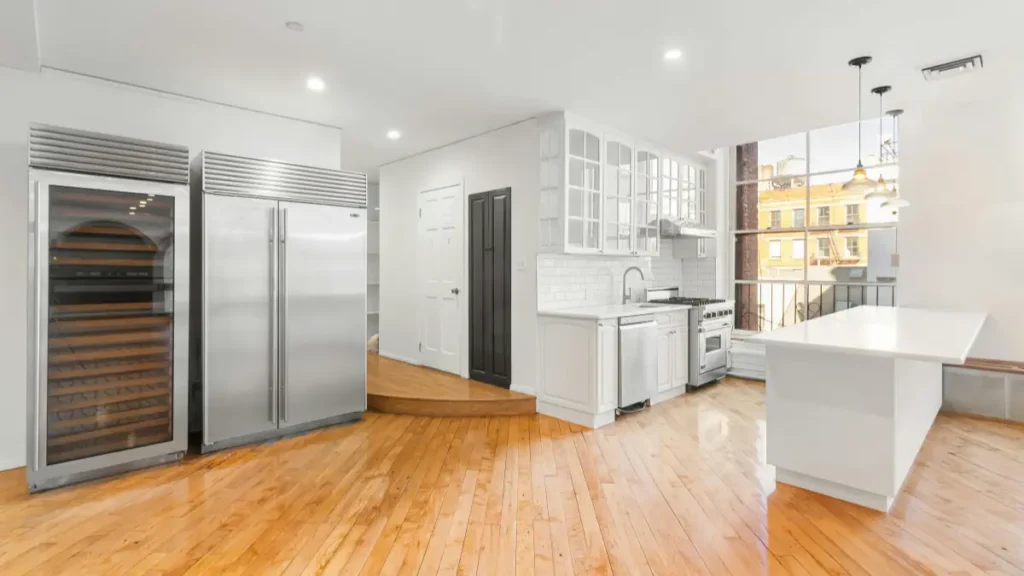
When I went through the details — especially the ones highlighted in the New York Post’s coverage — I realized this house is built for someone who cares about flow as much as footprint. A lot of luxury homes feel cold. This one doesn’t.
You enter through a small vestibule, and suddenly you’re in a foyer wrapped in original paneling. Not restored, not replicated — original. The formal living and dining rooms sit right off this space, and the proportions make sense. Nothing oversized just for the sake of drama.
The family room has a fireplace and built-in shelving that actually looks lived-in, not staged. And then you step into the kitchen, which blends top-tier Bosch, Viking, and Sub-Zero appliances without screaming “look at me.” I love kitchens like this — quiet confidence, not showroom energy.
But my favorite detail? The breakfast room. The Post highlighted the French doors that swing out to a pergola, and they were right — that transition changes the entire feel of the main floor. You get a fountain, outdoor dining, and a grilling setup that doesn’t feel forced. For a D.C. home, that indoor-outdoor flow is rare.
Upstairs, the primary suite has its own fireplace and a marble bathroom that avoids the “hotel lobby” look. Two more en-suite bedrooms sit on the same floor. The top level adds two more rooms — perfect for guests, staff, or even a home studio.
The lower level is a completely different world: media room, gym, wine cellar, and an in-law suite with separate access. That’s the kind of layout that works for multigenerational living, visiting parents, or a live-in caretaker.
If you enjoy seeing how different celebrity homes balance layout and lifestyle, you might also like how Macaulay Culkin’s Toluca Lake mansion was designed before it sold.
Why Hughes Might Be Selling — A Look at His Property Pattern
I don’t look at a high-profile sale like this in isolation. I always ask: What’s the pattern? And when you trace Hughes and Eldridge’s real-estate history, you start to notice something interesting.
The Robb Report pointed out that they bought this Kalorama home in 2021 for about $7.8 million — which means they’re stepping out with roughly a million-dollar spread before fees. That’s not a casual sale. That’s a strategic move.
This isn’t the first time they’ve restored and refined a property, either. Remember their historic Whippoorwill Farm estate in New York? They put years into rebuilding that home before selling it in 2025 for $9.5 million. Before that, they cycled through multiple luxury properties in Manhattan.
To me, it looks like they operate with a very specific rhythm:
- Buy historically significant home
- Restore or modernize it with respect
- Live in it long enough to know it intimately
- Move on when the timing matches their personal or political life
And honestly, that last part might be the key. Kalorama is a political neighborhood. People come here when their work is tied closely to Washington power. You leave when your life shifts away from it.
I was recently reading a discussion in a WhatsApp real-estate insights channel where people were talking about how many high-profile owners follow this same buy–restore–move rhythm. It’s interesting how often these patterns repeat at the top of the market.
Who Chris Hughes Is — And Why His Story Matters in This Sale
Most people know Hughes from one headline: he cofounded Facebook alongside Mark Zuckerberg. But that’s only one chapter of a much wider career.
After stepping away from Facebook in 2007, he shaped the digital playbook that helped elect Barack Obama in 2008. And if you’ve ever worked in digital strategy — like I have — you know how foundational that campaign was. The tools, the targeting, the messaging pipelines — Hughes was at the center of all of it.
Then he bought a majority stake in The New Republic, trying to rebuild the magazine’s voice for a new generation. Say what you want about that chapter — it showed he was never just a “tech guy.” He cared about institutions.
Today, he’s writing and thinking about economic power structures, including his book Marketcrafters. The guy has always existed at the intersection of tech, media, politics, and public influence. And that’s exactly the kind of person who ends up owning a home in Kalorama.
This matters because buyers in this price bracket often look at who lived in a home almost as much as the house itself. Legacy becomes part of the property’s story.
This kind of timing-based move reminds me of another story I covered recently about Gerry Turner and Lana Sutton buying their $1M home.
Why an $8.8M Price Tag Fits the DC Market Right Now
If you’re not familiar with Kalorama’s market, $8.8 million might sound inflated. But if you know this area — and you track the same numbers I do — the price makes perfect sense.
Kalorama isn’t just another wealthy neighborhood. It’s the place past presidents choose when they leave office. It’s where ambassadors host quiet meetings. It’s where tech founders who want privacy — but still need proximity to D.C. power — settle in.
Homes here don’t come up often, and when they do, they don’t sit.
Luxury demand in D.C. has been climbing steadily since 2023, especially for historic homes with modern amenities. Redfin and Zillow’s upper-tier indexes back this up — buyers are hunting for heritage, not just square footage.
This property hits that perfect intersection:
- Historic architecture
- Modern renovations
- A politically significant seller
- Prestigious street placement
- Limited neighborhood supply
In markets like this, scarcity does most of the heavy lifting.
So let me put it to you honestly: If you had to choose — would you pay more for location, for history, or for luxury finishes?
The Architectural Details That Make This Home Stand Out
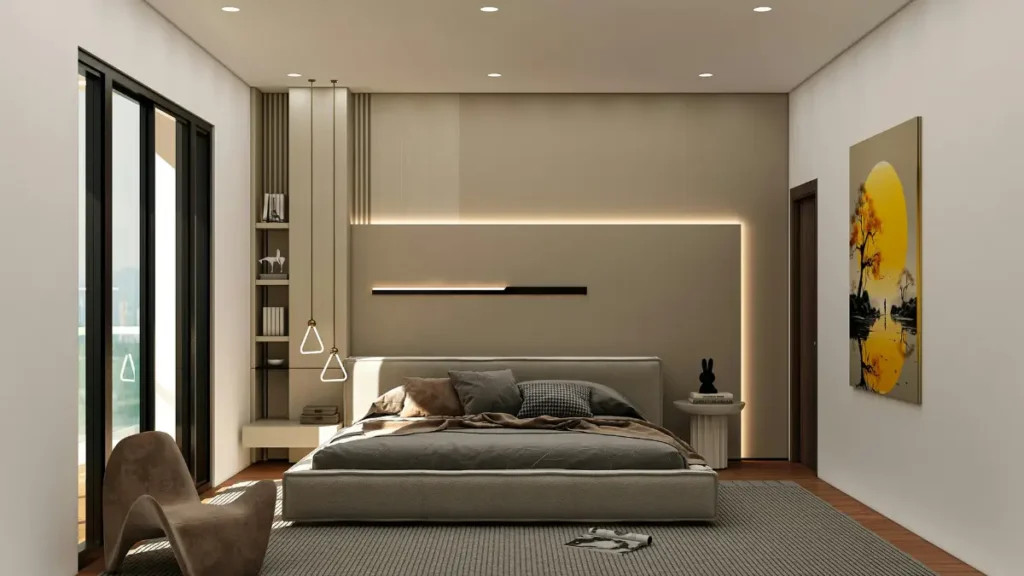
Whenever I look at a luxury listing, I try to separate “expensive” from “exceptional.” And this home leans heavily toward exceptional. Not because of the price — but because of the architectural decisions someone made more than a century ago.
The 11-foot ceilings alone change everything. Tall ceilings don’t just make a room feel bigger; they make it feel calmer. You breathe differently in spaces like that. The restored pocket doors add another layer of charm — the kind you can’t recreate with modern hardware, no matter how much money you throw at it.
There’s also an elevator, which sounds like a small detail until you realize how rare it is for a historic D.C. property to have one. It tells me the previous owners weren’t just preserving history; they were upgrading it in ways that made the home actually livable for the long run.
But the feature that sticks with me the most is the indoor-outdoor flow. You don’t get many D.C. homes where French doors open directly into a pergola with a fountain running quietly in the background. That’s the kind of design element that turns a house into a habit — a place you build routines around.
If historic architecture grabs your attention the way it does mine, you’ll probably enjoy looking at Marilyn Monroe’s iconic Palm Springs home as well.
What This Listing Signals About D.C.’s Ultra-High-End Market
I’ve watched the D.C. luxury market for years, and every time a high-profile home in Kalorama hits the market, it tells you something about where the city is heading. These are not random listings — they’re whispers of what’s shifting behind the scenes.
A property like this coming up now tells me two things. First, political-adjacent homeowners are repositioning themselves. Whenever election cycles or national priorities shift, you see quiet movement in neighborhoods like this. People step in. People step out. Houses change hands.
Second, D.C.’s top-tier market is maturing in a way that mirrors New York and Silicon Valley more than ever. Buyers want history, privacy, and easy access to power — and they’re willing to pay for a mix that feels uniquely “Washington.”
Most coverage out there just says, “Another expensive listing.” But if you read between the lines — and look at the timing, the owner, the style of the home — you see a deeper story about how influence, technology, and politics intersect in this city.
I’m curious to know your angle: Do you follow luxury listings for the homes themselves, or for what they reveal about the people and industries behind them?
Why This Home Still Feels Different From Other Luxury Listings in 2026
I’ve covered a lot of real estate stories, but this one feels different because it checks boxes you rarely see checked together. You get history without hassle. You get modern comforts without killing the identity of the house. And you get a seller whose story adds a layer of significance you can’t manufacture.
A lot of luxury listings try too hard — oversized chandeliers, cold marble, empty echoing rooms staged within an inch of their life. This home avoids all of that. It feels like a place where someone lived with intention, not excess.
And in a market where buyers are getting smarter, more selective, and less impressed by flash, this kind of authenticity matters more than ever.
So before you scroll past it as “just another expensive D.C. home,” I’ll say this: properties like this don’t come around often — and when they do, they usually disappear quietly into private hands.
And since we’re here, tell me: If money wasn’t the issue, would you choose a historic home like this — or something modern with clean lines and glass walls?
If you enjoy deep-dive property breakdowns like this, you can follow more updates on my X page and join my Facebook community for daily luxury real-estate stories and market insights.
Disclaimer: All details in this article are based on publicly available information at the time of writing and may change as the listing updates. Real estate prices, features, and market conditions can shift quickly, so always verify current data before making decisions.