Tragic Massachusetts House Fire Hospitalizes Seven, Kills Pets
I’ll be honest — the first thing that hit me when I read about the Spencer house fire wasn’t just the number of people rushed to the hospital. It was the image of firefighters pulling up to May Street, seeing a column of smoke rising straight from the neighborhood where families live, pets sleep, and life usually feels safe. You don’t expect something that violent to erupt on a regular Monday afternoon.
Six residents hurt. A firefighter hurt. Multiple pets gone. And a home so heavily involved in flames that crews had to start knocking it down with a deck gun before they could even think about getting inside. When you hear details like that, you realize how fast a fire can overwhelm everything — even the people who are trained to control it.
If you’ve ever driven past your own street and seen emergency lights flashing ahead, you know that feeling: the sudden punch of Is everyone okay? That’s exactly why I pay extra attention to stories like this — because they remind you and me how quickly a normal day can tilt into something none of us are prepared for.
Before we go deeper, I want to ask you this: When you hear about a fire this severe, what’s the first thing you think about — your smoke alarms, your pets, or your family’s escape plan?
What Crews Saw When They Arrived?
When I went through the details from WesternMassNews, one thing immediately stood out — firefighters in Spencer didn’t just arrive to a fire. They arrived to a column of smoke that was already visible from their station. That tells you everything about how fast this fire was moving.
Think about that for a second: you’re still leaving the station, and you can already see the sky turning the wrong color. That’s when every firefighter knows they’re walking into something big.
The crews pulled up to May Street and found a large home already engulfed. Not smoking, not smoldering — well involved. That’s the kind of scene where heat pushes you back before you even reach the front yard.
And if you’ve ever watched a fire take over a house, you probably felt the same thought I did: Once a fire looks like that, everyone inside is already in a race against time.
How Quickly the Situation Escalated
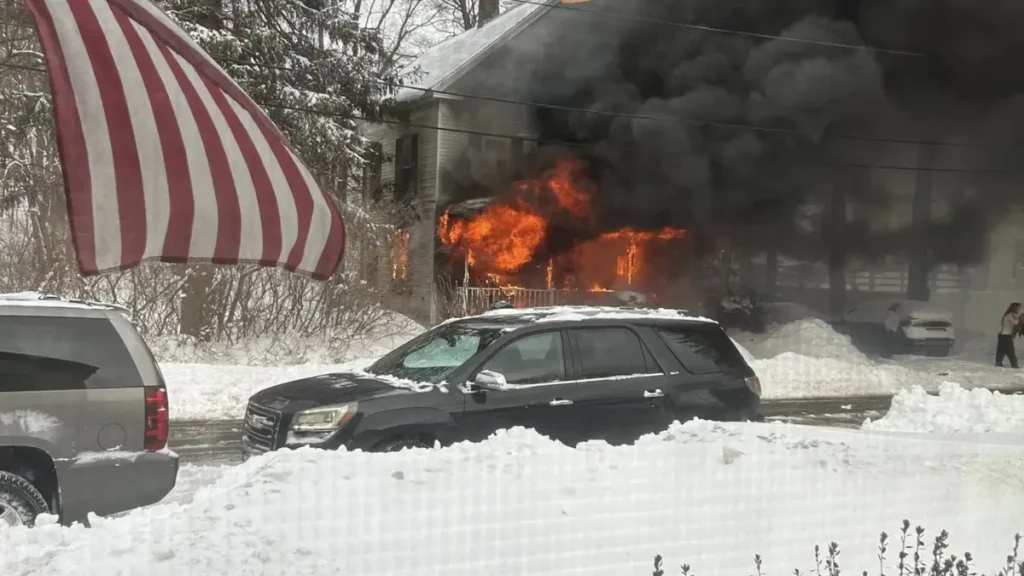
One thing I’ve learned over the years is that fire doesn’t wait for anyone — not firefighters, not residents, not the weather. And this fire didn’t just grow; it erupted. Crews immediately called for additional support the moment they saw how bad it was.
That quick escalation tells you two things:
- The fire had already reached multiple parts of the structure.
- A standard response wasn’t going to be enough.
You and I might think of fire departments as always fully staffed for moments like this, but that’s not always the case — especially in smaller towns. And when a home is already burning that intensely before crews even arrive, the margin for saving people or pets shrinks fast.
This is the point where you wish fires gave warnings — but they don’t.
What the Official Facebook Update Revealed?
When I read the official update posted by the Spencer Fire Department on Facebook, it filled in the part that news summaries usually miss.
Their post laid out the reality: A second alarm had to be struck. Crews from Paxton, Leicester, East Brookfield, Brookfield, and Southbridge rushed in. Traffic control, emergency management, rehab units — everyone was needed.
And what hit hardest was this line: “Unfortunately, numerous pets were killed in the fire.”
If you’ve ever had pets at home, you know why that sentence stings. Pets don’t just live in a house — they fill it. Losing them isn’t “property loss.” It’s family loss.
The update also made something else clear: the extra firefighters on duty because of the blizzard made a difference. Without that staffing, this fire could have turned even worse.
If you’ve ever questioned whether staffing matters, this fire answers that.
This reminded me of another heartbreaking case where pets were lost before firefighters could even reach them — the mobile home fire in Marion where dogs didn’t survive.
Why This Fire Became So Dangerous So Fast
Whenever I look at fires like this, I try to understand the “why” behind the intensity. And even though the investigation is still active, there are patterns you and I both know:
- Older homes burn faster once flames reach hidden spaces
- Winter conditions stretch response times
- Heavy fire on arrival reduces survival and rescue chances
- Pets often hide during fires, making rescue harder
- Large structures give fires more fuel and more air
You can imagine the chaos inside that house — smoke thickening, heat rising, pets panicking, residents trying to escape while their bodies react slower than the flames.
Six people injured is not a small number. One firefighter injured reminds us how dangerous these scenes are, even for the trained.
And if you’ve ever stood outside your home and imagined it on fire — you know how quickly that thought can tighten your chest.
What We Know About the Investigation So Far
Right now, investigators from the State Police and the Fire District 7 FIU are going through the home piece by piece. Fire investigations aren’t fast — they rely on burn patterns, debris, structural failure, and whatever evidence survived the heat.
Here’s what typically happens next:
- The ignition point will be identified
- Electrical systems, appliances, and heating units will be reviewed
- Survivor statements will be gathered
- Structural collapse patterns will be analyzed
- A final cause will be released once the evidence lines up
You and I both want answers — it’s human. But fire scenes rarely give them easily. Still, every layer of this process matters, especially when so many people were hurt and lives were lost inside that home.
The Human Side of This Fire That Often Gets Overlooked
Every time I cover a fire involving multiple injuries, I try to picture what those first few minutes must have felt like for the people inside. Six residents didn’t just run out — they were pulled out of chaos, smoke, and heat that overwhelms your body before your mind even catches up.
And the truth is, the injuries you don’t see can be just as heavy.
Some of the people taken to the hospital are now dealing with smoke in their lungs, burns, shock, or the emotional crash that hits once the adrenaline wears off. If you’ve ever seen someone walk out of a fire shaken and coughing, you already know how long that moment stays with them.
The firefighter who was transported — that reminds you, again, that even the most trained aren’t protected from everything on scenes like this. When a home is fully involved, every step you take as a firefighter is a gamble with your body.
You and I often focus on the flames, but the people who survived this will be replaying it in their minds for months.
I’ve seen people share their own fire survival experiences in places where communities talk openly about these things — especially in some WhatsApp update channels that focus on local emergencies. Those real stories stay with you, and they’re a reminder that recoveries often start long after the flames are gone.
The Blizzard Factor: How Weather Changed Everything
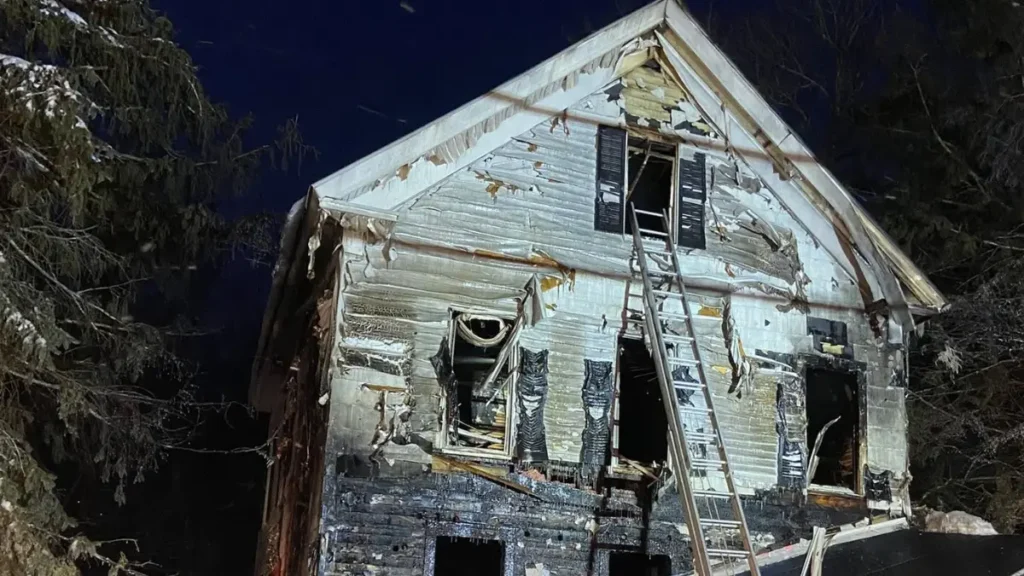
One detail from the official update stuck with me: crews had extra firefighters on duty because of the blizzard.
That single line says more than most people realize.
If you’ve ever lived through a heavy snowstorm, you know how it slows everything — roads, response times, visibility, equipment movement, even basic communication. But this time, the storm accidentally worked in the community’s favor.
Normally, only two people would’ve been working.
Imagine that.
A massive house fire. Several people trapped and injured. Pets lost. One firefighter down. And only two responders available at the start.
If that extra staffing hadn’t been there, the outcome might have been even more devastating.
You and I don’t usually think about how weather ties into emergency response. But fires don’t pause for storms, and storms don’t pause for fires. When both hit at the same time, the difference between life and death can literally come down to who’s on duty.
Situations like this also reminded me of the Parker Street incident in Utica, where a simple car fire spread fast enough to damage two homes. Fires move unpredictably — here’s that breakdown if you missed it.
What This Fire Teaches Us About Home Safety
Whenever I cover a fire this severe, I try to pull a lesson from it that actually matters — not the usual “check your smoke alarms” line you’ve heard a thousand times. This fire shows something deeper:
Preparedness changes depending on who lives in the home, what the home is like, and how quickly a fire grows.
Here are a few takeaways that feel especially real after reading everything about this case:
- Big homes give fires space to move faster than people can
- Pets often hide under beds or behind furniture, making rescue almost impossible
- Winter heating setups can add fuel to already-dangerous conditions
- Injuries multiply when multiple people are inside at once
- Fire spreads differently in older structures — faster, hotter, and more unpredictably
If you’ve ever walked through your own house at night and imagined an emergency, you already understand why these details matter.
And stories like this remind us of something else: A home can feel safe for years… until one moment when it’s not.
Large structures always change the way a fire behaves — a lot like that Arlington Heights fire where L.A. firefighters fought massive flames inside a big residential building.
What Happens Next, and Why Updates Matter
At this stage, the fire is officially under investigation by the Fire District 7 FIU and the State Police FIU, and that means the next updates will take time — sometimes weeks, sometimes longer. Fire scenes don’t give up their answers quickly, especially when the structure is heavily damaged.
Here’s what you and I can expect moving forward:
- A cause will eventually be determined once evidence aligns
- The extent of the victims’ injuries will be updated by local officials
- The home will be structurally evaluated to understand how the fire moved
- A public update will likely be released once the investigation is complete
I know people want clarity — I feel the same way. It’s human to want to know how something like this happens, and why it spiraled so fast. But accurate answers are worth the wait because they guide future responses, future prevention, and future survival.
While we wait, let me ask you something — What’s the one fire-safety habit you think most people overlook in their own homes?
If you want more real-time updates, fire safety breakdowns, and community stories like this, you can follow along here — I’m always sharing the latest on X and inside the Facebook group.
Disclaimer: This article is based on information released by local authorities and verified news outlets at the time of writing. Details may change as officials provide further updates on the investigation. Nothing here should be taken as emergency advice or an official incident report.