50,000 Garden Grove Residents Evacuated as Chemical Tank Threat Raises Home Security Fears Across Orange County
I’ve covered a lot of disaster stories. But this one hits differently because the fear isn’t just one thing. It’s two fears running at the same time. Will my neighborhood explode? And is someone breaking into my house right now?
That’s the reality for 50,000 people displaced by the Garden Grove chemical leak since May 21, 2026.
What Started It All
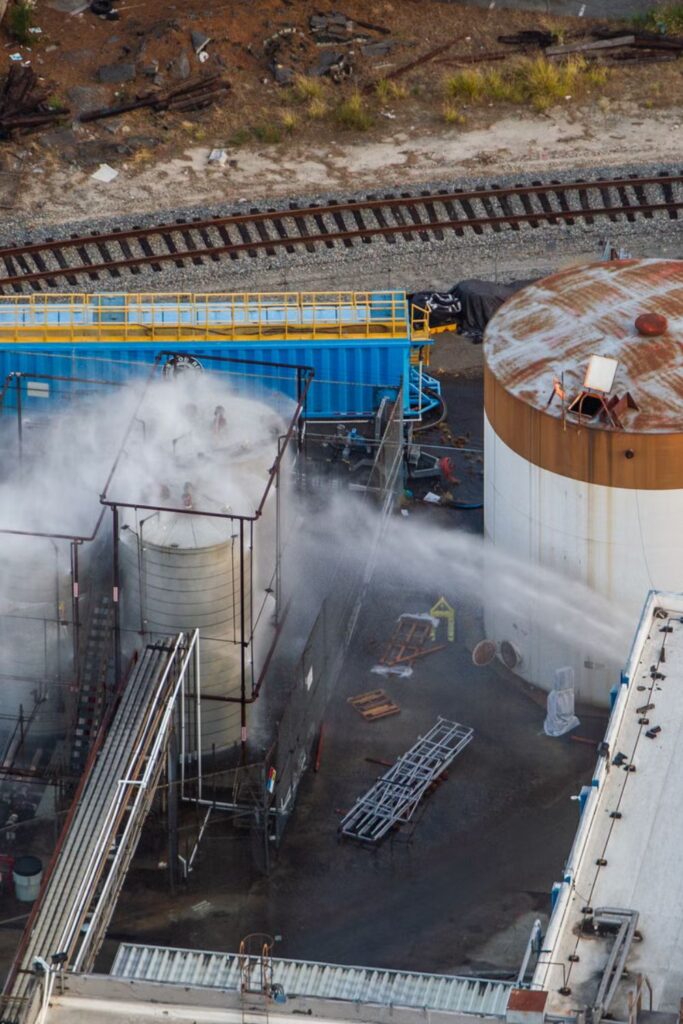
On a Thursday afternoon, a 34,000-gallon tank at GKN Aerospace Transparency Systems on Western Avenue began overheating.
Inside: roughly 7,000 gallons of methyl methacrylate, a highly flammable industrial chemical used to make acrylic plastics.
The relief valve triggered. Vapors vented. And by Friday, Orange County Fire Authority (OCFA) officials told residents the plain truth: the tank would fail in one of two ways, a massive chemical spill, or an explosion.
There was no third option.
The Chemical Nobody Told Them About
Methyl methacrylate is colorless, fast-evaporating, and extremely volatile when heated. When it reacts inside a sealed container, pressure builds rapidly and it can turn the tank itself into a bomb.
Short-term exposure causes headaches, respiratory irritation, and eye damage. Long-term exposure? Lung and organ damage.
The facility has been operating in this neighborhood since 1993. Most residents had no idea it existed, let alone what it stored.
One resident, Sarah Garcia, said it simply: “I had no idea this was in my neighborhood. I didn’t know it was so close to my home and that there were dangerous chemicals.”
50,000 People, Zero Warning
Garcia has two small children. When evacuation orders came, she had no plan. She drove to relatives on the east side of Garden Grove, still within the city, and still felt scared. “We’re safe from our home, but we’re still in Garden Grove,” she said.
She’s been getting most of her updates from social media. No direct communication from city officials. No timeline. Nothing concrete.
“There is a lot of uncertainty, and it’s hard to sit with.”
Her full account is worth reading. KTLA spoke with her directly on Sunday morning and it captures exactly what 50,000 people are living through right now.
The Second Fear: Are They Breaking Into My Home?
Here’s what most news articles aren’t covering properly.
Evacuated neighborhoods become soft targets. When 50,000 people leave a nine-square-mile area for days with no residents and reduced police presence, opportunists move in.
Garcia confirmed this fear is already spreading through neighborhood apps. She and her husband check their Ring camera constantly. “Is our house safe not only from an explosion, but safe from people?”
This isn’t paranoia. After Hurricane Katrina and California’s major wildfire evacuations, property crime in vacated zones spiked significantly. It’s a documented pattern, and it’s not just chemical disasters that create this vulnerability.
In cases like the vehicle that crashed into a Mississippi home while the family was inside, or the drunk driver who hit a Wisconsin home at 11 PM without anyone realizing until it was too late, the common thread is always the same: homes face threats their owners never saw coming.
When your house is the target, whether from a chemical blast zone or an opportunistic break-in, the helplessness feels identical.
If you want real-time updates and safety news as this situation develops, there’s a WhatsApp channel covering stories like this where people are actively sharing on-ground information.
If you’re displaced right now, do this:
- Check Ring or Nest cameras remotely every few hours
- Ask a neighbor outside the zone to do occasional drive-bys
- Call Garden Grove PD non-emergency line if you see anything suspicious
- Use the OCDA anonymous tip line: 714-347-8714
Why This Matters Beyond Garden Grove
Garcia also raised the question that should make everyone uncomfortable: “We’re a community of brown, Asian and working-class families… why is a dangerous industrial operation placed so close to my family?”
That’s not just emotion. It’s a documented pattern across the U.S.
According to ProPublica’s “Sacrifice Zones” investigation, people of color are exposed to significantly higher levels of industrial air pollution than white communities, a pattern that persists even across income levels.
Fenceline communities, those living right next to industrial plants, are chronically the last to know what they’re breathing.
Garden Grove is not an isolated incident. It’s a symptom.
What’s Happening Legally
Governor Newsom declared a state of emergency on May 23. A class-action lawsuit has been filed by The X-Law Group and Presidio Law Firm on behalf of evacuated residents, alleging GKN failed to protect the community from a known hazardous condition.
The Orange County DA launched an investigation the same day. His exact words: “We will be looking at whether this company has been derelict in its duties to protect the public.”
The facility’s cooling system for the tank had been compromised. Whether that was negligence, deferred maintenance, or something worse, investigators are now looking into every detail.
What Comes Next
As of May 25, the situation is still unresolved. Evacuation orders remain. The tank hasn’t stabilized. Schools in the area are closed until further notice.
For residents, there are two timelines running: when can they go home, and what do they come home to?
The road back is always harder than the evacuation itself, something North Chicago families understood after a squad car crashed into a neighborhood home and the community had to figure out what “safe” even meant anymore.
Key Takeaways
- A 34,000-gallon methyl methacrylate tank at GKN Aerospace overheated on May 21
- 50,000+ residents displaced across Garden Grove, West Anaheim, Cypress, and Stanton
- Explosion and toxic spill remain the two possible outcomes, both are dangerous
- Residents face a second, underreported threat: break-ins in the vacated zone
- A class-action lawsuit and DA investigation are both underway
- This story raises urgent questions about who bears the risk of industrial zoning decisions
Have you or someone you know been affected by the Garden Grove chemical leak? Or do you think industrial facilities near homes should face stricter disclosure rules? Drop your thoughts in the comments, this is exactly the kind of conversation that needs more voices.
Final Thought
This isn’t just a hazmat story. It’s a story about a community that was never told what was in its backyard and is now paying for someone else’s decision.
For more coverage on home safety, emergency preparedness, and community stories like this, visit Build Like New where we help you protect and rebuild what matters most.
If you want to stay in the loop on stories like this as they break, follow us on X (Twitter) and join the conversation on our Facebook page. We share updates, breakdowns, and real talk on the stories that actually affect people’s homes and safety.
Disclaimer: This article is for informational purposes only. The Garden Grove chemical leak situation is actively evolving. For official safety guidance and evacuation updates, refer to the Orange County Fire Authority and the City of Garden Grove.