The $6.1 Million Georgetown Home Where JFK Planned His Path to the White House
I’ve covered a lot of real estate stories. But this one hit differently.
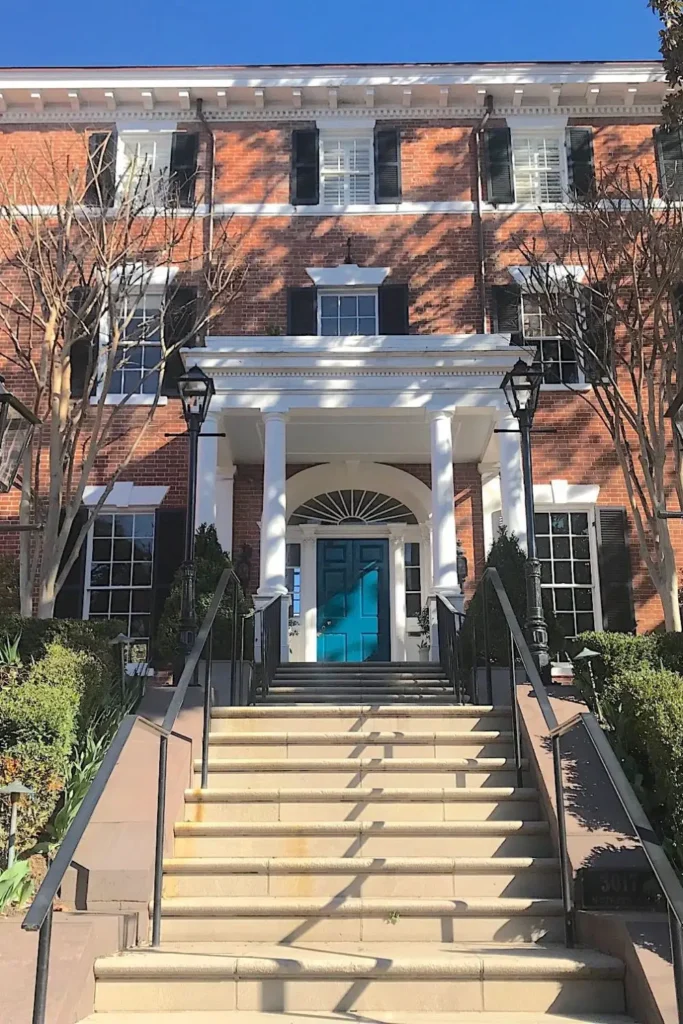
A red-brick Federal-style townhouse at 3307 N Street NW in Georgetown, Washington D.C., just sold for $6.12 million. On paper, it’s a luxury sale in an expensive zip code.
In reality, it’s the house where John F. Kennedy stood on the front porch, not in a campaign office, not at a podium, and addressed the press about who would run America.
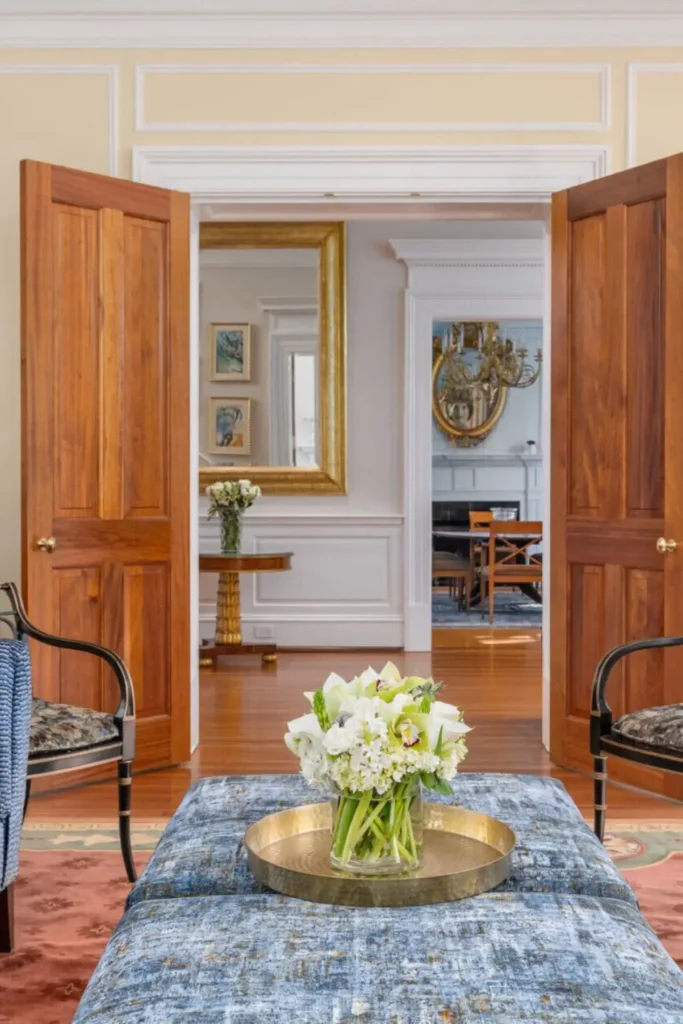
That’s not history textbook stuff. That’s a front door. A garden. A double parlor with original wood floors.
From $82,000 to $6.1 Million: A 69-Year Journey
JFK and Jackie bought this house in 1957 for $82,000. Jackie immediately put $18,000 into it: Louis XV armchairs, antique dining chairs, carpets. She wasn’t just decorating. She was building an image.
Both Caroline Kennedy and John F. Kennedy Jr. were born while the family lived here. JFK Jr. arrived on November 25, 1960, just 17 days before the family walked out this same front door and headed to the White House.
On January 20, 1961, Inauguration Day, photographers captured the Kennedys leaving 3307 N Street. That photo exists because of this house. Not the White House. This one.
The Kennedys sold it shortly after moving in as President and First Lady.
What Most People Don’t Know About This House
Everyone talks about JFK the president. Nobody talks about what this house actually was during the 1960 campaign.
Cabinet meetings held in the backyard. Press briefings from the front steps. CBS anchor Walter Cronkite came here to film. LBJ stood at this door for photos.
Jackie hosted “political teas” in the double parlor, intimate, strategic gatherings designed to shape JFK’s public image and build political goodwill.
That parlor didn’t just have nice furniture. It’s where Camelot was quietly assembled, before anyone called it Camelot.
And here’s the part almost every outlet missed: this house was built in 1811, not for the Kennedys, but for William Marbury.
The same William Marbury of Marbury v. Madison, the Supreme Court case that established judicial review and changed how American law works forever. Two landmark chapters of American history. One address.
The Sale Itself: What the Numbers Actually Tell You
The home listed in October 2025 at $7.5 million. It sold in May 2026 for $6.12 million, roughly $1.4 million below asking.
According to Robb Report, the sellers were retired financial analyst Vincent Griski and his partner Cameron Knight, a social worker who helped develop mental health programs for the U.S. Army. Knight’s grandfather was a diplomat under both JFK and LBJ.
He grew up nearby. He didn’t buy the house because of Kennedy. He bought it because a family friend kept asking when he’d finally take it off her hands.
The JFK Library in Boston called. They offered to accept it as a donation.
Knight’s response? “Over my dead body. You can buy it from me.”
The buyer, represented by Kelly Garret of TTR Sotheby’s, said they “loved all of the light, elegance and, of course, the garden.” Smart people. They know what they bought.
It’s worth noting that a home sitting seven months before closing isn’t unusual for this price bracket. Drake’s Beverly Hills mansion was slashed by $9 million and buyers still weren’t rushing in. At this level, patience isn’t optional. It’s part of the strategy.
Stories like this one drop fast in the luxury real estate world. There’s a WhatsApp channel where these sales get covered as they happen, worth checking if you follow this space closely.
Why This Matters: The Real Story Behind the Price
Here’s what nobody’s saying clearly: selling 18% below list in Georgetown isn’t typical. According to Redfin’s Georgetown market data, the median home price in Georgetown was $1.7 million as of early 2026, and most homes sell around 1 to 2% below asking.
This home sat for seven months and dropped nearly $1.4 million. That tells you something honest about how the market values “presidential provenance.”
It drives attention, not necessarily dollars. History is a premium on the PR side. On the pricing side, it still comes down to square footage, condition, and what a buyer is willing to write a check for.
A 6,000 sq ft Georgetown townhouse with 5 bedrooms, 6 fireplaces, a library, original stone mantels, and a renovated garden, that’s the asset. The Kennedy history is the story you tell at dinner.
And celebrity homes with emotional backstories don’t always command emotional prices.
Pete Davidson sold his Staten Island condo at a $400K loss and the reason behind that sale had nothing to do with the market. Sometimes personal circumstances drive the deal more than square footage or prestige.
Key Takeaways
- The house traded at $82K in 1957, $3.35M in 2004, and $6.12M in 2026. Strong appreciation, but not immune to price corrections.
- Georgetown’s luxury tier remains resilient. $6.1M still sits in the top 5 to 10% of all sales in the neighborhood.
- Historic homes carry emotional value that doesn’t always translate 1:1 to sale price, even when presidents lived there.
- The double parlor, fireplaces, and original detailing were preserved. Whoever owns this now has a piece of architecture that cannot be recreated.
If you enjoy stories about estates where history and architecture meet, Michael Kors recently put his stunning Fire Island oceanfront retreat on the market for $6.3 million, a completely different vibe, but the same idea: a home that carries a story bigger than its listing price.
Why This Sale Resonates Beyond Real Estate
JFK was assassinated 62 years ago. Yet a home sale in Georgetown generated global media coverage in 2026.
That’s not nostalgia.
That’s how deeply the Kennedys and what they represented are still woven into how Americans think about leadership, elegance, and what it looked like when a young couple from Massachusetts took on the world from a red-brick rowhouse in D.C.
The house still stands. The front door still opens and closes. Walls remember, even when we forget.
Should historic homes like this stay in private hands, or should they be protected as public spaces? That’s not a simple question. Drop your take in the comments. I genuinely read every one.
Conclusion
Real estate and history don’t always mix this cleanly. But when they do, it tells you something bigger than price per square foot.
If you’re into historic homes, luxury real estate, or stories where architecture and American history collide, this is the kind of sale worth paying attention to.
For more stories like this, follow Build Like New on X (Twitter) and join the conversation on the Facebook community. That’s where these stories get discussed in real time.
And if you’re looking for more content on real estate and homes built to last, visit Build Like New for more.
Disclaimer: This article is for informational purposes only. All facts are sourced from publicly available reporting and real estate market data as of May 2026.