Wake County Homeowner Says Fallen Oak Took Down Roof Fascia and Gutters in Thursday Storm
Ray Salerno didn’t see it coming. On Thursday morning, a large oak tree came crashing down onto his home on Daycroft Court in northern Wake County. When he stepped outside, the full picture hit him.
“It has taken down fascia boards, gutters,” Salerno said. “It’s basically a work in progress.”
No injuries. But the roof, the exterior, the gutters were all damaged. And the storm that caused it wasn’t done yet.
What Happened on Daycroft Court
Firefighters from the Northern Wake Fire Department responded quickly and placed a blue tarp over the damaged section of the roof to keep more rain from getting inside.
Salerno said the home still had power and running water, a small relief given the scale of what he was looking at. He wasn’t looking for sympathy, just being honest about where things stood.
“It’s hard to keep your lunch down when you’re looking at something like this,” he said. “But there’s not a whole lot I can do. It is what it is. It could have been worse. We could have been injured.”
According to ABC11/WTVD’s reporting, Thursday’s storms brought down trees across northern Wake County, with some blocking roadways entirely. Salerno’s home was one of multiple properties hit that morning.
This Wasn’t Just One Bad Storm
The heavy rain started before 2:30 a.m. and didn’t let up. Flash Flood Warnings went out across Wake, Chatham, Franklin, Nash, and Davidson counties. High Point recorded over 6 inches of rain by 5 a.m. Parts of Durham saw 3-plus inches. Hillsborough crossed 4 inches.
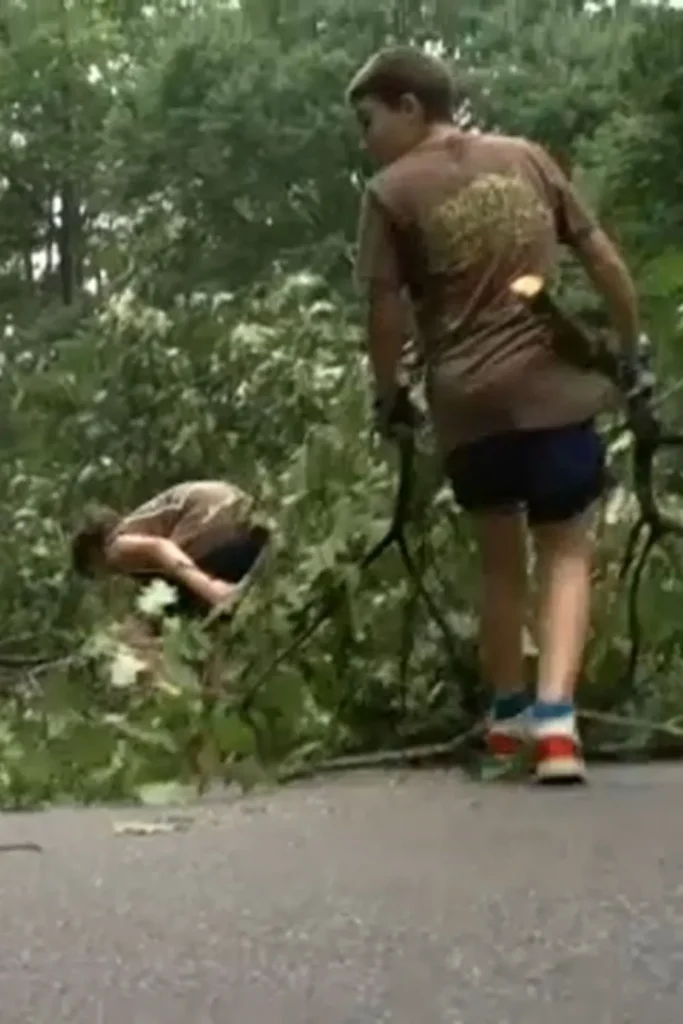
In Rocky Mount, a separate tree fell onto power lines and knocked out electricity for roughly 520 customers. Roads in Raleigh, including Pines Drive, Marion Road, and Hardee Road, were blocked by downed trees before most people had finished their morning coffee.
And in Fuquay-Varina, another tree landed on a home. Less damage, same story. Same morning. Same cause.
Severe weather doesn’t just come for trees.
When storms hit residential areas this hard, the damage to structures can be sudden and shocking, much like what happened when a bakery truck slammed into a Kingston home in a freak morning crash or when a truck crashed into an Indiana home on Lincoln Avenue and crews spent hours pulling it out.
The pattern is always the same. Homes take the hit, and families are left picking up the pieces.
Why Saturated Ground Is Actually the Danger, Not Just the Storm
The Northern Wake Fire Department put it plainly on Facebook: “Sometimes the danger isn’t the storm itself, but what it leaves behind.”
That line deserves more attention than it got.
Officials confirmed that days of heavy rain had left the ground saturated, weakening root systems and making trees far more likely to topple with little to no warning.
Most trees anchor themselves in the top two feet of soil. When that layer turns waterlogged, roots lose their grip even when the tree looks completely fine from the outside.
When the canopy fills with wind, it acts like a sail. The force transfers down the trunk, and the root plate, already loosened by saturated soil, pulls free. Arborists call this “windthrow.” But in bad enough conditions, calm weather alone is enough to bring a tree down.
Wake County was already under severe drought status before Thursday’s storms arrived. Drought weakens root systems first. Then sudden heavy rain saturates the soil before roots can recover. The ground becomes most dangerous exactly when it looks most refreshed.
Why This Matters
According to the Insurance Information Institute, when a tree hits an insured structure, your standard homeowners policy covers the damage, but tree removal is typically capped at just $500 to $1,000. That’s a fraction of what a large oak removal actually costs after storm damage.
If the tree fell because it was neglected, dead, diseased, or visibly rotting, your insurer may deny the claim entirely. Poor maintenance is not a covered peril.
One storm. One tree. Costs that can run into tens of thousands. And most homeowners never saw it coming.
If your home has ever been hit by storm damage, a tree, a vehicle, anything, how did your insurance handle it? Share your experience in the comments. It might help someone else dealing with the same situation right now.
Warning Signs You Should Check For Right Now
Residents across Wake County are being encouraged to watch for signs of trouble before the next round of rain. Officials specifically flagged leaning trees, exposed roots, and large cracked limbs as red flags that need professional evaluation.
Here’s what to look for when you walk your yard:
- A tree leaning in a direction it wasn’t before, especially after rain
- Soil heaving or lifting around the base of the trunk
- Exposed or cracked roots near the surface
- Large dead branches near the top, what arborists call “widow makers”
- Cracks or splits where major limbs meet the trunk
If you spot any of these, call a certified arborist. Not next month. This week.
Incidents like this one tend to cluster during storm season. If you want to stay current on local home damage news and safety updates without hunting for them, this WhatsApp channel covers this kind of reporting regularly.
If a Tree Does Hit Your Home
Get your family out if the structure is compromised. Don’t go back in until the fire department clears it.
Then photograph everything, every crack, every broken gutter, every damaged section of roof, before a single branch is moved. Call your insurer immediately. Your policy likely covers storm-caused structural damage, but you need solid documentation to back the claim.
If a neighbor’s tree hit your home, you still file with your own insurance first. Your provider handles it from there.
The emotional weight of this is real. When a car crashed into a Milwaukee home near 8th and Chambers Streets, residents described the same disbelief, the sound, the shock, and then the long road of repairing a place that was supposed to be safe. Storm damage hits differently when it’s your own front door.
Closing Thoughts
Salerno said it simply: “It’s just a question of dealing with the structural damage to the house and the second floor. Just one day at a time.”
That’s all you can do in the moment. But knowing the warning signs before the next storm, and knowing exactly what to do in the first 24 hours after impact, puts you in a far better position than most homeowners who’ve been through this.
Large oak trees are beautiful. They’re also heavy, deep-rooted, and dangerous when the ground beneath them quietly stops holding.
Have large trees near your home? Walk your yard today. Don’t wait for the next storm to make that call for you.
We cover stories like this because they matter to real homeowners. If this kind of reporting is useful to you, follow us on X (formerly Twitter) and join our Facebook community. We share home safety updates, storm coverage, and practical guides regularly.
Disclaimer: This article is for informational purposes only. For tree hazard assessment, contact a certified arborist. For insurance coverage questions, consult your insurance provider directly.