House Fire Ceiling Collapse Traps Ohio Firefighter Prompting Mayday Call
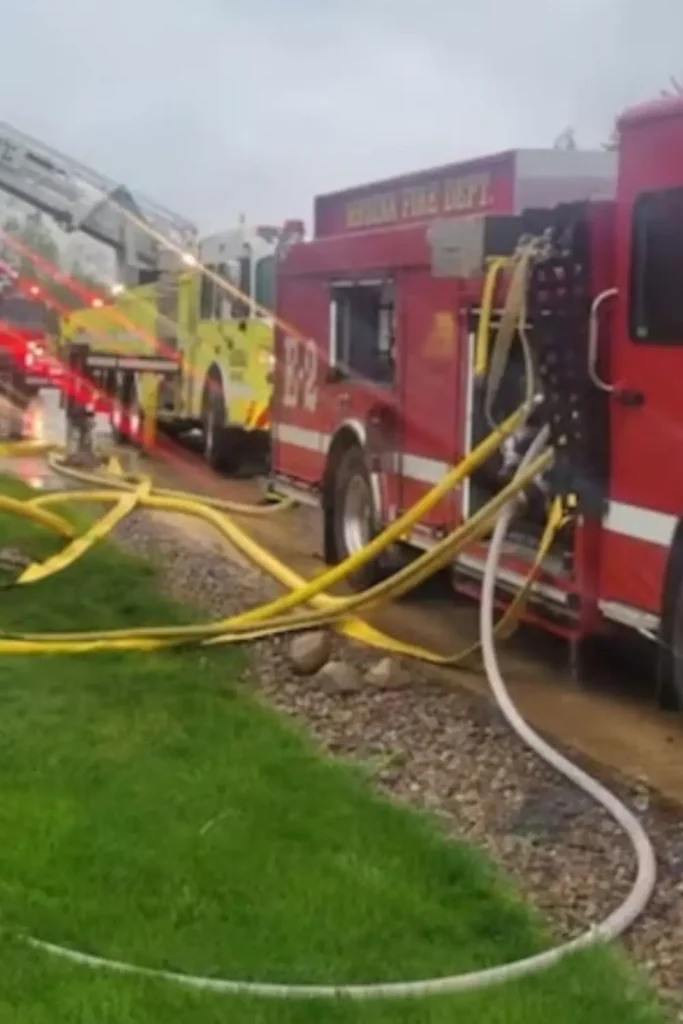
It was supposed to be a routine call. At 4:52 p.m. on May 6, a Medina Fire Department crew was dispatched to a house fire on Maggie Marie Boulevard in Medina Township, Ohio.
They arrived to find heavy fire ripping through the garage. It had already spread into the attic and the interior of the home.
Crews split up: one team hit the flames from outside with a 2.5-inch hose, while another went inside to search for occupants and fight the fire from within.
What happened next changed everything.
A Ceiling Gives Way and a Firefighter Goes Down
Deep inside the home, a large section of second-floor drywall let go without warning. It came crashing down onto a Medina firefighter, pinning him at the bottom of a stairway.
Here is the detail most outlets missed entirely. The trapped firefighter did not call his own Mayday.
A Brunswick Hills firefighter nearby saw what happened and made that call over the radio. That split-second decision, someone else’s presence of mind, is a big reason this story has a good ending.
Crews pulled him out quickly. He was transported to Medina Hospital, evaluated, and released that same evening. The department confirmed he is home and doing well. One resident also suffered minor burns and was later released.
What Exactly Is a Mayday and Why Does It Stop Everything?
If you have never heard this term in a fire context, here is what it means in plain terms.
A Mayday is the most serious radio call on any fireground. It means a firefighter is in immediate, life-threatening danger: trapped, lost, low on air, or injured, and needs to be rescued right now.
The moment it goes out, all other radio traffic stops. Every resource on scene pivots to one mission: get that firefighter out.
Why do firefighters sometimes wait too long to call it?
Studies of line-of-duty deaths show a troubling pattern. Firefighters often delay calling Mayday because they want to self-rescue first, or they do not want to disrupt the operation. That hesitation narrows the survival window fast.
The Medina incident, covered by FireRescue1, is a reminder of how fast conditions change and why calling early saves lives.
Every department is required by NFPA 1710 and 1720 to have a Rapid Intervention Team (RIT) staged and ready before interior operations even begin. Their only job is to rescue a downed firefighter if the call comes in.
Why Did the Ceiling Collapse? The Science Is Simpler Than You Think
Drywall looks solid, but once fire eats through an attic above it, the whole assembly loses structural integrity fast. Add water from suppression efforts and the weight compounds. The ceiling does not gradually sag. It drops.
Stairways are especially risky. They act like funnels where debris from above concentrates at the base. A firefighter working near a stairwell is in one of the most exposed positions inside a burning structure.
Fire investigators often trace these collapses back to how the fire started and how long it burned undetected.
We covered a case where investigators in San Luis Obispo County finally pinpointed what ignited a house fire, and those findings explained exactly why the structure failed the way it did.
Fire incidents like this one tend to get buried fast. If you want to stay current on house fires, structural safety, and fire investigation news as it breaks, there is a WhatsApp channel that covers this beat worth bookmarking.
Why This Matters
- 53,575 firefighter injuries were reported in the U.S. in 2024, down 15% from the previous year, according to NFPA’s 2024 Firefighter Injury Report.
- Of those, 30% occurred on the fireground, roughly one injury for every 85 fires responded to.
- The same report flagged 2024 as having the highest civilian home fire fatality rate ever recorded: one death per every 100 home fires.
The number of firefighter injuries is trending down, and that is genuinely good news. But trending down does not mean safe.
Every ceiling collapse, every Mayday, every close call is a reminder that interior firefighting is still a high-stakes operation where seconds and training decide outcomes.
And when conditions deteriorate fast enough that crews are forced back, the outcomes get far worse.
That is exactly what unfolded in this overnight house fire in Little Falls, where two people were killed as flames pushed firefighters out of the building. A sobering contrast to what happened in Medina, where the system held.
Got a take on this? Whether you are in the fire service or someone who just follows these stories, drop a comment below. We read all of them, and the discussion in the comments often goes deeper than the article itself.
What This Should Make Every Homeowner Think About
- Garage fires spread silently into attics. The gap between ceiling and roof is a direct highway for fire. Most people do not realize a garage fire can gut a home’s structure before it is even visible inside.
- Your garage likely has no smoke alarm. Many building codes do not require one there. Add a heat detector at minimum. It could be the difference between a contained fire and a structural emergency.
- When firefighters enter your home, it is already dangerous. The best thing you can do is never let it get to that point. Do not store flammables loosely, maintain your heating equipment, and test your alarms monthly.
And the consequences stretch beyond the structure. A fire does not just damage walls. It displaces families, often overnight, often with nothing.
We covered a fire in Santa Rosa where two people were injured and five were left without a home after a mobile home fire, and the speed at which it happened is the part that stays with you.
The Bottom Line
This firefighter is home. He is safe. That outcome happened because of fast mutual aid response, trained teammates, and a system, the Mayday protocol, that worked exactly as designed.
But it also happened because someone nearby was paying attention. A Brunswick Hills firefighter saw a colleague go down and did not hesitate. That kind of situational awareness is not luck. It is training.
For the rest of us, this is a reminder that house fires do not announce themselves, and that prevention is always cheaper than rescue.
If you found this useful, we cover fire incidents, home safety, and structural news the same way over at Build Like New. No press release rewrites, just breakdowns that actually make sense.
Follow along for more stories like this. We post fire safety news and home safety updates regularly on X (Twitter) and Facebook.
Disclaimer: This article is for informational purposes only. All details are based on publicly available reports from the Medina Fire Department, FireRescue1, and cleveland.com as of May 2026. Fire cause investigation was ongoing at the time of publication. For fire safety guidance, consult your local fire authority or visit NFPA.org.