Tossed Cigarette Ignites Plastic Bin, Leaves Two Bend Homes in Ruins
Most people who toss a cigarette into a trash can don’t think twice about it. It happens every day, in every neighborhood, without incident.
Until it doesn’t.
On Saturday evening in Bend, Oregon, that one careless moment turned into a fast-moving fire that destroyed a family’s home — and nearly took a neighbor’s too — in under 35 minutes.
What Happened at Suntree Village
At 5:58 PM on May 2, 2026, multiple 911 callers reported a structure fire and explosions at the Suntree Village Mobile Home Park in Bend. B
y the time first responders arrived at 6:04 PM — just six minutes after the first call — the fire had already spread from one home to a neighboring residence.
Bend Fire & Rescue knocked down both fires and contained the scene within 35 minutes. The last units cleared at 7:42 PM.
One home was a complete total loss. The second sustained minor damage. The homeowner declined Red Cross assistance.
Investigators traced the origin to the front porch of the destroyed home. Smoking materials had been tossed into a plastic trash can filled with other waste. The contents ignited.
The fire then reached the propane tanks connected to a nearby grill — causing the explosions that 911 callers had reported, according to KATU News.
One discarded cigarette. One plastic bin. A chain reaction that cost someone everything they owned.
Why It Spread So Fast
A smoldering cigarette tip burns at around 900°F. Drop that into a plastic trash can packed with paper, packaging, or dry waste — and the container acts like a slow-build furnace.
Plastic doesn’t simply burn. It melts, drips, and releases flammable gases that feed the fire further. The moment those gases reached the nearby propane tank, the explosion became almost inevitable.
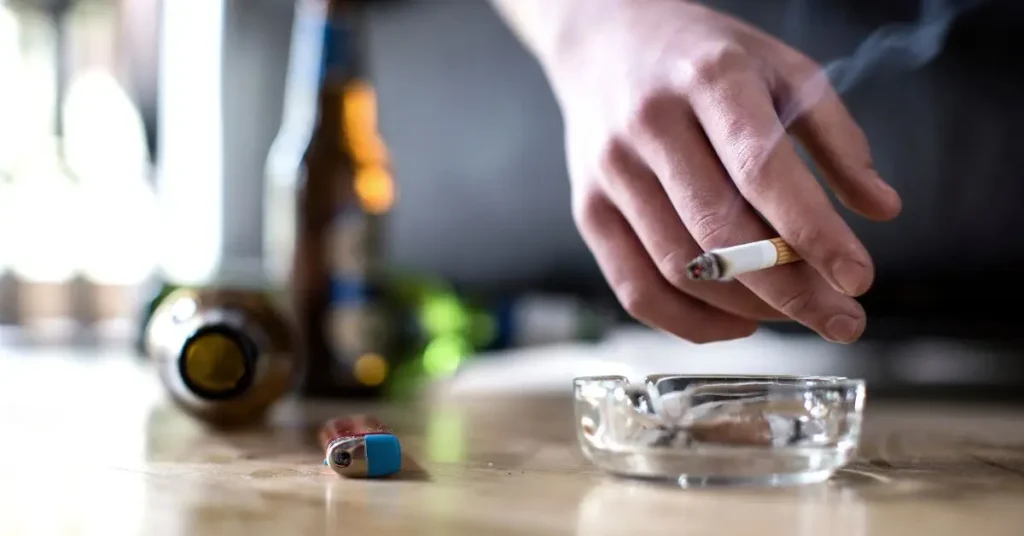
This kind of secondary explosion is not unique to Bend — a gas-triggered explosion in Queens recently set off a massive fire that injured multiple NYPD officers, showing how quickly a contained fire turns into something far more dangerous.
In a mobile home park, proximity does the rest. Homes sit close together. Radiant heat alone — without direct flame contact — can ignite a neighboring structure.
That’s not a flaw in the community. It’s a physical reality that every resident deserves to know about before something goes wrong.
According to the U.S. Fire Administration, smoking materials cause an average of 15,900 home fires per year in the United States.
These fires are only 2% of all residential fires — but they account for 14% of all civilian fire deaths. That gap tells the whole story.
What Safe Disposal Actually Looks Like
This isn’t about blaming smokers. It’s about one simple habit that takes no extra time and costs nothing.
- Use a metal or ceramic ashtray — never plastic, never a trash can
- Keep it away from grills, fences, walls, and planters — at least 3 feet
- Wet the butt before throwing it away — a damp cigarette cannot reignite
- Never flick into bark mulch, dry grass, or vegetation of any kind
- If a grill is nearby, know where the propane shutoff valve is — before a fire, not during one
It’s also worth remembering that fires don’t only start outdoors. A kitchen fire that damaged the home of a Dauphin County paramedic is a reminder that even people trained in emergencies can face fire damage from everyday hazards – preparation matters more than profession.
For mobile home park residents: clear combustibles off your porch, test smoke alarms monthly, and keep exits accessible.
The National Fire Protection Association maintains a full, regularly updated resource on smoking-material fire prevention — worth bookmarking.
Stories like this one get covered regularly on a WhatsApp channel focused on fire safety and home incidents across the U.S. — useful if you want to stay informed without having to search for it.
The Hard Part to Sit With
Bend Fire & Rescue did their job. They arrived fast, worked fast, and contained two fires in 35 minutes. That’s impressive response work.
But a home was still gone by the time they left.
Someone’s furniture, photos, documents, memories — reduced to ash in the time it takes to watch half a movie.
Not because of a storm, not because of faulty wiring, not because of anything uncontrollable. Because of a trash can on a porch.
In that sense, the outcome in Bend isn’t unlike what investigators found after a fatal house fire in Skowhegan, Maine left one person dead — fires that begin small and end in total loss, with no time to course correct.
That’s the part worth thinking about the next time a cigarette needs to be put out.
If this was useful, there’s more where it came from.
And if you’re dealing with fire damage or a home rebuild, visit Build Like New — we cover the full picture, from what caused it to what comes next.
Follow along to stay updated: 𝕏 Follow on X and Facebook Group
Disclaimer: This article is based on official information from Bend Fire & Rescue (via FlashAlert.net, May 2, 2026) and verified reporting from KATU, KTVZ, and Central Oregon Daily. This content is published for public information and fire safety awareness only. In any fire emergency, call 911 immediately.