After the Pfizer Conversion Scare in Manhattan Condo Buyers Are Demanding Structural Checks
With New York City already struggling to meet housing demand, the conversion of the former Pfizer headquarters in Midtown Manhattan into over 1,600 apartments looked like exactly the kind of project the city needed. Then came July 7, 2026.
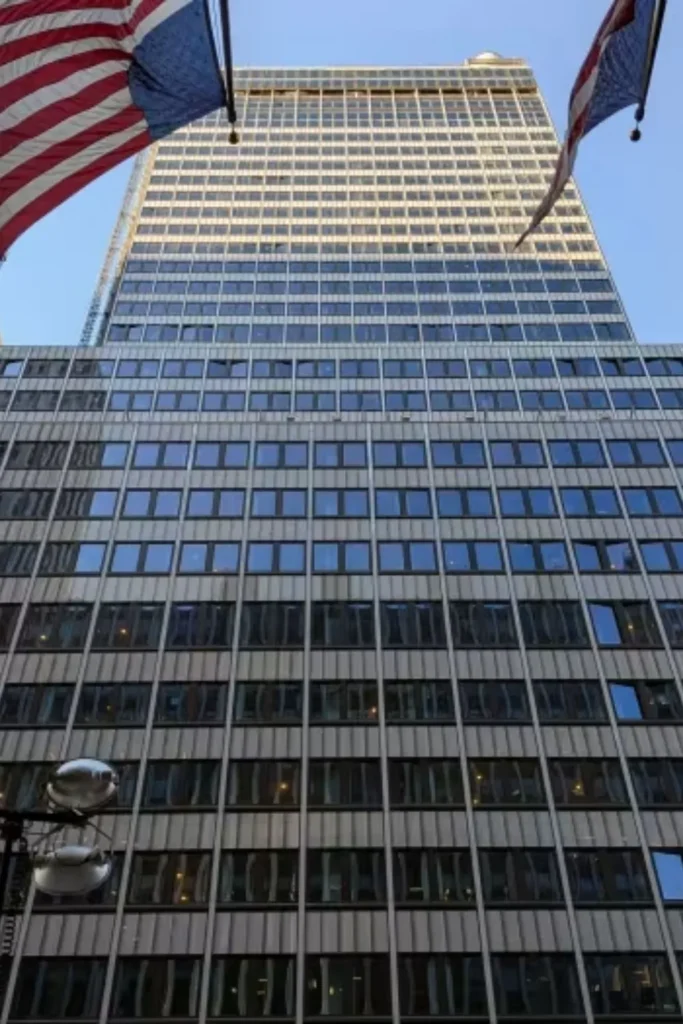
Construction workers inside 235 East 42nd Street discovered buckled steel columns on the 21st floor of the 37-story building. Within hours, nine surrounding buildings were evacuated, 12 city blocks were shut down, and Mayor Zohran Mamdani declared the situation “serious.”
Four hundred children at the Kennedy International School on East 43rd Street were relocated mid-morning.
By July 9, the building was declared “stable.” But the questions it left behind for condo buyers across New York are anything but settled.
Steel Columns Buckled and Nine Buildings Were Evacuated
The FDNY received its first call just before 8 a.m. about debris falling from 235 East 42nd Street. Raw footage taken by a worker inside showed an entire floor of badly bent steel beams.
A frozen zone was implemented spanning 40th to 45th Streets between First and Third Avenues. Overnight crews installed temporary struts floor by floor until the structure was stabilized.
The project, led by developer MetroLoft with Gensler as architect, was set to deliver 1,602 apartments including 400 affordable units across two buildings at 235 and 219 East 42nd Street.
It was on track to become the largest office-to-residential conversion in United States history. That timeline is now uncertain, and the Department of Buildings investigation into the structural failure remains open.
The Building Had 22 Violations on Record Before the Columns Buckled
What made the July 7 incident harder to dismiss was what was already in the public record.
The building carried 22 violations dating back to 2020, with 13 still active and $39,000 in unpaid penalties. An April 2026 complaint reported debris falling from high heights.
An October complaint described a large object breaking through five floors and nearly striking someone. Inspectors cleared the site both times without finding violations.
On the same day the columns buckled, the DOB filed a new complaint accusing developers of conducting excavation beyond previously approved plans. A civil suit filed in November 2025 by injured worker Wilmer Cabrera Rojas added further context to conditions at the site.
MetroLoft founder Nathan Berman told The Wall Street Journal that added weight from widening the top 15 or so floors was the likely cause of the damage, while calling it “nothing more than a typical construction mishap.”
NYC Buildings Commissioner Ahmed Tigani noted the project had undergone “extensive, exhaustive review” for two years before construction began.
NYC Has 44 More Conversions in the Pipeline
The structural scare at 235 East 42nd Street would be easier to dismiss if this were an isolated project. It is not.
A 2025 report from the NYC Comptroller’s office identified 44 adaptive reuse projects in various stages across the city. Office vacancies remain roughly 50 percent above pre-COVID levels and the economic pressure to convert unused office space into housing is not going away.
Structural engineers who spoke to ABC News and other outlets said the Pfizer project is complex by any measure: two buildings of very different ages, one from 1909 and one from the 1960s, with plans to add up to 30 new stories on top of existing structures.
Emily Guglielmo, a San Francisco-based structural engineer, said failure could stem from original design assumptions being misread, a construction error, or crews overloading the structure during the build.
Housing policy shifts and real estate safety stories like this one tend to move quickly. There is a WhatsApp channel worth having open if you want to stay ahead of how these developments unfold without waiting on the news cycle.
What This Means for Condo Buyers Right Now
Experts say the Pfizer scare is unlikely to derail the broader conversion push. But buyer scrutiny must go up, and the financial consequences of a structural incident extend well beyond the initial repair.
A documented structural event pushes a building’s master insurance premium up at renewal. Some carriers decline to renew altogether, forcing the HOA into the surplus insurance market, which is less comprehensive and more expensive.
Higher premiums flow directly into monthly HOA dues. Appraisers who flag a structural history can trigger additional underwriting conditions, and lenders have long memories. Even resale becomes harder when a building carries a public incident on its record.
This kind of risk is not limited to conversions under construction. Across the country, the gap between housing demand and supply is pushing buyers into decisions they may not be fully prepared for.
San Diego recently approved $8.5 million just to stop affordable rentals from disappearing before private investors could acquire them, a sign of how thin the margin has become for buyers at every price point.
Before You Sign on a Converted Condo, Pull These Records First
Buyers often treat converted buildings like standard new construction. They are not. Here is what to check before signing anything.
Search the NYC DOB’s Building Information System for open violations, unpaid penalties, and any flag reading “construction contrary to approved plans.” That exact language appeared in a DOB complaint filed against 235 East 42nd Street on the day the columns buckled.
Ask for the structural engineering report tied specifically to the conversion work and confirm that loads from added floors were verified by an independent engineer.
Read the last three years of board minutes for any mention of deferred maintenance, special assessments, or structural concerns. Check whether the building’s master insurance has renewed without conditions and whether HOA dues have been rising without explanation.
For any conversion involving added floors or a pre-1970s structure, hire a licensed Professional Engineer rather than a standard home inspector. The cost runs between $500 and $1,500. In a New York City purchase, that is not optional.
Real estate stories like David Ayer’s decade-long handcrafted Silver Lake home, listed at nearly $3 million after he personally sourced every material inside it, make the point clearly: someone who paid close attention to a property leaves behind a building that holds up.
A converted Midtown tower’s paper trail often tells a very different story.
Why This Matters
The Pfizer project alone represents over $2 billion in residential value at luxury Manhattan price levels, still under active DOB investigation as of this writing. Multiply that across 44 conversions in NYC’s pipeline and the scale of the buyer risk becomes clear.
Property history has a way of outlasting headlines. A 545-year-old home in West Sussex where Princess Margaret once spent her weekends is now listed at $5.3 million, and its value is built almost entirely on who owned it and how it was cared for across five centuries.
The opposite applies just as directly. A building’s paper trail of complaints, violations, and deferred maintenance does not disappear when the scaffolding comes down.
Buying in a converted building does not require assuming the worst. It requires knowing what you are buying. The paper trail at 235 East 42nd Street was public and accessible before July 7. Very few people looked.
Would you still consider buying in a converted office building in New York after what happened at 235 East 42nd Street? Drop your take in the comments below.
Key Takeaways
- On July 7, 2026, steel columns buckled on the 21st floor of the former Pfizer HQ at 235 East 42nd Street, triggering evacuations across nine buildings in Midtown Manhattan
- The building had 22 violations on record before the incident, 13 still active, with $39,000 in unpaid penalties
- MetroLoft’s founder acknowledged the added weight from new upper floors was the likely cause of the damage
- NYC has 44 office-to-residential conversions in its pipeline, making this a systemic buyer risk, not a one-off event
- A structural incident can push HOA insurance premiums up, complicate mortgage underwriting, and reduce resale value
- Buyers in converted buildings should check DOB records, request structural engineering reports, review board minutes, verify insurance history, and hire a licensed PE before signing
- The DOB investigation remains open and the 2027 delivery timeline is now uncertain
For more real estate and housing stories as they break, follow Build Like New on X (formerly Twitter) and join the conversation on the Build Like New Facebook community. These stories move fast and that is where they get discussed first.
Disclaimer: This article is for informational purposes only and does not constitute legal, financial, or structural engineering advice. All details are based on publicly available reports and official statements at the time of publication. For guidance specific to a property purchase, consult a licensed real estate attorney and a qualified structural engineer.