
No Mow May 2026: The Free Lawn Hack Saving Homeowners Real Money Amid Rising Gas Prices
Every May, millions of Americans fire up their gas mowers on a schedule. Weekly. Without question. But a growing number of lawn experts and now some surprisingly convincing science say that habit is costing you more than just time.
We’re talking real money. Real fuel. And possibly a lawn that’s worse off for it.
This is No Mow May and before you roll your eyes at it being another trendy hashtag, hear me out. The math alone might change how you think about your Saturday morning routine.
What Exactly Is No Mow May?
No Mow May started in the UK in 2019, launched by a conservation charity called Plantlife. The idea is simple: put the mower away for the month of May and let your lawn breathe.
It’s not about letting your yard turn into a jungle. It’s about giving your grass and the pollinators that depend on it a fighting chance during the most critical weeks of the growing season.
The movement has since crossed the Atlantic. Cities, homeowners, and even a few city councils across the US have picked it up. And with gas prices staying stubborn, the financial side of the argument is hitting differently in 2025.
How Much Gas Does Mowing Actually Cost You?
Here’s what most people don’t sit down to calculate:
A standard push mower burns 0.5 to 1.5 gallons per hour. A riding mower? Up to 2 gallons per hour. The average American mows roughly 25 times per season that adds up to around 13 gallons of gas just for a push mower on a mid-sized yard.
Skip four mows in May, and you’re looking at $9 to $25 back in your pocket from fuel alone. Add in reduced blade wear, fewer oil changes, and one less Saturday fighting with the pull cord and the number gets more interesting.
Taller grass also develops deeper roots, which means your lawn needs less water. So the savings don’t stop at the gas pump.
The Benefits Go Further Than the Bees
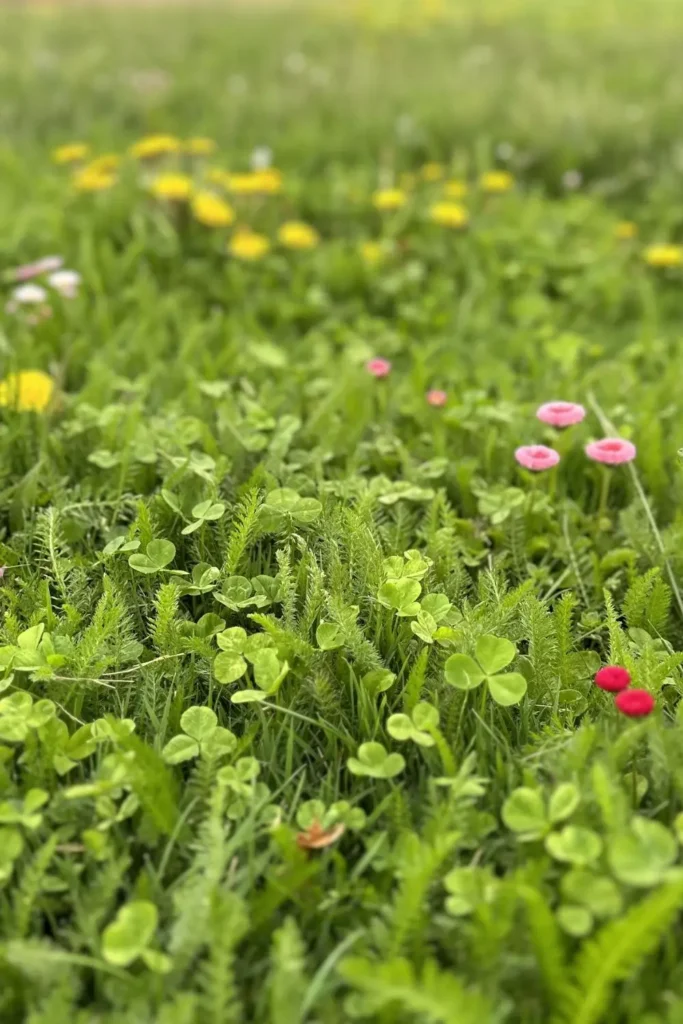
Yes, the pollinators story is real. Plantlife’s data shows that lawns left unmowed through May can produce up to ten times more nectar than regularly mowed ones.
Researchers in Massachusetts found 93 species of bees visiting lawn flowers in yards that were mowed only every two to three weeks.
But let’s talk about what the lifestyle sites usually skip over.
Gas-powered lawn mowers account for 5% of all U.S. air pollution. Every weekend, roughly 54 million Americans mow their lawns burning through 800 million gallons of gas per year.
One hour of mowing a gas-powered mower produces the same emissions as driving a car for 45 miles.
A 2023 report covered by Grist found that lawn equipment emitted more than 30 million tons of CO2 in a single year more than the entire city of Los Angeles.
Skipping four mows doesn’t just save gas money. It’s four fewer hours of that running.
And if you’ve ever wondered how small habits quietly drain a homeowner’s budget, this is just one piece of it these six expensive home repairs show exactly how the costs pile up when upkeep gets ignored.
What Nobody’s Telling You: The Real Risks
This is where I want to be straight with you, because most articles about No Mow May skip this entirely.
The science is more complicated than the hashtag suggests. In 2024, Cornell University’s Turf Team ran their own research and found that No Mow May did not significantly increase nectar availability for pollinators by June and did not meaningfully boost pollinator populations.
The original study that launched the Appleton, Wisconsin version of the movement? It was retracted. Appleton later removed No Mow May from its municipal code entirely and reinstated its 8-inch grass limit.
There’s also a practical lawn health problem. Grass that goes unmowed for a full month can reach 10–12 inches. When you finally cut it in June, removing more than one-third of the blade at once puts the turf into shock damaging it right before summer heat hits.
The Legal Risk Most Homeowners Ignore
This is the part that most No Mow May articles completely miss, and it can be expensive.
Most U.S. cities have ordinances capping grass height at 8 to 12 inches. HOAs are often stricter sometimes as low as 4 to 6 inches. Violate those rules and you’re looking at daily fines, property liens, and in extreme cases, legal action.
A homeowner in Dunedin, Florida ended up facing $30,000 in fines after his lawn went unmowed for two months. He was out of state. The city voted to foreclose on his property. He eventually settled for $8,000.
Before you skip a single mow, check your local ordinance and your HOA’s CC&Rs. This step takes ten minutes and can save you thousands.
Lawn violations are one thing, but they’re rarely the only hidden threat to your property value. If you’re a homeowner thinking about the long game, this breakdown of real estate wealth risks is worth ten minutes of your time.
What Lawn Experts Actually Recommend Instead
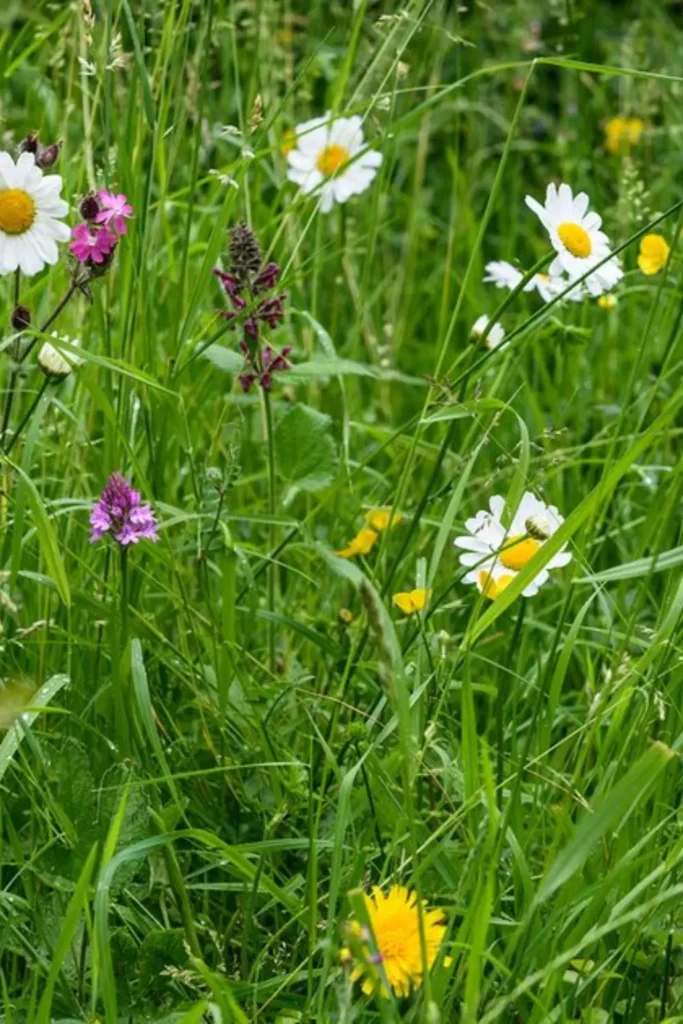
Here’s the version of this movement that actually works for most American homeowners and that the best researchers are landing on:
Call it “Mow Less May” instead of No Mow May.
Mow every two to three weeks instead of every week. Raise your blade to 3.5 to 4 inches. Let a small patch a back corner, a garden border go wild while the rest stays manageable.
Cornell CALS puts it simply: “Mow HIGH, May through July.” Bee City USA backs this up: mowing every two to three weeks produces nearly the same pollinator diversity as going completely no-mow without the June lawn shock or the legal risk.
That’s the honest middle ground. Less effort, less gas, real benefit, and you stay on the right side of your HOA.
Speaking of smart seasonal moves if you’re already thinking about your yard this spring, there are five other home renovation projects worth starting in April before contractor prices climb. Same logic: timing matters more than most people realize.
Why This Matters (And Why Now)
The numbers behind America’s lawn habit are genuinely staggering. There are 40 million acres of turfgrass in the United States more land than any irrigated crop in the country.
Maintaining it burns 800 million gallons of gas a year and produces up to 5% of the nation’s total air pollution.
Park managers who reduced mowing from 15 to 10 times per year saw cost savings of up to 36%, according to research cited by Bee City USA. For homeowners, even small reductions add up over a season.
Lawns are the largest irrigated crop in the U.S. and most of us have never once questioned the schedule we mow them on.
A quick note if you want practical home tips like this without having to hunt for them, there’s a WhatsApp channel that sends this kind of stuff straight to your phone. Worth a follow if you find yourself googling home improvement questions more than once a week.
Key Takeaways
1. Skipping 3–4 mows in May = real gas savings + reduced mower wear.
2. The science is mixed No Mow May works best if your lawn already has clover, violets, or dandelions.
3. Check your HOA and city rules before skipping a single mow fines are real.
4. “Mow Less May” bi-weekly mowing at a higher blade delivers most of the benefit with none of the risk.
5. Raise your blade to 4 inches. It’s the single easiest change you can make right now.
Final Thought
You don’t have to go full wildflower meadow to get something out of this. Even raising your blade height and skipping one mow per month puts money back in your pocket and gives your lawn a fighting chance.
The goal was never to let your yard go feral it’s to stop being a slave to a schedule that’s costing you gas, time, and lawn health you didn’t know you were losing.
Tried No Mow May this year? Got an HOA that shut it down before you even started? Drop your experience in the comments below I read every single one, and if your situation is tricky enough, it might just become the next article.
And if you’re looking for more of this no fluff, just practical home advice that actually saves you money Build Like New is where it lives.
If you’d rather catch these posts as they go up, I share them on X (Twitter) and in the Build Like New Facebook group both are good spots to ask questions, share what’s worked for your home, and see what other homeowners are dealing with. Come find us there.
Disclaimer: This article is for informational purposes only. Local ordinances, HOA rules, and lawn conditions vary. Always verify your local laws and consult a lawn care professional for advice specific to your region and grass type.


