Experts Say Super El Nino Will Push US Homes Into Record Heat This Summer But Most HVAC Units Will Not Survive It
Most people are treating this summer like any other hot season. That is a mistake that could cost them hundreds, possibly thousands, of dollars.
NOAA’s Climate Prediction Center has issued an unmistakable warning: the 2026 El Nino is emerging earlier and more aggressively than anyone anticipated, with a 2 in 3 chance of reaching strong or very strong intensity by fall or winter.
Scientists are describing the speed of development as genuinely startling.
And right now, half of American homeowners are walking into this with an AC system they haven’t touched in over a year.
This Is Not the El Nino You Remember
NOAA’s latest data puts the probability of El Nino forming between May and July 2026 at 82%, with certainty climbing to 96% between December 2026 and February 2027.
Some climate models are forecasting the Ocean Nino Index crossing 3 degrees Celsius above average, a threshold reached only once before in modern recorded history, in January 1878.
What makes this different from 1997 or 2015 is the starting point. Experts warn that a modern El Nino will unfold over a planet that is already structurally overheated by fossil fuels.
The historical outcomes from past super El Nino events may not replicate in the same way today.
This is not a weather pattern. It is a weather pattern arriving on top of a planet that is already running a fever.
What This Actually Does to Your AC
Your air conditioner was built to handle hot days. It was not built to handle weeks of continuous operation under humidity levels that never drop.
El Nino does not just bring heat. It brings heat and elevated moisture simultaneously. When humidity stays high, your AC has to run longer cycles just to keep the indoor air feeling livable. That double load is what breaks systems that otherwise seem fine.
50% of Americans have already skipped HVAC maintenance heading into this summer to save money, even as more homeowners are reporting signs of strain across their cooling systems.
That is a massive number of households heading into a historic heat event with systems that have not been serviced.
The Problem Nobody Is Talking About
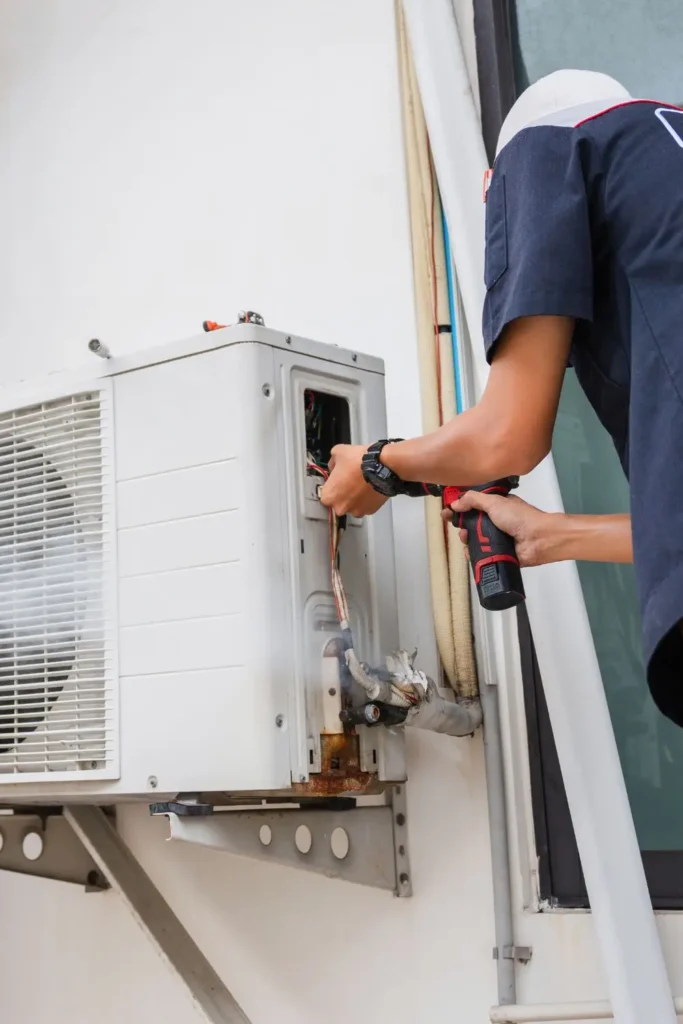
Here is the part most HVAC articles skip completely.
The HVAC industry is currently short 110,000 technicians nationally. At the same time, HVAC companies are already dealing with technician shortages and rising service requests as older systems begin to fail during extreme heat waves.
That means when your AC breaks in August, you are not waiting a few hours. You could be waiting days, in a home that is 95 degrees, with no real timeline for help.
The people who book a technician now, in May or June, are in a completely different position than the people who wait for the breakdown.
If you want to understand exactly what your system should handle and what warning signs to watch for, Realtor.com’s HVAC readiness guide for the Super El Nino is worth reading before you make any decisions.
Most homeowners focus only on the AC when El Nino hits, but the damage often starts below the surface.
If you live in an area with clay-heavy or uneven soil, it is worth reading about why homeowners who skip soil grading before El Nino season are setting themselves up for a foundation nightmare because foundation problems.
AC strain often show up at the same time, and fixing both during a heat wave is a situation you really want to avoid.
There is a WhatsApp channel that covers home system prep, climate impact on housing, and El Nino updates as they break. A good place to stay ahead without waiting for the news cycle.
Why This Matters
This goes beyond personal comfort.
Air conditioning already accounts for 12% of all electricity consumption in the United States, a figure expected to rise sharply as temperatures climb. Heating and cooling together make up about 40% of a home’s utility bills.
A stressed system running non-stop is not just a breakdown risk. It is a bill that quietly doubles before the unit gives out entirely.
NOAA is forecasting that El Nino conditions could bring greater downtime risks, system strain, and longer technician wait times than in any typical summer, for hospitals, schools, residential housing, and commercial facilities alike. That pressure filters down directly to homeowners.
The 2024 North American heat waves killed over 1,000 people in the United States alone. A working AC is not a luxury this summer. For elderly family members and young children, it is a safety system.
For a deeper look at what the data says about where this summer is headed and what utility companies are already doing to prepare, Latitude Media’s breakdown of how utilities are hardening for the 2026 Super El Nino puts the full picture together.
And if your AC is the thing you are focused on right now, do not overlook what is happening above your head.
A lot of people do not realize that your roof may not be ready for what is coming either, and a compromised roof during an El Nino weather event can push repair costs into territory that makes an HVAC replacement look minor.
One more thing people are discovering too late: your home insurance bill is about to get a lot worse because of this Super El Nino, and most homeowners are not budgeting for it. Worth knowing before the renewal notices start arriving.
Key Takeaways
- NOAA gives an 82% probability of El Nino forming between May and July 2026, rising to 96% by December 2026
- Some climate models forecast Pacific Ocean temperatures rising 3 degrees Celsius above average, a level not seen since 1878
- 50% of American homeowners skipped HVAC maintenance heading into summer 2026
- The HVAC industry is short 110,000 technicians nationally, meaning emergency wait times are already stretching longer
- El Nino brings combined heat and humidity, which forces AC systems to run longer and harder than typical summer heat alone
- Systems 10 to 15 years old face the highest risk of failure under sustained load
- Booking a technician now is the only way to avoid surge pricing and multi-day waits during peak August demand
Is your AC already serviced for this summer, or are you in the half that hasn’t done it yet? Drop your answer in the comments. Genuinely want to know how many people are actually prepared going into this one.
Wrapping Up
The people who act in May and June are going to have a very different August than those who don’t. That gap between prepared and unprepared is exactly what a Super El Nino exposes.
If this kind of story is useful to you, Build Like New covers home systems, climate impact on real estate, and the practical side of big housing decisions on the regular. Worth bookmarking if you want more than just the headline.
For more as it breaks, follow us on X (Twitter) and join the conversation over on our Facebook community. That is where these stories get discussed the moment they drop.
Disclaimer: This article is for informational purposes only. All data is based on publicly available reports and forecasts at the time of publication.