Holiday Alert: Porch Pirates Target Homeowners in These 10 States
I’ll be honest — every holiday season, I feel that small knot of worry the moment a delivery notification pops up on my phone. You’re probably the same. Gifts ordered, excitement building… and then the thought hits: What if someone grabs it before I do?
That fear isn’t paranoia anymore. During the holidays, porch piracy and home burglaries spike in ways we don’t see the rest of the year. While we’re busy shopping, traveling, or juggling family plans, thieves see something else entirely: unattended packages, quiet homes, and predictable delivery patterns.
The shift to online shopping has changed the rhythm of neighborhoods. Boxes sit on porches longer. Deliveries arrive at odd hours. And unlike a crowded store, a front porch doesn’t have cameras, employees, or witnesses by default. For someone looking for a quick win, it’s low effort and low risk — especially during the busiest shopping weeks of the year.
What’s striking when you look at recent studies is that this isn’t random crime. It’s seasonal, strategic, and location-dependent. Some states and neighborhoods see far sharper holiday spikes than others, not because residents are careless, but because opportunity stacks up fast when deliveries surge and routines break.
That’s why where you live — and how prepared you are — matters more than most people realize. And before we even talk about which states are hit hardest, it’s important to understand why the holidays have quietly become prime time for porch pirates and burglars alike.
Have you ever had a package disappear during the holidays — or changed how you shop because of it?
More Deliveries, More Targets for Thieves
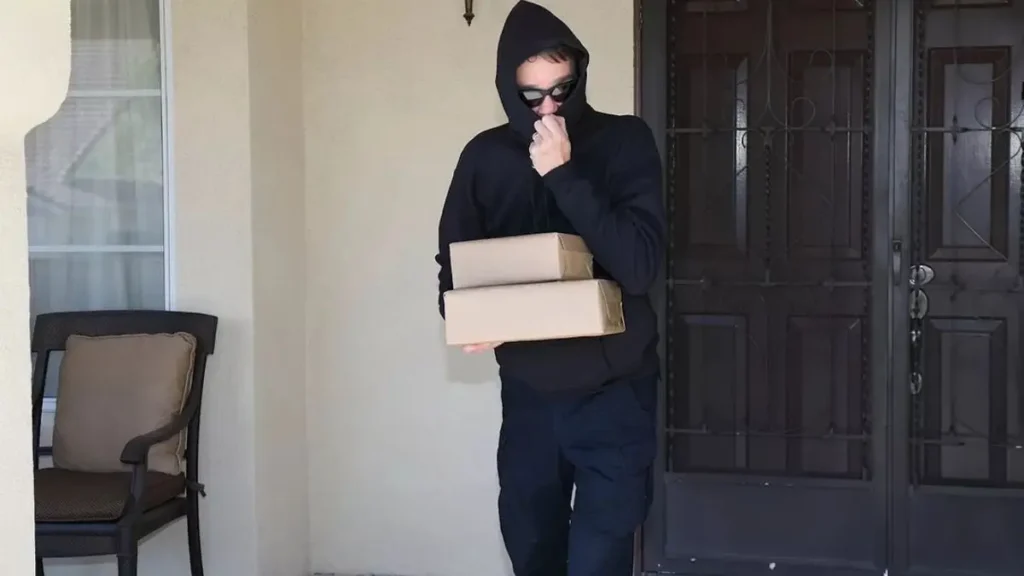
I don’t think most people realize how much the holidays change the math for criminals.
From October to December, Americans order more packages than at any other time of the year. Online holiday shopping alone now crosses $250 billion, and that flood of deliveries creates a simple problem: too many boxes, too many doorsteps, not enough people home to grab them.
According to Security.org, an estimated 37 million packages are expected to be stolen in 2025. At an average value of $222 per package, that’s more than $8.2 billion gone — not because of sophisticated crime rings, but because boxes sit in plain sight.
Here’s the part many SERP articles gloss over: it’s not just volume. It’s timing. Packages arrive while people are at work, stuck in traffic, or out shopping for more gifts. Thieves know this. They don’t need to break locks or smash windows — they just need to walk up, grab, and leave.
For you and me, a delivery notification means excitement. For them, it’s opportunity.
States Seeing the Biggest Holiday Burglary Increases
Where you live plays a much bigger role than most people expect.
A recent analysis highlighted by Realtor, based on FBI crime data and independent legal research, shows that some states experience sharp jumps in burglaries specifically during the holiday season — not spread evenly across the year.
Alabama stands out the most.
Over the past five years, the state saw a 12.5% increase in burglaries from November to December, the highest holiday spike in the country. This isn’t about overall crime rates — it’s about how much risk rises when gift deliveries peak.
Following Alabama, California and New York recorded the next-highest holiday increases, at 8.8% and 8.4%, respectively. These states combine dense populations, high delivery volume, and busy urban schedules — a perfect storm for porch theft and break-ins.
Other states rounding out the high-risk list include Louisiana, Oklahoma, and Wisconsin, each seeing holiday burglary jumps between 6.7% and 7.8%. States like West Virginia, Virginia, Texas, and Rhode Island also show consistent seasonal increases.
The takeaway here isn’t fear — it’s awareness. These numbers help explain why some neighborhoods feel more vulnerable every December, even if they’re quiet the rest of the year.
The States Getting Safer During the Holidays
Not every story is bad news.
Some states are moving in the opposite direction, seeing fewer burglaries during the holiday season despite the same surge in online shopping. Delaware, New Hampshire, Wyoming, Maine, and Montana all recorded double-digit decreases in holiday burglaries over the past five years.
The biggest surprise is Vermont.
Vermont saw a 29.8% drop in holiday burglaries, making it the safest state during the festive season in the latest analysis. That kind of decline doesn’t happen by accident. Lower population density, strong community awareness, and consistent security habits likely play a role.
This matters because it proves something important: holiday theft isn’t inevitable. Risk can be reduced, and behavior — both individual and community-wide — makes a real difference.
Why Burglaries Spike During the Holidays?
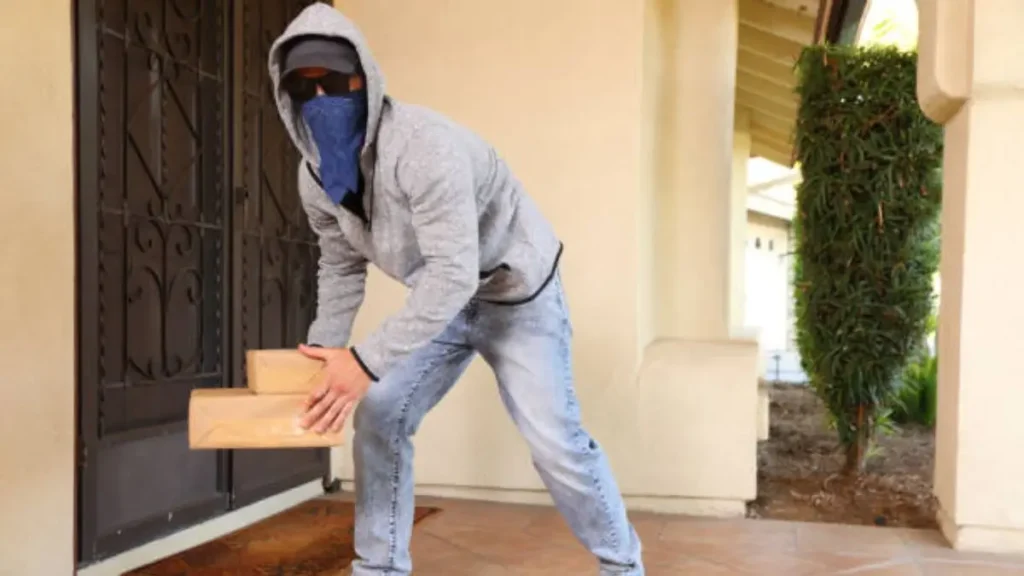
When you line up the data, the pattern becomes hard to ignore.
First, package volume explodes. Security.org found that the average home receives about 25 parcels during the holiday season, roughly double any other three-month period. More boxes mean more visible temptation.
Second, homes are empty more often. People travel for family gatherings, attend parties, or spend long days shopping. Even a few dark evenings signal opportunity to someone watching routines closely.
Third, delivery timing works against homeowners. Packages arrive throughout the day, often hours before anyone returns home. Thieves don’t need to guess — they watch delivery trucks and follow patterns.
Holiday crime isn’t random. It’s opportunistic, predictable, and built around moments when normal routines break down.
If you want to stay updated on the latest home safety alerts and tips during the holidays, there’s a WhatsApp channel sharing real-time guidance on local package theft trends.
It’s Not Just Packages Thieves Are After
Porch piracy gets the headlines, but it’s only part of the picture.
During the holidays, burglars know something else too: valuable items are inside the home. Gifts, electronics, jewelry — all concentrated in one place for a short window of time.
That’s why law enforcement and legal experts warn that package theft and full home break-ins often rise together in December. A stolen box can even act as a test run — a way to see who’s home, who isn’t, and how secure a property really is.
This is especially true for single-family homes with secluded porches or long walkways, and for large apartment complexes where packages pile up in shared areas. And sometimes, the most dangerous spots in your home aren’t where you’d expect — like certain rooms that criminals may target first.
The holiday season brings joy, but it also brings predictability. And predictability is exactly what criminals look for.
Before I move on to prevention and expert advice, I want to ask you something: Do you usually change how you handle deliveries during the holidays — or do you treat them the same as the rest of the year?
How to Stop Porch Pirates Before They Strike?
If there’s one thing experts agree on, it’s this: there’s no single fix. What actually works is stacking small deterrents until your home stops looking “easy.”
Gene Petrino, a retired SWAT commander and lead adviser at Security.org, calls this a layered approach. And the logic is simple. Porch pirates don’t want a challenge. They want the fastest grab with the lowest risk.
Start with visibility. If someone can be seen from the street, they’re far less likely to linger. Trim overgrown shrubs. Clear anything that blocks sightlines. Make sure your front entry doesn’t feel hidden or private to someone who shouldn’t be there.
Lighting matters more than most people think. A well-lit porch can drastically reduce the chance of a burglary and doesn’t just help cameras — it makes thieves feel exposed.
Delivery choices are just as important. When possible, use Amazon lockers, UPS Access Points, or in-store pickup. If that’s not realistic, a lockable parcel box on your porch can be enough to make a thief move on.
The goal isn’t to turn your home into a fortress. It’s to make it slightly more annoying than the one next door.
What Renters and Landlords Often Overlook?
Here’s a part of the conversation that’s missing from most articles: security isn’t just personal — it can be a legal issue.
Landlords have a responsibility to provide reasonable security for tenants. That includes working locks, secure entryways, adequate lighting, and functional security systems. When those basics are ignored, the risk doesn’t just fall on tenants.
Legal experts point out that if a burglary happens because known security issues weren’t addressed, landlords could face premises liability claims. The holidays make this even more relevant, because crime patterns are well-documented and predictable.
For renters, this means speaking up matters. If lighting is broken, doors don’t lock properly, or mailrooms are unsecured, those aren’t “minor” issues — especially in December.
For landlords, the message is straightforward: a quick security check before the holidays can protect tenants and reduce legal exposure.
Many homeowners aren’t aware of the surprising health risks that can come from wood-burning fireplaces, which are common during the holidays. Paying attention to these small details can make your home both safer and healthier this season.
What This Means for You This Holiday Season?
The holidays are supposed to feel generous, not stressful. But the reality is that gift-giving now comes with a layer of risk we didn’t deal with a decade ago.
The data shows that theft isn’t random, and it isn’t unavoidable. It spikes when routines change, when packages pile up, and when homes signal opportunity — not when people are careless.
A few small changes in how you handle deliveries, lighting, and visibility can dramatically lower your risk. And knowing whether your state tends to see holiday spikes gives you a head start instead of a false sense of security.
So here’s what I want to know from you: Do you plan your holiday deliveries differently now than you used to — or are porch pirates something you only think about after it’s too late?
For more tips, discussions, and updates on keeping your home safe, join the conversation on X and our Facebook group. You’ll find practical advice and stories from people dealing with the same challenges.
Disclaimer: The information in this article is based on publicly available crime data, third-party research, and expert commentary, and is provided for general awareness only. Crime rates and risks can vary by neighborhood and change over time. This content should not be taken as legal or security advice, and readers are encouraged to use their own judgment and consult local authorities or professionals when needed.