A West Village Townhouse Built in the 1800s Just Sold and the Greenhouse Inside Is the Real Story
A home that helped freedom seekers escape bondage in the 1800s just opened its doors to buyers for the first time in over a century. And the moment you see what’s been sitting behind that facade, you understand why one family held on to it this long.
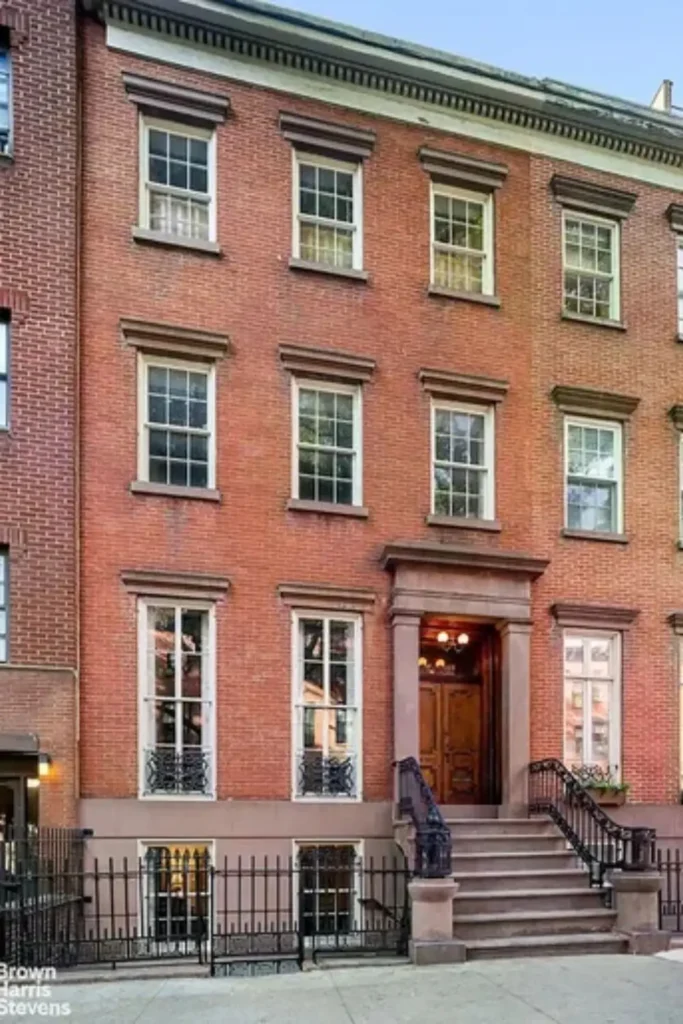
29 Grove Street in Manhattan’s West Village hit the market at $11.99 million. Four bedrooms. 2,100 square feet. Built in 1841. Same family for more than 100 years.
The listing agent at Brown Harris Stevens called it a “truly once-in-a-lifetime opportunity,” and for once, that phrase is not an exaggeration.
A House That Held Its Secrets for 185 Years
Most historic homes in NYC have been gutted, updated, and updated again until the only original thing left is the address. 29 Grove Street went the other direction entirely.
The parlor floor still has its 11-foot ceilings, five black and gold-veined marble mantles, original shutters, and a gold leaf pier mirror flanked by floor-to-ceiling windows.
The kitchen still has the original wood-burning range from 1841, with copper pots hanging above it, alongside a cast-iron boot scraper and a functioning bell-pull doorbell at the entry that predates electricity.
The family who owned it did not treat it like real estate. They treated it like a responsibility. That comes through in every room.
The Greenhouse Is the Detail Everyone Underplayed
The headline says greenhouse. Most coverage moved past it in one sentence. That’s a mistake.
This is a two-story greenhouse attached to the back of the home. The upper portion opens off the parlor floor through a long hallway, serving as an enclosed terrace.
A spiral staircase leads down to a sunroom on the garden level, which then opens directly to the backyard. It is not a decorative gesture. It functions as an entire wing of the house.
Realtor.com has the full listing details and photos here, but what the images can’t fully convey is the weight of what surrounds it: original fireplaces, hand-painted porcelain sinks, and a connection to American history that most properties in this price range simply cannot manufacture.
Because 29 Grove Street was a documented stop on the Underground Railroad.
What the Underground Railroad Connection Actually Means Here
This is the part that separates this listing from every other “historic” townhouse in Manhattan.
The listing agent, Warner Lewis of the Harkov Lewis Team at Brown Harris Stevens, confirmed the connection directly: “29 Grove St. was a stop along the Underground Railroad, and there are copious original details going back to 1841.”
This is not an unverified rumor or a marketing hook. It is a documented part of the property’s past that the family preserved for over a century without putting it on the market.
Grove Street has a long relationship with this history. The 1830s mansion at 45 Grove Street is also a recorded Underground Railroad safe house, and 17 Grove Street has its own underground tunnel history connecting to a Prohibition-era speakeasy.
This one block in the West Village carries more American history per square foot than most museum buildings.
That kind of provenance doesn’t show up on a listing sheet. You either know it or you miss it entirely.
The real estate dynamics around historic properties are worth understanding before you form an opinion on the price.
Josh Brolin is selling his $5 million Atlanta estate for reasons that have nothing to do with the house and Lindsey Vonn slashed another $255K from her Beverly Hills mansion just 3 weeks after relisting it.
Even extraordinary properties sit or cut price when the market isn’t meeting the moment.
If you follow stories like this as they happen, there is a WhatsApp channel that covers luxury and historic real estate moves as they break. Worth having in your feed.
Why This Matters
This sale lands in a market where Manhattan townhouse inventory has genuinely thinned out.
According to the Compass Q1 2026 Manhattan Market Report, Manhattan recorded 191 townhouse sales year to date, with a median sale price of $9.94 million and an average of $13.99 million. Overall inventory fell 5.4% year over year. New listings dropped 17.5%.
At $11.99 million, 29 Grove Street is priced just above the current median.
For a home that has been off the market for over a century, comes with documented Underground Railroad history, a functioning two-story greenhouse, and original 1841 details that cannot be recreated at any price, the positioning is defensible.
The West Village townhouse market has seen extreme deal-making in 2026. A Bank Street megamansion went for over $70 million. 80 Clarkson Street is pending at $129 million.
But those are construction plays. 29 Grove is the opposite. It is what survives when no one tears anything down.
That tension between heritage value and market timing plays out differently depending on the property.
Nicholas Hoult took a significant financial hit on his Hollywood Hills home after it sat unsold for over a year. Even homes with genuine character don’t always close clean. History matters. So does pricing it right.
Key Takeaways
- 29 Grove Street was built in 1841 and held by the same family for over 100 years
- Listed at $11.99 million for 2,100 square feet with 4 bedrooms and 2.5 bathrooms
- A documented stop on the Underground Railroad, confirmed by the listing agent
- Features a two-story greenhouse, five original marble mantles, gold leaf detailing, and a bell-pull doorbell that predates electricity
- The original 1841 wood-burning kitchen range remains in place
- The facade has been fully restored, with a new roof added within the last 7 years
- An additional approximately 1,375 square feet of expansion is possible, subject to architect verification
- Manhattan townhouse median hit $9.94 million in Q1 2026 per the Compass report
Would you buy a home with 185 years of history and leave the original details exactly as they are, or would you have to update some of it to actually live there? Drop your honest take in the comments. Genuinely curious where people land on this one.
Wrapping Up
A home that sheltered people fleeing slavery in the 1840s just came to market for the first time in living memory. The greenhouse is still standing. The bell-pull doorbell still works. The gold leaf mirror is still on the wall.
If stories like this are your thing, Build Like New covers historic real estate, luxury market moves, and the human side of big transactions regularly. Worth bookmarking if you want more than just the headline.
For more stories in real time, follow Build Like New on X (Twitter) and join the conversation on the Facebook community. That is where these stories get discussed as they break.
Disclaimer: This article is for informational purposes only. All details are based on publicly available reports at the time of publication.